The Sky Ablaze: Unexpected Northern Lights Dazzle Lower Latitudes
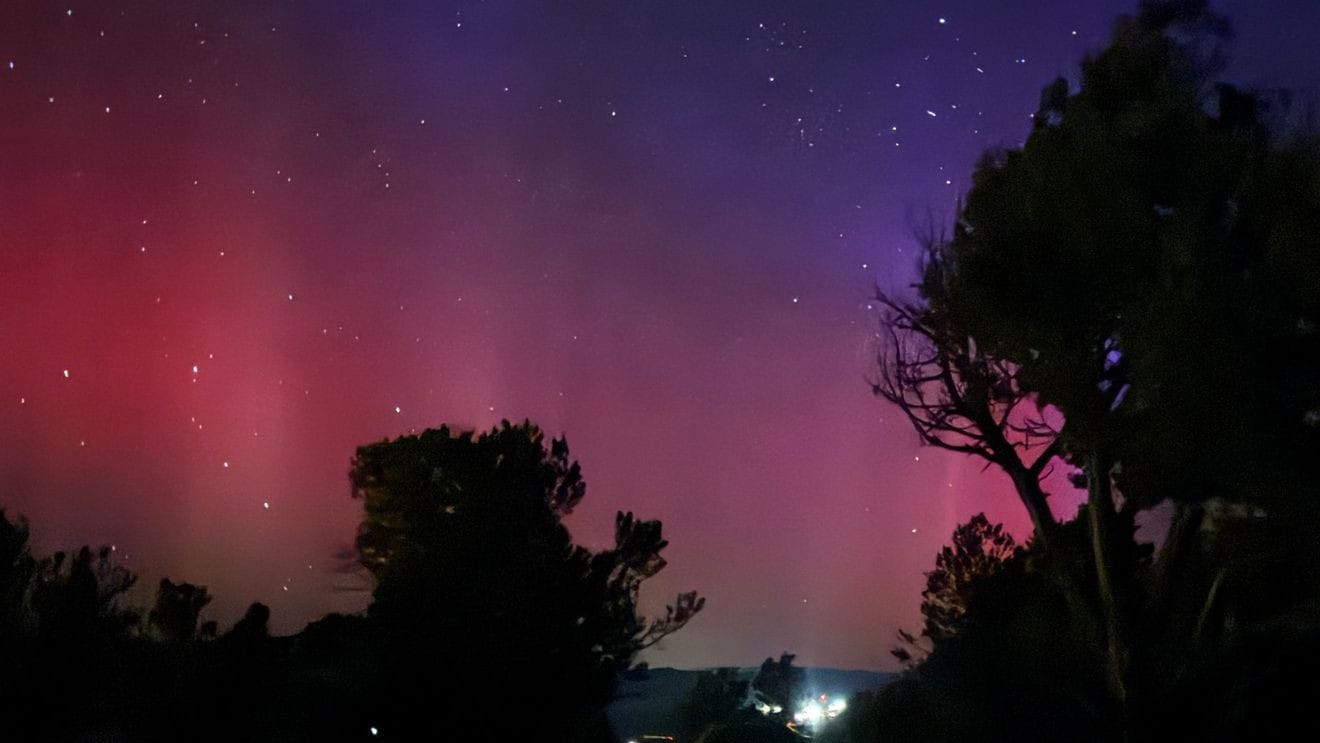
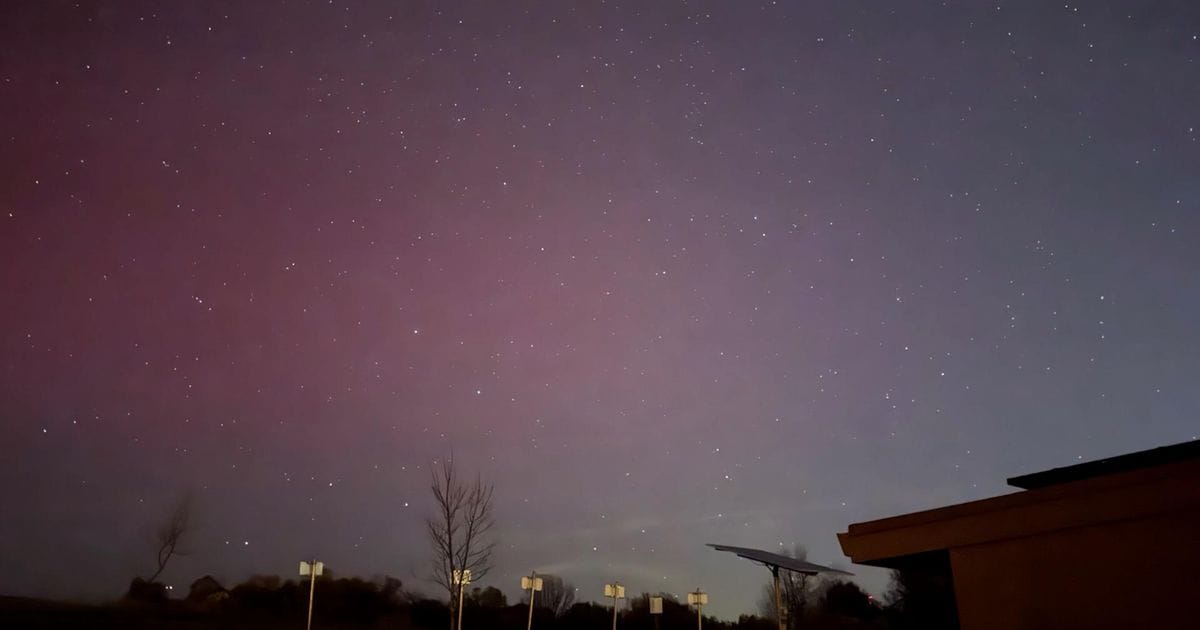
For residents accustomed to clear, dark skies, the sight was breathtaking—a sudden canvas painted with hues of green, red, and purple where only stars usually reign. The aurora borealis, typically confined to the far northern reaches, unexpectedly made an appearance on the horizon of places like Utah.
This dazzling display was not a fluke of local weather but a direct consequence of powerful activity erupting from the sun, validating alerts that warned of a significant cosmic event headed directly for Earth.
The Storm Arrives Stronger and Sooner
The initial forecasts for the solar event were revised sharply upward. Update: A G4 (Severe) geomagnetic storm level was officially reached at 08:23 UTC (3:23 am EST). This level of geomagnetic disturbance signifies a substantial impact on Earth’s magnetic field.
As the event progressed, the intensity held. A second peak confirming the severity was logged later at 10:21 UTC (05:21 EST). These confirmed readings signify that the solar energy bombarding our planet was significant enough to cause widespread effects.
Coronal Ejection Beats the Clock
The catalyst for these intense displays was a massive eruption known as a Coronal Mass Ejection (CME). These colossal bubbles of plasma and magnetic field erupt from the sun’s outer layer, traveling millions of miles through space.
Reports indicated that the CME arrived earlier and significantly stronger than initially predicted. Around sunset on Monday, the effects began to manifest, catching many observers off guard but delivering a spectacular show.
Quantifying the Impact: The Kp Index
Scientists use the planetary index, abbreviated as Kp (derived from its German equivalent), to measure the level of geomagnetic activity. A higher Kp number indicates a stronger storm and aurora visibility at lower latitudes.
The content confirms that the Kp index initial topped out, reflecting the strength of the incoming solar wind as it interacted violently with the Earth’s magnetosphere. This interaction excites the gases in the upper atmosphere, producing the visible light show.
A Rare Sight in the Beehive State
In Salt Lake City, Utah—the Beehive State—the aurora borealis provided a memorable spectacle. Witnesses described seeing waves of color sweep across the sky, turning the typically familiar nocturnal landscape into something otherworldly.
The presence of reds and purples alongside the dominant greens suggests that the energy from the storm penetrated deeper into the atmosphere, exciting nitrogen and oxygen molecules at various altitudes.
“Seeing the aurora here is like catching lightning in a bottle twice. It’s a humbling reminder of the massive, invisible forces shaping our environment, even from 93 million miles away.”
The Double-Edged Sword of Solar Activity
While the visible aurora is a magnificent reward for sky-gazers, severe geomagnetic storms carry risks. The input data hints at the disruptive nature of the energy flow, noting that “Positive particles prove negative for aurora sightings in NC” (North Carolina).
This phrasing, though slightly cryptic, often refers to the orientation of the interplanetary magnetic field (IMF) carried by the CME. When the IMF is oriented southward (opposite to Earth’s magnetic field), it couples much more effectively, leading to stronger geomagnetic activity and better aurora visibility at lower latitudes.
Conversely, the comment about positive particles suggests that certain magnetic orientations, while still energetic, might not couple as efficiently to produce the strongest visual displays, or perhaps this specific orientation caused issues for ground-based systems or specific atmospheric excitation patterns observed in that region.
Navigating the Space Weather Maze
The journey from the solar surface to Earth is fraught with scientific observation and prediction modeling. Events like this demand rapid communication between space weather centers and the public, especially for those managing critical infrastructure.
Severe G4 storms can stress power grids, disrupt satellite communications, and affect high-frequency radio transmissions used in aviation and maritime operations. Therefore, the issuance of the alert itself is a crucial public service.
The rapid arrival and enhanced strength of this particular CME underscores the dynamic and sometimes unpredictable nature of our nearest star. Every solar maximum cycle brings new challenges and new opportunities for awe-inspiring celestial events.
As space weather forecasters continue to monitor the aftermath of the primary impact, the world watches, reminded that the delicate balance supporting our technological society is perpetually influenced by the immense power of the sun.