
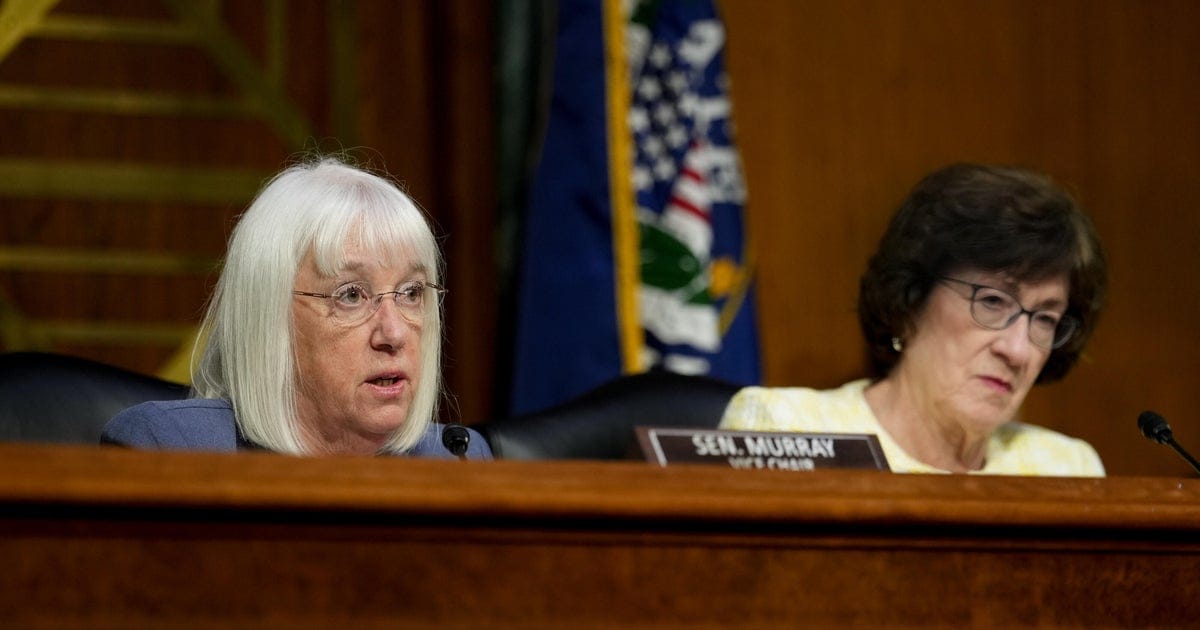
CONTEXTUAL ANALYSIS: Congress Secures Critical Funding Amidst Deadline Pressure
In a familiar high-stakes legislative maneuver, leaders in the U.S. Congress announced the successful passage of a $1.2 trillion funding deal for key federal agencies, narrowly averting a partial government shutdown. The agreement, forged under intense deadline pressure, encompasses appropriations for the Department of Homeland Security (DHS), the Pentagon (Department of Defense), and a wide array of domestic agencies. This development follows the release of final measures by lawmakers, concluding a prolonged period of budget negotiations that frequently flirted with fiscal cliffs.
The deal represents a significant milestone in the often-contentious annual budget process, ensuring operational continuity for vital government functions. For weeks, the specter of a shutdown loomed over Washington, threatening to disrupt essential services, furlough federal employees, and inject further uncertainty into the nation’s economic outlook. The eleventh-hour agreement allows these critical agencies to maintain their operations without interruption, at least for the current fiscal year segment.
Why This Matters: Stability Amidst Persistent Fiscal Challenges
The avoidance of a government shutdown carries profound implications, both domestically and internationally. A shutdown would have directly impacted millions of federal employees and countless citizens reliant on government services, from passport processing and environmental protections to national defense and border security. The consistent pattern of legislative brinkmanship around budget deadlines highlights a deeply entrenched challenge in American governance.
For the Department of Homeland Security, sustained funding is crucial for border protection, cybersecurity initiatives, immigration services, and disaster response. Any disruption to DHS operations could have immediate and significant consequences for national security and public safety. The Pentagon’s funding ensures the continued readiness of the U.S. military, supporting defense operations globally, troop pay, equipment maintenance, and strategic development. Given the complex geopolitical landscape, the stability of the Department of Defense budget is paramount for both national and international security.
Beyond these two major departments, a vast array of domestic agencies, responsible for everything from public health and scientific research to infrastructure projects and social safety nets, would have faced severe curtailment. A funding lapse would not only halt critical programs but also erode public trust in government’s ability to fulfill its basic responsibilities. The successful passage of this funding bill, therefore, provides a measure of stability and predictability, allowing these agencies to plan and execute their missions effectively.
BROADER IMPLICATIONS: A Recurring Cycle of Fiscal Governance
The latest budget resolution is not an isolated event but rather a recurring symptom of broader trends in American politics and fiscal policy. The frequent need for last-minute deals to avert shutdowns reflects deep ideological divisions within Congress regarding spending priorities, the role of government, and the nation’s fiscal trajectory. This pattern of governance by crisis has become a defining characteristic of recent legislative sessions, often leaving the public and financial markets in a state of unease.
The Economic Ripple Effect of Uncertainty
Even the threat of a government shutdown can have tangible economic consequences. Businesses that contract with the federal government face uncertainty, potentially delaying investments or hiring decisions. Consumer confidence can waver, and financial markets often react negatively to the prospect of instability in Washington. When shutdowns do occur, the impact is more direct, with furloughed workers losing pay, federal services grinding to a halt, and economic growth experiencing a measurable, albeit often temporary, drag.
Economists have repeatedly warned that the cumulative effect of these repeated budget impasses can undermine long-term economic planning and diminish the United States’ standing as a stable investment environment. The ability of the world’s largest economy to consistently fund its operations is a key indicator of its reliability. The $1.2 trillion deal, while a relief, does little to address the underlying structural issues that lead to these perpetual funding battles.
Political Polarization and Legislative Gridlock
The challenges in reaching budget agreements are deeply intertwined with the increasing political polarization within Congress. Disagreements often extend beyond simple budgetary figures to fundamental questions about government spending, national debt, and the direction of public policy. Hardline stances by different factions can make compromise exceedingly difficult, transforming the appropriations process into a high-stakes political battleground.
The reliance on omnibus bills—large legislative packages that combine multiple appropriations bills into one—has become a common tactic to overcome gridlock. While efficient in avoiding multiple shutdown threats, this approach often leaves little room for individual debate or amendments on specific agency budgets. It’s a testament to the legislative pressures, often culminating in leaders crafting deals behind closed doors to avoid a complete collapse of government funding.
Historical Context of Government Shutdowns
The U.S. has a history of government shutdowns, particularly since the 1980s. Notable examples include the 1995-96 shutdowns under President Clinton, which lasted a combined 27 days, and the 2013 shutdown under President Obama, which lasted 16 days. More recently, the 2018-19 shutdown, primarily over border wall funding, became the longest in U.S. history, extending for 35 days and affecting hundreds of thousands of federal workers.
Each shutdown, regardless of its duration or immediate cause, serves as a stark reminder of the unique design of the U.S. appropriations process. Without congressional agreement on annual spending, the government lacks the legal authority to spend money, leading to a cessation of non-essential services. The constant threat, and occasional reality, of these shutdowns underscores a systemic vulnerability in the nation’s fiscal governance.
LOOKING AHEAD: Navigating Future Fiscal Hurdles
While the immediate crisis has been averted with the $1.2 trillion funding package, this resolution is often a temporary reprieve in the ongoing saga of federal budgeting. The U.S. fiscal year begins on October 1st, and budget negotiations are typically a continuous process. This latest deal might only cover a portion of the fiscal year, or it might be a second tranche of funding following an earlier partial agreement, indicating that another major budget debate could be on the horizon.
The Path Forward: Sustained Dialogue and Compromise
The challenge for Congress and the administration will be to transition from crisis management to sustainable fiscal planning. This requires a willingness to engage in sustained dialogue, seek common ground, and prioritize the nation’s long-term interests over short-term political gains. Addressing the fundamental disagreements on spending, revenue, and national debt will be crucial for breaking the cycle of last-minute deals and shutdown threats.
Furthermore, the appropriations process itself could benefit from reforms aimed at promoting transparency, predictability, and bipartisan cooperation earlier in the legislative calendar. Such reforms could help rebuild public confidence in the government’s ability to manage its finances responsibly and effectively.
Impact on Public Perception and Global Standing
The repeated near-misses of government shutdowns take a toll on public perception of Washington’s effectiveness. Frustration with legislative gridlock and political maneuvering can deepen cynicism about democratic institutions. Internationally, the perception of fiscal instability can impact global markets and the confidence of allies and adversaries alike in the reliability of U.S. leadership.
The securing of the $1.2 trillion funding deal is undoubtedly a relief, preventing immediate disruption. However, it also serves as a potent reminder of the fragility inherent in the current political climate surrounding fiscal governance. The true measure of success will be whether this relief paves the way for a more stable and predictable approach to budgeting in the future, rather than simply resetting the clock for the next showdown.
Photo by 1778011 on Pixabay.