Mumbai’s Political Tides Turn: The Battle for India’s Richest Civic Body
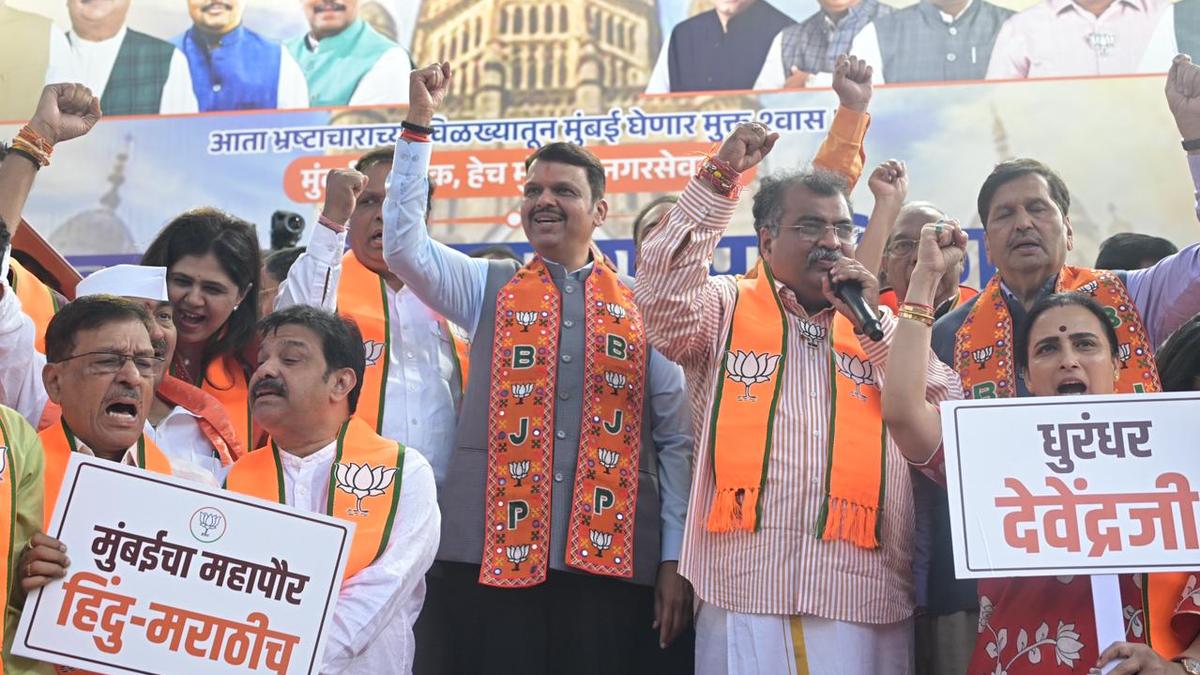
In the bustling heart of India’s financial capital, the air on January 16, 2026, was thick with anticipation, then quickly, with the weight of a new political reality. Across Maharashtra, and particularly within the high-stakes Brihanmumbai Municipal Corporation (BMC), the votes cast in the 2026 civic elections delivered a resounding and undeniable verdict. This electoral exercise, encompassing 27 civic bodies, has significantly reshaped the political landscape, handing a clear mandate to the BJP-led Mahayuti alliance.
The outcome solidifies the position of the ruling coalition, a development underscored by Union Minister Nitin Gadkari’s swift congratulatory message to Chief Minister D (name truncated in reports) on Friday, January 16. While final tallies from all 2,869 seats across the state’s municipal corporations and councils were still being declared, with results for 2,784 seats already out, the trends painted a picture of BJP dominance, securing 1,372 seats and asserting its leadership across Maharashtra.
The Jewel in the Crown: Why BMC Matters So Much
To understand the profound implications of these results, one must first grasp the unparalleled significance of the Brihanmumbai Municipal Corporation. Far from a mere local administrative body, the BMC is an economic and political powerhouse, often dubbed India’s richest civic body. Its annual budget frequently surpasses that of several smaller Indian states, underscoring its vast financial autonomy and capacity to influence policy and development within Mumbai.
Controlling the BMC means wielding immense power over critical urban infrastructure, public services, and significant development projects in a city that is not only India’s financial nerve center but also a global metropolis. From regulating building codes and managing public transport to overseeing sanitation, water supply, and health services for over 20 million residents, the BMC’s jurisdiction touches every aspect of Mumbaikars’ daily lives. Its influence extends far beyond mere civic administration, acting as a crucial barometer for state and national political sentiment.
Historically, control over the BMC has been a source of immense prestige and a stepping stone for political parties aiming for broader influence in Maharashtra. For decades, it served as the traditional stronghold of the Shiv Sena, a party deeply rooted in Marathi identity and local issues. The shifts within the BMC, therefore, are not just about local governance; they reflect deeper currents in regional politics and national aspirations.
Maharashtra’s Tumultuous Political Landscape
The 2026 civic elections unfolded against a backdrop of one of Maharashtra’s most turbulent political periods in recent memory. The state has witnessed significant realignments and power struggles, most notably the split within the Shiv Sena. This schism saw the emergence of two prominent factions: one led by former Chief Minister Uddhav Thackeray (Shiv Sena – UBT) and the other by current Chief Minister Eknath Shinde, who subsequently aligned with the Bharatiya Janata Party (BJP) and a faction of the Nationalist Congress Party (NCP) to form the ruling Mahayuti alliance.
This political earthquake profoundly impacted the electoral calculus across Maharashtra. The Mahayuti alliance, comprising the BJP, Chief Minister Shinde’s Shiv Sena faction, and Deputy Chief Minister Ajit Pawar’s NCP faction, sought to consolidate its power base and demonstrate public support for its government. For the BJP, these civic polls were a critical opportunity to expand its influence at the grassroots level and affirm its dominant position within the state’s political ecosystem.
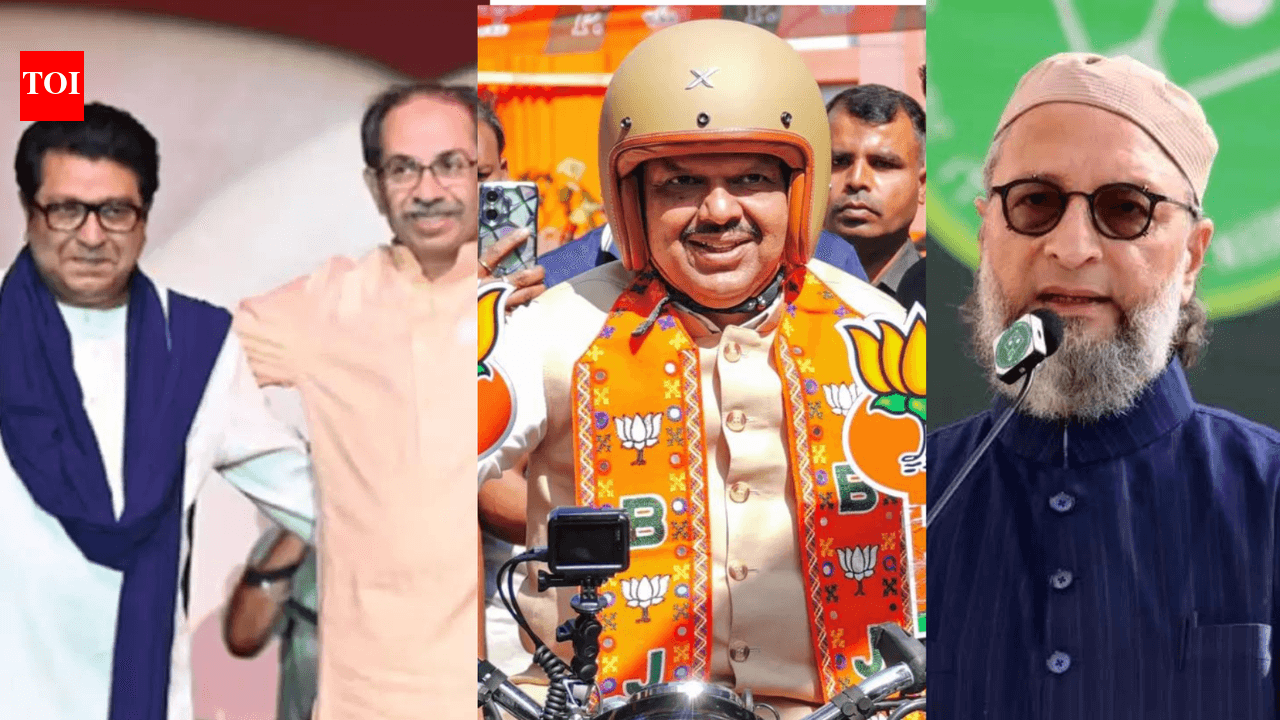
Conversely, the elections represented a crucial test for Uddhav Thackeray’s faction. Having lost control of the state government and the original party symbol, retaining influence in the BMC, a long-held bastion, was paramount for his political survival and credibility. The narratives from the elections suggest a significant setback for Thackeray, as the BJP-Shiv Sena combine (referring to the Mahayuti partners) appears to have taken the lead in the BMC, effectively wresting control from his camp.
The political drama in Maharashtra is a microcosm of broader national trends, where regional parties face increasing pressure from the BJP’s formidable organizational machinery. The state’s diverse population, complex social fabric, and significant economic contribution make its political outcomes keenly observed across India, offering insights into the broader electoral mood and the effectiveness of different political strategies.
The Players and Their Shifting Fortunes
The election results, even in their preliminary stages, highlight distinct trajectories for the major political players. The BJP’s strong performance across the 27 civic bodies, securing over 1,300 seats, is a testament to its organizational strength and the effectiveness of its alliance strategy. This dominance is critical for the party as it prepares for future state assembly and national parliamentary elections, signaling a robust ground game and voter acceptance.
For the BJP, a dominant showing in the civic polls, particularly in the BMC, reinforces its narrative of effective governance and development. It also strengthens the Mahayuti alliance, providing a mandate for its collaborative approach to state administration. The congratulatory message from Union Minister Nitin Gadkari further underscores the national leadership’s satisfaction with the state unit’s performance.
Meanwhile, the implications for Uddhav Thackeray are stark. Losing control of the BMC, a fortress his family’s party had guarded for decades, represents a profound challenge to his leadership and the future of his Shiv Sena (UBT) faction. It forces his camp to re-evaluate its strategy and consider its options in a significantly altered political landscape. His ability to rally his base and carve out a new political identity without the traditional BMC stronghold will be under intense scrutiny.
Beyond the two dominant narratives of BJP’s rise and Thackeray’s challenge, the elections also saw other parties making noteworthy strides. The All India Majlis-e-Ittehadul Muslimeen (AIMIM) managed to expand its footprint in various pockets, indicating a growing influence among certain demographic segments. This expansion reflects a broader trend of regional parties and identity-based politics finding resonance in specific constituencies, adding another layer of complexity to Maharashtra’s electoral map.
The Indian National Congress, despite facing a formidable challenge from the ruling alliance, also managed to find a foothold in these elections. While not achieving widespread dominance, its ability to secure certain seats and maintain a presence is crucial for its long-term strategy to rebuild and regain relevance in Maharashtra. For the Congress, even modest gains in local elections are vital signs of life, offering hope for a potential resurgence in future electoral battles.
Beyond Mumbai: The Wider Maharashtra Canvas
While the Brihanmumbai Municipal Corporation polls garnered the most attention due to Mumbai’s stature, the overall Maharashtra civic elections across the 27 bodies provide a comprehensive snapshot of the state’s political leanings. The BJP’s victory in 1,372 out of 2,784 declared seats indicates a broad-based acceptance across urban and semi-urban centers. This extensive reach is critical for a party aiming for holistic political control and reflects a successful campaign strategy that resonated with voters beyond metropolitan boundaries.
The sheer scale of these elections, with thousands of seats contested, means that local issues, candidate personalities, and micro-level grievances played as significant a role as state-level political narratives. However, the overarching trend points to a consolidation of power around the Mahayuti, suggesting that voters have largely endorsed the current state government’s direction and leadership.
The results from the remaining seats, once declared, are unlikely to fundamentally alter the overall picture of BJP and Mahayuti’s dominance. They will, however, provide more granular insights into regional variations and the specific challenges or opportunities for opposition parties like AIMIM and Congress in different parts of the state.
Looking Ahead: Implications for Future Political Battles
The Maharashtra civic election results of 2026 are more than just a commentary on local governance; they are a significant precursor to upcoming state assembly and national parliamentary elections. The momentum gained by the BJP and the Mahayuti alliance will undoubtedly fuel their campaigns for the next legislative polls, presenting them as a cohesive and popular political force.
For the opposition, particularly Uddhav Thackeray’s faction, these results necessitate a period of introspection and strategic recalibration. The fight for control over the BMC was not just about administration; it was about identity, legacy, and political survival. His future moves, including potential alliances or a renewed focus on grassroots mobilization, will be closely watched. The ability of the opposition to unite and present a credible alternative will be crucial in the face of the Mahayuti’s growing strength.
Moreover, the performance of AIMIM and Congress, even in limited capacities, indicates that while the political narrative is dominated by the ruling alliance, diverse political voices continue to find space. These smaller gains can become crucial leverage points in future coalition politics, shaping the contours of state and national elections to come.
“Local elections are the heartbeat of democracy. They reveal the pulse of the people, their aspirations, and their discontent, often painting the clearest picture of a nation’s political trajectory before the grander stages take center stage.”
As the dust settles on the 2026 Maharashtra civic polls, the message is clear: the political tides in one of India’s most crucial states are shifting decisively. The BJP-led Mahayuti has cemented its position, leaving opponents to navigate a challenging new landscape as India marches towards its next major electoral cycles.