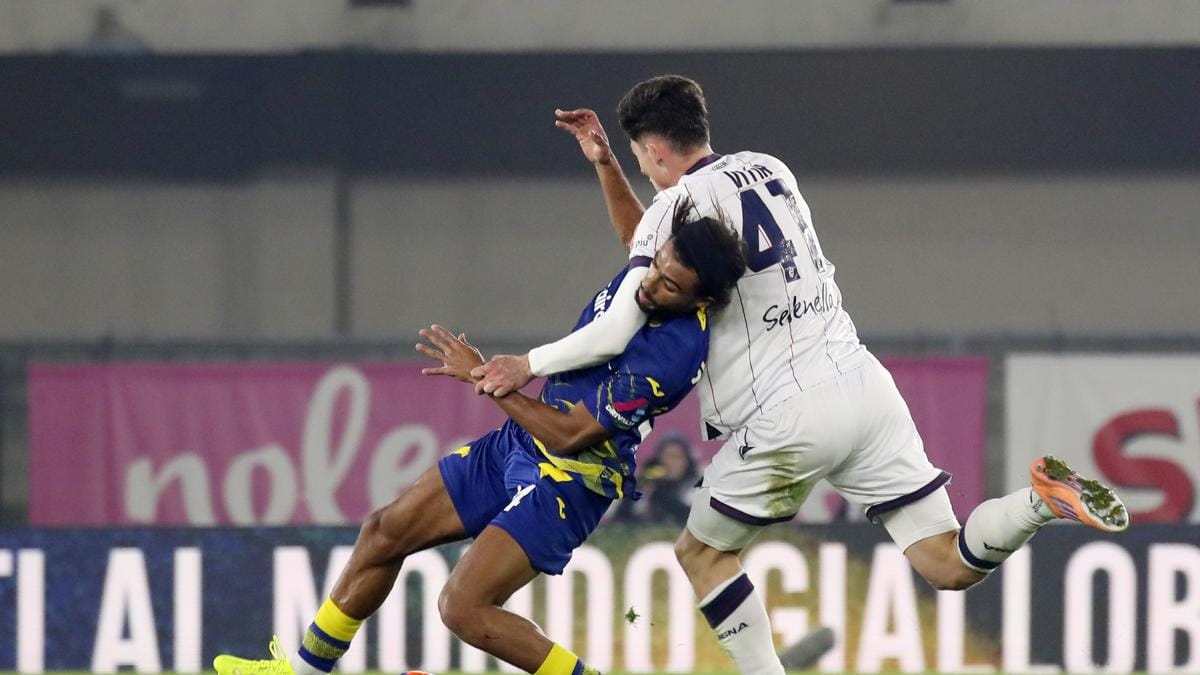
The atmosphere crackled under the lights, a familiar tension settling over the pitch as Hellas Verona pushed desperately for a breakthrough. Every pass, every tackle, every charge towards goal carried the weight of a Serie A encounter where time was a dwindling commodity. With the scoreline standing at Verona 1, Bologna 3, the home side found themselves in a precarious position, battling not just the formidable opponents but also the ticking clock and the immense pressure of securing crucial points in Italy’s top flight.
This pivotal Serie A Enilive 2025/26 fixture saw Bologna firmly in control for much of the game, building a significant 1-3 advantage that highlighted their tactical discipline and clinical execution. For Verona, however, the narrative was one of relentless effort and a quest for a dramatic turnaround. Coach Zanetti, acutely aware of the urgency, had already deployed his strategic reinforcements, bringing in talents like Gagliardini and Giovane, hoping their fresh legs and attacking prowess could ignite a late surge capable of overturning the deficit. These changes were a clear signal: Verona was not yielding, not yet.
A Battle of Will and Skill
The beautiful game often hinges on moments of individual brilliance or collective resolve, and this match was no exception. Verona, trailing by two goals, demonstrated an unwavering commitment to attack. Among the most promising, and indeed most visually striking, attempts came from Giovane. With a keen eye for goal and an audacious spirit, he first tried a direct shot, only to see it expertly blocked by a resolute Bologna defense. This moment encapsulated the challenge Verona faced: creating opportunities was one thing, converting them against a well-drilled opponent was another entirely.
Undeterred by the initial setback, Giovane’s determination shone through again. Moments later, finding himself in a challenging position, he opted for an acrobatic overhead kick – a “rovesciata,” as it’s known in Italian football – a display of flair and ambition. While spectacular in its conception, the shot ultimately sailed wide without truly testing Bologna’s goalkeeper, Ravaglia. The effort, nonetheless, was a testament to Verona’s fighting spirit, a collective refusal to surrender despite the odds stacked against them. Every such attempt, even those that didn’t hit the mark, served to keep the Bologna defense on its toes and the home crowd hoping for a miracle.
Verona’s Offensive Forays
The Veronese side continued to press, their attacking intent evident in every movement. Another notable instance of their offensive push was a “sforbiciata volante,” a flying scissor kick, aimed at the Bologna goal. Such attempts are often born out of desperation but also highlight the players’ dedication to exploring every possible avenue for a goal. These high-risk, high-reward maneuvers are a staple of football when a team is chasing the game, embodying the desire to create something out of nothing. They are designed not just to score, but to inject energy into the team and electrify the supporters, changing the emotional tempo of the match.
The sheer volume of Verona’s attempts, even if unrewarded, painted a picture of a team leaving everything on the pitch. Each blocked shot, each near miss, each acrobatic effort underscored the relentless nature of their pursuit. The strategic introduction of players like Giovane and Gagliardini by coach Zanetti was clearly an effort to inject fresh impetus and a new dimension into their attack, aiming to unlock Bologna’s steadfast defense. These substitutions are critical junctures in any football match, offering a manager the chance to recalibrate tactics, bolster weaknesses, or exploit perceived vulnerabilities in the opposition.
Bologna’s Calculated Response
On the other side of the pitch, Bologna, with their commanding 1-3 lead, faced a different kind of pressure: the psychological challenge of holding onto their advantage against a resurgent opponent. Goalkeeper Ravaglia, despite Giovane’s ambitious rovesciata not truly troubling him, remained vigilant, a calm and assured presence between the posts. His role became increasingly crucial as Verona intensified their offensive efforts, requiring sharp focus and excellent communication with his defensive line to thwart any potential threats.
Bologna’s coach also recognized the need for tactical adjustments to counter Verona’s mounting pressure. At the 66-minute mark, a significant change was made for Bologna: midfielder Pobega was withdrawn, and in came Moro. This substitution was likely a strategic move, perhaps to bring on a player with different attributes – fresh legs, a change in defensive solidity, or a different attacking impetus – to help maintain control of the midfield or provide an outlet in attack. Earlier discussions around the match also indicated other potential substitutions for Bologna, with Immobile and Moro replacing Castro and Pobega, suggesting a comprehensive approach to managing the squad and adapting to the flow of the game.
The Art of Substitution
Substitutions in football are far more than just swapping players; they are strategic decisions that can fundamentally alter the course of a match. For a team holding a lead, they often involve reinforcing the defense, introducing players with strong defensive work rates, or bringing on an attacker who can exploit tiring opposition defenders on the counter. In Bologna’s case, the introduction of Moro for Pobega at 66 minutes speaks to a manager’s calculated gamble, aiming to either shore up the defense, refresh the midfield, or provide a new offensive spark that can kill off the game.
The decision to make these changes reflects the fluid nature of top-tier football. Coaches constantly analyze the rhythm of the game, the energy levels of their players, and the tactical approaches of their opponents. A substitution at a crucial moment can disrupt the opposition’s momentum, or conversely, give a struggling team a much-needed shot in the arm. Bologna’s adjustments were made with the clear intention of protecting their valuable lead and ensuring that Verona’s desperate attempts would ultimately prove futile. Their ability to manage the game, even under increasing pressure, would be key to securing all three points.
Serie A: The Unyielding Arena
The backdrop to this intense encounter is the Serie A Enilive 2025/26 season, a league renowned for its tactical sophistication, passionate rivalries, and the sheer drama it consistently delivers. Italian football, often characterized by its defensive astuteness and intricate build-up play, demands absolute concentration and unwavering commitment from all participants. Every match, whether it’s a top-of-the-table clash or a battle for survival, carries significant weight, impacting league standings, European qualification hopes, and the dreaded specter of relegation.
For both Verona and Bologna, every point gained or lost in Serie A is momentous. The league is a relentless marathon, stretching from late summer through to spring, testing the physical and mental fortitude of every squad. Clubs invest heavily in scouting, player development, and coaching expertise, all in pursuit of success in this highly competitive environment. The “formazioni ufficiali” – the official lineups – released before kick-off are always meticulously planned, reflecting weeks of training, tactical briefings, and an understanding of both their own strengths and the opponents’ weaknesses. These lineups are the first strategic salvo fired in the ninety-minute war that follows.
The Broader Context of Italian Football
Serie A is not just a domestic competition; it is a global brand, followed by millions of fans worldwide, especially across Europe. Its rich history is filled with legendary teams, iconic players, and unforgettable moments that have shaped the very fabric of football. The tactical evolution witnessed in Serie A has often set trends for the rest of the footballing world, emphasizing defensive solidity, midfield control, and sophisticated attacking patterns. Teams like Bologna and Verona, while perhaps not always challenging for the Scudetto, are integral parts of this vibrant ecosystem, contributing to the league’s competitive balance and thrilling narratives.
The energy witnessed in the Verona-Bologna match, particularly Verona’s tenacious pursuit of a comeback and Bologna’s disciplined defense of their lead, is typical of what fans have come to expect from Italian football. It’s a game where passion and strategy intertwine, where moments of individual brilliance are often matched by collective resilience. The 2025/26 season promises to be another chapter in this illustrious history, with every fixture offering its own unique story of triumph, despair, and the relentless pursuit of sporting glory.
The Psychology of the Comeback
For Verona, trailing 1-3, the match transitioned into a psychological battle as much as a physical one. The belief that a comeback is possible, even when facing a significant deficit, is a powerful motivator. Coaches often speak of “momentum” in football, that intangible shift in energy that can turn a game on its head. Verona’s continuous attempts, the unrewarded bicycle kicks, the blocked shots, were all part of an effort to build that momentum, to plant seeds of doubt in the minds of the opposition, and to galvanize their own players and supporters.
The decision by coach Zanetti to bring on Gagliardini and Giovane was a clear statement of intent: to go all out for an equalizer, or at least to reduce the deficit. Fresh legs often bring renewed vigor and a different perspective to the field, potentially catching a slightly complacent or tired defense off guard. For Bologna, conversely, the challenge was to remain mentally strong, to avoid errors, and to maintain their defensive shape. The final minutes of such a game are often a true test of nerve, where disciplined play and composure under pressure become paramount to securing the desired outcome.
Looking Ahead: Implications of the Scoreline
A 1-3 scoreline, particularly at this stage of the season, carries significant implications for both clubs. For Bologna, it represents a crucial three points in their Serie A campaign, bolstering their position in the league standings and providing a morale boost. It validates their tactical approach and the effectiveness of their squad management, including timely substitutions. For Verona, while the result is undoubtedly disappointing, the fighting spirit shown, particularly in the latter stages with their intensified offensive efforts, can offer some consolation and a foundation upon which to build for future matches.
The beauty of football lies in its unpredictability and the emotional roller coaster it provides. While the initial facts of the Verona-Bologna match might point to a decisive victory for the visitors, the underlying narrative of perseverance, tactical adjustments, and the sheer will to compete paints a more complete picture. Each game, even those with seemingly straightforward scorelines, is a complex tapestry of human endeavor, strategic foresight, and moments of raw, unbridled passion. It is these elements that ensure the allure of Serie A, and indeed football itself, remains eternal.
Ultimately, the ebb and flow of a football match, the moments of despair and surges of hope, culminate in a final whistle that etches the result into the season’s record. What truly endures, however, is the memory of the effort, the tactical duels, and the unyielding spirit displayed by all involved – a testament to the enduring appeal of the beautiful game.