Regional Infrastructure Resilience: The January 13 Traffic Disruptions
In the heart of the Appalachian region, the morning of January 13, 2026, brought a series of infrastructure challenges that underscored the delicate balance of rural transportation networks. Two separate incidents, one planned for maintenance and another caused by a vehicular accident, effectively severed key transit arteries in Johnson County, Kentucky, and Barboursville, West Virginia. These events, while localized, serve as a microcosm for the broader challenges facing regional connectivity in the United States.
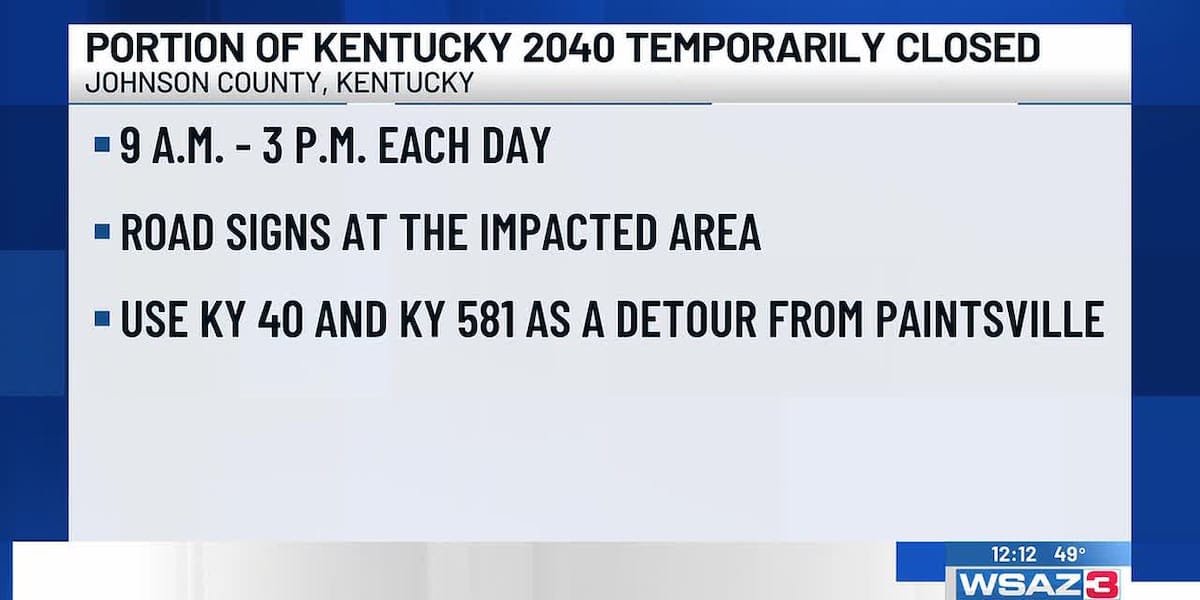
In Johnson County, authorities announced the temporary closure of a significant portion of Kentucky 2040. The closure, which began midday on Tuesday, is scheduled to extend through the following day. While such closures are often necessitated by routine maintenance or preemptive repairs, they highlight the critical role that secondary state routes play in the daily commute and logistical operations of rural communities. For many residents, these routes are not merely paths of convenience but essential lifelines for reaching employment hubs and medical services.
The Impact of Utility Infrastructure on Road Safety
Simultaneously, in Barboursville, West Virginia, a more sudden disruption occurred on Heath Creek Road. A driver collided with a power pole during the morning hours, resulting in an immediate road closure. This incident emphasizes a recurring theme in modern infrastructure management: the vulnerability of the power grid to vehicular incidents. When a utility pole is compromised, the immediate concern shifts from traffic management to public safety, as live wires and structural instability pose significant risks to both responders and the public.
The crash on Heath Creek Road demonstrates the immediate ripple effect of utility-related accidents. Beyond the physical blockage of the road, such incidents often trigger localized power outages, disrupting home offices, small businesses, and essential heating systems during the winter months. The coordination between law enforcement and utility providers is a critical component of the recovery phase, requiring specialized equipment and skilled technicians to restore both power and passage.
Why This Matters: The Fragility of Rural Connectivity
The convergence of these events highlights a significant economic and social reality for the Appalachian region. In urban centers, a single road closure often has multiple high-capacity detours. In rural Kentucky and West Virginia, however, the closure of a road like KY 2040 can add significant time and mileage to a journey, affecting everything from school bus routes to the delivery of essential goods. The geographical constraints of the region mean that the redundancy of the road network is often limited.
From a market perspective, these disruptions represent hidden costs in the regional economy. When a logistics provider or a local contractor is forced to reroute, the increase in fuel consumption and labor time directly impacts the bottom line. Over time, frequent disruptions on secondary roads can discourage investment in rural areas, as businesses prioritize locations with more resilient and redundant infrastructure. This makes the maintenance and modernization of these routes a priority for local economic development.
Broader Trends in Infrastructure and Utility Management
The events in Kentucky and West Virginia align with broader national trends regarding aging infrastructure and the need for hardened utility systems. Across the United States, there is an increasing push to relocate utility lines underground or to use more resilient materials for roadside poles to mitigate the impact of vehicular accidents. However, the cost of such upgrades in mountainous, rural terrain is often prohibitive, leading to a reliance on traditional, more vulnerable configurations.
Furthermore, the reliance on local news outlets like WSAZ to disseminate real-time closing information underscores the importance of the digital information ecosystem in public safety. As infrastructure becomes more complex, the ability to provide instant, geolocated updates to residents is essential. This integration of communication technology and physical infrastructure is a key pillar of modern emergency management strategies, ensuring that the public can adapt to disruptions with minimal risk.
Looking Ahead: Investing in Resilient Networks
As we look toward the future of regional transportation, the focus is shifting toward predictive maintenance and smart infrastructure. Sensor-based monitoring of road conditions and utility pole health could eventually allow authorities to intervene before a failure occurs. In the case of Kentucky 2040, data-driven scheduling for closures can help minimize the economic impact by identifying the least disruptive windows for maintenance work.
In the long term, the Bipartisan Infrastructure Law and subsequent state-level initiatives are expected to channel more resources into rural road safety and grid modernization. For communities like those in Johnson County and Barboursville, this means not only repairing existing roads but rethinking the design of the roadside environment to prevent accidents and ensure that when they do occur, the recovery is swift. The goal is a transportation network that is not just a collection of roads, but a resilient system capable of sustaining the economic and social vitality of the region.
Ultimately, the closures on January 13 are a reminder that the infrastructure we often take for granted requires constant vigilance and investment. Whether it is a scheduled repair on a Kentucky highway or an emergency response in West Virginia, the movement of people and power remains the backbone of the American economy. Ensuring the reliability of these systems is a task that requires cooperation across state lines and between public and private sectors.