
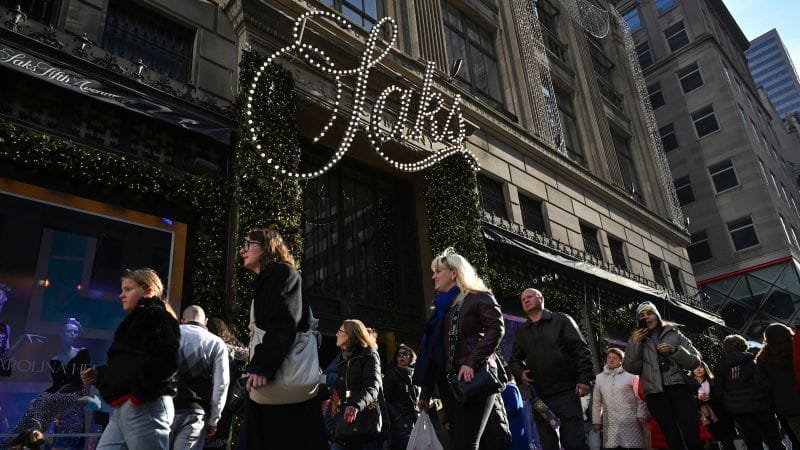
Saks Global, the parent company of the venerable luxury retailer Saks Fifth Avenue, formally initiated bankruptcy protection proceedings late on Tuesday. This significant development underscores the persistent financial headwinds facing traditional department stores, particularly those burdened by substantial debt and navigating a rapidly evolving consumer landscape. The filing comes as the company grappled with a heavy debt load, a situation exacerbated following a strategic acquisition of a rival that ultimately strained its balance sheet.
The move by Saks Global is more than just a corporate restructuring; it is a powerful indicator of the profound shifts occurring across the entire retail ecosystem. Once the epitome of high-end shopping and aspirational luxury, the traditional department store model has been under immense pressure for years. This bankruptcy filing signals that even established luxury players are not immune to the powerful forces of digital transformation, changing consumer expectations, and macroeconomic volatility.
Contextual Analysis: A Luxury Titan Under Pressure
The Immediate News: Saks Global Seeks Protection
The core news is straightforward: Saks Global, the entity overseeing operations for Saks Fifth Avenue, has sought legal protection under bankruptcy statutes. This action is typically pursued when a company faces insurmountable debt obligations and requires a structured legal process to reorganize its finances, renegotiate terms with creditors, and potentially streamline its operations to ensure future viability. For a company of Saks Global’s stature, this decision is not taken lightly and reflects a culmination of financial challenges that have been building over time.
Central to Saks Global’s predicament was a substantial debt load. While the specifics of how this debt accumulated are complex, the company explicitly struggled following a key acquisition of a rival. Such strategic moves, intended to expand market share or consolidate operations, can sometimes backfire, leading to integration issues, unforeseen costs, and a heavier financial burden than anticipated, especially if market conditions deteriorate post-acquisition. The inability to service this debt amid a challenging retail environment proved to be a critical tipping point.
Why This Matters: Cracks in the Luxury Facade
The bankruptcy of Saks Global resonates far beyond the confines of its corporate offices; it sends ripples through the global luxury retail market and the broader economic sphere. Firstly, it highlights the vulnerability of even iconic brands to adverse market conditions and financial mismanagement. Saks Fifth Avenue has long been a symbol of American luxury, known for its curated selection of designer brands and high-touch customer service. Its parent company’s bankruptcy challenges the perception of luxury retail as an unassailable sector.
Secondly, this event underscores the fundamental structural challenges confronting department stores globally. The traditional model, relying on vast physical spaces and a diverse array of brands under one roof, has struggled to adapt to the ascendance of e-commerce, direct-to-consumer (DTC) brands, and a consumer base increasingly prioritizing experiences over mere possessions. Even luxury shoppers, once loyal to flagship stores, are now comfortable buying high-end goods online or directly from brand boutiques, bypassing the traditional department store intermediary.
Moreover, the heavy debt load cited by Saks Global is a familiar narrative in the retail sector, particularly for companies that have undergone private equity buyouts or aggressive expansion through acquisitions. Such strategies often leave companies with significant interest payments that become unsustainable during economic downturns or periods of sluggish sales. This case serves as a stark reminder of the risks associated with highly leveraged growth strategies in a volatile market.
Broader Trends: A Shifting Retail Paradigm
The E-commerce Tsunami and Digital Disruption
The digital revolution has fundamentally reshaped consumer behavior. Online shopping offers unparalleled convenience, selection, and often competitive pricing. While luxury retail was initially seen as more resistant to this shift due to the experiential aspect of high-end shopping, even this segment has embraced digital transformation. Luxury brands now heavily invest in sophisticated e-commerce platforms, personalized online experiences, and digital marketing, often competing directly with their traditional retail partners.
For department stores like Saks Fifth Avenue, this means a significant erosion of their traditional foot traffic. Consumers now browse online, compare prices effortlessly, and may only visit physical stores for specific items or services. The challenge lies in creating a compelling reason for customers to physically step into a store, offering something beyond what can be found with a few clicks.
Changing Consumer Preferences: Beyond the Transaction
Modern consumers, particularly younger generations, are looking for more than just products; they seek experiences, authenticity, and alignment with their values. This trend has pushed retailers to rethink their physical spaces, transforming them into experiential hubs rather than just transactional points. Luxury shoppers, in particular, expect a high level of personalization, bespoke services, and unique events.
The shift towards sustainability, ethical sourcing, and transparency also plays a crucial role. Brands and retailers that can demonstrate a commitment to these values often resonate more strongly with contemporary consumers. Department stores, with their complex supply chains and vast inventories, sometimes struggle to adapt quickly enough to these evolving ethical demands, potentially alienating a segment of their target market.
Economic Headwinds and Luxury Resilience
While the luxury market is often considered more resilient during economic downturns, it is not immune. Periods of high inflation, rising interest rates, and general economic uncertainty can lead even affluent consumers to tighten their belts or become more discerning in their luxury purchases. Global economic instability, supply chain disruptions, and geopolitical tensions can also impact the availability and pricing of high-end goods, further complicating the operational landscape for luxury retailers.
The post-pandemic boom in luxury spending, fueled by pent-up demand and increased savings for some segments, has begun to normalize. As discretionary spending patterns return to pre-pandemic levels or even contract in certain areas, retailers like Saks Global face a tougher battle to maintain sales volumes and profit margins, especially when burdened by significant debt.
The Weight of Debt: A Common Retail Foe
Saks Global’s heavy debt load is a cautionary tale that echoes across the retail industry. Many legacy retailers, struggling with declining sales and increased competition, have been acquired by private equity firms or have taken on significant debt to fund expansions or modernizations. While debt can fuel growth, it also creates fixed financial obligations that can quickly become overwhelming when revenues falter.
The inability to service debt starves a company of capital that could otherwise be invested in innovation, store improvements, e-commerce development, or marketing. This creates a vicious cycle where underinvestment leads to further declines in competitiveness, exacerbating financial distress. The retail graveyard is littered with companies that succumbed to unsustainable debt structures.
Looking Ahead: The Path Through Bankruptcy and Beyond
The Bankruptcy Process: Reorganization and Restructuring
Filing for bankruptcy protection, typically under Chapter 11 in the U.S., allows a company to continue operating while it develops a plan to repay its debts and restructure its business. This process involves negotiating with creditors, potentially shedding unprofitable assets or store locations, and streamlining operations. For Saks Global, this could mean significant changes to its business model, its store footprint, and its financial structure.
The goal is to emerge from bankruptcy as a healthier, more financially stable entity. This often involves reducing debt, securing new financing, and refocusing on core strengths. However, the process is complex, costly, and its outcome is never guaranteed. It often entails tough decisions, including potential job losses, store closures, and renegotiated contracts with suppliers and landlords.
The Future of Saks Fifth Avenue: A Test of Resilience
The fate of the Saks Fifth Avenue brand itself will be a key focus. While its parent company is in bankruptcy, the brand’s equity and customer loyalty remain valuable assets. The bankruptcy process will likely involve strategic decisions to either divest parts of the business, attract new investment, or dramatically reinvent its offering to compete in the modern luxury market.
For Saks Fifth Avenue to thrive post-bankruptcy, it will need to accelerate its transformation into a truly omnichannel retailer, seamlessly integrating its physical and digital presence. This means investing in personalized shopping experiences, innovative store concepts, and leveraging data to understand and anticipate customer needs. The focus must shift from simply selling products to curating a unique luxury lifestyle experience that justifies its premium positioning.
Implications for the Broader Market
The Saks Global bankruptcy serves as a warning shot to other luxury retailers and traditional department stores. It reinforces the urgent need for innovation, agility, and prudent financial management. Companies that fail to adapt to changing consumer behaviors, manage their debt effectively, and create compelling propositions in both physical and digital realms risk similar fates.
"The landscape of luxury retail demands more than just iconic branding; it requires relentless adaptation and a robust financial foundation to withstand the pressures of a dynamic global market." — Market Analyst Insight
This event could also prompt a broader re-evaluation by investors and lenders regarding the viability of traditional retail models, particularly those carrying heavy debt loads. It may accelerate consolidation in the luxury market, as stronger players look to acquire distressed assets or partnerships form to weather the storm.
A Look Ahead: Reinvention or Retreat?
The coming months will be critical for Saks Global and Saks Fifth Avenue. The bankruptcy proceedings will determine the company’s financial future and its operational structure. The outcome will offer valuable insights into the resilience of luxury brands and the efficacy of traditional retail models in an increasingly digital and experience-driven world.
The story of Saks Global is a microcosm of the larger narrative unfolding across retail: a continuous battle for relevance, profitability, and survival. Success will hinge on the ability to shed legacy burdens, embrace innovation, and reconnect with a discerning consumer base that expects nothing less than excellence, both in product and experience. The question remains whether this luxury giant can reinvent itself to reclaim its former glory or if its struggles signal a permanent shift in the retail hierarchy.
Photo by chowbins on Pixabay.