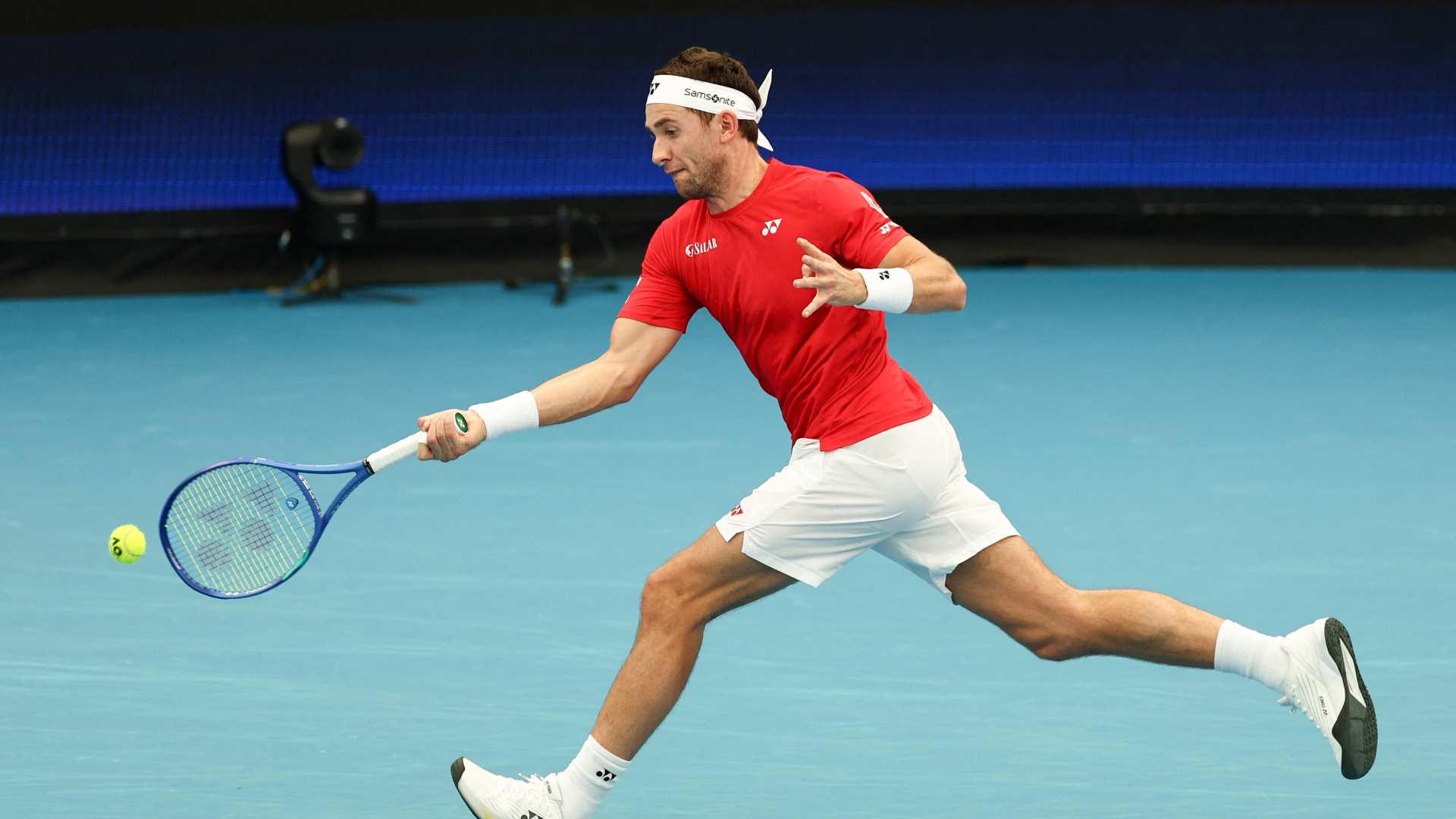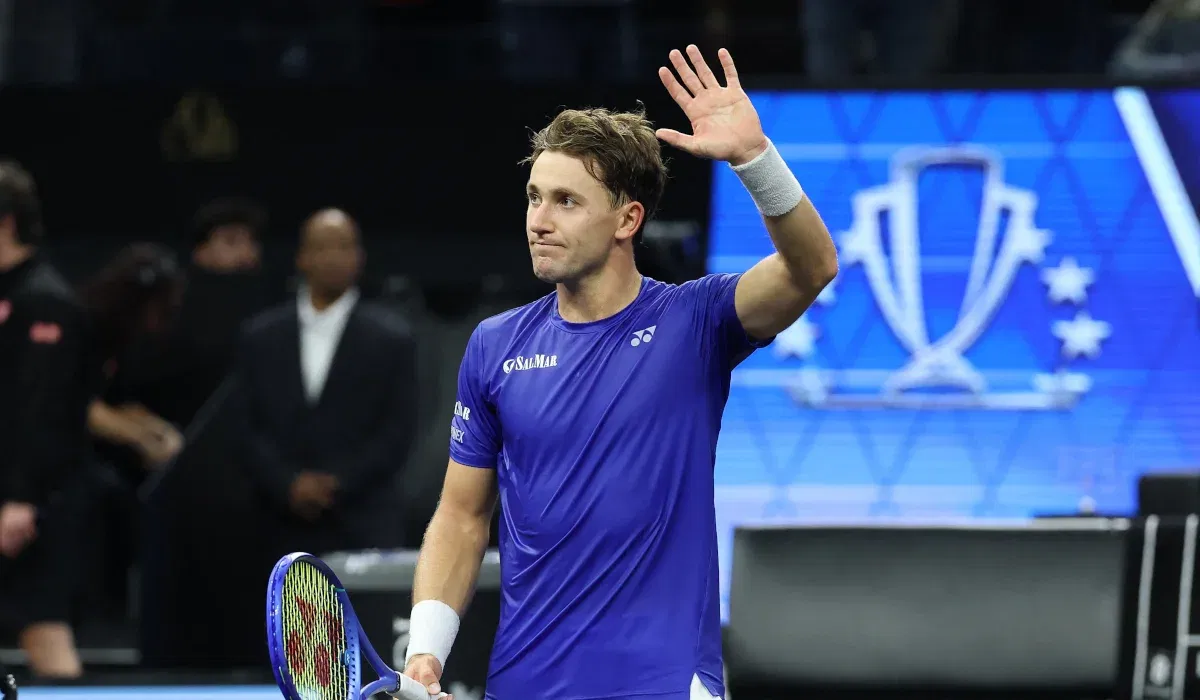
AUCKLAND, New Zealand – Casper Ruud, once ranked as high as world No. 2, is acutely aware that past achievements hold diminished currency in a men’s tennis landscape being rapidly reshaped by a new wave of fearless shotmakers. The Norwegian veteran has publicly acknowledged the imperative to evolve his game to effectively counter the dominant rise of talents such as Carlos Alcaraz and Jannik Sinner, signaling a proactive approach to remain at the sport’s summit.
Ruud’s recognition of this shift comes early in his season, having initiated his 2024 campaign with two matches at the United Cup before heading to Auckland to finalize his preparations for the demanding tour ahead. His statements underscore a deep understanding of the current competitive environment, where stagnation is not an option for those aspiring to major titles.
The Shifting Sands of Men’s Tennis
The men’s professional tennis circuit, particularly the PIF ATP Rankings, has witnessed a seismic shift in recent years. For nearly two decades, the sport was largely defined by the ‘Big Three’ – Roger Federer, Rafael Nadal, and Novak Djokovic. Their unparalleled consistency, distinct styles, and sustained dominance set a remarkably high bar, creating an era where few others could consistently break through to Grand Slam glory or the very top of the rankings.
However, as Federer has retired and Nadal manages his twilight years with injuries, a power vacuum has emerged, quickly filled by a new generation of supremely talented and aggressive players. This transition has been faster and more impactful than many anticipated, fundamentally altering the tactical and physical demands required to succeed at the highest level.
The Alcaraz-Sinner Generation: A Paradigm Shift
Casper Ruud explicitly points to the ‘Alcaraz-Sinner generation’ as the benchmark for this new era, and for good reason. Carlos Alcaraz, the young Spaniard, exploded onto the scene with a dynamism and all-court game that defied his age. His ability to hit winners from anywhere on the court, combine delicate drop shots with thunderous forehands, and move with unmatched athleticism has already earned him multiple Grand Slam titles and the world No. 1 ranking.
Jannik Sinner, the Italian prodigy, represents another facet of this new wave. His relentless, aggressive baseline game, characterized by immense power off both wings and a significantly improved serve, has seen him ascend rapidly. Sinner’s mental fortitude under pressure and his capacity to elevate his game in crucial moments have marked him as a legitimate contender for every major title. Together, Alcaraz and Sinner embody a style of play that is highly physical, ultra-aggressive, and mentally resilient, forcing opponents to adapt or be left behind.
Beyond these two, a cohort of other young players – including Holger Rune, Ben Shelton, Lorenzo Musetti, and Felix Auger-Aliassime, among others – also contribute to this intense competitive landscape. They bring diverse skill sets but share a common thread: an unapologetic approach to taking the ball early, hitting with immense pace, and displaying formidable athleticism across the court.
Ruud’s Journey: From Clay King to All-Court Contender
Casper Ruud himself has been a significant figure in men’s tennis for several seasons. Known initially as a clay-court specialist, he showcased his formidable forehand, consistency, and tactical intelligence on the slower surfaces. This expertise led him to multiple ATP Tour titles and, crucially, three Grand Slam finals – two at the French Open (2022, 2023) and one at the US Open (2022).
His ascent to world No. 2 in the PIF ATP Rankings in September 2022 was a testament to his consistent performances and ability to challenge the sport’s elite. However, his journey has also highlighted the challenges of transitioning from a surface-specific threat to an all-court contender capable of winning major titles beyond his favored clay.
Ruud’s game is built on heavy topspin forehands, solid backhands, and excellent movement. While highly effective, the emerging generation often plays with a flatter ball, greater pace on serve, and a willingness to take more risks, sometimes pushing Ruud out of his comfort zone and denying him the rhythm he thrives on.
‘I Must Evolve My Game’: The Imperative for Adaptation
The Norwegian’s assertion, ‘I Must Evolve My Game,’ is not merely a reflection of a personal goal but a strategic necessity. In an era where players are bigger, stronger, and faster, and racket technology allows for unprecedented power and spin, standing still means falling behind. For Ruud, evolution likely involves several key areas.
Studying the Best: Sinner & Fonseca
The fact that Ruud has been ‘studying’ the likes of Sinner and João Fonseca is particularly telling. Sinner, as mentioned, embodies the aggressive, modern baseline game. Ruud might be analyzing Sinner’s shot selection, his ability to absorb pace and redirect it with interest, his improved serve, and his strategic court positioning. Sinner’s relentless hitting forces opponents into defensive postures, an attribute Ruud might seek to integrate more consistently into his own play.
João Fonseca, a promising young Brazilian, represents the next wave of talent, brimming with youthful fearlessness and an all-court game that often surprises opponents. Studying Fonseca could indicate Ruud’s interest in understanding the mindset of unburdened aggression, the willingness to attempt audacious shots, and the seamless transition between offense and defense that characterizes emerging stars who have nothing to lose.
This ‘studying’ goes beyond mere observation; it’s a deep dive into the tactical and technical blueprints of those who are currently setting the pace. It suggests a willingness to deconstruct and reconstruct elements of his own game to match the intensity and versatility of the top contenders.
Specific Areas for Evolution
For Ruud, evolving his game could involve several tactical and technical adjustments:
- Increased Aggression: While his forehand is a weapon, injecting more pace and a flatter trajectory, particularly on faster surfaces, could make it even more potent.
- Improved Serve: A higher first-serve percentage with increased speed and strategic placement can earn more free points and set up offensive opportunities.
- Backhand Offensive Capabilities: His backhand is solid, but developing more offensive options, especially down the line or cross-court angles, would reduce his predictability.
- Net Play: Modern tennis isn’t just about baseline rallies. Timely approaches to the net, effective volleys, and precise overheads can shorten points and add variety.
- Return of Serve: Neutralizing big serves from aggressive players is crucial. Improving anticipation and depth on returns can put immediate pressure on opponents.
- Physical Conditioning: The demands of the modern game require exceptional endurance and explosive power. Maintaining peak physical condition to sustain long rallies against athletic opponents is non-negotiable.
The Broader Impact on the ATP Tour
Ruud’s introspection is indicative of a broader trend across the ATP Tour. Many established players, even those with considerable success, are confronting the necessity of adaptation. The average age of players at the top is generally decreasing, and the physical requirements are escalating.
Tournaments are now often characterized by unpredictable outcomes, with fewer clear-cut favorites outside the very top echelon. This creates an exciting, dynamic environment for fans but a relentless challenge for the players. The ‘old era’ of tennis, perhaps characterized by more specialized play or a slightly slower pace, is giving way to an all-encompassing athletic and tactical battle on every surface.
The quest for evolution is not unique to Ruud. It is a constant endeavor for any professional athlete aiming for longevity and success. However, for a player who has reached such heights, the willingness to openly acknowledge the need for significant change against a specific generation speaks volumes about the perceived threat and the ambition to remain a central figure in the sport’s narrative.
Looking Ahead: Ruud’s 2024 Season and Beyond
As Casper Ruud continues his early season preparations in Auckland, his focus on evolution sets a clear trajectory for his 2024 campaign. The opening tournaments, particularly the Australian Open, will offer early insights into the fruits of his analytical approach and potential adjustments to his game.
His journey to counter the Alcaraz-Sinner generation will be a compelling storyline, not just for his own career but as a microcosm of the continuous evolution within professional tennis. It highlights that even for those who have reached the pinnacle, learning, adapting, and striving for improvement remains the ultimate challenge and the path to enduring relevance in a relentlessly competitive sport.
The narrative of the ‘old guard’ meeting the ‘new guard’ is a timeless one in sports, and Ruud’s dedication to evolving ensures he remains a crucial part of that unfolding story in men’s tennis.