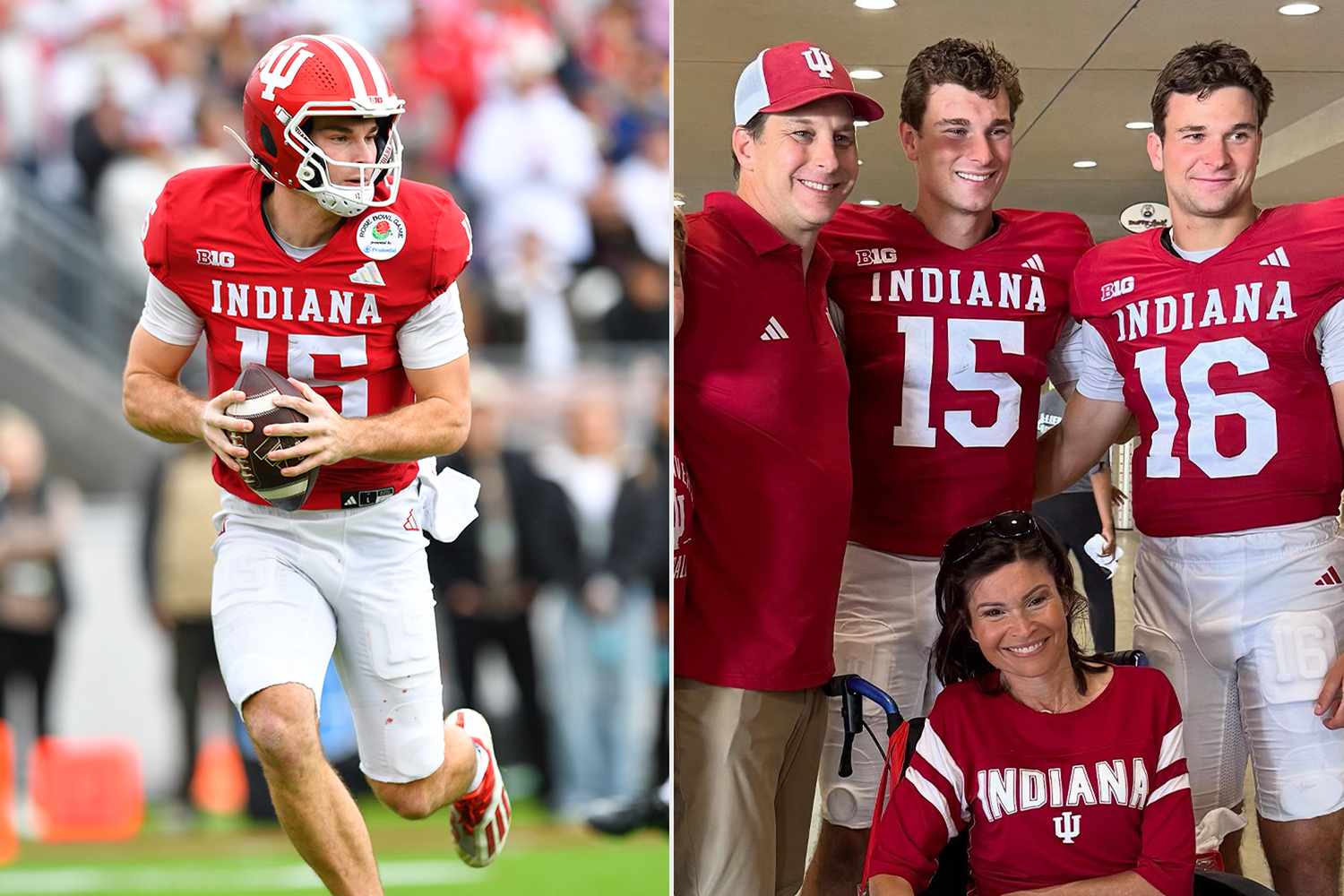
The Cold Strategy of the Mendoza Brothers: A Deep Dive into Indiana’s QB Depth Chart
And so, in a world where college sports are increasingly dominated by corporate interests and multi-million dollar NIL contracts, we are presented with a new twist on an old formula: the family business. But this isn’t a mom-and-pop shop selling artisanal goods; this is a high-stakes, high-leverage operation involving two quarterbacks, two brothers, and one Indiana Hoosiers depth chart.
Because while the media loves a good feel-good story about family support and sibling bonds, the truth of the situation involving Fernando Mendoza and his brother Alberto, the direct backup, is far more cynical and strategic than a simple tale of brotherly love. The Mendoza family, led by Fernando Mendoza Sr. and Elsa Mendoza, has positioned themselves perfectly to maximize leverage over the university, mitigate risk in an inherently violent sport, and ensure that no matter what happens on the field, the quarterback position—and all its associated revenue—stays firmly within the family’s control. It’s a brilliant, cold-blooded maneuver that exploits the modern landscape of college football for maximum gain.
Fernando Mendoza: The Asset and the Risk
But let’s be clear about the starting quarterback, Fernando Mendoza. The hype surrounding him—the Heisman Trophy mentions, the immediate impact on the Hoosiers program, the talk of a 2026 College Football Playoff bid (despite the program’s history)—isn’t just a coincidence; it’s the result of a coordinated effort by the family to turn an exceptionally talented athlete into a market-ready brand. And that brand, in today’s environment, requires a significant amount of capital investment and protection.
And this is where the strategy really begins to unfold. Because Fernando isn’t just a player; he’s the primary product. The risk for the Mendoza family isn’t just a loss on the scoreboard; it’s an injury that could derail a multi-year plan and potentially cost millions in future professional earnings. The greatest threat to any top-tier quarterback isn’t the opposing team’s defense; it’s the non-guaranteed nature of his physical health. A single hit, a single twist, and the entire house of cards comes tumbling down. The family understands this risk better than anyone, which leads us directly to the strategic deployment of Alberto.
Alberto Mendoza: The Insurance Policy, Not the Sidekick
And so we have Alberto Mendoza, Fernando’s brother, waiting in the wings. He isn’t just a sentimental backup; he is a calculated insurance policy. The media might paint a picture of unity, but in reality, Alberto’s presence on the roster serves two strategic purposes, both of which are designed to protect the family’s investment.
First, Alberto acts as a deterrent against outside threats. By occupying the second-string quarterback spot, he effectively prevents the coaching staff from bringing in a high-quality transfer portal quarterback who might challenge Fernando for the starting job. If a top transfer QB were to join the program, it would create internal competition, dilute the family’s leverage, and potentially force Fernando into a position where he feels less secure. By having Alberto in that spot, the family ensures that any pressure on Fernando comes from within the family unit, keeping all potential conflicts and strategic decisions internal and under their control. It’s a brilliant and brutal business move to control market supply.
Second, Alberto ensures continuity of the brand. If Fernando were to go down with an injury—God forbid—the program wouldn’t necessarily be forced to start a completely unknown, unproven commodity from outside the family. The Mendoza brand, already built around Fernando, would immediately transition to Alberto. The narrative would shift from ‘disaster’ to ‘the next man up,’ keeping the media cycle focused on the Mendoza family and maintaining momentum for future NIL deals. The university, desperate for continued success, would be forced to support Alberto, thereby continuing the flow of resources and attention to the family enterprise. It’s a risk mitigation strategy that would make corporate finance executives envious.
The Inherent Conflict and Strategic Leverage
But this setup isn’t without its own significant conflicts. Because while Alberto may support Fernando publicly, the reality of a direct competition for the starting job—even if one is currently superior—creates a psychological dynamic that borders on the toxic. The Cold Strategist persona understands that in high-performance environments, loyalty quickly dissolves when opportunity presents itself. If Fernando were to falter, either through poor performance or injury, Alberto’s chance would arrive, and the family would be forced to navigate a situation where one son’s success relies on the other son’s failure. This isn’t just a personal matter; it’s a strategic calculation for the family’s future wealth.
And this dynamic gives the Mendoza family significant leverage over the coaching staff and the university administration. If a coach were to threaten to bench Fernando, the family could respond by highlighting the immediate and available replacement—Alberto—who represents the same brand and fan loyalty. This essentially tells the university: ‘You can’t get rid of us; we control the position, whether it’s Fernando or Alberto taking snaps.’ The university, in turn, is pressured to manage the situation carefully, ensuring that both brothers are satisfied, even if it compromises traditional coaching decisions regarding performance.
Because let’s be realistic: in today’s NIL environment, a star quarterback and his backup brother represent a significant financial asset for the university itself. The Mendoza brand brings eyeballs, ticket sales, and merchandise revenue. The university is incentivized to protect that brand. The strategic placement of both brothers on the depth chart guarantees that the family holds all the cards. It’s a masterstroke of negotiation and strategic positioning, utilizing the very real and emotional bond of family to create an impenetrable corporate structure within the college football program.
The Peach Bowl and Future Implications
And when we consider the upcoming Peach Bowl, we are not just looking at a game; we are looking at the next phase of this strategic rollout. The Peach Bowl serves as the platform where the Mendoza brand solidifies itself on the national stage. The game, along with the subsequent discussions about the 2026 National Championship, isn’t just about winning; it’s about maximizing visibility and future value for both brothers. The family’s involvement in the narrative, from the parents to the siblings, ensures that the story remains tightly controlled and focused on the future potential of the family enterprise.
Because the strategic decision to have both brothers at the same program—an Indiana program, specifically—is not random. It’s a calculated decision based on the current landscape of college football. Indiana, while a Power Five school, is not Alabama or Georgia. It allows Fernando to immediately step into a starting role with less competition than he would face at a traditional powerhouse. It allows Alberto to be the clear backup without having to battle through a stacked depth chart of future NFL players. This is about calculated risk management and maximizing the immediate potential of both assets. The family chose the program that provided the clearest path to immediate relevance for Fernando, while also ensuring Alberto had a secure and valuable position within the program, ready to step in at a moment’s notice.
But this is the core of the issue: this isn’t a heart-warming story about family unity; it’s a cold, hard business decision. The Mendoza family has successfully created a two-for-one deal for the university. They are selling a package—two quarterbacks, both dedicated to the family enterprise—rather than individual players. The result is unparalleled leverage and control. When we look at the Mendoza brothers, we are looking at the future of college sports: a world where family bonds are leveraged as strategic assets, and every decision is filtered through the lens of maximizing financial gain and mitigating physical risk. It’s a new, more ruthless game, and the Mendozas are playing it better than anyone.
The Calculated Cost of Family Loyalty
But let’s not ignore the human cost of this strategic arrangement. The pressure on Fernando to succeed must be immense, not just for himself, but for the family and for Alberto, whose value is directly tied to Fernando’s performance. And on Alberto’s side, there must be a constant internal struggle between supporting his brother and wanting his own opportunity. The strategist sees this not as a problem, but as a feature: the internal pressure keeps both brothers focused on the ultimate goal—the NFL and generational wealth—and less on personal feelings or distractions. The family unit demands loyalty, and this loyalty is weaponized for financial success. It’s a high-stakes psychological game where the family is both the support structure and the source of immense pressure.
And so, we must reframe our perspective. Stop viewing this through the traditional lens of college sports rivalries and start viewing it through the lens of corporate strategy. The Mendoza brothers are not just teammates; they are business partners in a high-growth startup, with the family acting as the board of directors. Every play, every game, every interview is a calculated move to increase the valuation of the company. It’s a fascinating, if somewhat chilling, evolution of how NIL and family leverage are reshaping the landscape of collegiate athletics. The Mendozas have figured out how to keep the power in their own hands, and that’s exactly why this situation should be analyzed with a cold, strategic eye. The heartwarming stories are just window dressing for the real game being played in the shadows.