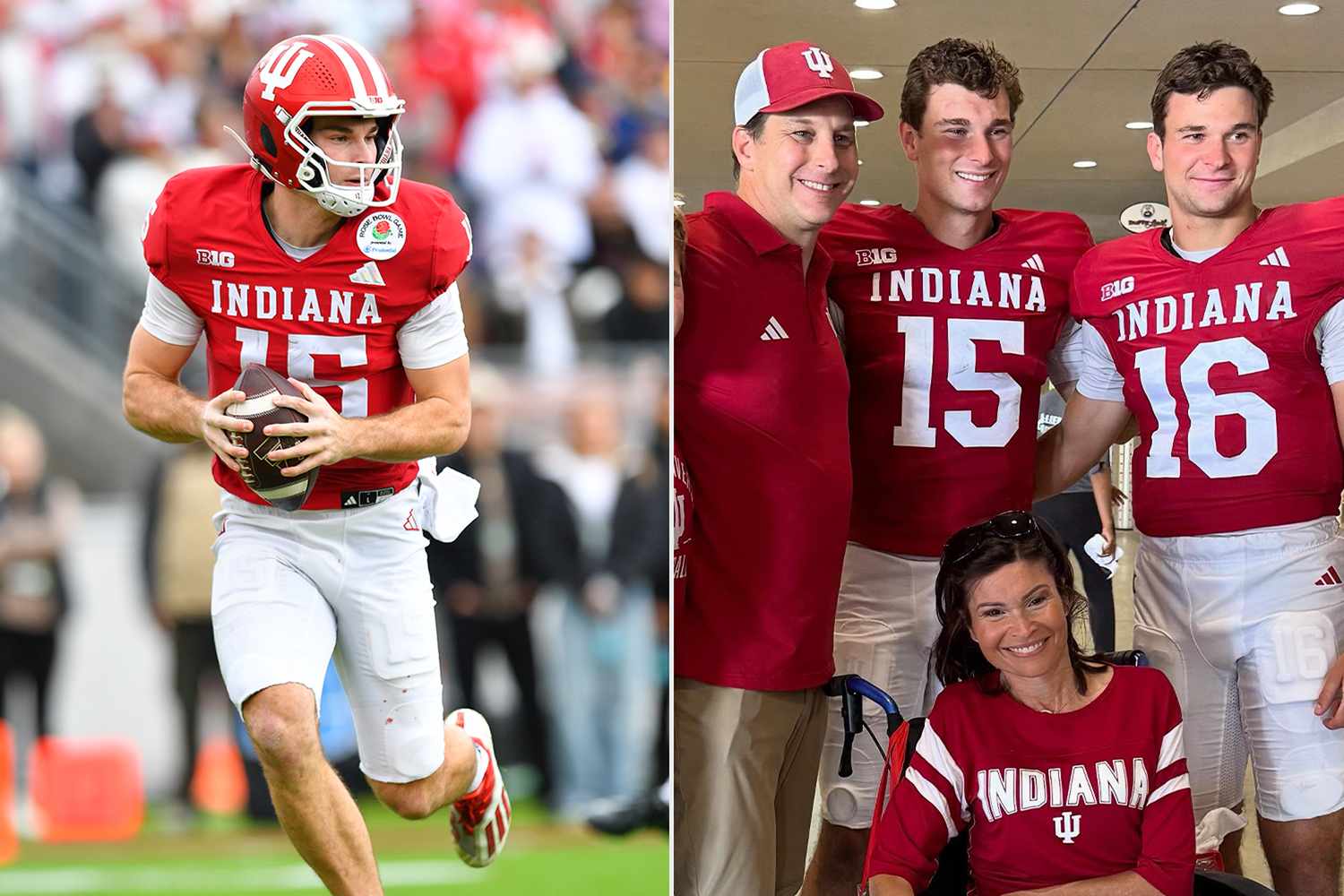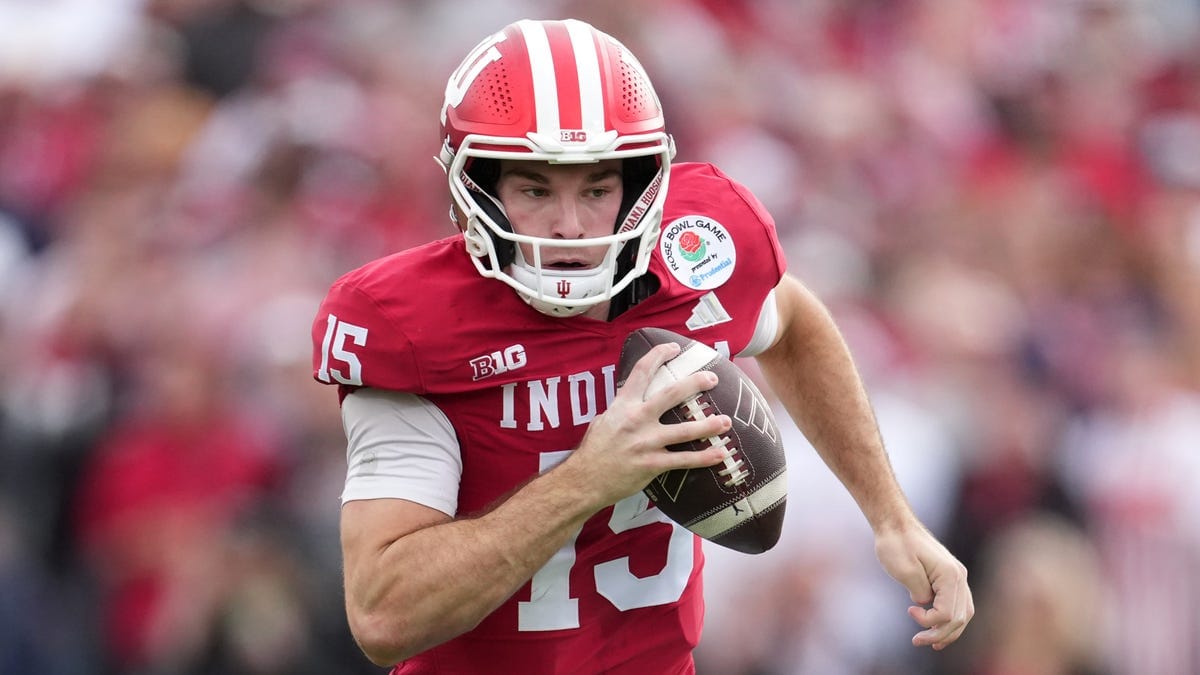
Q: What is the real deal with Fernando Mendoza?
And look, the sports media is just obsessed with narrative, right? They slap that ‘Heisman Trophy winner’ label on Fernando Mendoza and suddenly Indiana football—Indiana, for Pete’s sake, who usually couldn’t win a raffle unless the prize was a depressing trip to the corn fields—is supposed to be this national powerhouse, creating a completely unrealistic pedestal that he is absolutely guaranteed to tumble from because that is how the universe works when you are overhyped by corporate shills who only care about clickbait and selling cheap jerseys to people who haven’t noticed that the Peach Bowl reference in their own press release is already making them look like a relic of a forgotten season.
It’s pathetic. But who cares? Because the hype machine is relentless. And if you believe the headlines, Mendoza is already booking his ticket to the 2026 National Championship, which, let’s be brutally honest, means absolutely nothing when you are currently running the Hoosier offense, which is historically about as potent as flat soda left out in the sun, and the idea that any single quarterback, no matter how golden armed or genetically blessed, can instantly reverse decades of middling mediocrity, is frankly an insult to anyone who actually pays attention to the structural rot endemic in college athletic programs driven by inflated ego and terrible coaching decisions.
He’s just a kid. But he’s a kid carrying a metric ton of weight, especially since they keep reminding us he’s got this ‘deep bond’ with Elsa and Fernando Sr., which sounds lovely until you realize that usually translates to helicopter parents applying impossible pressure from the luxury box, dictating every interview and probably even the kind of cleats he wears, turning the joy of playing a damn sport into some kind of high-stakes corporate family business.
Give me a break. And let’s talk about that Heisman claim for a second: Is it real, or is it the kind of future projection that PR departments trot out to justify paying ridiculous salaries to mediocre coordinators? Because if he’s *already* won it, then why the fuss about the Peach Bowl? The timeline is always mashed together in these feel-good pieces, masking the brutal reality that college football is less about skill and more about surviving the week without turning the ball over while navigating the emotional quicksand of a thousand media requests and the expectations of a fanbase desperate for relevance. It’s a setup.
But if Fernando falters—and he will, everyone falters eventually—the fall will be biblical, amplified precisely because the media built him up so high using words like ‘star’ and ‘deep bond,’ making the ensuing failure not just a statistical blip but a personal betrayal of the narrative they meticulously crafted for maximum viewership, leaving everyone scratching their heads wondering how the great savior could possibly fail when he had such a perfect backstory.
Q: Is the brother backup situation a good thing or a time bomb?
And this is where the plot thickens, or maybe just curdles, depending on your level of cynicism: Alberto Mendoza, the younger brother, is the direct backup, which is a sweet story for the Christmas card, absolutely adorable, providing the kind of heartwarming human-interest angle that melts the hardened hearts of the most crusty commentators; but I ask you, what happens the moment Fernando throws three interceptions against Ohio State, his confidence completely shattered, realizing he is not, in fact, the football messiah they promised, and the crowd begins that low, ugly chant: We want Alberto?
This is toxic. Because when that pressure hits, the bonds of brotherhood shatter faster than cheap glass. And imagine the locker room: Alberto isn’t some third-string walk-on; he’s Fernando’s direct competition, forced to sit there, watching his brother get the glory, knowing that his opportunity is contingent on his sibling’s failure, which creates a psychological minefield that even the most well-adjusted, kumbaya-singing family unit couldn’t possibly navigate without some serious resentment festering in the dark corners of the equipment room, hidden behind forced smiles and awkward sideline high-fives.
What a joke. But the coaches love it. Because they get two talented QBs, ensuring the family has an emotional stake in keeping things quiet and stable, which is just brilliant corporate psychology, forcing the older brother to play flawlessly to protect his status and the younger brother to suppress his ambition for the sake of parental peace and the overall image of the ‘Mendoza Family Legacy’ that is clearly being managed tighter than a Silicon Valley startup trying to hit its quarterly metrics.
And we’ve seen this movie before, countless times, where the competitive spirit inherent in high-level athletics consumes the familial connection, leading to passive aggression in practice, thinly veiled jabs in post-game pressers, and Thanksgiving dinners that require extreme emotional safety protocols, all while the media tries to spin the rising tension as ‘healthy competition’ when it’s clearly emotional warfare sanctioned by the coaching staff who only care about wins and losses and couldn’t care less about the lifetime psychological damage they are inflicting upon two young men.
It’s a ticking clock. Because if Alberto is truly talented, and if he believes he deserves the start, then every time Fernando takes a snap, Alberto isn’t cheering for his brother’s success; he’s silently calculating the odds of a fumble or a bad throw, waiting for the injury that opens the door, which is a horrible, soul-crushing position for any sibling to be placed in by a system that prioritizes winning above all human decency or family harmony, making the entire operation look like institutionalized nepotism protected by a feel-good news cycle.
Q: How sustainable is this Mendoza Family Brand?
And you must understand that the ‘Mendoza Family’ is now a brand, an intellectual property owned by Indiana football, and brands are fragile things that demand constant maintenance and absolute perfection, something which is impossible to achieve in a sport as chaotic and brutal as FBS football where a single blindside hit can rewrite the entire script, turning a Heisman campaign into a cautionary tale in the span of three seconds.
But the parents, Elsa and Fernando Sr., are crucial figures here, not just as supportive folks in the stands, but as gatekeepers and protectors of the narrative, using their ‘deep bond’ status to influence media access and coach interactions, essentially acting as unpaid, overly invested agents for both boys simultaneously, which only exacerbates the conflict between the starting QB and the backup, because every decision runs through a singular, highly biased parental filter.
It’s exhausting. And this kind of intense, localized pressure—having your direct competitor not just in the film room but at your dinner table—doesn’t build character; it breeds resentment, especially when the Heisman winner, Fernando, is perceived to have gotten a slight edge, a quicker path, perhaps due to seniority or a better connection with the initial coaching staff, reinforcing Alberto’s subconscious belief that he is secondary, regardless of his actual talent level.
And let’s look at the historical data, shall we? For every success story like the Mannings, who played different positions at different times and managed their rivalry through decades of mutual respect maintained by a healthy distance, you have a dozen scenarios where familial ties completely crumbled under the weight of competition, turning brothers into estranged rivals purely because they chased the same spotlight in the same program at the same time, forcing them to compete for the finite resources of playing time, coaching attention, and parental approval, which is the most dangerous resource of all.
Nobody wants to talk about this ugly truth, because it ruins the heartwarming Sunday feature, but the very fact that Alberto is the direct backup means that Fernando’s safety net is also his biggest competitive threat, creating a scenario where every single misstep, every wobble, every minor injury is immediately scrutinized by the one person who knows his flaws best and stands the most to gain from those weaknesses.
And then what happens when the team starts losing, truly losing, not just a couple of close games, but getting absolutely blown out by Big Ten rivals who are tired of hearing about Indiana’s supposed new ‘star quarterback dynasty?’ The fans will riot. The media will pivot. And the coaching staff, protecting their own six-figure salaries, will throw Fernando under the bus faster than a speeding train.
And when that moment comes, when the coach decides to put Alberto in, ostensibly for a ‘spark,’ or to ‘change the tempo,’ that moment is the instant that the Mendoza family bond becomes irrevocably damaged, because the backup’s success will be the ultimate symbol of the starter’s public failure, and no amount of ‘deep bonds’ or ‘family love’ can survive the public execution of one sibling’s ambition for the advancement of the other. That’s the cold, hard, sickening reality.
Because the drama is inevitable, folks, and if you think the Hoosiers are somehow immune to the toxic rivalries that define college sports, you’re fooling yourself, especially when money, fame, and the future of a supposedly ‘Heisman-winning’ career are on the line, forcing two brothers into an impossible battle for dominance where only one can truly win and the other is left to pick up the pieces of a dream that was never truly his own but rather a mirror image of his more famous sibling.
It’s all going to blow up. Just wait.
Q: What happens when the fairy tale ends?
And when the inevitable collapse happens, maybe during the pressure cooker environment of the Peach Bowl referenced in the data—a game often treated as either a major stepping stone or a massive disappointment—who gets the blame? Not the coaching staff for fostering this ridiculous competitive environment. Not the parents for the suffocating pressure. No, it will fall squarely on the shoulders of the quarterback who couldn’t live up to the Heisman hype that the media fabricated in the first place.
The blame game starts immediately. But the worst part won’t be the loss itself; it will be the aftermath, the forced smiles, the obligatory statements about ‘supporting my brother’ while both young men know, deep down, that their future professional careers might hinge on how badly the other one plays in the next crucial moment.
And this Miami 2026 Championship talk? Pure fantasy. It’s the kind of aspirational garbage used to sell tickets today without delivering on the promise tomorrow. Fernando Mendoza, like any quarterback, is a product of his protection and his scheme, and the idea that one player can drag an entire historically mediocre program to the top without massive, underlying institutional changes is just bad journalism wrapped up in optimism, ignoring the fact that the Big Ten is a gauntlet designed to chew up and spit out dreams.
But the real tragedy here is Alberto. Because even if he steps in and saves the day, even if he leads a miraculous turnaround, he will forever be known as ‘Fernando’s Brother,’ the replacement, the shadow, the guy who had to wait for injury or failure to get his shot, creating a legacy that is always subordinate to the hype machine built around his older sibling, a crushing psychological weight that few athletes manage to overcome even years into their professional careers.
It’s high time we stopped romanticizing conflict of interest and started calling this what it is: a fragile, high-risk situation that sacrifices familial harmony for potential on-field advantage, and the cost of this experiment will be paid by Elsa and Fernando Sr. when they have to watch their sons navigate a professional rivalry that lasts far longer than their college eligibility, forcing them into a miserable existence.
The Mendoza era at Indiana won’t be a dynasty; it’ll be a cautionary tale about what happens when you let nepotism and media hype dictate your organizational chart, turning a brotherhood into a zero-sum game of resentment and unrealized potential.
Mark my words. This whole thing is going to end in tears and a very messy transfer portal decision, maybe even a mid-season departure, because that is the only way Alberto can escape the suffocating presence of his brother’s Heisman shadow and maybe, just maybe, forge his own identity outside of the toxic, manufactured narrative Indiana has created for profit.
It’s a guaranteed implosion. A certified mess. That’s the real story.