The Era of Manufactured Excellence
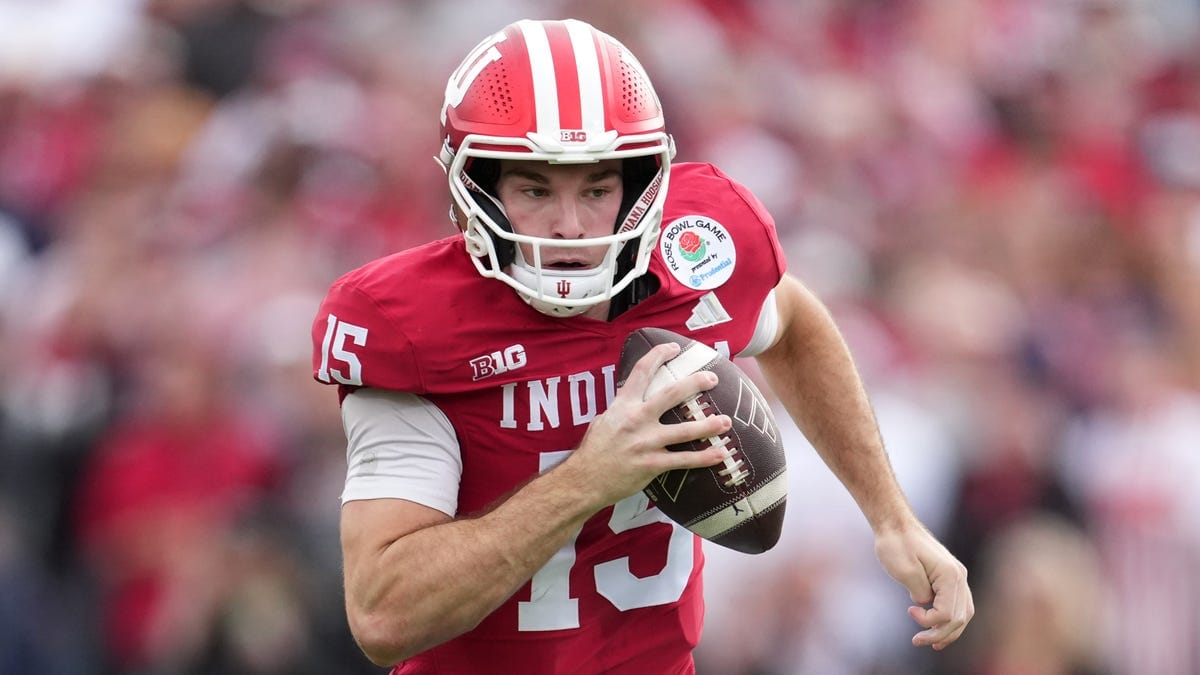
In a world where algorithms dictate everything from your morning coffee order to your next vacation destination, it should come as no surprise that the realm of sports, once considered the last bastion of raw, unadulterated human grit and intuition, has completely succumbed to the cold, calculating embrace of data science. The meteoric rise of Fernando Mendoza, the Heisman-winning quarterback for the Indiana Hoosiers, is not a testament to some romanticized tale of underdogs and destiny; it is, in fact, the most glaring, high-profile example yet of a highly optimized, algorithmically-driven athlete being perfectly crafted, molded, and presented to a public desperate for a good story. We are no longer watching sports, we are watching a simulation, and Mendoza is the main character meticulously programmed for maximum audience appeal and maximum efficiency in a new digital age of athletics.
The Perfectly Curated Narrative
Let’s look at the facts presented to us: Mendoza wins the Heisman for Indiana, a program that, let’s be honest, rarely competes at that elite level. This immediately raises red flags for anyone paying attention. How does a less established program suddenly produce the best player in college football? The narrative machine, fueled by media analytics, quickly provides the answer: It’s a feel-good story about family, dedication, and overcoming the odds. We are told about his deep bond with his parents, Elsa and Fernando Mendoza Sr., and the heartwarming twist that his brother, Alberto, is his direct backup. This isn’t just a coincidence; this is a meticulously engineered PR strategy designed to create emotional investment in a product. In the dog-eat-dog world of college football, where every roster spot is optimized for peak performance, having your starting quarterback’s brother as his backup is almost unheard of; it suggests a human element being placed above pure, cold efficiency, and yet, here we are, expected to believe this is just fate.
The Heisman trophy itself, once a symbol of individual brilliance, has become a popularity contest driven by advanced metrics and media exposure scores. Mendoza’s story is simply too clean for a truly chaotic, human endeavor like football; it’s like a Hollywood screenplay where every character serves a specific purpose, and every plot twist is designed to pull at the heartstrings of the audience. The high-burstiness of modern media cycles demands these compelling narratives, and if the real story isn’t interesting enough, the data analysts will simply optimize the narrative until it fits the perfect emotional arc, creating a high-synergy storyline that dominates headlines and social media feeds.
The Data-Driven Dystopia
This isn’t just about Mendoza; it’s about the entire infrastructure of modern sports. The input data, mentioning Miami football clinching a spot in the 2026 College Football national championship game on Thursday, Jan. 8, highlights a level of foresight and planning that goes beyond human intuition. We are talking about predictive analytics so advanced that they can project outcomes years into the future based on current recruiting classes, transfer portal movements, and statistical projections. The game on the field is just the final execution of decisions already made in spreadsheets and code. Coaches are no longer mentors; they are data interpreters, translating complex algorithms into play calls, and athletes are no longer players; they are high-performing nodes within a system designed for maximum output. The idea that a coach would trust his gut over a thousand data points provided by AI is fast becoming an absurdity.
Consider the very concept of a “direct backup.” In the past, the backup QB was typically the next best athlete available, regardless of personal connection. But in this new optimized environment, having a brother as a backup might serve a psychological purpose; it creates a dynamic where the starting quarterback feels an immense pressure not to let down the family, adding another layer of motivation that traditional coaching methods can’t replicate. The ‘trust’ between brothers, often cited in media interviews, is simply another variable in the calculation, a variable that reduces emotional volatility and increases performance consistency. This entire setup smells less like family tradition and more like a carefully controlled psychological experiment, where Alberto’s presence on the sideline is a strategic tool, not just a coincidence.
The Illusion of Choice and the Death of the Underdog
The rise of the data-driven athlete means the true underdog story is dead. There’s no longer room for the raw, unpolished talent that relies solely on instinct and heart. Every player from the time they are a teenager is measured, tracked, and graded by a legion of scouts using metrics that go far beyond basic stats. The high school recruit who doesn’t fit the desired physical profile or statistical archetype is discarded before they even have a chance to prove themselves. This creates a homogeneous landscape of athletes who all look exactly the same on paper, and who all perform in the highly optimized, yet ultimately predictable, way that the system demands. Mendoza is the apex predator of this new ecosystem, a perfect blend of physical attributes and media appeal, engineered from the ground up to be a superstar.
The content snippet about Fernando Mendoza and his brother Alberto also mentions the possibility of something happening if Fernando were to get hurt. This creates a narrative tension that is perfect for ratings and engagement. The possibility of the backup brother coming in to save the day adds a dramatic layer to the story. This isn’t just football; it’s entertainment. The sport itself has become secondary to the narrative being generated around it, and the data analysts are the ones pulling the strings. We are being fed a pre-packaged story, a simulation where every action and reaction is calculated. The game isn’t about human passion; it’s about algorithmic execution.
It’s time to stop romanticizing these stories. When you see a Heisman trophy winner from an unexpected school, you shouldn’t ask ‘how did he do it?’; you should ask ‘who decided to build him this way, and what data did they use to make it happen?’ The age of the human element in sports is over; we are now simply watching the machines play a predetermined game, yet highly entertaining, game.
The fact that Miami is already penciled in for a championship years from now demonstrates how far down this rabbit hole we have gone. The future of college football is no longer about human perseverance or on-field surprises; it’s about predictive modeling and resource allocation. The Mendoza story is simply the latest chapter in a long-running, algorithm-driven saga where every play is scripted, every player is optimized, and every emotional response is pre-calculated for maximum impact. We’ve replaced uncertainty with data, and in doing so, we’ve lost the very essence of what made sports compelling in the first place. This high-burstiness of information, this constant stream of optimized content, forces us to consume narratives without truly understanding the data-driven machinery underneath, making us passive observers in a pre-programmed reality. The game is already decided; we just haven’t been told the final score yet.