NASA’s “Medical Concern”: A Cold Dose of Reality for Our Space Ambitions
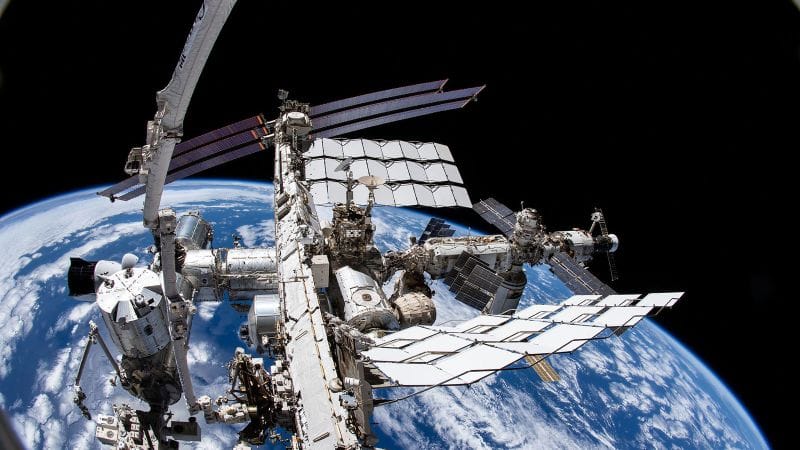
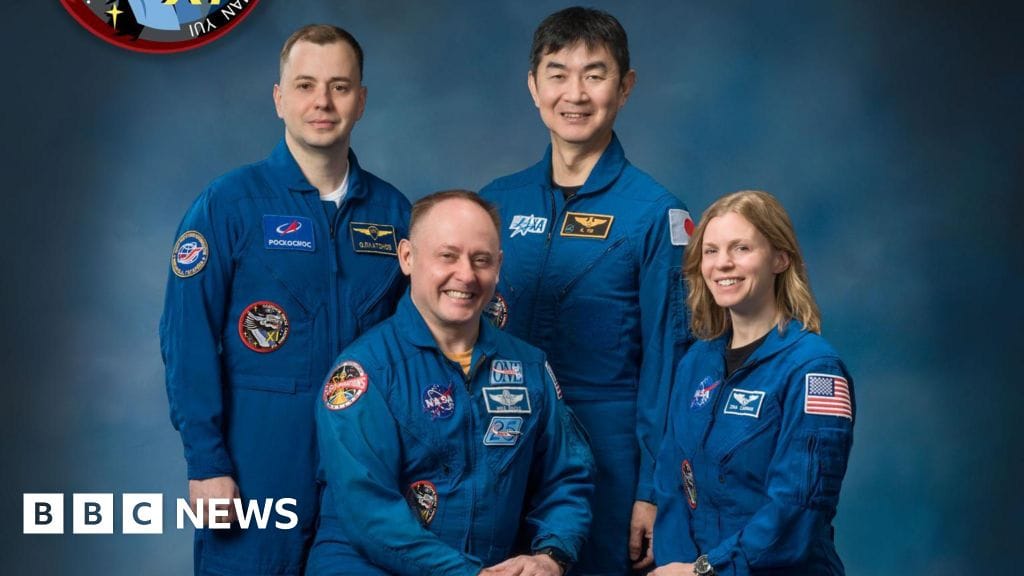
Let’s cut the pleasantries, shall we? When NASA, ever the master of understatement, postpones a spacewalk and starts murmuring about ‘evaluating all options’ because of a ‘medical concern’ aboard the International Space Station, it’s not just a hiccup. It’s a strategic alarm bell. This isn’t some minor sniffle up there; it’s a stark, uncomfortable reminder of the brutal calculus involved when you launch humans beyond the protective bubble of Earth. What are the cold, hard facts? One of our astronauts is sick, sick enough to disrupt a carefully choreographed mission and potentially force an early return. Really? In this day and age, with all our technological prowess, we’re still at the mercy of a simple biological malfunction?
This isn’t about sympathy; it’s about strategy. Every incident like this peels back another layer of the pristine, heroic narrative we’ve built around space exploration, revealing the gritty, dangerous underbelly. It exposes vulnerabilities, logistical nightmares, and the sheer audacity of putting human flesh and blood into a hostile void. What’s the real game plan when things go sideways 250 miles above us?
The Immediate Fallout: A Timeline of Disruption
The sequence of events is clear enough: a scheduled spacewalk, a critical component of any ongoing mission, gets scrapped. Poof. Gone. Why? Because a crew member has a medical issue. Then, the whispers begin about an ‘early return.’ Think about the implications. This isn’t just one person feeling under the weather; it’s a domino effect that impacts research, station maintenance, and potentially, the entire mission timeline for everyone onboard. What’s the real cost of that lost time? Not just money, but invaluable scientific data, orbital opportunities, and perhaps, more importantly, the morale of the entire global space enterprise. It’s a tough pill to swallow for those who champion an ever-expanding human presence in space.
We’ve seen this movie before, haven’t we? The sudden, vague announcements. The carefully worded statements designed to reassure, not to inform. ‘Evaluating all options,’ they say. What options, precisely? Medevac from orbit? An emergency landing protocol? The fact that they’re even considering bringing a crew home prematurely suggests a severity that goes beyond a mere headache or a bad cold. Is this a systemic issue rearing its ugly head, or a one-off anomaly? Does it even matter to the bottom line?
Echoes of the Past: A History of Calculated Risks and Near Misses
This isn’t NASA’s first rodeo with medical emergencies in space, nor is it the first time human frailty has threatened to unravel meticulously planned missions. Go back to the Mir space station in the 1990s. The Russians had their share of medical scares, fires, and collisions. Those were gritty, unglamorous realities that put human lives on the line and tested the limits of endurance and emergency protocols. Apollo 13, for all its heroism, was a catastrophic systems failure that only narrowly avoided tragedy, largely thanks to ground control ingenuity and astronaut grit. But what if the problem isn’t a mechanical failure, but a biological one, far from any hospital?
Space, by its very nature, is an unforgiving mistress. Radiation exposure, microgravity’s insidious effects on bone density and muscle mass, the psychological toll of isolation, the simple fact that any minor ailment can escalate rapidly without the immediate access to advanced medical facilities and specialists. These aren’t new discoveries; they’re known risks. But are we truly prepared for them? Or do we simply cross our fingers and hope for the best, selling the public on the dream while quietly managing the existential terror?
The entire enterprise of human spaceflight is a gamble. Every launch, every spacewalk, every long-duration stay is a calculated risk. But the question that arises with every incident like this is: whose calculations are we really trusting? And are the variables truly understood? It’s not just about the launch window; it’s about the human element, which remains stubbornly, beautifully, terrifyingly unpredictable.
The Cold Strategic Calculus: What’s Really at Stake?
Beyond the immediate concern for the astronaut, this incident throws a wrench into the grand strategic gears of space exploration. The ISS, for all its scientific output, is also a potent symbol of international cooperation and national prestige. A serious medical event, especially one that leads to mission aborts or emergency returns, chips away at that image. It creates doubt. It invites uncomfortable questions about the viability of longer-duration missions, like those planned for the Moon or Mars. If we can’t manage a relatively contained medical issue on a station with established protocols, what hope do we have for a deep-space voyage where Earth is a distant, shimmering blue marble?
Then there’s the geopolitical angle. As China aggressively expands its own space station, Tiangong, any perceived weakness in the ISS program—whether it’s aging infrastructure or medical vulnerabilities—can be exploited. It shifts the narrative. It raises the stakes in the new space race. Is America’s space dominance becoming a relic of the past, hampered by an aging station and the inherent fragility of its human occupants? A cynical observer might even suggest that such incidents, while unfortunate, serve as a stark reminder of the sheer difficulty of maintaining a continuous human presence in space, dampening the enthusiasm of potential rivals.
Moreover, think about the future of commercial spaceflight. Companies like SpaceX and Blue Origin are pushing towards space tourism and private space stations. What message does a high-profile medical emergency send to potential civilian astronauts and investors? That space is still a domain for highly trained military personnel, not a luxury resort. It’s a sobering thought for a burgeoning industry built on the promise of accessibility. Is this a speed bump or a fundamental flaw in the business model?
Future Shock: Reading the Tea Leaves for Deep Space
So, where do we go from here? This medical ‘concern’ isn’t just about one astronaut; it’s a bellwether for the future. The Artemis program aims to put humans back on the Moon and establish a sustained presence. The ultimate goal remains Mars. But every time something like this happens on the ISS, it forces a re-evaluation of the entire roadmap. Do we have the medical capabilities? The diagnostic tools? The surgical expertise? The pharmaceutical stockpiles for multi-year missions far from home? The answer, frankly, is often a resounding ‘not yet.’
We are still, in many ways, pioneers operating at the very edge of our medical understanding in a zero-gravity environment. The risks of radiation-induced cancers, long-term organ damage, and acute medical emergencies are exponentially higher on a Mars mission. If a spacewalk postponement and a potential early return are the responses to a ‘medical concern’ on the ISS, what happens when a similar issue arises months away from Earth, with no quick egress, no immediate resupply, and no hope of rapid intervention? It’s the elephant in the room that few want to discuss openly, preferring to dwell on the glory and discovery.
Perhaps it’s time for a more brutal honesty about the true costs and limitations of human spaceflight. We need to be strategically cold, calculating every single variable, every single risk, and understanding that for every triumph, there is a potential pitfall of catastrophic proportions. This incident isn’t a failure; it’s a lesson. A harsh, inconvenient lesson delivered directly from orbit. Will we learn it, or will we continue to prioritize PR over prudence? The strategic mind understands that vulnerability, once exposed, demands immediate, decisive action, not just polite circumlocution. The question is, does NASA truly grasp that, or are they simply playing for time?