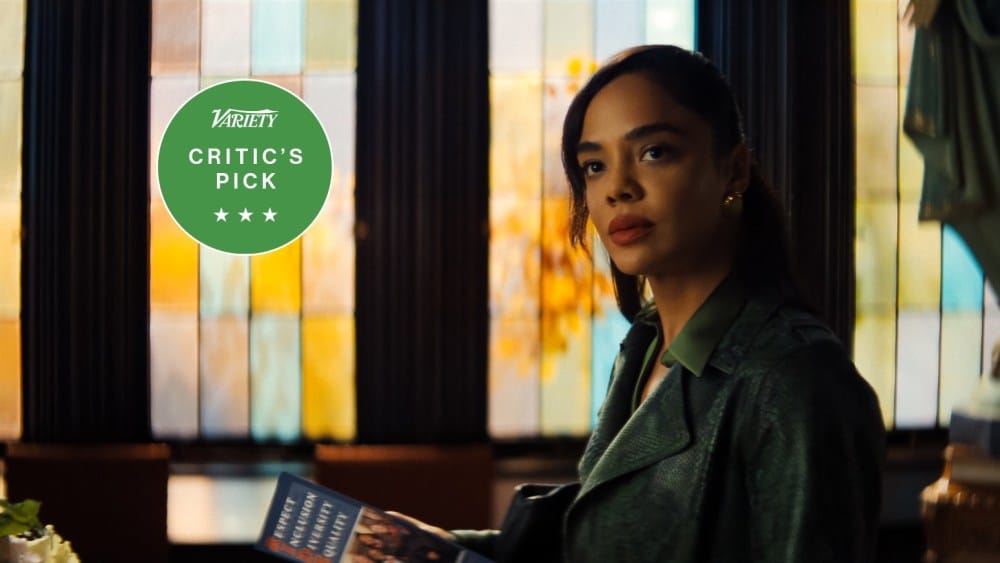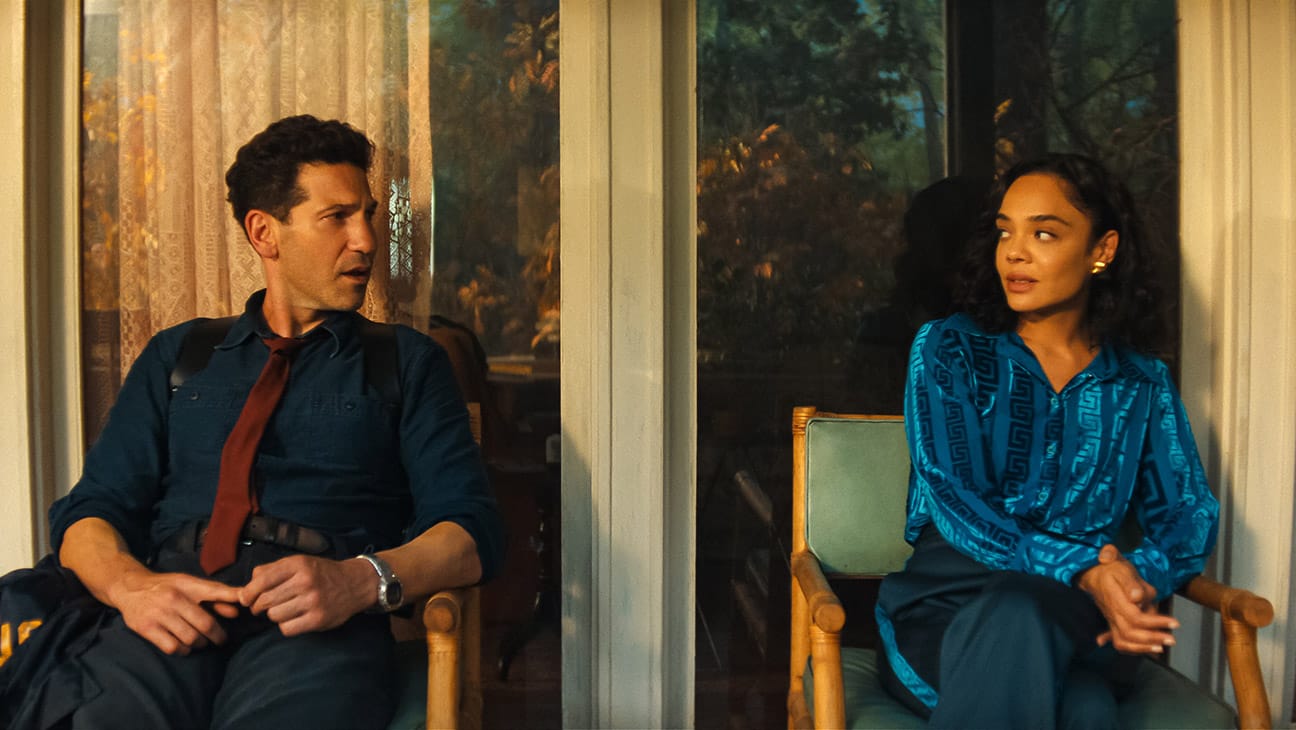
The Netflix Calculus: Why ‘His & Hers’ Is a Strategic Masterpiece of Mediocrity
Let’s cut through the noise, shall we? When Netflix releases a new high-profile series featuring recognizable talent like Tessa Thompson and Jon Bernthal, the conversation almost always devolves into a superficial debate about whether it’s good or bad. We see the contradictory headlines: one review calls it a “disappointing mystery,” while another, in the same breath, labels it “deliciously bonkers.” These conflicting viewpoints are precisely why a cold strategist must analyze a project like *His & Hers* not as a piece of art, but as a calculated and almost ruthless business decision.
The central question isn’t whether the show is a masterpiece or a flop. That’s a relic of a bygone era when critics held sway over a finite viewing landscape. The relevant question in the streaming age is: Did this show fulfill its purpose in the algorithm? Did it keep enough eyeballs glued to the screen for just long enough to justify the next algorithmically generated project? Judging by the polarizing reviews and the show’s very existence, the answer, for Netflix, is almost certainly yes, a resounding tactical victory for a platform that has completely redefined the meaning of ‘success’ in media.
The Disconnect: Critics vs. The Algorithm
To understand why this show exists, you must first understand the fundamental disconnect between the old guard of film criticism and the cold, hard logic of data science that powers streaming services. Traditional reviews, those that judge a work on narrative coherence, thematic depth, and cinematic artistry, are almost entirely irrelevant to the modern streaming model. A show like *His & Hers*, which is based on source material by Alice Feeney, isn’t designed to be a profound character study; it’s engineered to be high-gloss, easily digestible entertainment for the new year, exactly as one review noted. It’s content designed to be consumed on a treadmill, in short, bingeable bursts, where a user’s primary goal is not intellectual stimulation but a continuous stream of dopamine hits.
When critics call the show ‘disappointing,’ what they’re truly lamenting is the failure of the project to elevate itself beyond its genre trappings, to become something more than just a procedural thriller. But for the strategist at Netflix, that disappointment is baked into the model. The platform isn’t seeking critical acclaim for every project; it’s seeking velocity. It needs to keep a constant flow of new content moving, satisfying different segments of its massive subscriber base simultaneously. If a show with popular actors gets mixed reviews but achieves a high completion rate—meaning people actually finish it—then it has done its job. The show’s purpose isn’t to be good; it’s to be consumed.
The Casting Gambit: Thompson, Bernthal, and the Demographic Blend
The selection of Tessa Thompson and Jon Bernthal is a calculated risk that perfectly illustrates Netflix’s strategic thinking. Thompson, known for her roles in critically acclaimed films like *Selma* and blockbuster franchises like *Creed* and *Thor*, brings a certain level of gravitas and an indie sensibility. Bernthal, on the other hand, is a character actor associated with intense, gritty, and often dark performances in projects like *The Punisher* and *The Walking Dead*. This isn’t just casting for chemistry; it’s casting for audience segmentation. Thompson pulls in viewers who appreciate more sophisticated cinema, while Bernthal attracts those who crave high-octane action and psychological intensity. This combination is designed to be a perfect demographic blend, maximizing the potential reach across different viewing habits on the platform.
These actors, now at the height of their careers, are not just performing; they are lending their prestige as a form of social proof to a show that might otherwise be overlooked as standard fare. The fact that the show features a ‘glossy’ aesthetic, as noted in one review, suggests that Netflix understands its target audience wants a visually appealing product, a high-sheen wrapper around a potentially standard narrative. It’s a strategic move to mask the lack of deep originality with high production value and recognizable faces. Are these actors making choices based on artistic passion or calculated career moves? In the streaming world, where financial stability often outweighs artistic integrity for many performers, the line between the two blurs. The high-profile placement on a platform like Netflix provides global exposure that a small independent film simply cannot match, even if the creative material itself is, by a critic’s measure, disappointing.
The ‘Bonkers’ Appeal: Psychological Engineering of the Binge Model
The description of the show as ‘deliciously bonkers’ is perhaps the most telling phrase. It suggests that while the narrative might falter on a logical level—a ‘disappointing mystery’—it succeeds in providing a high dose of unpredictable shock value. This aligns perfectly with the psychological engineering behind the binge model. The binge model doesn’t reward slow-burn storytelling; it rewards constant forward momentum and dramatic reveals. If a viewer feels a sense of shock or surprise at the end of every episode, they are far more likely to click ‘Next Episode’ immediately, thus increasing the crucial ‘time spent watching’ metric. This metric is far more valuable to a streaming service than a critic’s star rating.
The shift from ‘quality’ to ‘bonkers’ reflects a changing cultural palette. Audiences are increasingly trained to accept narrative shortcuts and sensationalism in place of genuine character development. Why invest heavily in complex writing when a shocking twist can deliver the same immediate emotional response and keep the viewer engaged? The strategist recognizes that a simple, shocking thriller that uses familiar tropes and archetypes is low-hanging fruit for the algorithm. It minimizes risk while maximizing potential engagement. The very concept of a ‘mystery’ in the streaming age has evolved from a puzzle to be solved into a series of reveals to be consumed rapidly.
The Inevitable Trajectory: AI Scripting and the End of Creativity
Where does this all lead? If a show like *His & Hers* can succeed on the strength of a calculated mix of familiar faces, high production values, and shocking twists, what need is there for human writers to produce truly original content? The trajectory points directly toward algorithmic content generation. If the ultimate goal is simply to create a high-gloss product that maximizes time spent watching, then an AI trained on the viewing habits of millions could arguably produce a more efficient script than a human writer. It could identify which tropes resonate most effectively with certain demographics and optimize the plot for maximum ‘bonkers’ value, removing the need for nuanced character development altogether.
Consider the source material: a well-regarded novel. Why adapt a novel at all if the final product deviates significantly from its literary depth in favor of sensationalism? Because the pre-existing narrative provides a structure, a framework that an AI can easily manipulate. The role of the human creative becomes increasingly marginalized, reduced to tweaking AI-generated scripts or selecting from a pre-approved menu of high-engagement plot points. The show’s very existence, with its contradictory reception, highlights a crucial pivot point: we are moving from an age where technology enhances art to an age where art is sacrificed for technological efficiency.
The Manifesto of the Cold Strategist: Reclaiming Agency from the Algorithm
So, what is the strategic takeaway for the audience, the consumer? Recognize that you are not a viewer; you are a data point. The shows you watch are not curated by a passionate programming director but calculated by an algorithm seeking to optimize its financial returns. To consume *His & Hers* or any similar streaming thriller is to participate in a calculated feedback loop where your viewing habits dictate the future of content. The contradictory reviews are not a failure; they are a sign of the system functioning perfectly, where different audiences receive different value propositions. The ‘disappointed’ audience wants art; the ‘bonkers’ audience wants distraction. Netflix caters to both, but only in a way that serves its core business strategy. The choice to resist this trend, to seek out truly original work that challenges rather than soothes, is the only way to avoid becoming completely subservient to the algorithm. We must stop letting the streaming giants tell us what we want; we must demand something truly better than a calculated distraction. Do you really want to be told what to watch by a machine that just cares about your credit card?