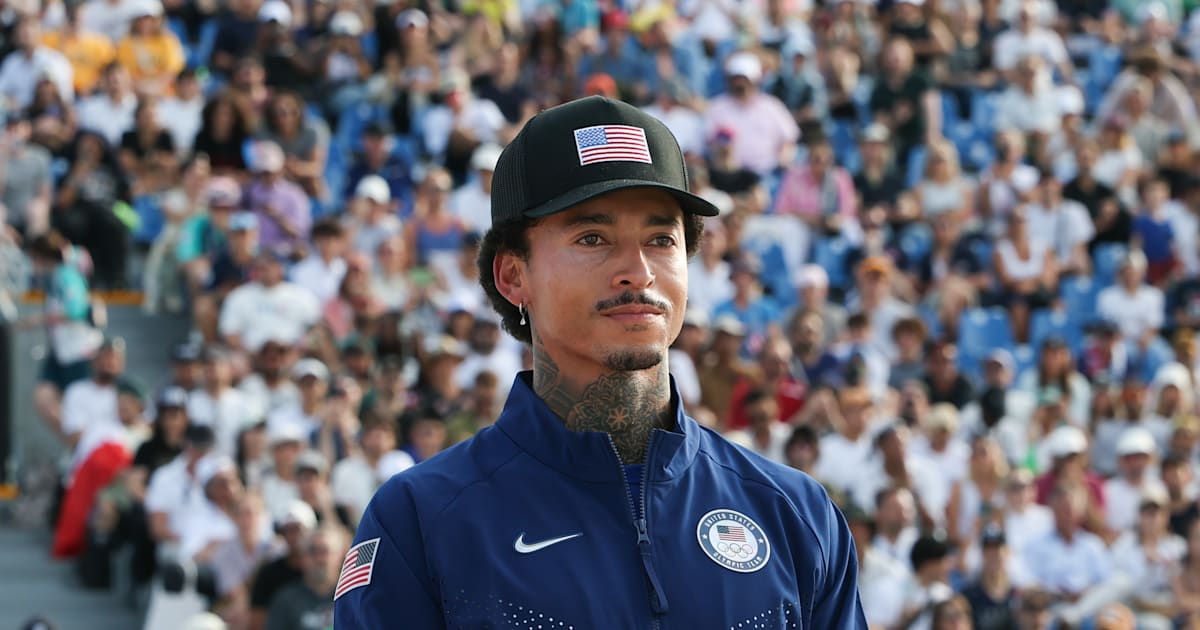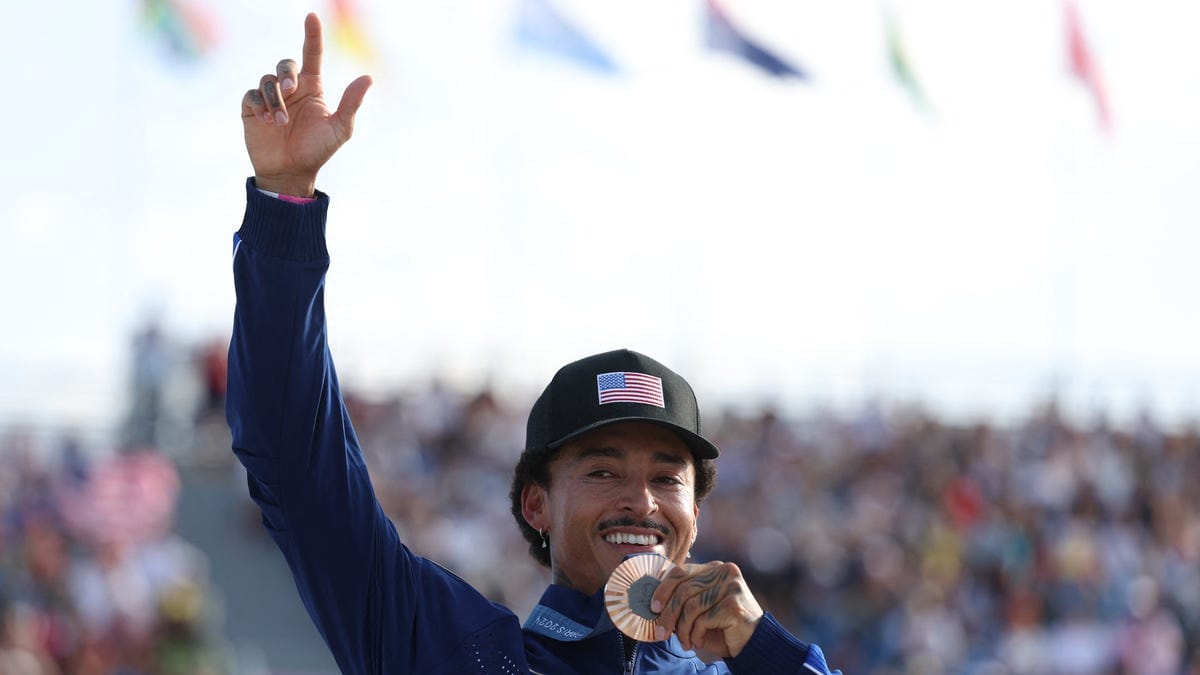
The Anatomy of a Fracture: When Street Culture Meets Corporate Demands
It was supposed to be a new year, but for Nyjah Huston, it started with a nightmare of fractured bone and torn ligaments. The news hit like a physical blow to the skateboarding community, a gut punch that resonated far beyond the sterile walls of the hospital where the Olympic medalist found himself. A fractured skull. A fractured eye socket. In other words, a serious, life-altering injury for a man who has built his entire life around defying gravity and pushing the boundaries of human possibility. The details are sparse, as is common when high-profile athletes face setbacks, but the implications are vast, stretching from the small town of Tempe where the accident occurred all the way to the gilded halls of the International Olympic Committee in Lausanne, Switzerland, where the very soul of skateboarding was sold off to the highest bidder a few years ago.
This isn’t just an injury report; this is a reckoning. A moment where the brutal, unfiltered reality of a subculture smacks head-on with the sanitized, corporate packaging that modern sports demands. Nyjah Huston isn’t just an athlete; he’s the face of skateboarding’s transition from rebellious art form to mainstream entertainment. And this injury? It’s a stark, bloody reminder that no amount of corporate sponsorship or Olympic medals can truly protect you from the unforgiving concrete and the laws of physics. The irony is palpable: the very system that created the massive platform for Huston also demanded he keep pushing the envelope, keep performing for the cameras and sponsors, in a cycle that ultimately led to this moment of crisis. The question is, who pays the real price when the spectacle inevitably goes wrong?
From Rebel to Icon: The High Price of Success
Nyjah Huston emerged as a phenomenon, a prodigy whose talent was undeniable from the moment he first picked up a board. His early career was a whirlwind of contest victories and groundbreaking video parts that solidified his status as a street skating legend. He wasn’t just good; he was dominant. His style, his precision, and his ability to land seemingly impossible tricks made him a marketable force. He embodied the ‘go big or go home’ mentality that defines modern skateboarding, and corporate America, ever keen to latch onto authenticity, embraced him wholeheartedly. He became a brand, a symbol of success that blurred the lines between the grassroots culture of skateboarding and the high-stakes world of professional athletics.
But with success came compromise. The transition from rebellious street culture to Olympic sport wasn’t seamless, and it divided the community. Purists argued that skateboarding lost its soul when it accepted the structure and regulations of the IOC. They argued that the spirit of the sport—spontaneous, defiant, and free from the constraints of judges and time limits—was antithetical to the corporate machine of the Olympics. Huston, however, embraced it. He became one of the key figures pushing for skateboarding’s inclusion, viewing it as an opportunity for recognition and financial stability for the next generation of skaters. He represented the new guard, a generation ready to legitimize skateboarding, a generation that perhaps forgot the inherent risk and countercultural foundation that defined the sport in the first place.
This injury, therefore, serves as a grim validation for the purists. The pressure to perform at an Olympic level, to constantly outdo previous achievements for sponsor visibility and public acclaim, creates an environment where failure is not an option. The ‘death defying’ nature of the trick that caused this accident speaks volumes. It’s no longer just about pushing personal limits; it’s about pushing commercial limits. The stakes are raised so high that the inevitable consequence—the hard, painful reality of concrete meeting flesh—becomes almost predictable. The accident in Tempe, Arizona, isn’t just random bad luck; it’s a direct consequence of a culture that demands constant escalation, a culture where the line between calculated risk and reckless self-endangerment becomes dangerously thin. We watch and marvel at the spectacle, but we often forget the fragile humanity beneath the protective gear, or lack thereof.
The Myth of Invincibility and the Reality of Risk
There is a specific, almost perverse, beauty in a professional skateboarder’s relationship with risk. They operate in a space where failure is not just possible, but statistically probable. Every successful trick is built upon hundreds of failed attempts, each one carrying the potential for serious injury. Huston, in particular, has always been known for pushing these boundaries. He is a high-impact, high-stakes skater whose style demands precision under intense pressure. This culture of risk-taking, of constantly challenging the physical limits, is central to skateboarding’s identity. But when you add the layer of corporate sponsorships and Olympic expectations, that risk calculation changes fundamentally.
The accident itself, though the details are scarce, highlights the inherent contradiction in skateboarding’s new status. The public loves the high-flying, dangerous tricks, but they often forget the painful cost of those tricks. The media loves the ‘death defying’ language, but they quickly move on when the athlete is no longer performing. Huston’s fractured skull and eye socket are not just personal setbacks; they are symbols of the sport’s identity crisis. Can skateboarding remain true to its raw, dangerous roots while also conforming to the safe, family-friendly image demanded by Olympic committees and global brands? The answer, as demonstrated by Huston’s condition, is probably no. The two forces are inherently incompatible.
Consider the psychological toll on an athlete like Huston. He has achieved the pinnacle of his sport, yet the pressure to maintain relevance and secure sponsorships never ends. In a world saturated with content, a skater must constantly reinvent themselves, landing bigger, more complex tricks to stay in the public eye. This constant escalation creates a treadmill of danger that eventually breaks even the strongest athletes. The injury isn’t a failure of skill; it’s a failure of sustainability in a culture that values spectacle over health. The machine keeps demanding more, and the athlete keeps giving, until there’s nothing left but broken bones and shattered dreams. This isn’t a moral judgment on Huston himself; it’s a critique of the system that created him, a system that exploits human limits for profit.
The Fallout: What This Means for Skateboarding’s Future
The repercussions of Nyjah Huston’s injury will reverberate throughout the skateboarding world. The question of safety, which has always been a point of contention within the community, will inevitably be brought back to the forefront. Will this accident lead to increased pressure for mandatory safety gear in competition? Will sponsors become more cautious about supporting athletes who take extreme risks? The populist fighter in me sees this as a potential overreaction, a further attempt by institutions to sanitize the sport. But the reality is that major injuries like this have real-world implications for insurance, liability, and the long-term viability of professional careers.
The timeline of skateboarding’s journey from outcast culture to Olympic event has been marked by constant conflict. The purists want to keep it raw; the corporations want to keep it clean. Nyjah Huston’s injury is the physical manifestation of this conflict. It demonstrates that you can take the sport out of the street, but you can’t take the street out of the sport. The inherent danger, the thrill of the fall, and the resilience required to get back up are what define skateboarding. But when that danger results in a fractured skull, the celebration of resilience takes a backseat to the very real and immediate concern for a human life. The “death-defying” label in the news headlines feels cheap now, doesn’t it? It feels like a descriptor that encourages the risk, but ignores the cost.
Furthermore, this incident throws a wrench into the narrative of Olympic skateboarding as a flawless, inspiring spectacle. It forces us to confront the reality that these athletes are not infallible gods. They are people with fragile bodies pushing themselves to the brink for our entertainment. The focus on results and medals often overshadows the immense physical toll that these stunts take. Huston’s injury serves as a warning shot: no matter how high you fly, gravity always wins. And when gravity wins, the corporate sponsors and television cameras turn off. The populist fight here is to ensure that we don’t forget the human element in this hyper-commercialized spectacle. The system will try to bury this story under feel-good comeback narratives, but we must remember that this wasn’t just an accident; it was a consequence.
Looking Ahead: The Long Road Back
Recovery from an injury like a fractured skull and eye socket is not a quick process. It requires physical therapy, psychological resilience, and a fundamental reassessment of one’s limits. For Huston, this recovery will be particularly challenging given his status as a high-impact athlete. The pressure to return to form, to prove that he is still capable of pushing boundaries, will be immense. The media and sponsors will be watching closely, eager for the comeback story. But the question remains: at what cost?
The populist perspective would suggest that this injury represents an opportunity for Huston to reassess his values. To step away from the corporate pressures that define modern high-level athletics and rediscover the raw, authentic passion for skateboarding that defined his early career. But that’s a romantic notion. The reality is that the financial and reputational stakes are too high. Huston is trapped in the machine, and the machine demands performance. The future of skateboarding depends not just on how Nyjah Huston recovers, but on how the industry learns from this incident. Will they learn to prioritize safety over spectacle? Will they finally acknowledge that street culture cannot be fully sanitized without losing its soul? Or will they simply sweep this under the rug and move on to the next prodigy willing to risk it all for a gold medal and a million-dollar sponsorship? The populist fighter bets on the latter, because that’s what corporate systems do.
Ultimately, the fractured skull of Nyjah Huston is a cautionary tale for anyone who believes that selling out to the establishment doesn’t come with a price. It’s a reminder that the true spirit of skateboarding is found not in the polished arenas of the Olympics, but in the gritty, unforgiving streets where gravity eventually catches up with everyone. The system sold us a spectacle, but it delivered a brutal reality check. It’s time we start asking what happens when the entertainment value runs out and all that’s left is the human cost.