The Illusion of the Hero Shot: Why Devin Booker’s Buzzer-Beater Was a Catastrophe
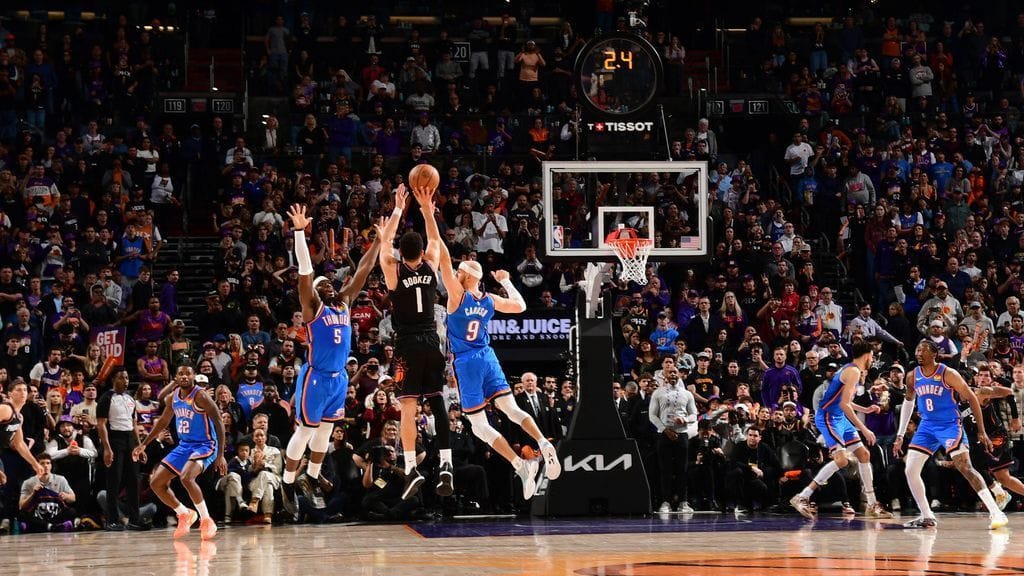
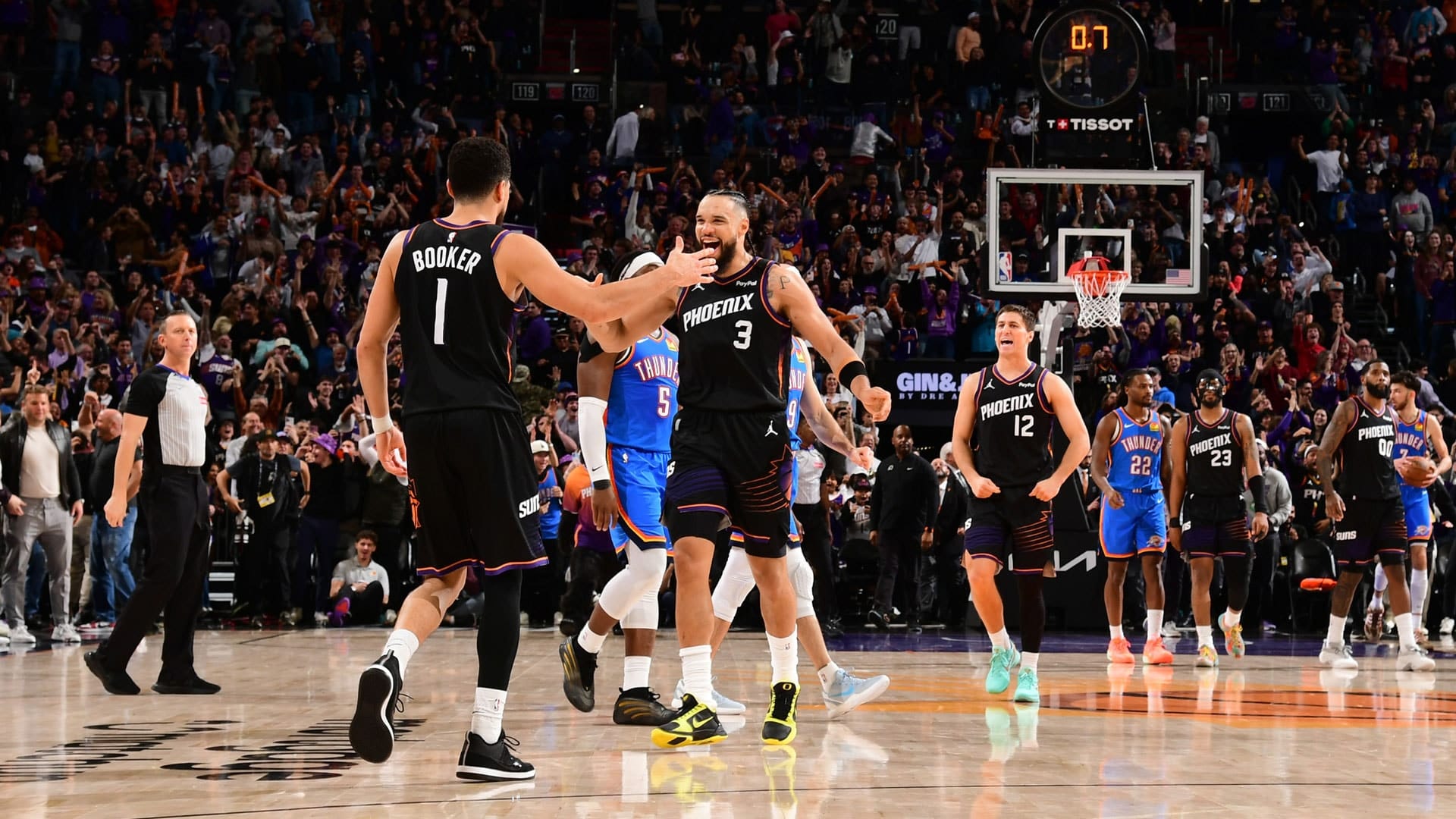
The sports desk melted down, predictably. They saw the flash, the cold-blooded three, and the immediate narrative—Vinny’s View: Suns earned grittiest win of season over Thunder. Give me a break. What they failed to analyze, what the entire hyper-commercial machine desperately wants to overlook, is the terrifying reality that the Phoenix Suns needed an act of divine intervention, a high-variance, last-gasp bucket from their highest-paid commodity, simply to scrape by the Oklahoma City Thunder, a team whose entire identity is based on deferred promise and future draft capital.
We are analysts, not stenographers for the league office. We are obligated to look past the box score candy. Jalen Williams hits a jumper to tie it, 8.2 seconds left, and everyone feels calm? Booker felt calm? Sure, the guy is a closer, he has icy veins in the Valley, but if your game-plan requires you to rely solely on one man avoiding overtime against a rebuilding squad, you are fundamentally broken, and no amount of dramatic headlines about a “Sunday statement” will change the inevitable trajectory of disappointment that this specific form of star dependency always ensures.
The Crushing Weight of Expectation vs. OKC’s Reality Check
Let’s address the Thunder, who are always presented as the plucky underdog, the cute kids with boundless energy; however, their performance in this loss—where they genuinely dictated the pace and almost stole a road victory against a purported contender—signals that the league has severely misjudged their timeline, meaning that the OKC management might actually have constructed a roster that, despite its youth and general lack of experience in the hostile environment of late-game execution, is already capable of exposing the glaring systemic holes in established franchises like Phoenix.
Vulnerability.
When the analysis focuses purely on Booker’s brilliance, it conveniently sidesteps the question of how the Suns allowed Williams to tie the game in the first place, or why the OKC offense was able to generate such clean looks throughout the fourth quarter, or the deeply ingrained issues regarding defensive rebounding and interior presence that Phoenix management decided were secondary concerns when assembling this astronomically expensive, top-heavy roster.
This isn’t an isolated incident; this reliance on individual brilliance—often termed ‘hero ball’ by those who prefer honesty to marketing buzzwords—is the toxic byproduct of modern roster construction, where three stars soak up 90% of the cap space, leaving the bench thinner than old wrapping paper, forcing the team to live and die by the desperate, often unsustainable heroics of their top tier players when the inevitable defensive breakdowns occur.
In many ways, the Thunder provided Phoenix with a courtesy loss, a chance to feel ‘gritty’ and ‘tested’ without actually having to confront the true existential threat that awaits them when they face a disciplined, deep opponent in the Western Conference playoffs, the kind of team that won’t just let Booker walk the ball up the court and launch a clean look with 2.8 seconds remaining.
The Fragility of the “Gritty” Narrative
The term ‘gritty’ is the most abused piece of sports slang this side of ‘dog mentality.’ When a team that is overwhelmingly favored, playing at home, and stacked with generational talent, barely survives a matchup against a team designed to peak in 2028, the correct term is not ‘gritty,’ it’s ‘underperformed,’ and that single word encapsulates the structural problems that plague Phoenix, problems temporarily disguised by the sheer talent of one man making an improbable shot when the clock was dripping down toward zero.
Let’s rewind the tape, strip away the Vinny’s View rose-colored glasses, and look at the preceding possession: Jalen Williams’ jumper. That was not a desperation heave; it was a well-executed set play capitalizing on poor transition defense and general lack of focus, tying the score with 8.2 seconds remaining, meaning Phoenix allowed the other team to dictate the terms of engagement until the very final possession of regulation, a massive strategic failure.
Imagine, for a second, that the shot misses. The game goes to overtime. The momentum, psychological and physical, swings entirely to the young, fearless OKC squad, who have already achieved their moral victory just by pushing the supposed contender past 48 minutes of regulation basketball; the outcome in that hypothetical extension would be far less flattering for the Suns, perhaps revealing a fatigue and desperation that the hero narrative conveniently sweeps under the rug.
Historical Precedent: Why Mid-Season Drama Means Nothing
This type of mid-season melodrama, where a contender needs a high-stakes, game-winning shot to seal a minor victory, has historically proven to be a dangerous precursor to postseason failure, indicating a fundamental inability to dominate inferior opposition consistently, which is the baseline requirement for serious championship aspirations; history is replete with examples of aesthetically pleasing regular-season teams—high drama, huge scores, great individual plays—that faltered immediately when faced with the grinding, possession-by-possession intensity of the playoffs.
The problem is not Booker. The problem is the architecture surrounding him, the predictable reliance on isolation scoring when a truly elite team should be able to rely on a dynamic, ball-movement offense capable of generating high-percentage looks, regardless of who is shooting the ball during crunch time.
Look at the content summaries: thunder, Booker hands OKC rare loss with game-winning 3, Vinny’s View: Suns earned grittiest win of season over Thunder. Notice the immediate, Pavlovian response to focus on the individual and the immediate result, ignoring the structural decay beneath the surface. This is what the league sells: individual glory, not team excellence.
And what about the ‘Starting 5: Looking ahead to 1st full week of 2026’? This whole spectacle is immediately folded into the next week’s storyline, designed to keep the engine of engagement churning, ensuring that no one actually stops to question the underlying validity of what they just watched, which was frankly a poor showing salvaged by one exceptional talent.
The Predicted Collapse of 2026
As the Cynical Investigator, I am here to tell you that this ‘gritty win’ is not a foundation; it’s a warning flare. The ability to win ugly is valuable, yes, but when ‘winning ugly’ becomes your default setting against mid-tier teams, you have already signaled your ceiling, which, barring a completely unexpected philosophical shift in how this team approaches team defense and bench rotation, is likely far short of the promised land of the NBA Finals.
The Thunder, despite losing, won the intellectual battle. They demonstrated that their young talent is accelerating faster than predicted, and they forced Phoenix to play a style of basketball—scrambled, reactive, dependent on late-game magic—that fundamentally minimizes the strengths of a veteran, star-studded roster designed to control tempo and assert dominance early in the game; this is why the loss, though statistically negative, is a huge moral victory for OKC.
We are going to see this script repeat itself. We are going to see Booker and the other stars bail out sloppy play time and time again this season, generating momentary euphoria, high ratings, and endless debate over who is ‘clutcher,’ until they run into a team in May that possesses both elite talent *and* profound depth, a team capable of surviving Booker’s inevitable scoring bursts while consistently exploiting the holes in the rest of the Suns’ lineup.
That is where the grit fades, where the hero narrative evaporates, and where the cynicism of the Investigator is finally validated, revealing that these narrow, dramatic regular-season victories were merely setting the stage for a predictable, agonizing failure in the second round of the playoffs.
Don’t buy the hype. Don’t trust the narrative that demands you celebrate the individual shot rather than criticize the 47 minutes and 57 seconds of organizational inadequacy that required the shot in the first place, that’s just cheap smoke and mirrors designed to keep you tuning in next week when the next high-drama, low-substance victory is inevitably manufactured for mass consumption, ultimately confirming that the 2026 championship chase is built upon far flimsier ground than any of these provocative headlines dare to admit.
The truth is harsh, the system favors spectacle over substance, and the Suns are currently the poster child for an organization mistaking high drama for sustainable excellence.