The Immediate Damage Report: A Stab to the Heart
We need to quit pretending that what happened Sunday night was just another regular season loss for the Oklahoma City Thunder; it wasn’t a fluke, it was a diagnostic test failed under immense pressure, a grim, clinical confirmation that while their tank is full of high-octane talent and the engine is revving louder than anyone expected, they still haven’t installed the necessary armor plating to survive the strategic brutality of the postseason.
Failure.
When Jalen Williams hit that shot—a beautifully executed sequence, by the way, showcasing the precision passing and unselfish play that defines the Thunder’s exciting, yet ultimately soft, identity—there was a brief, fleeting moment of optimism that the young squad had finally learned how to weather the storm and deliver a fatal counterpunch, setting themselves up for an overtime brawl they were statistically favored to win.
Then came the timeout. The silence. The strategic geometry.
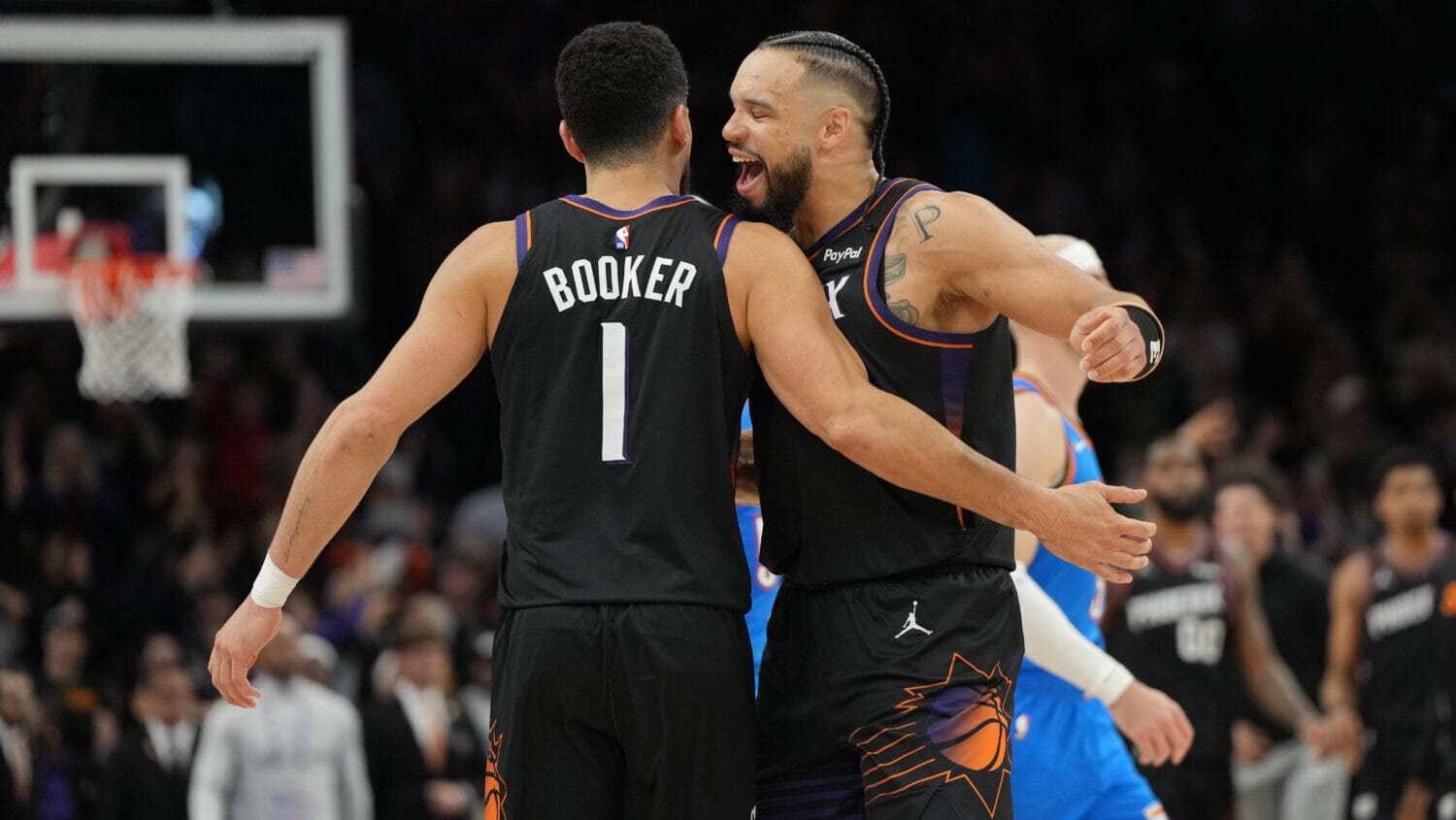
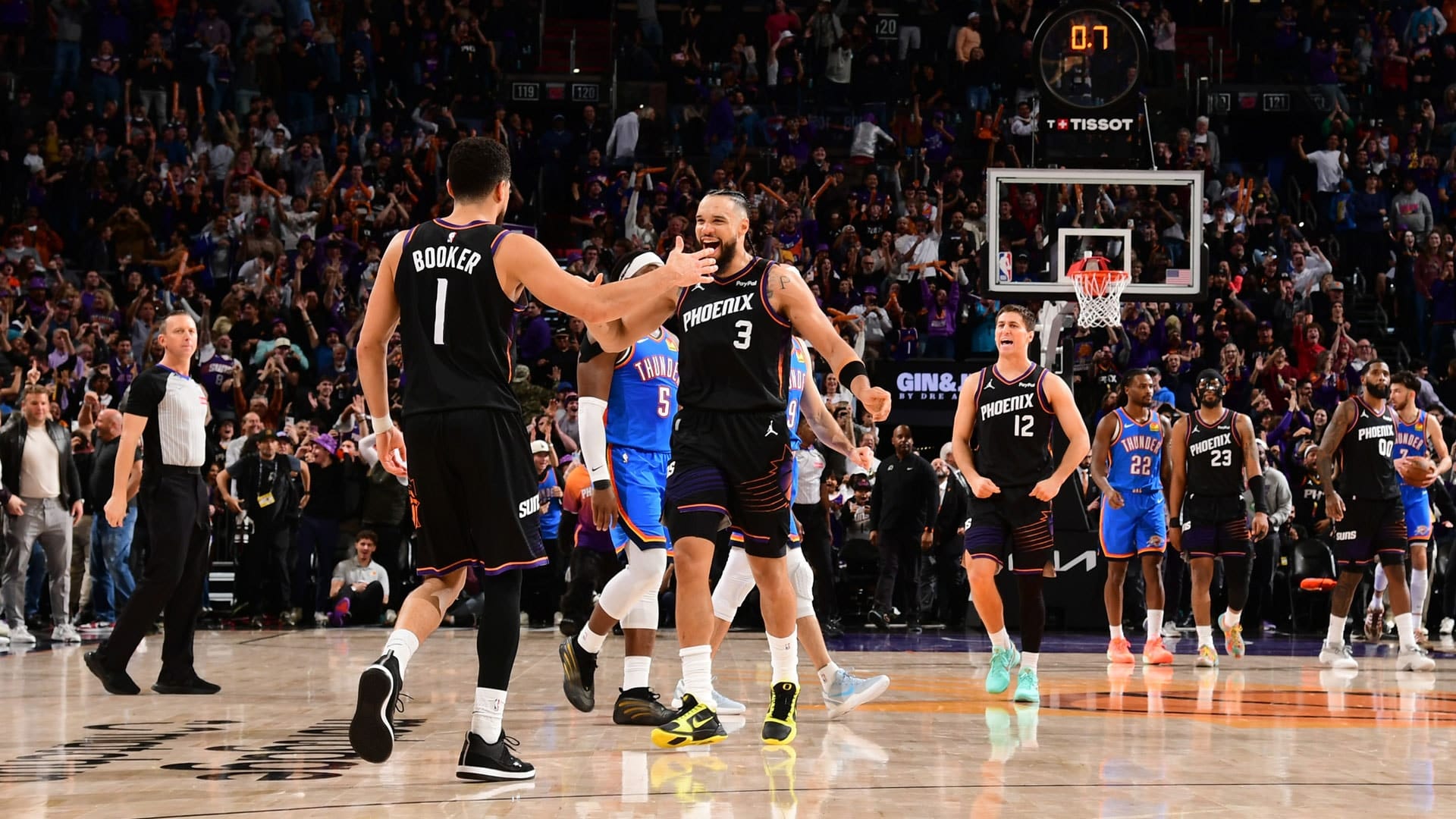
The ball was put into the hands of a man who understands that basketball is merely a vehicle for high-stakes psychological warfare, Devin Booker, who, despite having spent years marinating in the sour mediocrity of early Suns teams and then suffering the gut-punching, demoralizing collapse in the 2021 Finals, has developed an internal gyroscope that always points toward the most strategically advantageous outcome, regardless of noise or defensive placement, culminating in that ice-cold, game-winning triple that left the Thunder franchise and its exuberant, naive fanbase absolutely gutted and searching for meaning in the ashes of what should have been their victory.
Booker knew.
He felt the calm, as the reports confirm, which is the defining characteristic separating the pretenders who get anxious from the closers who get the job done; it’s the difference between talent and mettle, and right now, OKC is drowning in talent but desperately short on genuine, championship-grade mettle.
The Historical Context: Scar Tissue vs. Softness
To truly appreciate the significance of this January 2026 defeat, you must view it through the lens of institutional trauma. The Suns, despite their own organizational chaos, have the scars. They have the hard-won experience of failing spectacularly on the biggest stage, and that failure, unlike the relatively harmless failure of a young Thunder squad that is still years ahead of schedule, fundamentally alters the DNA of a team, stripping away the frivolous excess and leaving behind only the cold, sharpened edge required for late-game execution.
Look at the Thunder’s history of closing. Or rather, lack thereof.
This group, even acknowledging their current brilliance, is built on an unsustainable foundation of good vibes and positive reinforcement, largely due to Sam Presti’s masterful asset accumulation which has insulated the entire organization from true existential dread; they haven’t had to scratch, fight, and bleed just to make the playoffs, they’ve been handed a royal flush of lottery luck and shrewd drafting, meaning they’ve never truly had to answer the uncomfortable question about whether they have the dog in them when the opponent hits back with absolute, malicious intent.
Never tested.
The grittiest win of the season for the Suns, as Vinny’s View correctly pegged it, wasn’t about superior athleticism or better coaching in the preceding 47 minutes; it was about the Suns utilizing the psychological leverage that comes from knowing that when the game shrinks to a final possession, the opponent will inevitably default to their weakest programming, and for OKC, that programming involves a slight hesitation, a micro-second too late on the closeout, a reliance on hope rather than ruthless certainty, allowing Booker to operate in that pocket of space reserved exclusively for stone-cold assassins.
The 2026 Championship Imperative: You Can’t Trade for Grit
What the Thunder need now, and what they absolutely cannot acquire through their vast arsenal of draft picks and young players, is the lived experience of watching a championship slip through their fingers due to strategic negligence, a searing memory that fundamentally changes how one prepares for and executes the final eight seconds of a tie game against a legitimate contender.
The Thunder must now internalize this painful reality: they are no longer the adorable upstarts; they are legitimate contenders, which means every loss, especially a game-winner at home, is a strategic weakness that will be exploited mercilessly come April, May, and June by teams like the Suns, the Lakers (if they ever get their act together), and the ever-present, grinding machine that is Denver.
The market correction is in.
They are statistically fantastic—top five in efficiency metrics, possessing a Defensive Player of the Year candidate, and fielding three or more legitimate All-Stars—but the strategic flaw is evident, glaring like a beacon to veteran opponents who smell blood in the water during those pivotal moments where the execution of a game plan determines financial outcomes, legacy narratives, and the overall perception of strategic competence for the next decade; this is where young teams invariably stumble, overwhelmed by the gravitational pull of expectation and the sudden, suffocating pressure exerted by a calculated rival.
One needs only to look back at the historical precedent of talented, yet immature, squads across the last two decades who dominated the regular season only to find themselves completely incapable of delivering the knockout blow when it mattered most, often succumbing to older, less flashy teams that simply understood how to manipulate the clock and referee tendencies better than their younger, more exuberant counterparts, solidifying the cold, hard fact that tactical maturity is far more valuable in the playoffs than raw athletic potential.
Consider the necessary future adjustments. Does this loss force Presti’s hand?
The acquisition target has shifted from merely ‘talent’ to ‘strategic execution specialist’—an aging, slightly overpaid veteran who has won a ring and carries the baggage of that necessary cynicism that OKC currently lacks, someone who can literally scream at the young guards when they deviate from the rigid, defensive protocol required in a switch scenario with eight seconds left on the clock, thereby preventing the very space Booker required to stick the dagger.
The philosophical question for OKC is whether they trust the organic growth of their current nucleus to eventually develop this killer instinct—a risky, long-term proposition predicated on the idea that they will endure enough heartbreak to finally learn the lesson—or if they make a decisive, tactical trade before the deadline to inject immediate, surgical experience into their closing lineup, sacrificing future draft capital for present strategic competence, a move that would signal the end of their developmental phase and the beginning of their ruthless championship window.
The Cold Strategist advises the latter. You don’t wait for maturity to bloom when you’re already capable of winning now; you buy the missing piece.
2026 Projections: The Cold Strategy for the West
If the Suns can bottle the ‘grit’ they showed in this specific matchup—and that is a monumental ‘if’ given their inherent volatility and occasional organizational melodrama—they remain the single most dangerous tactical matchup in the West, because they possess three players (Booker, Durant, Beal, when healthy) who demand double-teams and operate best in isolation scenarios, which is exactly how games devolve in the half-court grind of the playoffs.
Isolation kills.
The Thunder’s success, conversely, relies on precision ball movement, quick decisions, and the energy derived from transition, a style that is beautiful to watch but inherently fragile when forced into a slow, deliberate, possession-by-possession knife fight against an opponent who is deliberately trying to draw fouls and milk the clock down to 4 seconds every possession.
This win allows the Suns, who were already looking ahead to the first full week of 2026 with a sense of urgency, to cement a key mental edge over a likely playoff opponent; they now know the blueprint for causing maximum psychological damage, and the Thunder know that the Suns possess their unique kryptonite.
Expect Phoenix to deliberately force OKC into more isolation sets during future matchups, specifically targeting the young guards late in the shot clock, understanding that their default impulse will be to try and find the open man rather than simply taking the best available, high-percentage shot themselves.
It’s simple math.
The trajectory of the Thunder is still blindingly bright, but this loss serves as a chilling, necessary correction. They need less flash, more substance. Less hopeful passing, more selfish, calculated finishing. They need to learn that in the NBA hierarchy, being ‘good’ gets you accolades, but being strategically ruthless gets you banners, and right now, Booker and the Suns reminded them they are still sitting somewhere in the middle, looking up at the truly cold-blooded strategists who live and breathe late-game execution.
The lesson: If you get a chance to put the strategic knife in, you twist it. OKC hesitated. Booker didn’t.
The next time these two meet, the tactical adjustments must be visible. If the Thunder allows another game to slip away in the final seconds due to a failure in late-game defensive rotation or offensive shot selection, then the narrative around this squad shifts entirely—from “contenders” to “nice guys who finish fourth.” The cost of this single three-point shot extends far beyond the standings; it has planted a seed of doubt that only a deep playoff run can eradicate, forcing the entire team to confront the chilling, undeniable truth about their own strategic limitations under duress, demanding an immediate, brutal self-assessment of where and why their collective psychological defenses cracked in the face of Devin Booker’s supreme, unfeeling tactical execution.
The margin between success and failure in the Western Conference is razor-thin, measured not in points but in millimeters of spacing and milliseconds of reaction time, and this specific failure will haunt them until they prove they can overcome the psychological hurdle the Suns just erected.
Get mean. That’s the only path forward.
The Thunder’s rare loss is precisely the kind of loss that defines a generation of players, cementing the fact that skill alone is insufficient without the predatory focus necessary to dispatch a veteran opponent who understands that legacy is built on moments of strategic closure, not mere statistical accumulation over 82 games, forcing OKC to evolve from an aesthetically pleasing team to a terrifyingly efficient machine if they ever hope to lift that trophy in the summer.