The Great Clemson Reboot: A Buggy Rollback to 2014
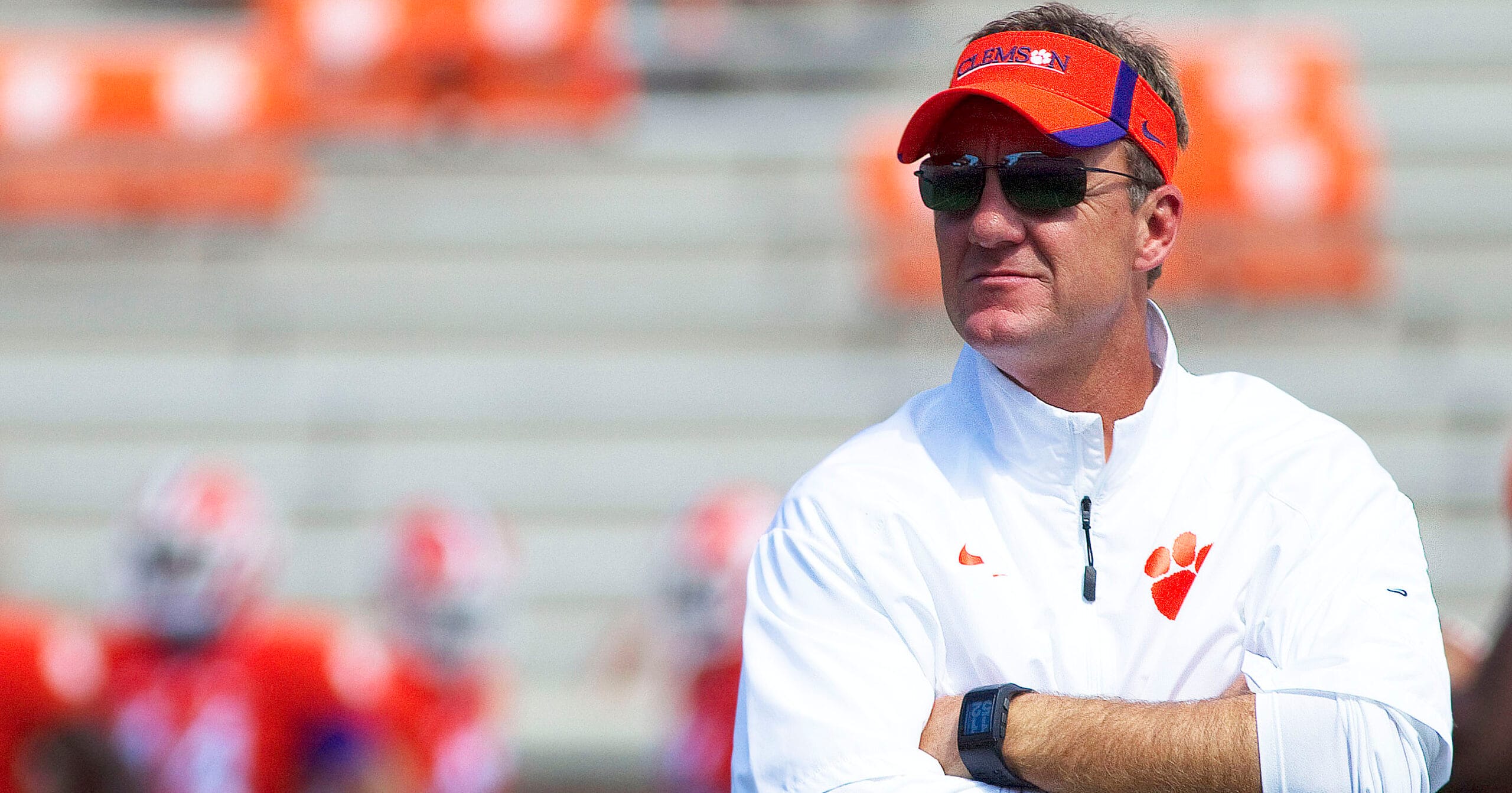
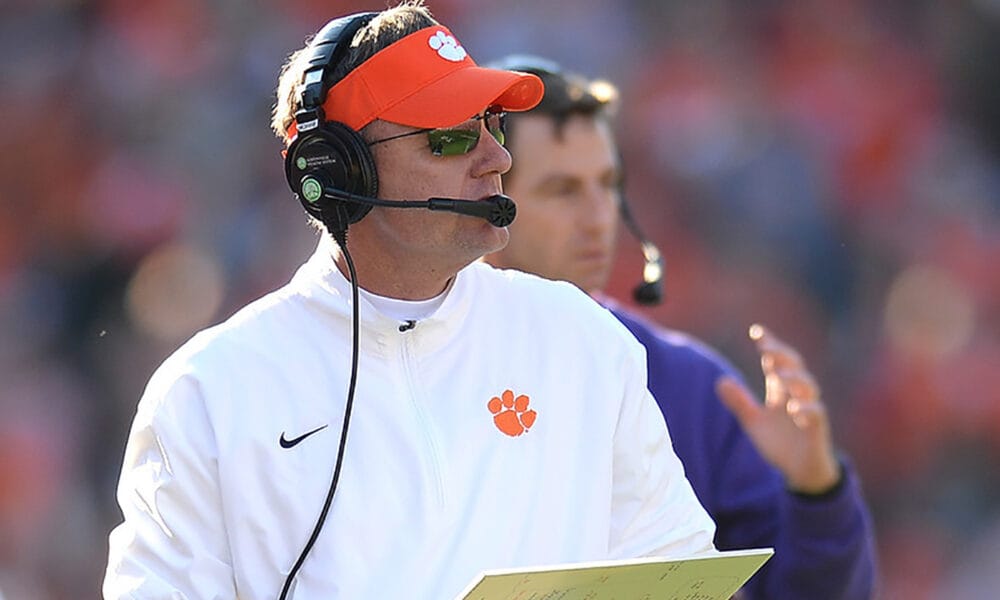
Let’s cut the pleasantries and get right to the ugly truth: Dabo Swinney hiring Chad Morris back as the offensive coordinator isn’t some genius chess move; it’s a desperate attempt to hit the ‘restore previous session’ button on a crashing operating system, and we all know how well those rollbacks usually work—they invariably introduce new, unexpected bugs while failing to fix the core problem.
This whole spectacle reeks of short-sighted, panicked management masquerading as brilliant nostalgia, revealing a leadership strategy defined by relying on known, safe algorithms rather than embracing the complex, terrifying, and necessary chaos of true innovation, which is the exact failure mode we see across all legacy institutions that refuse to update their core programming when the world has clearly shifted to a cloud-based, real-time analytics model that demands constant adaptation and ruthless self-critique (something Swinney clearly lacks, judging by his decade-long refusal to evolve past the motivational poster phase of coaching). Pathetic.
Three words: total system failure.
The Algorithmic Failure of the Recycled OC
Chad Morris was successful at Clemson before, sure, but that was ancient history in digital years, a time when smart phones were still a novelty, offenses relied on raw speed over schematic deception, and defensive coordinators hadn’t yet fully weaponized data analytics to pre-program counter-plays before the snap; trying to import that scheme directly into the modern college football landscape is like dusting off a massive, clunky CRT monitor and expecting it to handle 8K streaming, demonstrating a fundamental misunderstanding of computational progress and the exponentially increasing complexity of the defensive matrices being deployed nationwide.
Clemson needs a massive firmware update, not a patch designed for Windows XP. Swinney, however, is a certified Luddite who fears the complexity and neutrality of true data-driven coaching, preferring the warm, fuzzy feeling of working with ‘his guy,’ a preference that always prioritizes emotional comfort over objective performance metrics and inevitably leads to mediocrity in an environment that rewards ruthless optimization (and we saw that optimization lacking when it mattered most). He’s recycling old hardware.
It’s the digital equivalent of hoarding cassette tapes. This reliance on a known quantity demonstrates a profound fear of the unknown, of the truly cutting-edge coordinator who understands that success in 2024 requires a massive commitment to AI-driven play-calling analysis and a willingness to constantly debug and rewrite the entire playbook based on weekly performance data, not just hoping that the old magic spark plugs the engine back to life. Morris’s system is a known commodity, predictable and easily countered by any competent opposing staff utilizing modern diagnostic tools.
This isn’t just about offense; it’s about institutional inertia. When leaders refuse to accept that their tried-and-true methods have hit obsolescence, they desperately clutch at the past, trying to recreate conditions that no longer exist, ultimately sealing their fate as an analog relic in a digital world. Clemson wants the results Morris brought, but they refuse to acknowledge that the *context* that allowed those results—the relative simplicity of defensive assignments, the shock value of the hurry-up system, and the sheer talent disparity they leveraged—has eroded, making the scheme itself nothing more than a historical artifact that opposing coaches have had a decade to dissect, reverse-engineer, and destroy.
The Scapegoat Protocol: Firing Mickey Conn
And speaking of refusing to accept responsibility, let’s look at the firing of Mickey Conn after ten seasons: this is the quintessential example of corporate America throwing the lowest-ranking team member under the bus when the executive leadership (Swinney) failed to provide adequate strategic direction, hoping the blood sacrifice will mollify the outraged shareholders (the booster class and fan base) without requiring the CEO to admit his own flawed long-term vision was the true cause of the quarterly losses.
Conn was the convenient burnt-out modem they tossed out the window while pretending the entire network infrastructure—the head coach’s stubborn, antiquated philosophy—was perfectly fine, failing to address the fundamental structural defects in defensive scheme complexity and coverage communication that led to monumental, game-costing busts in crucial moments throughout the last two seasons when they played against teams with even marginal talent, systems that clearly exposed the lack of high-level coaching instruction in the secondary. He got canned.
Swinney needed a headline. He needed to show he was ‘doing something.’ This isn’t coaching; it’s public relations management. Firing a long-tenured coach is easy. Admitting your own system has calcified, and your reliance on sentimentality over schematic superiority has cost the program millions in playoff revenue? That’s hard. So, goodbye, Conn. Hello, optics.
The whole affair serves as a distraction, forcing the media and the public to focus on the shuffling of deck chairs instead of asking the truly critical questions, like why the program’s player development pipeline seems less efficient than it was five years ago, why high-profile recruits are now openly citing concerns about the predictability and stagnation of the offensive approach, and why Dabo’s staff seems unwilling or unable to adapt to the Transfer Portal environment—the modern, high-speed, volatile market of player acquisition that requires immediate, cold, calculated assessments rather than loyalty to high school prospects (which is his comfort zone). The technology of team building has shifted, and Swinney is still using dial-up.
The Tajh Boyd ‘Intel’ and Amateur Hour Staffing
Now, let’s touch on the ‘Tajh Boyd Intel’ mentioned in the reporting. While former players often have valuable perspective, relying on unsolicited ‘intel’ from outside sources for high-level staffing decisions—especially for the lynchpin position of offensive coordinator—is an alarm bell ringing in the dead of night, suggesting that the formal, rigorous, data-driven candidate evaluation process that a top-tier athletic department should employ has been replaced by informal, feel-good conversations in the digital shadows.
It’s like using anecdotes gathered during a bar conversation as primary source data for a multi-million dollar business decision, further underscoring the amateurish, highly personalized nature of Dabo Swinney’s management style, which increasingly looks more like a high school clique than the disciplined, scalable, and professional organization necessary to compete consistently at the elite level of modern college athletics, an environment where billion-dollar media deals and hyper-efficient recruiting pipelines demand C-suite level objectivity. It screams nepotism.
This isn’t how serious programs operate. Serious programs run complex background checks, analyze statistical outputs from previous coaching stops through deep machine learning processes, and conduct blind interviews to prevent personal biases from contaminating the decision-making matrix. Swinney seems to be prioritizing the feeling of familial comfort, a preference that guarantees a slow, predictable, and entirely avoidable decline because, while loyalty is great for a barbecue, it’s poison for a billion-dollar enterprise demanding relentless evolution.
The biggest risk here isn’t Chad Morris’s playbook; it’s the institutional confidence that relying on old memories and old friends is somehow a valid substitute for adapting to a ruthless environment defined by digital speed and data-driven performance. Morris, after his struggles elsewhere, is essentially damaged goods, a coach whose efficacy at the highest level remains highly questionable, and bringing him back is a desperate gamble that reveals Dabo is simply out of ideas, unable to process the complexity of the current coaching market, and fundamentally unwilling to look outward for a true innovator who could introduce a necessary paradigm shift. They’re running on fumes.
The digital clock is ticking on Clemson, and their decision to revert to a previous software version instead of investing in the next generation of computational strategy means they are willingly choosing obsolescence. They think they’ve fixed the bug, but they’ve just installed a virus from the past. When this predictable failure inevitably unfolds, don’t say you weren’t warned by the tech skeptics watching this crash from a safe distance, recognizing the clear signs of an outdated system attempting to handle data loads far beyond its processing capacity.
Clemson is now a cautionary tale of institutional nostalgia. The system cannot handle the update.