
The Cold Calculus of Conference Realignment: Houston’s Takeover
Forget the pleasantries and the nostalgic talk of conference history; this is a business, and the business of college athletics is undergoing a hostile takeover. The Big 12, having lost its crown jewels—Texas and Oklahoma—to the SEC’s predatory expansion, didn’t choose to rebuild; it chose to consolidate resources and survive. The additions of BYU, UCF, Cincinnati, and especially Houston were not romantic pairings based on shared values or traditional rivalries; they were a necessary and cold-blooded strategic maneuver to maintain relevance and secure media rights revenue in a dog-eat-dog world. This isn’t a friendly welcome party; it’s an audition for survival, and the matchup between No. 8 Houston and Cincinnati perfectly encapsulates the new power dynamics.
The Houston Blueprint: Strategic Ascension vs. Cincinnati’s Identity Crisis
Houston’s inclusion in the Big 12 isn’t a stroke of luck; it’s the result of a deliberate, calculated strategy. Under Kelvin Sampson, the Cougars built a national powerhouse in basketball while sitting outside the established Power Five structure, proving they didn’t need the validation of a legacy conference to compete at the elite level. They forced the issue through sheer performance, demonstrating that a well-funded, disciplined program (a rare combination in this era) can rise above the traditional hierarchy. This is the new model for success in college sports, where meritocracy, not tradition, dictates value. Houston enters the Big 12 as a fully formed predator, ready to claim its share of the spoils. They are not adapting; the conference is adapting to them. Cincy, meanwhile, faces a different challenge. The Bearcats spent decades waiting for this call, constantly seeking validation from larger conferences while enduring the struggles of the American Athletic Conference. Now, they finally have their seat at the table (the one they felt they deserved all along), but the game has changed dramatically since their Big East heyday. They have to prove that their historical identity can translate into a modern, high-intensity environment without becoming a stepping stone for the conference’s true power players like Houston and Kansas. It’s a very difficult position to be in.
The Manifestation of Power: Houston’s Style vs. Cincy’s Struggle
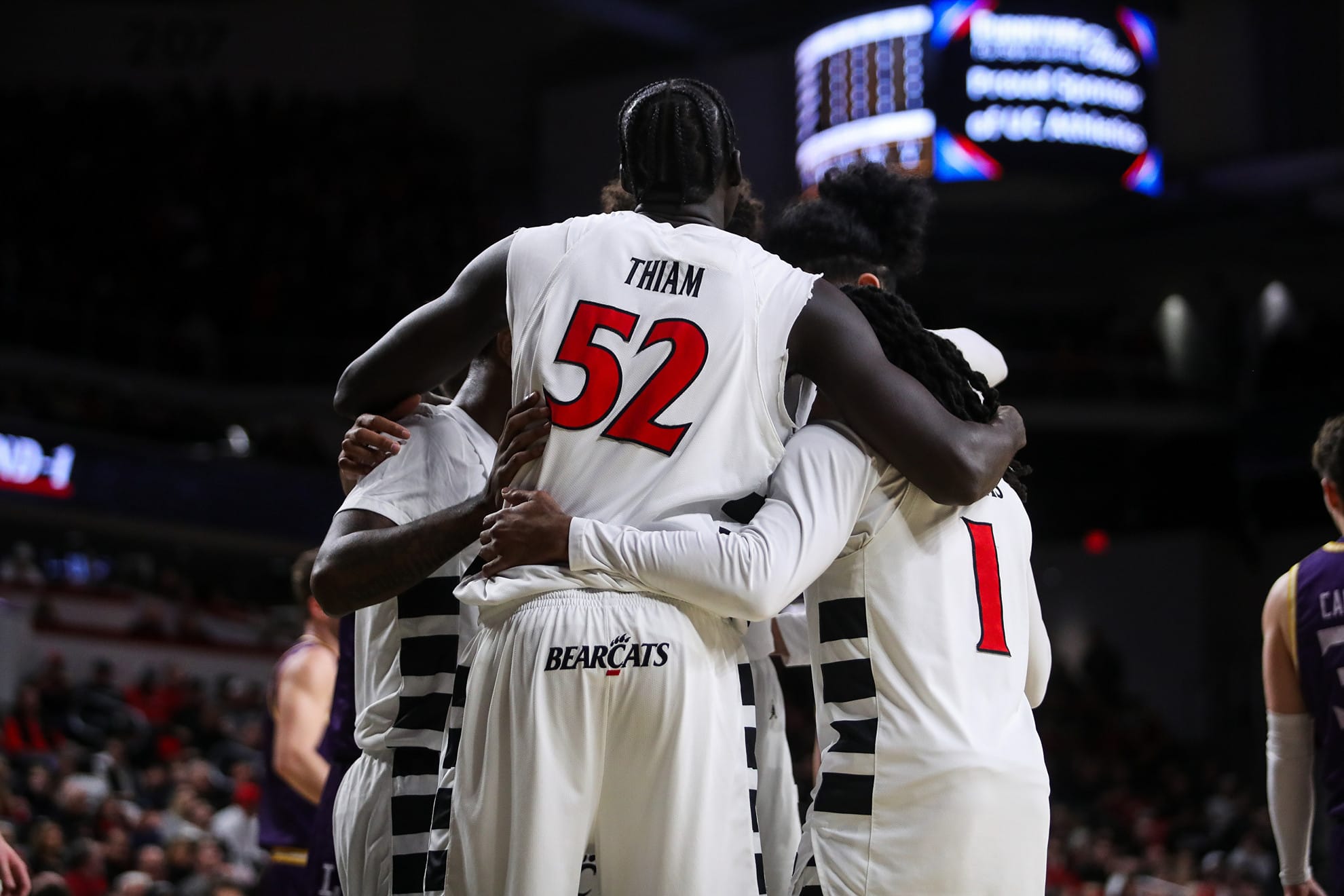
When Houston travels to Cincinnati, it’s a direct conflict of ideologies. Houston’s system under Sampson is built on a foundation of defensive tenacity, relentless rebounding, and physical play—a style that translates seamlessly to high-level conference competition. They don’t rely on flash or individual brilliance (though they have talent); they rely on a suffocating, grinding approach that wears down opponents over 40 minutes. They play with the confidence of a team that knows exactly who they are and what they represent in the new Big 12. Cincinnati, in contrast, is still trying to define itself in this new landscape. The pressure to perform in a conference where every single night presents a legitimate challenge is immense, and the Bearcats haven’t yet found a consistent identity that can withstand this level of scrutiny. While they have shown flashes of potential, the transition from being a top team in a lower league to competing in arguably the toughest basketball conference in the nation is a significant leap. This game serves as the first real test of whether Cincinnati can withstand the physical and mental onslaught of a truly elite program or if they will fall victim to the cold, hard calculus of the new hierarchy. The game’s outcome will dictate much more than just a win-loss record; it will establish the initial perception of Cincy as a competitor or merely as filler in the expanded conference.
Strategic Implications for the Future: The Big 12’s Basketball Gambit
The Big 12’s strategic pivot to become a basketball-first conference (or at least, to emphasize basketball significantly more than the SEC or Big Ten) is a calculated risk. While football drives the primary revenue, a strong basketball identity provides valuable national exposure and differentiates the league in a crowded market. The success of the expanded conference hinges on the ability of the new members to not only compete but to elevate the overall quality of play. Houston’s immediate success is vital to this strategy. If Houston falters, the new model looks shaky. If Cincinnati (and UCF, BYU) can surprise and pull off upsets, it validates the conference’s decision to expand. The game between Houston and Cincinnati is therefore a high-stakes strategic play, far exceeding the significance of a single early-season game. The narrative being established here is one of survival, where the new blood either proves its worth immediately or risks becoming irrelevant in the ever-shifting landscape of college sports. The cold reality is that Houston is here to take over; Cincinnati must prove it has earned the right to stand against the new power structure. This match is a brutal, unforgiving assessment of the future.