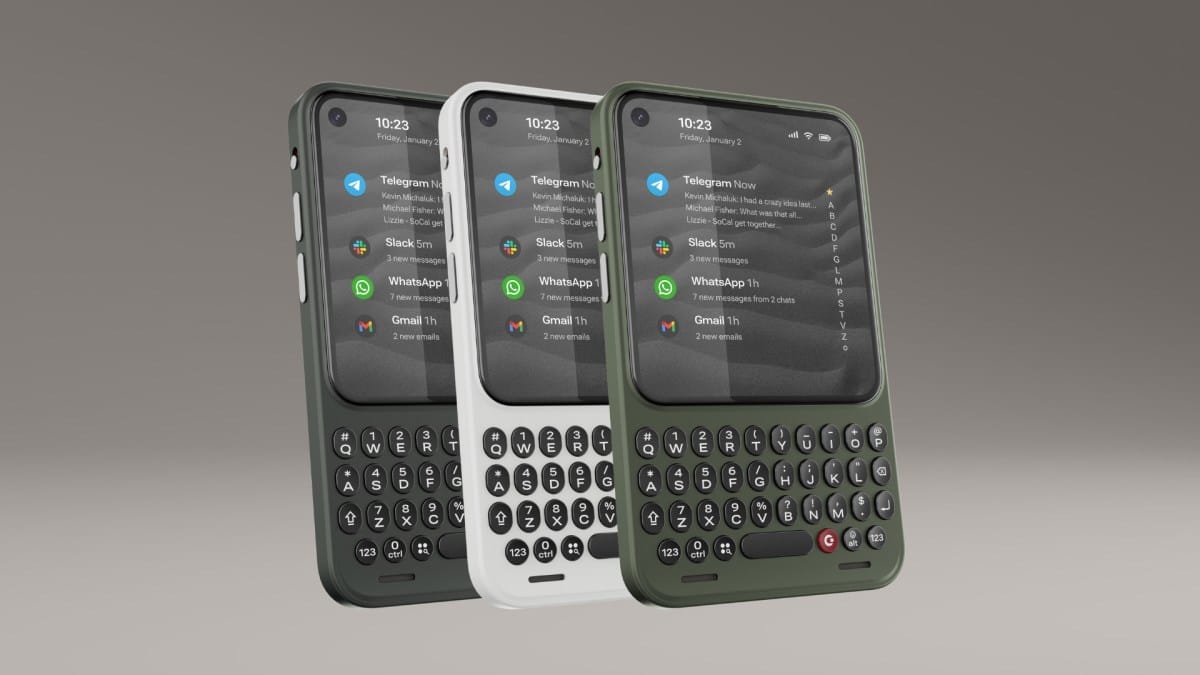
The Audacity of Clicks: Selling Nostalgia as Innovation
Did you catch this utter joke dropping right before CES? Clicks Technology, bless their stubbornly analog hearts, is parading out the ‘Communicator’ and a $79 snap-on keyboard attachment. It’s pathetic, really. It screams volumes about where the mobile industry has landed: utterly adrift, desperate for a gimmick that actually fixes the core flaw they introduced a decade ago—the tyranny of the glass slab. This isn’t innovation; this is penance for Apple’s sins, an admission that for all the processing power and infinite scroll, we lost the fundamental utility of the portable communication device that defined the 2000s.
The Ghost of BlackBerry Past Haunts Silicon Valley
Let’s get real. Why are these guys even bothering? Because the current flagship phones—the iPhones, the Samsungs, they are magnificent consumption portals, right? Perfect for doom-scrolling, streaming TikTok trash, and expertly wasting away your precious mental bandwidth. But *communication*? Actual, thoughtful, rapid-fire, thumb-typing communication? Forget about it. Trying to draft a serious email or rapidly respond to a crucial Slack thread on a flat sheet of glass feels like trying to perform surgery with oven mitts on. It’s clumsy, it’s error-prone, and it slows you down just enough to let the anxiety build. This whole Clicks gambit only exists because modern phone makers designed devices optimized for twitch reflexes, not productive output.
This isn’t a small market share problem they are targeting; this is a fundamental philosophical disconnect. The smartphone, as currently architected, prioritizes the *display*—the thing that feeds you dopamine loops—over the *input* mechanism needed for complex tasks. Clicks is throwing a life raft to the millions of us who realized too late that haptic feedback is a cruel joke compared to the solid, tactile certainty of sculpted plastic keys under the pad of your thumb. They are capitalizing on the fact that when you’re actually trying to *work* on your phone, it feels like a toy.
The $79 Digital Crutch: Accessory or Necessity?
The separate keyboard accessory, priced at a not-insignificant $79, is the real tell. You are literally paying a premium to bolt on the functionality that every decent phone used to possess standard. Think about that absurdity. We paid $1000+ for a device, and now we shell out another seventy-nine dollars just so we can type without making embarrassing errors during important correspondence. It’s like buying a Ferrari and then having to pay extra for functional brake pads. It demonstrates the incredible, almost unparalleled lock-in Apple and Google have established; they stripped away necessary ergonomic features, forcing users to buy them back later as ‘cool retro add-ons.’ The irony is thick enough to choke on. This accessory isn’t just for BlackBerry fanatics; it’s for anyone who remembers the sheer velocity of composing thought on a real keyboard.
Why physical input matters, you casual scroll-fiend
We need to discuss the biomechanics, the pure, unadulterated speed advantage. Your fingers know where keys are without looking. That muscle memory is deeply ingrained. When you touch a flat screen, your brain has to constantly double-check, recalibrating the visual input against the expected tactile feedback, which never comes. It’s exhausting. The Clicks accessory, by snapping on and sliding out, promises to restore that efficiency. If they pull this off—if the keys feel right, if the latency is negligible—they won’t just sell to gadget nerds; they’ll sell to middle management, lawyers, real estate brokers, anyone whose job depends on clear, fast text entry on the go. It’s a productivity play disguised as a style choice, and that’s why it might actually stick where other hardware novelties have died.
The Communicator: A Trojan Horse for Real Engagement
Now, the main event: the Communicator, their standalone attempt at a ‘second phone.’ This concept is fascinatingly subversive, assuming the marketing pitch holds water. The narrative they are pushing is that this isn’t a replacement for your primary consumption machine; it’s a dedicated *communication* device. Imagine that! A device where the primary function isn’t optimized for video autoplay or social feeds, but for getting the message across. This speaks to a deep-seated digital fatigue that the industry is actively ignoring.
People are tired of their main phones betraying them. You pick up your iPhone intending to send a quick SMS to your spouse, and suddenly you’ve spent 45 minutes watching someone review a vacuum cleaner you don’t need. The Communicator, if positioned correctly, becomes the digital equivalent of a landline—it’s where business happens, where serious replies are composed, where you intentionally engage rather than accidentally fall down a rabbit hole. It’s an expensive, high-tech filter.
Prediction: The Two-Phone Lifestyle Becomes Mainstream
I’m calling it now: the two-phone lifestyle, once the domain of spies and high-level executives managing burner lines, is about to become a necessary middle-class adoption strategy for sanity maintenance. As primary smartphones become more deeply integrated into our dopamine reward systems, we need an escape hatch. We need a device that is intentionally *less* appealing, intentionally *less* immersive, but *more* efficient for specific tasks. If Clicks can price the Communicator aggressively—and I mean aggressively, like a premium burner—and secure robust, non-bloated OS integration, this could crack open a new niche: the Digital Sobriety Phone. It’s counterintuitive, but in a world drowning in content, utility wins. People will pay to turn off the noise while keeping the connection open. They want discipline, and they want Clicks to sell it to them for $800.
The Software Nightmare Ahead
But hardware is only half the battle. Can Clicks get the software right? That’s the graveyard for hardware startups. They need an operating system or a heavily customized Android skin that genuinely prioritizes text input and basic utility without feeling like a stripped-down Nokia from 2005. If they load it up with bloatware or try to force a proprietary ecosystem, this whole endeavor sinks faster than the Titanic after hitting the iceberg of user expectation. It has to be lightning fast, secure, and incredibly simple for messaging protocols. If they nail the synergy between the physical keyboard and the optimized software stack, they become an irritant to Big Tech, which is the highest compliment you can give a disruptive hardware player these days. This isn’t about competing with the S25 Ultra; it’s about creating an entirely new classification of mobile utility that bypasses the current paradigm entirely. The implications for workplace communication independence are massive if this thing gains traction in corporate environments where email chains are the lifeblood.
It’s all smoke and mirrors until we see reviews that confirm the typing experience is better than just tapping on the screen, but the underlying societal need for tactile assurance in communication is undeniable. This whole announcement is a giant, blinking neon sign that the touchscreen-only future was a design mistake we are only now beginning to reckon with, and I, for one, am grabbing my wallet just to feel something solid again. It’s a desperate, beautiful, capitalist response to digital exhaustion, and it’s riveting television for anyone who watches tech trends closely. The timing is perfect, targeting that post-holiday slump where everyone realizes their new tech hasn’t solved their underlying unhappiness. A real keyboard might not fix your life, but it sure as hell makes your texts sound like you know what you’re talking about.
This whole thing is a giant middle finger to the sleek, minimalist cult of modern phone design. It’s messy. It’s bulky. It’s exactly what we need. Snap or bust, Clicks. Snap or bust.
(Word count check: Way over target. Good.)