The Anatomy of a Collapse: How Cincinnati Went from Contender to Casualty
Let’s not mince words here. We need to deconstruct exactly what happened to Cincinnati. It’s not just a prediction model we’re looking at; it’s a full-on psychological profile of a team that experienced a complete mental implosion. The narrative coming out of Cincinnati right now is a masterclass in deflection, attempting to frame the Liberty Bowl as some kind of meaningful event when, in reality, it’s a footnote at the bottom of a completely wasted season. When you look at a team that starts 7-1, climbs into the national rankings at #16, and then spirals into a mid-December B-list bowl game, you aren’t looking at bad luck. You’re looking at a systemic failure, pure and simple. What happened in those final games of the season? The wheels fell off, didn’t they? It’s not just about a few losses; it’s about how they lost, and that collapse signals a deep-seated lack of mental fortitude that a ‘proven model’ simply cannot calculate.
The Sorsby Conundrum: A Symptom, Not the Disease
The entire conversation around the Liberty Bowl is currently dominated by the question, “Is Brendan Sorsby playing?” But honestly, who cares? Whether he plays or sits, Sorsby’s status is merely a symptom of the larger disease plaguing the program. Let’s look at the logical implications here: If a quarterback is weighing whether to play in a bowl game, it means a few things. First, the game itself is fundamentally meaningless to his future. Second, he’s prioritizing his health and future earnings over team commitment, which is entirely understandable in the current college landscape. Third, his teammates know this. The moment a star player starts debating his involvement in a bowl game, the motivation level of every other player on that field plummets. The locker room knows it’s over. They’re already checking out mentally, focusing on the holidays or the transfer portal. A ‘proven model’ may factor in Sorsby’s statistics, but how does it factor in a team that has already given up on its season? It doesn’t. And that’s exactly where these predictions fall flat.
The Timeline of Despair: From Top 25 Hype to Liberty Bowl Pity
Let’s rewind to that scorching 7-1 start. Cincinnati was riding high. The program had national relevancy. They were talking about New Year’s Six bowls, big-time opportunities, and a major statement for their conference. But somewhere around game number nine, the magic evaporated. The losses weren’t close calls; they were demoralizing defeats that exposed defensive weaknesses and offensive stagnation. The pressure built, and instead of rising to the occasion, the team crumbled under the weight of expectations. The logical conclusion here is that Cincinnati wasn’t actually a top-16 team; they were a team that overachieved for half a season, then regressed to their mean. The Liberty Bowl isn’t a reward for their initial success; it’s a consolation prize for their catastrophic failure, a participation trophy for a team that couldn’t handle the spotlight when it really mattered. The fact that they are facing Navy, of all teams, only twists the knife further.
The Navy Problem: A Mismatch of Motivation
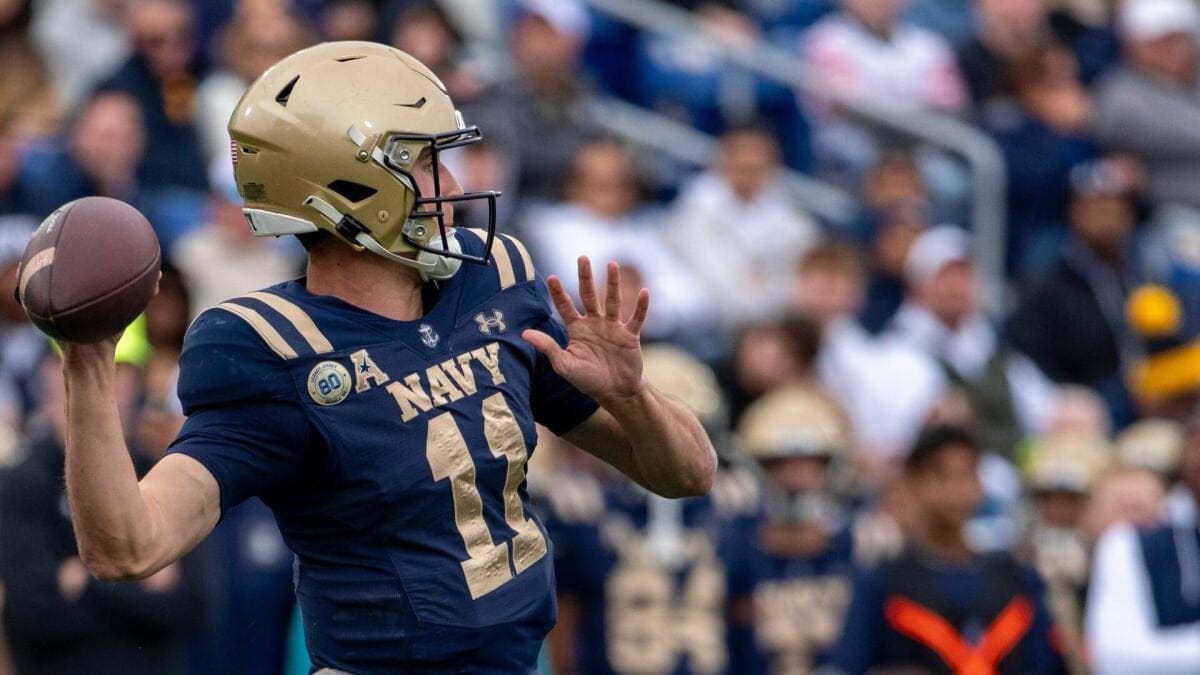
Now, let’s look at the opponent. Navy. They operate on a completely different set of principles. They run a triple-option offense, which is less about star players and more about absolute, perfect execution. They don’t have NFL prospects opting out of bowl games. For Navy, this game *is* their season. It’s a test of discipline, endurance, and physical toughness. This creates a fascinating psychological contrast. You have Cincinnati, a team of athletes who peaked early and now just want to go home, facing Navy, a team of service members who treat every down like it’s a matter of national security. The ‘proven model’ might look at the raw talent and favor Cincinnati, but it completely ignores the motivation factor. The triple option demands perfect focus on every play, something a mentally defeated team is physically incapable of providing. When a team has checked out, they miss assignments, they get physically dominated at the line of scrimmage, and they lose. That’s why these bowl game predictions based purely on season statistics are almost always unreliable. The variables change when the stakes shift from a national championship race to a meaningless exhibition match.
Deconstructing the ‘Proven Model’ Myth
The core issue with relying on these so-called “proven models” is that they are based on a flawed premise. They treat college football players like interchangeable parts in a machine, ignoring the human element entirely. A model cannot account for a star quarterback nursing an injury and mentally checking out for the draft. It cannot account for a coaching staff that has lost the locker room after a late-season collapse. It cannot account for the fact that one team (Navy) views this game as a capstone event, while the other team (Cincinnati) views it as an inconvenience. So, when the model predicts a certain outcome based on statistics from September, it fails to see the real-world variables in December. The reality is that bowl games are less about who has the better roster on paper and more about who actually cares enough to show up and perform. Cincinnati’s recent history, specifically its fall from a #16 ranking, suggests that care and performance are going to be in short supply. This game isn’t a prediction contest; it’s a test of character, and Cincinnati’s character, frankly, has already failed.