Why does a little bit of white powder turn a G7 nation into a third-world simulation?
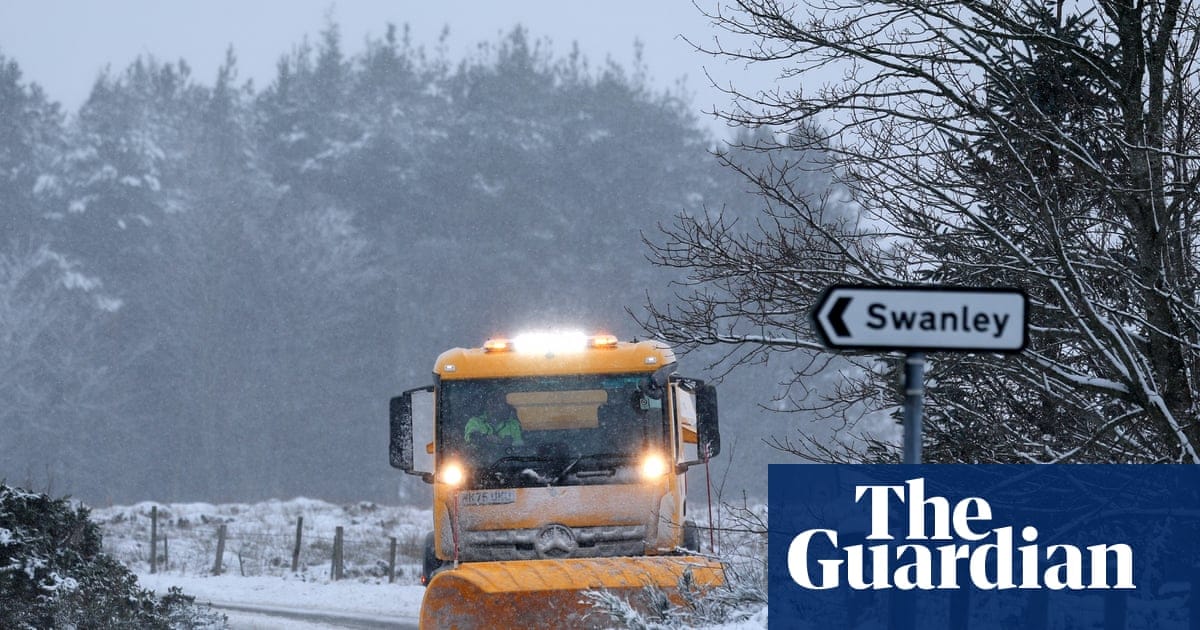
Let’s get one thing straight right out of the gate: the UK’s reaction to ten centimeters of snow is nothing short of a national disgrace that suggests our collective resilience has the structural integrity of a wet paper towel. We are sitting here in early 2026, looking at the same headlines we saw in 2010, 1987, and every other year since the dawn of the internal combustion engine, yet somehow the shock remains fresh. It’s pathetic. We treat a seasonal inevitability like an alien invasion (though an alien invasion might actually get a more coordinated response from the Department for Transport). When the Met Office starts upgrading warnings to ‘bitterly cold,’ what they are actually signaling is the total surrender of the British rail network and the immediate onset of mass panic at every Sainsbury’s bread aisle in the country. It is a ritual of failure that we perform with sickening regularity. Is it really the ice that stops the trains? No. It is the lack of foresight, the skeletal investment in de-icing technology, and a management culture that thinks ‘hope’ is a valid contingency plan for a North Atlantic winter. We are watching a country that literally colonized half the planet because it was too cold at home suddenly forget how to operate a shovel. It’s a comedy of errors where the punchline is a stranded commuter freezing on a platform in Crewe.
Is the energy grid actually ready for a real freeze?
Don’t make me laugh (it’s too cold to chuckle anyway). The reality of our current energy landscape is that we are one sustained ‘Beast from the East’ away from a total blackout scenario that would make the 1970s look like a neon-lit rave. We talk about ‘power cuts’ in these news bulletins as if they are minor inconveniences—a chance to light a candle and play a board game—but the strategic truth is far more sinister because our dependence on a fragile, just-in-time gas supply and an intermittent renewables mix means we have zero margin for error. (And don’t even get me started on the lack of storage capacity). When the mercury drops and the wind dies down, the grid groans under the weight of millions of heat pumps that everyone was told would be the salvation of the planet but are currently struggling to keep a two-up two-down in Sheffield above twelve degrees. It’s a strategic bottleneck. If we can’t handle 10cm of snow without the ‘risk of travel cancellations,’ how are we supposed to project power on the global stage? We are a nation that has outsourced its survival to the lowest bidder. The cold isn’t the enemy here; the enemy is the delusional belief that we can run a modern economy on a ‘fair weather’ infrastructure. You see it in the eyes of the politicians when they stand in front of a salt spreader for a photo op—they know they’re one blizzard away from a riot. The grid is a spiderweb pretending to be a steel cable.
Why are we so obsessed with the ‘bitterly cold’ narrative?
The media loves a bit of drama, doesn’t it? They frame it as ‘The Big Freeze’ or ‘Snow-mageddon’ because it sells ads for thermal underwear and de-icer spray, but the narrative serves a deeper purpose: it provides a convenient excuse for institutional incompetence. If you frame the weather as ‘unprecedented’ or ‘extreme,’ then nobody has to answer for why the M25 is a car park the moment a snowflake touches the asphalt. (It’s never actually unprecedented, by the way). We have records going back centuries. We know it gets cold in January. Yet, the narrative persists that this is an act of God rather than a failure of governance. Look at the language used—’Snow warnings upgraded.’ It sounds like a military briefing. It’s designed to make you feel like a victim of the elements rather than a victim of a transport system that spends more on executive bonuses than on heating elements for points and signals. We’ve become a society that fears the sky. We’ve lost the grit—both the literal grit on the roads and the metaphorical grit in our souls. In Scandinavia, 10cm of snow is what they call ‘Tuesday.’ In the UK, it’s a reason to declare a national emergency and stay in bed with a hot water bottle. This narrative of fragility is self-fulfilling. The more we are told to stay home, the more the economy grinds to a halt, and the more we accept that our systems are incapable of functioning in anything other than a light drizzle. It’s a slow-motion collapse of civic capability.
Is this the end of the ‘Green Dream’ when the pipes freeze?
There is a delicious irony in watching the proponents of a total fossil-fuel exit scramble for their electric blankets when the temperature hits minus five. Look, I’m all for not boiling the planet, but the ‘Cold Strategist’ in me sees the glaring tactical flaw in our current trajectory: we are trading energy density for virtue signaling. (And the virtue doesn’t keep your toes warm). When the snow settles and the solar panels are covered in a thick layer of white frost, and the wind turbines are locked down to prevent blade damage, where do you think that surge in demand is going? It’s going straight back to the very things we’re trying to kill off. This winter ‘crisis’ is a dress rehearsal for a much larger geopolitical reality where energy is used as a weapon. If a few snow showers can cause ‘delays and cancellations’ to the point of national paralysis, imagine what an actual targeted disruption would do. We are telegraphing our weakness to the entire world. We are saying, ‘Look, we can’t even keep the trains running in a mild winter storm.’ It’s an invitation to every adversary we have. The ‘Green Dream’ becomes a ‘White Nightmare’ when the reality of physics meets the idealism of policy. We need a hard reset on how we view resilience. Resilience isn’t just about carbon credits; it’s about making sure the lights stay on when the world turns into an ice cube. And right now? We are failing the test miserably.
What happens when the ice doesn’t melt?
The warnings suggest this could last ‘into the weekend and beyond.’ That’s code for ‘get ready for the supply chain to snap.’ (Because it will). Our ‘just-in-time’ delivery models are built on the assumption that roads are always clear and trucks always move. But one icy hill in the Pennines can butterfly-effect its way into a shortage of fresh produce in a London supermarket within 48 hours. This is the fragility of the modern world laid bare by a bit of frozen H2O. We have sacrificed redundancy for efficiency, and now we are paying the ‘ice tax.’ Every hour a truck is stuck is a pound added to the cost of living. Every cancelled flight is a blow to our international standing. And yet, we will do it all again next year. We will act surprised. We will blame the Met Office. We will buy all the milk and bread. We are a nation of goldfish, forgetting the lessons of the last frost before the current one has even thawed. If this 2026 freeze teaches us anything, it should be that our ‘modern’ systems are incredibly shallow. We are living on the edge of a precipice, and it’s a slippery one. Stop looking at the snow as a pretty postcard and start looking at it as a diagnostic tool for a failing state. It shows the cracks. It shows the rust. It shows the truth that no press release can hide. We are cold, we are stuck, and we are fundamentally unprepared for the world as it actually is, rather than how we wish it to be.
Where do we go from here?
Probably nowhere, considering the state of the rails. But if we were smart—which is a big ‘if’—we would stop treating weather as an adversary and start treating it as a baseline. We need to over-engineer our infrastructure. We need to prioritize energy security over ideological purity. We need to teach the next generation that a little bit of snow isn’t a reason to give up on the day. (But we won’t). Instead, we’ll wait for the thaw, pat ourselves on the back for ‘surviving,’ and go back to sleep until the next yellow warning pops up on our smartphones. The strategic failure isn’t in the clouds; it’s in the boardrooms and the halls of power where the cost of resilience is always deemed ‘too high’ until the pipes burst and the lights go out. 10cm of snow isn’t a disaster. Our response to it is. That’s the hard, cold truth that nobody wants to hear while they’re shivering in a station waiting for a train that was cancelled three hours ago. Welcome to 2026. It’s exactly like 2025, only colder and more expensive.