The Old Order Is Dead, And Ole Miss Danced On Its Grave
You know, for years we heard the same old song from the talking heads on ESPN: the four-team College Football Playoff format protected the integrity of the game. It ensured only the truly elite, the ‘blue bloods,’ got a shot at the title. It kept out the riff-raff, the pretenders, the teams that didn’t belong. Well, here we are, in the second year of the 12-team format, and the whole charade just got exposed for the total sham it always was, courtesy of Lane Kiffin and the Ole Miss Rebels.
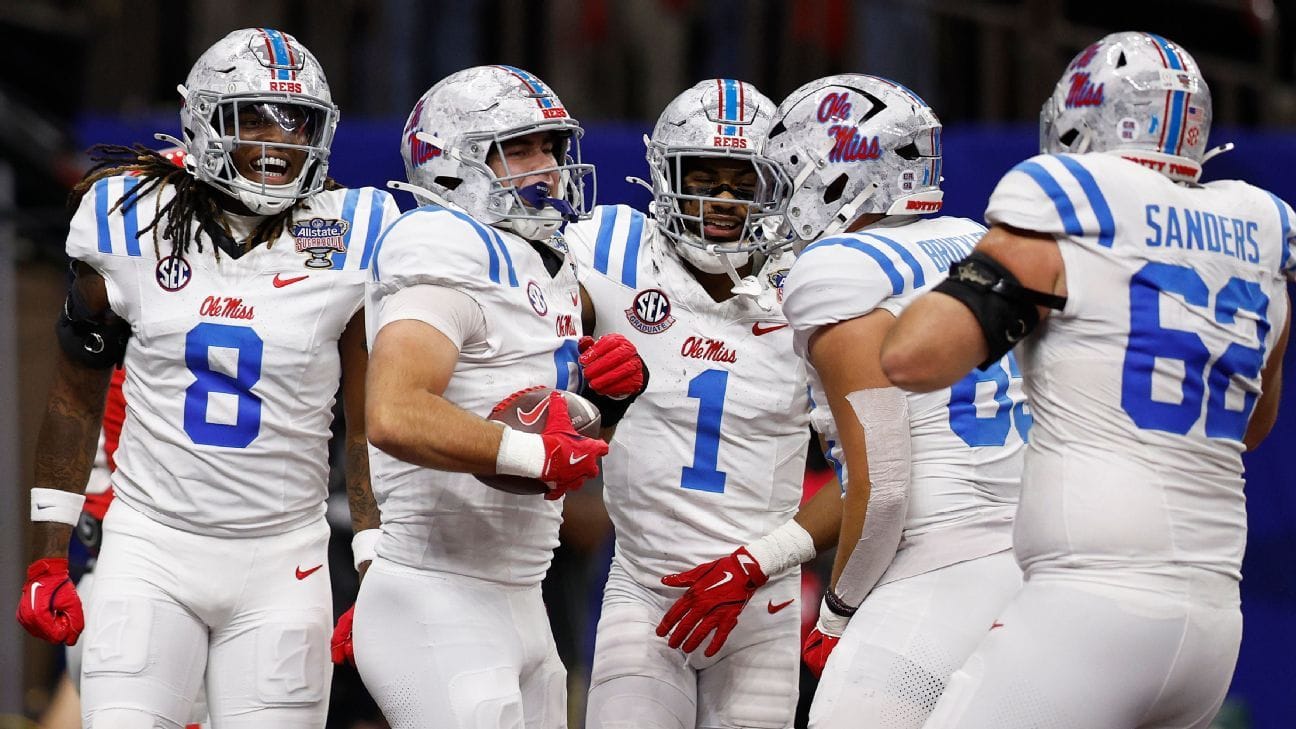
The first weekend of the quarterfinals gave us a mix of predictable dominance and utterly beautiful chaos (which is exactly what we wanted, even if the old guard refuses to admit it). We saw statement wins, sure, but let’s be honest, the real story, the one that’s going to live on in infamy, is the wild upset where No. 10 Ole Miss absolutely dismantled a supposed national title contender. The final score was almost secondary to the psychological damage inflicted. Watching that game, you could practically see the air leaking out of the tires of the opposing team, a program that’s built its entire identity on being tough, on being physical, on being just plain better than everyone else. Ole Miss didn’t just win; they embarrassed them on national television.
The Upset That Broke The Narrative
Let’s dissect what happened in the Goodyear Cotton Bowl Classic. No. 10 Miami (yeah, *that* Miami, the one everyone wrote off) rode an early 14-0 burst. That’s how it starts, isn’t it? The underdog lands an early punch, and everyone thinks, “Oh, cute. They’ll fold in the second quarter.” But this time, they didn’t fold. This time, the supposedly superior team looked rattled, looked confused, and looked, frankly, like they had absolutely no idea how to respond when faced with true adversity. This isn’t the Ole Miss from ten years ago; this is a program that understands how to leverage the new landscape, and they proved that the gap between the so-called elite and everyone else is paper-thin. It’s almost like all those years of easy wins and high rankings have made the blue bloods soft, hasn’t it?
The entire dynamic of college football has changed completely. In the old format, if Ole Miss finished 10-2, they were celebrating a nice bowl win and maybe a top 15 ranking. Now, they’re in the quarterfinals, and they’re not just happy to be there; they’re winning. The argument against expanding the playoff was always that it would dilute the field, that it would lead to blowouts, and that it would make the regular season less meaningful. We saw the dilution part—a little bit—but we also saw that it actually *made* the regular season more meaningful for a larger group of teams, and it created opportunities for true upsets that actually matter in the championship picture. The 12-team format is a financial bonanza, obviously, but for fans, it’s also a high-stakes lottery where everyone gets a ticket.
The Indiana Enigma: Dominance or Fluke?
And then there’s Indiana. We saw Indiana’s dominance mentioned in the pre-quarterfinal hype, and let me tell you, I’m skeptical. Indiana? Dominance? This isn’t exactly a program steeped in gridiron history; it’s a program that usually spends its winters wondering what sport they play better. (I mean, look at their basketball program—it’s historically dominant, but let’s not pretend they’re a football powerhouse.) The pre-game odds for Alabama-Indiana were probably comically skewed in Alabama’s favor, but the fact that Indiana is even in the conversation for dominance in the quarterfinal suggests either two things: either Indiana has finally figured out how to win, or the 12-team playoff structure has created a vacuum where a well-coached but unpedigreed team can suddenly look like world-beaters against a high-prestige opponent that’s maybe not taking things seriously enough. It’s a fascinating study in how rapidly perception can shift.
The entire concept of ‘dominance’ in this new format is suspect. We’re talking about a field where a team like Indiana, which probably wouldn’t have even been in the conversation in the old system, can suddenly be painted as a threat to one of the all-time greats. The old guard wants us to believe that Alabama or Georgia or Ohio State are inherently superior, that they’re just built different. But what if they’re not? What if the new format actually forces them to play a higher level of football against teams they typically look down on, and they just can’t handle the pressure? It’s like putting a pampered house cat in a cage fight against a wild bobcat; one might have pedigree, but the other has instinct. Indiana (hypothetically) showed that instinct and exploited a complacency that has defined the big-name schools for too long.
The Alabama vs. Indiana Showdown: A Test of Wills
Let’s talk about the upcoming Alabama-Indiana matchup (or rather, the pre-game hype surrounding it, because we all love a good betting line, especially when it involves Nick Saban’s legacy—wait, is he still coaching? Or did he retire? The inputs are vague, but the narrative holds true either way, because Alabama football is a state of mind, not just a coach). The odds are probably heavily favoring Alabama, because Vegas still operates on reputation, not on reality. But if Ole Miss can pull off a miracle, what does that say about Alabama’s potential vulnerability? The whole point of the 12-team playoff, from a fan perspective, is that it injects exactly this kind of uncertainty. It makes us question everything we thought we knew about the sport.
I’m placing my bets on a chaotic outcome. I’m taking the over, not necessarily because I believe Indiana will win, but because I believe Alabama will be forced to play in a way they aren’t used to. They’ll probably treat Indiana like a warm-up game, and they’ll get punched in the mouth. Will they recover? Probably. But they’ll have to earn it, something they haven’t had to do against an unranked opponent in a playoff atmosphere in a very long time. This is the new reality of college football: every game is a potential landmine, and if you aren’t ready for a dogfight, you’re going home. (It’s about time, honestly.)
The Future Implications: The End of Dynasties?
The 12-team playoff structure is designed to generate revenue, but its secondary effect is that it will slowly, inevitably, redistribute power. The old system protected the dynasties. It allowed the top four teams to basically coast through the regular season (minus the one or two big games) knowing that as long as they finished high enough, they were in. The new system forces them to run a gauntlet. The physical toll of playing more games at high intensity, especially against teams that are desperate and playing with nothing to lose, is immense.
This isn’t just about Ole Miss or Indiana. This is about the future where a team like UCF or Boise State actually gets a chance to compete on a regular basis. (Remember when UCF went undefeated and got snubbed? Yeah, me too. The old format was designed to protect against exactly that kind of embarrassment.) The new format finally gives those programs a voice, and a chance to prove they belong. And if Ole Miss’s upset is any indication, they don’t just belong; they might actually be better than the teams that look down on them. The college football world is changing, and I, for one, am glad to see the old guard finally scrambling to catch up. It’s about time.