The Illusion of Order Shattered by Miami’s Cheap Shot
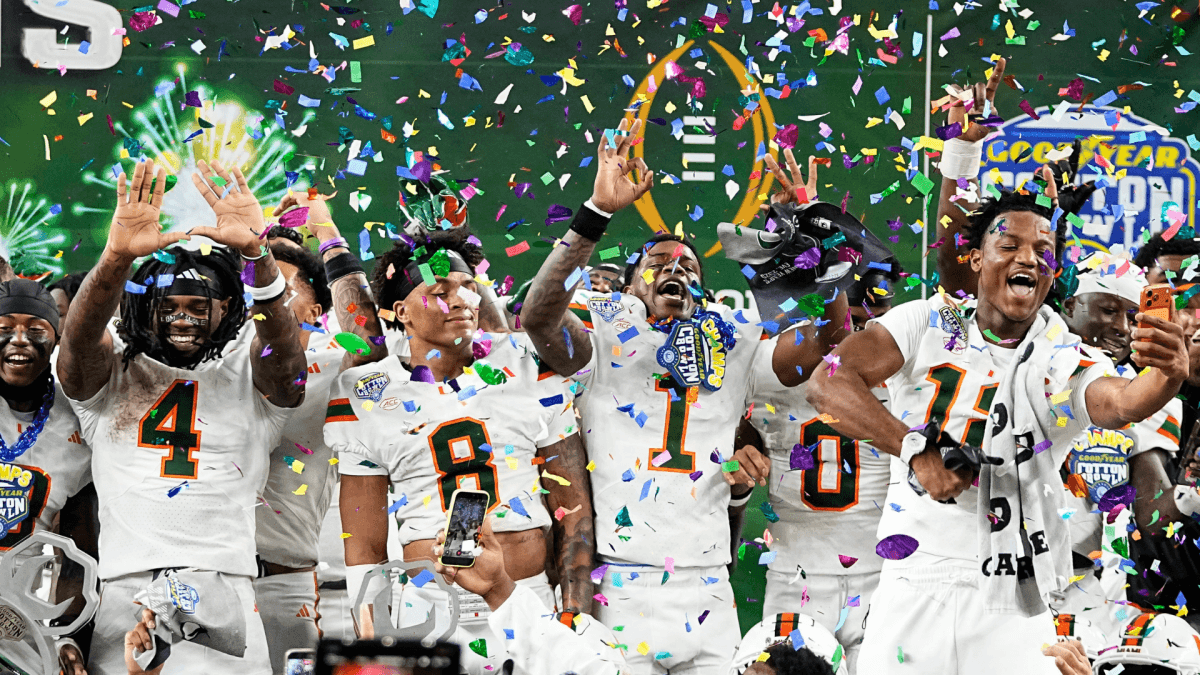
Look at this mess. Just look at it. We were promised ‘parity’ with this expanded College Football Playoff nonsense, a grander stage where destiny could be decided by more than just two sheltered blue bloods choking in January. And what do we get? Miami, a team that barely scraped by, marching into the semifinals after clocking Ohio State. It’s a joke, a complete and utter farce orchestrated by people who think more teams automatically equals better football. (Spoiler: It doesn’t.) The Cotton Bowl quarterfinals, or whatever they’re calling these glorified participation trophies now, have shown us the crack in the foundation, the rotten core of this bloated enterprise.
The Trevon Diggs Distraction: Proof the NFL Doesn’t Care About College’s Drama
And while we’re supposed to be focused on the supposed glory of college football—Texas winning some meaningless bowl game (good for them, I guess, if you like mediocre football)—the real story lurking in the background is the Packers casually claiming Trevon Diggs off waivers after Dallas tossed him out like yesterday’s trash. This is the true signal of the apocalypse for college sports fandom. The leagues are so interwoven, so utterly transactional, that the news cycle bounces from a perceived massive college upset to an NFL team poaching a disgruntled player without missing a beat. It screams that none of this actually matters. It’s all filler content, waiting for the next contract signing or the next inevitable corporate sponsorship announcement.
This entire bracket structure, this 12-team monstrosity, was sold to us as an equalizer. Rubbish. It’s just opening the door for more randomness, more low-stakes victories that feel important only for 48 hours before everyone moves on to the next shiny object. We’ve diluted the scarcity that made the final four feel earned. Remember when getting into the CFP felt like climbing Everest? Now it feels like taking the escalator to the second floor. (It’s way less impressive when you realize the security guards are asleep.)
Where Did the Meritocracy Die?
The old system, for all its flaws—and yes, there were huge flaws, mainly favoring the SEC and Big Ten until they got bored—at least had a veneer of exclusivity. Now, we have five, six, maybe seven ‘okay’ teams jostling for position, ensuring that at least one of them stumbles on the big stage and ruins the whole party. Miami upsetting Ohio State isn’t a sign of depth; it’s a sign of institutional fragility. Ohio State should never lose a game like that. Ever. They should be practicing their victory laps, not watching their season end on a fluke play fueled by sheer adrenaline and maybe, just maybe, a referee missing a call in the fourth quarter. (I’m just saying, look at the tape, people.)
This entire structure ensures that we are constantly chasing upsets rather than sustained dominance. We want the drama, sure, but we also want competence from the supposed elite. When the elite start looking sieve-like under pressure—which they will, repeatedly, under this new schedule—the whole enterprise loses credibility. It’s a death by a thousand cuts of mediocrity sneaking into the dance. This isn’t March Madness; this is a bloated, expensive regular season that suddenly sprouted a four-week overtime period nobody asked for. (And the travel schedule for these teams is going to be brutal; wait until the jet lag really hits them in mid-January.)
The Implications Beyond the Field: Money and Attention Spans
Think about the viewing habits this fosters. People tune in for the New Year’s Six games because those used to be the final exams. Now, those are just the seating lottery for the real tournament. The casual fan, the one who needs a compelling narrative that lasts more than three days, is going to tune out when the ‘big four’ are finally set, only to see two matchups that feel distinctly *unimportant* compared to the drama of the early rounds. It’s front-loading the excitement, which is precisely the wrong way to structure a long-term viewing product. They’ve mortgaged the championship for the thrill of the quarterfinal chaos. That’s terrible business sense disguised as fan service. (It’s pandering, plain and simple.)
And what does the Trevon Diggs situation tell us? It tells us that players, even highly talented ones, are completely unbound by any sense of loyalty or institutional memory tied to their college days. They burn bright, they move on, and if they aren’t immediately valuable to the NFL cash machine, they are discarded. The college game becomes a glorified minor league tryout camp, and the emotional investment fans feel is entirely one-sided. We pour our hearts out, and they treat it like a semester abroad before heading to the ‘real job.’ It’s heartbreakingly cynical, and this new playoff format just emphasizes the transactional nature of the whole system. Nobody cares about the shield when the paycheck is the only thing that matters.
Let’s expand on the chaos theory of the 12-team bracket. We are now guaranteed, almost certainly, a scenario where a team with two losses, perhaps even three highly contested ones, could stumble into the final four simply because they won a mid-tier bowl game against another flailing two-loss team. This rewards survival, not supremacy. Supremacy requires consistency over a grueling schedule against quality opposition. Survival rewards avoiding the one or two catastrophic off-days that define a true champion. (The seeding structure is also inherently flawed; who decided the top 4 seeds get a free pass? It’s a bribe for perceived quality, not proof of it.)
Imagine the historical context: Alabama in the early 2010s, Clemson dominating, Ohio State’s championship runs—these were built on eras of terrifying consistency. Can we expect that anymore? No. Because the incentive structure has shifted. Why go 13-0 and risk a brutal injury in a meaningless late-season game when you can go 10-2, cruise through a weaker conference schedule, sneak into the 8th seed, and then rely on sheer luck and a couple of hot streaks to steal a title? That’s the new blueprint, and the networks are eating it up because it guarantees more football and more betting opportunities. It’s disgusting. (And I’m saying this as someone who loves betting on football, so you know it’s bad.)
The Long Game: A 16-Team Future?
If Miami can storm in here and upset a powerhouse, what stops this from devolving into a 16-team bracket within five years? The logical next step for the television revenue gods is to push for expansion until every Power Four conference team gets a seat at the table, regardless of record. Once you break the seal of the 12-team model with an upset like this, the pressure to include ‘more markets’ becomes unbearable. The integrity of the championship will be utterly vaporized. We will look back on the four-team era—even the flawed four-team era—as the Golden Age of College Football. We’ll mourn the days when you actually had to be dominant to play for it all.
This current landscape feels like driving on a poorly maintained highway where everyone is speeding and hoping the next pothole doesn’t swallow their car whole. There is no sustained control. It’s just reacting to immediate circumstances. Texas wins the Citrus Bowl? Great. That means nothing for the actual national title aspirations other than maybe better recruiting posters for the next six months. The real story is the instability. The instability breeds viewer anxiety, which temporarily spikes ratings, but eventually breeds viewer fatigue when every meaningful contest feels arbitrary.
We need to stop pretending that the 12-team playoff is about competitive balance. It’s about maximizing revenue streams until the product snaps under the strain. And that snap is coming, heralded by teams like this current Miami squad—good enough to win a Tuesday night game in November, but fundamentally unready for the sustained pressure of true championship contention. They are an anomaly proving the rule: the system rewards chaotic entry, not earned excellence. It’s time everyone accepted that the magic is fading, replaced by a bloated, confusing beast that consumes talent and spits out marginal excitement.
Every year, we will dissect these brackets, searching for meaning in the randomness, trying to justify why a team that shouldn’t be there got a lucky draw. We are trapped in the cycle now. The door is open. The wolves are in the fold. And next year, expect a team with four losses to have a legitimate shot just because they hit their stride in December. It’s going to be a spectacle, but it won’t be *football*. It will be organized mayhem. (And someone is definitely going to get fired over a bad seed placement.)
Frankly, the Packers signing Diggs is more interesting. At least that’s a clear, brutal transaction based on current value, not some arbitrary seasonal ranking decided by committee over three months of uneven play. College football is drowning in subjectivity, and this new playoff structure is just handing it a bigger, heavier anchor. We’ve been sold a bill of goods, and the stench of disappointment is already starting to overpower the confetti from the Cotton Bowl.