The Illusion Shattered: Miami’s Assault on the CFP Mythos
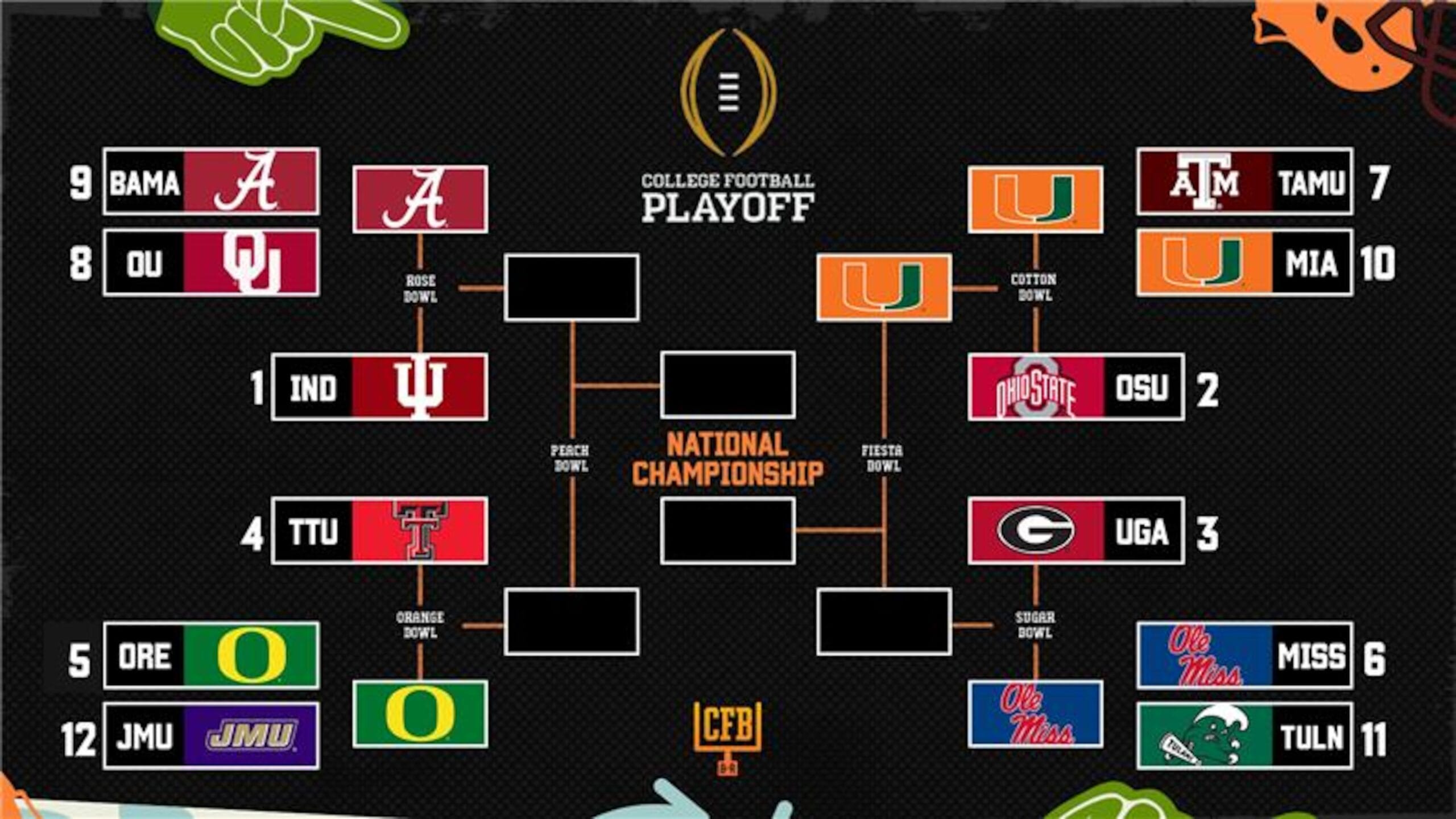
But let’s be real for a second. What did anyone actually *expect* when they expanded this bloated College Football Playoff to twelve teams? More parity? Nah. They wanted more ad revenue slots, pure and simple. And now, here we are, basking in the glorious, messy aftermath of reality hitting the ivory tower square in the face. Miami—the forgotten giant, the team everyone wrote off as perpetually rebuilding—just walked into the Cotton Bowl Quarterfinal and smacked the supposed powerhouse Ohio State right off the pedestal. Tell me again how this system rewards the best four teams? It rewards who the TV executives want you to watch, until chaos like this erupts and forces everyone to look at the embarrassing cracks in the foundation.
And the Packers? That’s just background noise, a weird little footnote where they pick up a castoff like Trevon Diggs. It’s almost insulting to the gravity of what just happened on the gridiron. We are supposed to be focused on who is left standing for the semifinals, the supposed pinnacle of college football purity, but the whole bracket looks like it was drawn up by a bored intern during a long commercial break. Texas won some meaningless bowl game, sure, big whoop. But Miami? That’s seismic. That’s the sound of the common man winning one against the monolithic structure built by the Power Five overlords.
The Curse of the Early Rounds
And why does this happen? Because the early rounds of any tournament involving a massive field are inherently flawed, designed to lull the casual fan into a false sense of security before the real sledgehammer hits in the final four. The 12-team setup was supposed to be the great equalizer, right? Balderdash! It just means more mid-tier teams get stomped by the establishment in the second round, except when a team like the Hurricanes remembers they actually have history, talent, and something left to prove that isn’t just fitting neatly into a pre-approved narrative. We are talking about a system that has been warped by TV contracts since its inception, and this latest expansion is just a bandage over a gaping wound of institutional bias.
But this Miami win throws a wrench, a massive, bronze wrench, into the machinery. Now, the committee, those sanctimonious gatekeepers in their windowless rooms, have to recalibrate. They have to account for the fact that a supposed ‘underdog’ that maybe didn’t look pretty every single week suddenly found the right combination of hunger and luck to dispatch a titan. That’s football, baby! That’s what happens when you let the actual competition play out instead of pre-seeding everything based on preseason hype manufactured by the same media outlets that profit from the existing power structure.
The Financial Earthquake Beneath the Sidelines
Think about the financial implications, the sponsorship dollars twisting in the wind because Ohio State isn’t there to sell hats in the next round. This isn’t just about Xs and Os; it’s about the massive economic ecosystem built around the expectation that Michigan, Alabama, or Georgia will always be playing in January. When a rogue element like Miami slices through, it sends shockwaves through the corporate suites faster than a quarterback rollout. They want predictability. They crave the comfortable narrative. What they got was the beautiful, terrifying uncertainty that comes when players actually play inspired football, rather than just executing a well-funded, bland game plan.
And this is where the populist in me gets truly fired up. The fans who show up, who bleed colors, who scrape together money for tickets—they want to see upsets. They want to see the established order challenged. They are tired of the same carousel spinning year after year. We are supposed to be celebrating the Citrus Bowl winner, Texas, but who cares when the structure designed to filter out excitement has just failed spectacularly?
The Trevon Diggs Distraction
And the Packers claiming Diggs? Honestly, that’s just noise. It’s the NFL equivalent of rearranging deck chairs while the Titanic of college football scheduling lurches into the ice field. It’s a side story designed to distract the media cycle from the real guts of the matter: The CFP isn’t pure. It’s corruptible, and this week, corruption wore orange and green.
We need to analyze what this means for the *next* five years of playoff expansion. Because every single decision maker in Indianapolis is sweating right now. Do they double down on chaos, or do they tighten the reins to prevent this from happening again? My bet is they try to engineer the next bracket to be even *more* insulated against the whims of a single Saturday afternoon performance. They will look at this Miami win not as proof that the sport is alive, but as proof that their selection mechanism needs stronger filters, meaning less room for the true surprises.
Because the establishment fears unpredictability above all else. Predictability equals guaranteed advertising slots. Unpredictability equals empty stadiums for the semi-finalists nobody expected to be there, or worse, actual passionate, chaotic fan bases taking over the narrative.
The Ghosts of Bowls Past
Remember when bowl games were the *whole* picture? When winning the Sugar or the Rose actually meant something definitive, even if a mythical national champion was crowned elsewhere? Now, this CFP apparatus has cannibalized all that history, pretending that a single, committee-selected bracket holds the true meaning of the season. And yet, the minute they let in 12 teams, the system immediately proves it can’t handle the breadth of real competition. It’s too big, too unwieldy, and susceptible to the very upsets it was designed to mitigate by keeping the field small and manageable for TV contracts.
This is more than just a bracket update; it’s a populist victory, a momentary triumph over the bureaucratic sludge that tries to sanitize the beautiful brutality of sports competition. We cheer for Miami not just because they won, but because they proved the math was wrong. They proved the rankings were arbitrary. They proved the narrative was fiction.
And if you think this is going to make the system better, you’re a chump. This will result in even *more* scrutiny, even more convoluted tie-breaking procedures, all designed to ensure that next year, Ohio State—or whoever the designated giant is—gets an easier path back to the promised land. They learned a lesson, alright: never let the little guy get that close to the main stage without proper security screening. This chaos is expensive for the folks writing the checks, and they hate that feeling more than losing a close game.
We are watching the growing pains of a system desperately trying to monetize history while simultaneously trying to neuter the very spirit that made the history worth monetizing in the first place. Miami just slapped the entire apparatus awake. Let’s see how long it takes for them to hit the snooze button and try to forget this happened.
The Long Shadow of the 12-Team Format
And don’t forget the sheer logistics nightmare this presents. Suddenly, the Cotton Bowl isn’t just a nice exhibition; it’s a high-stakes elimination game, and the travel logistics, the stadium readiness, the media rights for these quarterfinal matchups—it’s a logistical headache that the old four-team system elegantly avoided by keeping the action centralized and predictable in January. Now we have these semi-automatic bids that seem to prioritize whoever barely scraped through the initial round, turning what should be prestige matchups into glorified play-in games with massive weight.
But the people watching don’t care about logistics; they care about the scoreboard. And the scoreboard currently shows the established order bleeding out thanks to a team that apparently decided to show up with actual passion, unlike some other heavily favored programs who probably thought their brand name alone would carry them through the quarterfinal slog. The disparity between *expectations* and *reality* is where all the fun is, and this bracket update is swimming in that disparity.
Because when you expand the field, you dilute the prestige, but you are *supposed* to gain excitement. What Miami delivered was maximal excitement, proving that the dilution didn’t stop the potential for genuine shocks. It just made the road to the semi-final longer and bumpier for everyone, especially the teams that thought they had a divine right to be there. It’s a populist uprising fought on artificial turf, and I’m here for the fallout, provided the Packers don’t distract us too much with their roster shuffling.
This whole thing is a circus, a spectacle built on gambling odds and broadcast schedules, but when the spectacle gives us a real, genuine, jaw-dropping upset like Miami over Ohio State, it momentarily transcends its commercial origins. It gives hope to every fan base tired of watching the same four programs cycle through the championship game decade after decade. They wanted chaos with guardrails. They got chaos with the guardrails ripped out. The system is going to spend the next 18 months trying to weld those rails back in place, mark my words.