The Implosion of Predictability: Miami’s Coup and the CFP’s New Nightmare
The Unraveling Thread of the Sacred Order
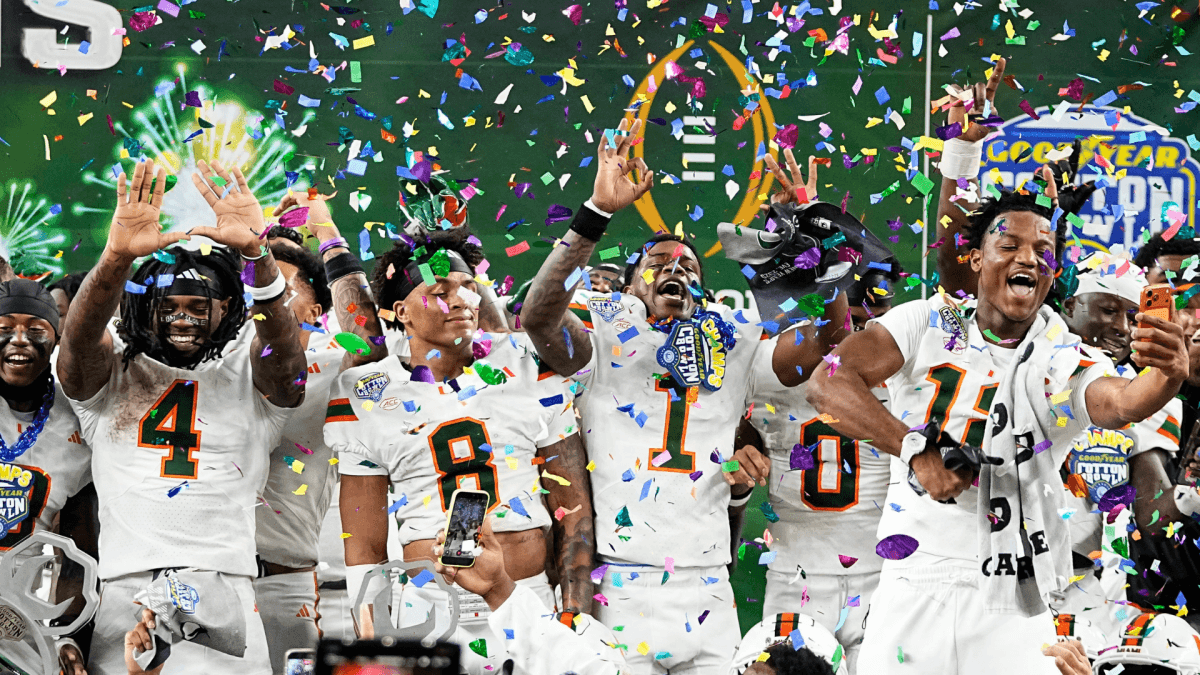
But look at what we just witnessed. College football, that bastion of tradition and heavily financed predictability, just had a brick pulled right out of its foundation. Miami, of all teams, marching through the Cotton Bowl quarterfinal, slamming the door shut on Ohio State. This isn’t just an upset; it’s a signal flare burning brightly against the twilight of the supposed elite hierarchy that everyone pretends still matters. And frankly, it’s glorious to watch the old guard squirm.
And what does this sudden, violent shift mean for the rest of the tournament structure? Because suddenly, the map has been redrawn using something sharper than ink—it’s been drawn in blood, or at least, in a flurry of unexpected defensive stops and poorly thrown passes by highly-ranked quarterbacks who thought they had a divine right to advance. Because that’s the insidious genius, or perhaps the catastrophic flaw, of this 12-team format they decided to foist upon us. It promises parity, but what it delivers is sheer, unadulterated, anxiety-inducing volatility. This isn’t the four-team cage match we were used to; this is a jungle brawl where anything that can happen, will happen, usually right before your scheduled programming break.
Because when the smoke clears from these quarterfinals, and we look at the surviving four heading into the semifinals, the narrative shifts instantly from ‘Who deserves to be here?’ to ‘How long until the next seismic event destroys this fragile structure?’ And let’s not forget the bizarre side show: the Packers claiming Trevon Diggs off waivers. What a spectacular distraction wrapped in an NFL footnote, signaling that even in professional leagues, talent management is an art form that many powerful organizations spectacularly fail at, much like selecting a playoff seed based on perceived past glory rather than current performance.
The Cost of Expansion: Sacrificing Certainty for Noise
And this is where the cold strategy kicks in. The administrators told us expansion was about opportunity. They whispered sweet nothings about access and fairness. What they failed to mention, or perhaps what they actively obscured, is that expansion is a direct dilution of brand equity for the titans. Ohio State doesn’t just lose a game; they lose the perception of invincibility that underpins their recruiting dominance and massive donor base. Because if you can lose to the 10-seed Miami team in a glorified bowl game that somehow counts as a playoff fixture, what exactly are you selling to the next generation of five-star talent?
And this is the trap. The four-team playoff, while offensively limited, was a clean, brutal meritocracy that reinforced the top tier. It was a closed shop where entry was baptism by fire against the absolute best. Now? It’s a lottery funded by television contracts, designed to keep mid-major conferences and perennial 8-12 seeds relevant enough to justify the increased ad inventory. Short-term revenue gain, long-term brand degradation. That’s the trade-off, plain and simple.
And the sheer volume of games required to whittle down twelve teams to four is an insult to the integrity of the regular season, which is supposed to matter most. Because now, every single regular-season loss isn’t just a bump in the road; it’s a statistical landmine you have to survive while praying your rivals don’t schedule an extra cupcake game just to inflate their own metrics.
Miami’s Moment: An Anomaly or a New Rule?
So, Miami. They capitalized. They punched their ticket. But history shows us that teams who sneak in on the edge of the bracket, fueled by sheer adrenaline and the belief that they have nothing to lose, often flame out spectacularly when faced with the methodical, ruthless efficiency of the true top seeds in the semifinals. Think about the jump in quality. You beat a slightly sleepwalking Ohio State, who probably had their mind already on the next round’s travel plans, and now you have to face the No. 1 seed, who likely just enjoyed a week off dismantling their practice squad in a controlled environment. That’s a different beast entirely.
But one must respect the execution. They played the moment. They understood that in this new, chaotic format, momentum isn’t just helpful; it’s the only currency that matters. Because confidence breeds aggression, and aggression forces errors from teams accustomed to dictating the pace. They weren’t playing scared of the magnitude; they were playing angry about being disrespected by the initial seeding rankings.
And what about Texas winning the Citrus Bowl? That’s another data point confirming the landscape is soft. They won a consolation prize game, essentially, but it fuels the narrative that the teams just outside the elite four are capable of winning high-stakes, high-profile matchups. This makes the remaining semifinal matchups even more fraught with peril for the established powers, because the assumed ‘breather’ games now carry genuine weight.
The Trevon Diggs Conundrum: A Microcosm of Mismanagement
Because while we track college football chaos, the NFL offers its own brand of strategic failure, exemplified by the Packers snagging Diggs after Dallas cast him aside. This isn’t just waiver wire fodder; this is a public declaration of mismanagement by the Cowboys organization. They had a high-ceiling, albeit high-variance, asset, and they couldn’t control him, couldn’t coach him effectively, or perhaps just couldn’t stomach the media circus that follows controversy. So Green Bay gets him for pennies on the dollar, a classic strategic coup executed by a team that understands value acquisition better than the organization that dumped him.
This mirrors the CFP problem. The teams that manage their assets—players, coaches, momentum—best, survive. Dallas managed Diggs poorly, and now Green Bay benefits. Ohio State managed their focus poorly against Miami, and now the entire structure of the semifinal matchups is destabilized. It’s all about process control, people. Something many major programs seem allergic to maintaining past Thanksgiving.
Predicting the Unpredictable Abyss: Semifinal Speculation
So, who joins Miami in that final four cluster? Because the road to the national championship game now requires navigating at least two, possibly three, games that carry the weight of the entire season, all in a span of three weeks. It’s an endurance test disguised as a tournament.
And here is where the strategist must look beyond the rankings. Who has the best depth to survive back-to-back, high-intensity games without a significant break? Who has the coaching staff capable of rapid game plan adjustments against wildly different offensive or defensive schemes? The team that relies solely on one superstar quarterback having a career day is doomed. They need systemic resilience. They need offensive linemen who can sustain blocks through three overtimes if necessary.
Because the old guard will try to revert to type. They will try to rely on reputation and assumed superiority. But Miami just proved that reputation is a poor substitute for preparation on the day. The next seed—the inevitable No. 1 seed that survived the chaos—must now be wary of the ‘consolation prize winner,’ the team that peaked perfectly for the first week of the expanded bracket.
And consider the psychological toll. The team that had to play the opening 12-team round—Miami—enters the semifinals battle-hardened, maybe even over-caffeinated from the intensity, but they lack the rest advantage. The higher seeds, resting while Miami fought tooth-and-nail, might come out slow, suffering from the dreaded ‘too much time off’ syndrome, where the intensity of the practice field doesn’t translate to the blinding speed of a genuine playoff game.
The Inevitable Conclusion: The Death of the Myth
And this entire spectacle, from the Citrus Bowl results to the Miami shockwave, confirms one thing that the traditionalists refuse to accept: College football is no longer a strictly monarchical system; it’s a volatile oligarchy perpetually threatened by well-coached insurgents. Because we are now in an era where the historical pedigree of a program matters less than the quality of the scouting department in the preceding eighteen months. The talent is flatter across the top 25 than ever before, thanks to NIL opportunities and the transfer portal weaponizing positional scarcity.
But the true strategist sees the framework. The framework demands we abandon linear thinking. We can no longer simply say, ‘Team X is better than Team Y, therefore Team X wins.’ That thinking belongs in the four-team era. Now, we must analyze the draw, the travel logistics, the referee tendencies in neutral site venues, and most importantly, the *mindset* of the coaching staff entering these pressure cookers.
Because the real endgame isn’t just winning the next game; it’s surviving the relentless, multi-front war that this 12-team CFP has created. It’s less like a tournament and more like navigating a political labyrinth where the map changes every time the ground shakes. And the ground just shook violently. Expect more tremors. Because the structure is fundamentally unstable, and that instability is now the defining feature of the sport. The Cotton Bowl wasn’t the end of the story; it was merely the prologue to sustained, fascinating chaos. And that, my friends, is why we keep watching the spectacle, even as the traditionalists weep into their vintage crystal goblets. Because the old way was boring. And boring never wins the ratings war. Never. This whole mess is designed for maximum engagement, and instability delivers engagement better than dominance ever could. It’s cynical, brilliant, and completely ruining the retirement plans of half the coaches in the SEC. Good. Let them adapt or perish.