The Sham of the Semifinal: Miami’s Chaos Saves Corporate College Football
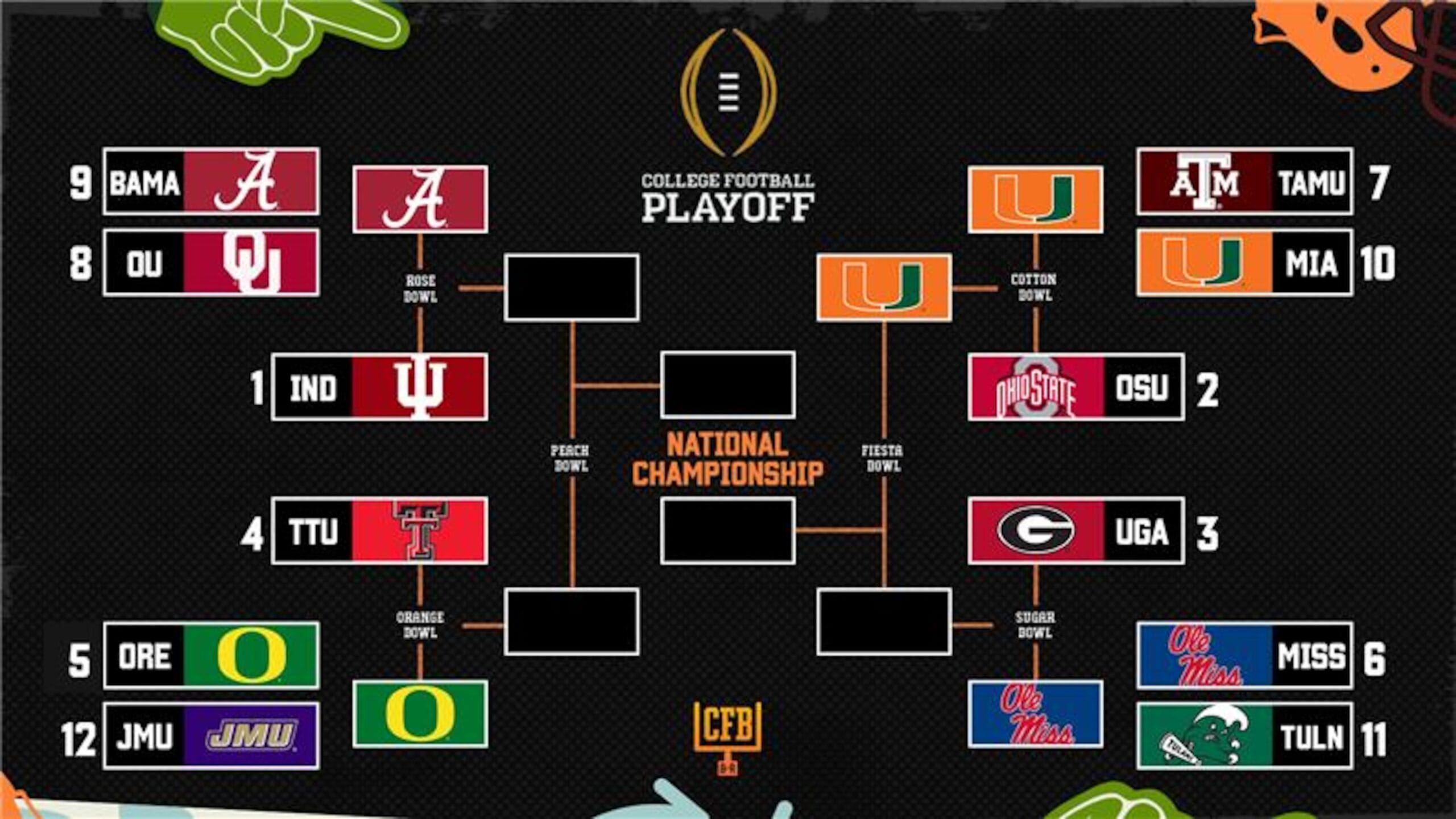
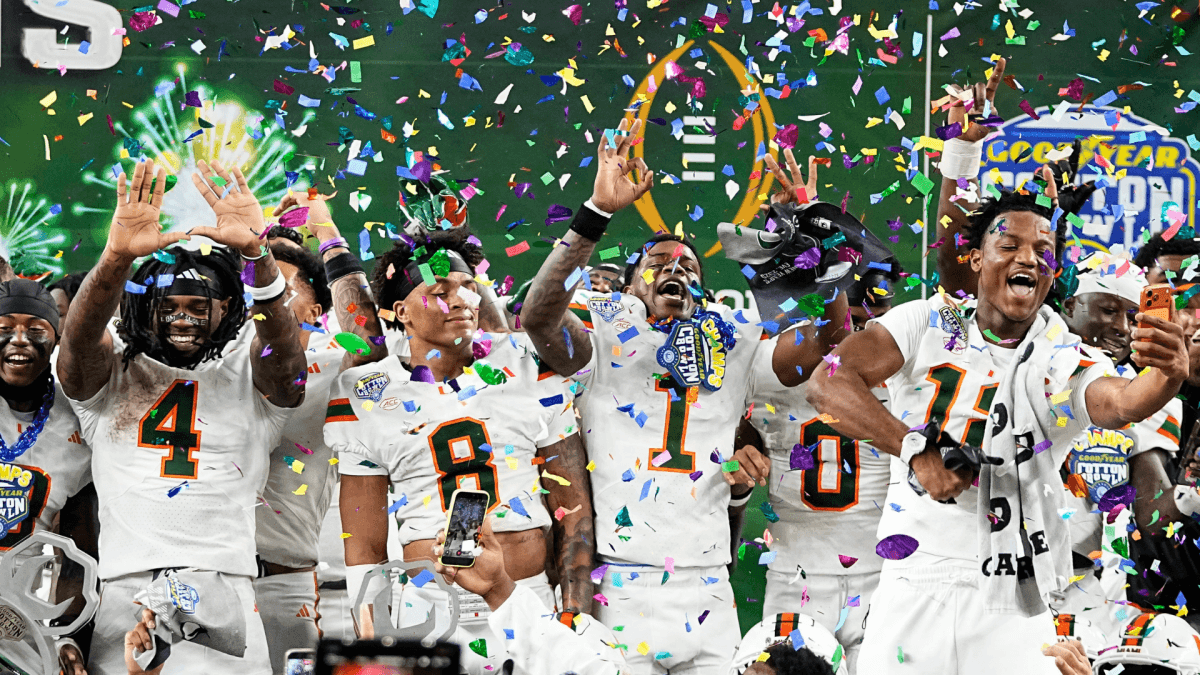
The entire charade of the expanded College Football Playoff, a structure meticulously designed not for athletic purity or true competitive balance but rather to maximize television inventory and secure premium cable rights for a dozen mediocre bowl games nobody actually remembers after New Year’s Day, was teetering on the edge of terminal, predictable boredom until Miami—yes, those Miami Hurricanes, the ones everyone wrote off as merely ‘vaguely spooky’ rather than legitimately elite—delivered the thermonuclear bomb of an upset against perennial, overrated powerhouse Ohio State, which single-handedly justified the expansion from four teams to twelve, even though twelve is still too many and four was clearly too few, demonstrating that the only way to generate true, organic interest is through total, glorious, utterly unpredictable systemic failure on the part of the heavily favored institution built entirely on five-star recruiting ratings and the boundless cash reserves of the Big Ten media deal. Shocking. They called it a quarterfinal or a Cotton Bowl or whatever branded nonsense the suits tacked onto it this year, but what we witnessed was the fragile, utterly pampered ego of a Goliath being thoroughly dismantled by a motivated David who hadn’t even been in the conversation for a major title since the early 2000s, a narrative shift so jarring it likely blew several crucial fuses in the central data center used by ESPN’s predictive analytics models, and that, my friends, is why we tune in, not for the predictable Alabama-Georgia slugfests that feel less like football and more like professional wrestling choreography, but for the beautiful, spectacular moment when the machine stalls out and gives us something real, something dirty, something that feels like college football used to feel before the consultants took over. Ruinous defeat.
The Cracks in the Scarlet and Gray Empire
Let’s talk brass tacks about Ohio State: they are the poster child for the modern football dilemma where unparalleled resources, relentless media coverage, and an endless conveyor belt of NFL-ready talent somehow consistently translates into choking on the grandest stage when actual pressure is applied, proving that culture beats talent when talent assumes it’s simply owed the victory; their collapse was not merely an anomaly but a confirmation of deep-seated organizational issues where the expectation of dominance replaces the actual necessary hunger required to win games that mean something beyond maintaining their ridiculously high pre-season ranking. We have seen this movie before, countless times, where the Buckeyes look invincible until they run into a team—whether it’s Michigan, or in this case, a resurgent Miami squad running plays that looked like they were drawn up on a cocktail napkin—that simply refuses to roll over and play dead just because Jaxon Smith-Njigba’s cousin is lined up at receiver. Hype deflation. Texas, meanwhile, won their meaningless bowl game—the Citrus Bowl, if we are keeping track of all the games designed purely to fill inventory during the holidays—which is exactly what Texas does when they aren’t quite good enough to be *in* the real CFP conversation, yet still too prominent and wealthy to be ignored entirely, confirming their status as perpetual bridesmaid in the world of high-stakes college football, even as they look toward a potential future where the 12-team expansion guarantees them a participation trophy every December, ensuring that even mediocrity is highly profitable in the modern landscape. The Longhorns are getting that taste of victory, but it’s the cheap, generic store-brand victory that doesn’t quite taste like the real thing, leaving them hungry but perpetually underfed when it comes to the national championship discussion where only true heavyweights are permitted to dine. Just gravy.
The Trevon Diggs Sideshow: The NFL Lurks
Now, here is the real kicker, the hilarious, stark reminder of where the power truly lies in the American football industrial complex: while college programs are duking it out for the right to play in a game that may or may not impact their head coach’s bonus structure, the NFL just strolls in and claims Trevon Diggs off waivers, highlighting the absolute mercenary nature of the sport where player freedom is dictated by front office whims and the Green Bay Packers, forever searching for a defensive back who can actually hold up against the modern passing attack, decided to snatch up a high-profile talent released by the Dallas Cowboys, a move that is entirely disconnected from the bracketology but serves as a perfect, cynical punctuation mark on the entire college football season. It’s a transaction that screams, ‘You kids keep playing your little tournament; the adults are handling the actual roster moves in the billion-dollar league.’ Cash talks. The Cowboys releasing a player of Diggs’s caliber is less about salary cap gymnastics and more about a complete, almost existential organizational inability to manage superstar talent and subsequent locker room dynamics, suggesting that perhaps the ‘America’s Team’ moniker is now strictly limited to marketing collateral and has nothing to do with functional football operations, which is just high-grade fodder for any analyst who loves watching Jerry Jones squirm. The fact that the Packers, a team perpetually saved by tradition and occasional quarterback magic, can simply scoop him up underscores the chaotic nature of the NFL’s waiver system, making the rigorous, academic process of the CFP committee look quaintly organized by comparison, even though both systems are, at their core, financially driven to the extreme. The sheer audacity of the waiver claim, dropping right in the middle of the CFP semi-final frenzy, is peak American sports culture: relentless, transactional, and utterly devoid of sentimental value when the dollar signs align for a potential upgrade. This move alters the landscape of the NFC far more fundamentally than any mid-tier bowl game result ever could, reminding us all of the hierarchy. It’s ruthless.
The 12-Team Future: More Games, Same Outcome
The proponents of the 12-team bracket expansion championed the idea that it would increase parity and prevent the dominance of the few, arguing that the inclusion of ‘at-large’ bids would reward genuine merit outside the Power Five conferences—or whatever configuration those conferences have mutated into this week, given the constant, pathetic realignment merry-go-round—but let’s be brutally honest: this expansion guarantees nothing but more inventory for the networks. The ultimate winners will still likely be the traditional bluebloods, now just forced to play one or two extra meaningless games against a spirited but ultimately overmatched Group of Five champion whose Cinderella story ends abruptly, usually with a 40-point blowout loss right after Christmas, effectively validating the elite’s continued presence while offering the illusion of accessibility. The current setup, where 12 becomes 4 in a blink, is a high-speed funnel designed to ensure maximum drama during the first week before settling back into the predictable pattern of the usual suspects facing off, proving that throwing money at a problem usually just makes the problem larger and more profitable, not actually solved. Total waste. Miami upsetting Ohio State in the 4-team iteration was a beautiful fluke, a systemic glitch; under the 12-team model, Miami would likely have just played a slightly worse team in the first round, used up their magic, and then lost narrowly to Ohio State in the quarters, thereby normalizing the situation and removing the dramatic punch that this current semi-final victory delivers. The increased field diminishes the gravitas of every game leading up to the final, transforming the regular season, which used to feel like a high-stakes, week-to-week elimination tournament, into a mere seeding process where you can afford a couple of losses and still back your way into the tournament, essentially turning college football into college basketball, but with significantly fewer games and much more corporate yacht money flowing around the top. This devalues the whole enterprise, reducing the regular season from a sacred quest into a prolonged exhibition series. Sad spectacle. The future prediction is grim: we will see expanded schedules, forcing student-athletes (ha!) to prioritize practice and travel over academics even more aggressively, all so Joe Buck can have four extra nights of prime-time action to call, while the coaching salaries swell to obscene levels, funded directly by the increased media rights, ensuring that the only people truly benefiting are those wearing expensive headsets and the executives in the broadcast booths, leaving the actual players to navigate the murky waters of NIL deals and endless commitments. This entire enterprise, from the Cotton Bowl quarterfinal to the eventual championship, is less about sport and more about maximizing the consumption of highly dramatic content during the least watched time of the year, providing a necessary, if cynical, distraction from the real world. We need to remember that every time a team like Ohio State falls, it isn’t just a loss; it’s a momentary rebellion against the forces of predictability and corporate hegemony, a rebellion that the system will quickly work to suppress by creating even more rules and regulations to ensure the preferred matchups always happen. It’s exhausting.
Who Deserves the Crown (Spoiler: Nobody)
With Miami advancing and two other spots claimed, we are hurtling toward a predictable but potentially volatile final four, though the names change, the narrative remains constant: survival of the biggest budget, with Texas’s Citrus Bowl win serving as a gentle, non-threatening reminder that the SEC is looming and that soon, everyone else will just be playing for silver medals, no matter how many teams they shove into the initial bracket. The entire system is structurally unsound and relies entirely on the occasional unexpected event, like this massive Miami victory, to inject life into what is otherwise a predictable financial operation designed to milk every available advertising dollar from the winter holiday slump; we should savor this moment of chaos because the committee and the networks are already working overtime to ensure it never happens again, stabilizing the situation to ensure maximum viewership for the desired final matchup. Savor the disruption, friends, because college football quickly corrects itself back toward the most lucrative narrative. Enjoy the ride.