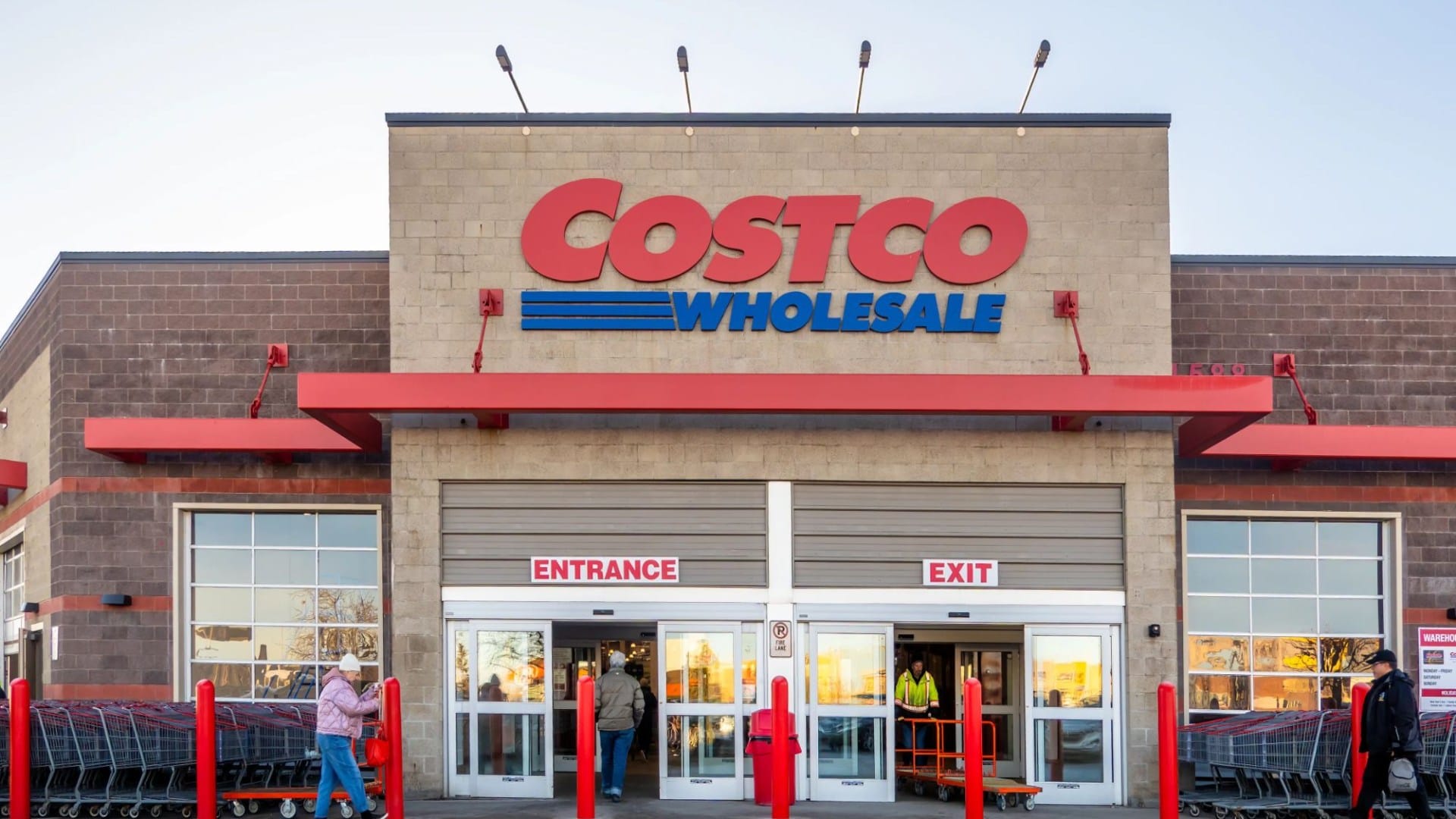
The Audacity of the Annual Shutdown: Deconstructing Costco’s Corporate Tantrum
Let’s not mince words here. When Costco decides to pull the plug on all 623 locations for a full 24 hours—especially near a major holiday like New Year’s Eve—it isn’t a gesture of employee goodwill. It’s a calculated, icy demonstration of sheer market power that should frankly send chills down the spine of every competitor still trying to play nice with the holiday rush.
The ‘We Don’t Need Your Pennies’ Mentality
The sheer gall of it! They confirm the shutdown, forcing millions of last-minute p—well, *stuff*—into the waiting arms of Walmart or Kroger, essentially gifting them an entire day’s worth of high-volume, bulk revenue. (That’s just good business, I suppose, if you’re sitting on top of the food chain, right?) This isn’t about giving workers a break, though that’s the PR spin they always deploy; this is about establishing a narrative where their absence is felt profoundly. It’s Pavlovian conditioning for the American consumer: endure the forced absence, and you’ll return twice as hungry next time.
Think about the logistics. These aren’t small boutique stores; these are massive warehouses stocked deep. Closing them means losing astronomical sales figures. For a publicly traded entity that tracks every cent, walking away from a full day’s gross receipts is akin to a billionaire throwing away a five-figure bill just to prove they can afford the gesture. It screams, “We have built up such massive consumer loyalty and inventory velocity that a single day of lost revenue is merely a rounding error on our quarterly report.” This is wealth flexing, pure and simple.
The History of the Holiday Blackout
This pattern isn’t new, but the scale grows more breathtaking as their footprint expands. Remember when these shutdowns were rare, almost ceremonial nods to Thanksgiving or Christmas? Now, it’s becoming an expected part of the annual calendar. They are manufacturing scarcity where none naturally exists, which is the oldest trick in the retail playbook, only now it’s being deployed by a company that already controls the bottom line for suburban provisioning. (It’s genius, if you admire ruthless efficiency.)
When you look at the competing narratives—like the vague reporting about when they open/close versus the concrete announcement that they are *shutting down completely*—it highlights a deliberate attempt to control the information flow. Walmart, bless its heart, is likely shuffling its schedule tentatively, trying to accommodate shoppers without triggering a full corporate meltdown. Costco, conversely, just drops the atomic bomb: Closed. Deal with it.
The Ripple Effect on the Supply Chain Ecosystem
We must consider the secondary impacts that the headlines conveniently ignore. Who pays for this forced idle time? It’s not just the shoppers scrambling to find paper towels elsewhere. It’s the entire local ecosystem. Trucking companies holding scheduled deliveries, local small businesses who rely on Costco members stocking up *before* the shutdown to then shop *locally* for perishables that day—they all get jittery. The system is primed for maximum efficiency, and Costco’s decision acts like a controlled demolition, shaking the foundation for everyone else dependent on their rhythm.
For the employees, yes, they get a day off, which is certainly welcome (even if they are salaried and the net change is negligible for many upper-level staff). But the operational whiplash on the day before and the day after is immense. Workers come back to double the workload, double the restocking needs, and double the stressed-out members who couldn’t get their specific brand of imported olive oil because they believed the hype that Costco was the *only* place for it.
Future Predictions: Escalation or Consolidation?
Where does this trend lead? If they can successfully pull off a 24-hour, nationwide closure and see only a minimal, temporary dip in stock valuation—or even a slight uptick due to the ‘demand anticipation’ effect—then we can fully expect this strategy to become more frequent. Why wait for established holidays? Perhaps we’ll see the ‘Mid-Quarter Inventory Reset Day’ or the ‘Q3 Profit-Taking Holiday.’
This level of institutional control over consumer behavior is unsettling. It removes choice under the guise of corporate benevolence. (It’s the soft tyranny of bulk purchasing.) If Costco can dictate when you *can’t* shop, they simultaneously dictate when you *must* shop, thereby controlling demand peaks across entire regions. This isn’t mere retail strategy; it’s macro-economic choreography dictated by a single membership card.
The logical deconstruction here reveals the core motivation: maintaining the perception of unparalleled value necessitates demonstrating unparalleled control. They control the price, they control the volume, and now, apparently, they control the calendar. Shoppers who rush to Walmart or Target that day are simply validating the entire exercise, proving they cannot function without the bulk option available.
This whole episode highlights the fragility of the competitive landscape when one entity achieves this kind of gravitational pull. Rival stores benefit for 24 hours, sure, but the underlying message remains: Costco is the sun, and everyone else is just orbiting debris hoping for a few dropped calories while the main event is dark. It’s a masterclass in leveraging customer devotion into strategic operational shutdowns, and frankly, it’s hard to argue with the results when you look at their P&L. But damn, it makes planning a New Year’s Eve party a bureaucratic nightmare for the rest of us peons scrambling for rotisserie chickens.
They are signaling to the market that their overhead management includes the strategic subtraction of revenue streams, a move that only the truly dominant players can even contemplate making without triggering immediate shareholder revolt. (It’s a power play disguised as a memo.) And what happens when they finally decide to close for 48 hours? Will the nation descend into hoarding madness? We’re already halfway there, aren’t we?
The fact that the initial data scraping failed suggests the information was so vital, so sought after, that the system choked trying to process the sheer volume of panicked inquiries flooding the servers. People weren’t just casually checking; they were frantically verifying the end of access to their primary source of bulk provisions. This failure isn’t a technical glitch; it’s a symptom of consumer dependency reaching critical mass. They are reliant, dependent, and now, they are being told when they are allowed to access their goods. It’s a hard lesson wrapped in shrink wrap. Think about that next time you swipe that gold card.
The sheer volume of people trying to confirm hours just underscores the problem. It’s not about finding out if they open at 9 AM or 10 AM; it’s about confirming the entire cessation of service. That level of operational black hole creates panic buying the day before. Everyone rushes in, creating artificial peaks, overstocking carts, and then leaving the aisles looking like a post-apocalyptic movie set for the next day. It’s manufactured chaos, and Costco stands safely above it all, counting the pre-shutdown profits.
This isn’t about a day off; it’s about demonstrating an unassailable position in the market hierarchy. They can afford to be temporarily inconvenient because inconvenience breeds future dependency. It’s counterintuitive, but in the realm of true retail giants, contradiction often equals strategy. We watch, we complain, and then we queue up again on the 1st, right on schedule, proving we learned absolutely nothing about resisting corporate dominance. The cycle continues, fueled by bulk paper towels and discounted seasonal candy. It’s a beautiful, terrible machine.