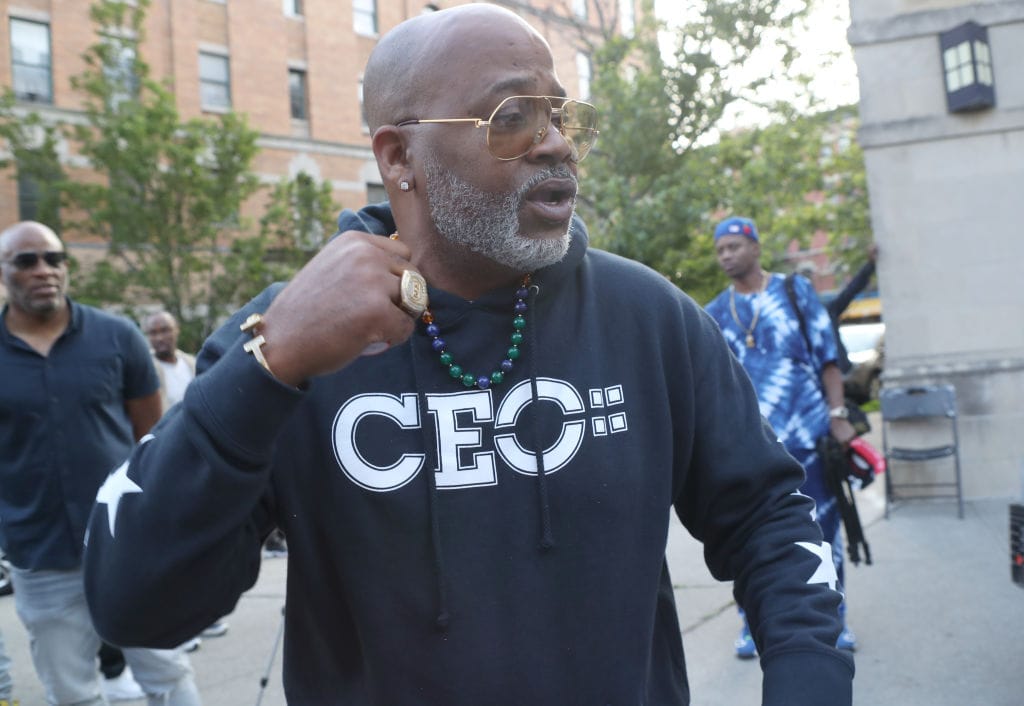
Welcome to the circus, folks, where the lions are starving and the ringmaster just sold his soul for the price of a generic brand toaster. You heard it right. Damon Dash, the man who once claimed to be the blueprint for every street-smart mogul in the concrete jungle, just saw his cinematic empire go for a crisp Ben Franklin. One. Hundred. Dollars. It’s not a typo, though your brain probably wants it to be because the alternative—that a man’s entire creative output is worth less than a tank of gas in a suburban SUV—is just too hilariously bleak to process. (Honestly, I’ve spent more on a mediocre dinner for two in Midtown, and I didn’t even get a film studio out of it, just heartburn and a realization that kale is a scam.) This is the ultimate punchline to the Roc-A-Fella divorce that never ends. While Jay-Z is busy collecting Basquiats and pretending he doesn’t hear the screams of his former business partner, Dame is out here getting treated like a garage sale leftovers box on a rainy Sunday afternoon.
The Audacity of the Hundred-Dollar Mogul
You have to admire the sheer, unadulterated chaos of it all. This wasn’t a private sale; it was a public execution by auctioneer. The creditors were swarming like locusts on a summer crop, waiting for anything they could pick off the bones of what was once a cultural juggernaut. Dame Dash (the man who famously told the world that if you have a boss, you’re a slave) now finds himself enslaved to the most humiliating valuation in the history of the entertainment industry. It’s a deep dive into the abyss of financial mismanagement. We are talking about Dame Dash Studios. The house that produced… well, things that people used to watch, I think? (Does anyone actually remember ‘State Property 2’ with any degree of clarity, or was that just a fever dream we all shared during the mid-aughts?) To see it go for a hundred bucks suggests that the bidders didn’t even see the value in the hard drives the movies were stored on. The electricity to run the auction probably cost more than the winning bid. It’s spectacular. It’s poetic. It’s the kind of failure that requires a special kind of dedication to ignoring your accountant’s frantic emails for a decade.
50 Cent and the Art of the Petty
And of course, enter Curtis Jackson. Because no tragedy in the hip-hop world is complete without 50 Cent showing up to piss on the ashes while grinning for a selfie. 50 Cent’s reaction was a masterpiece of minimalist trolling. A simple ‘Damn.’ That’s it. That is all it took to dismantle whatever shred of dignity Dame was trying to hold onto. (50 is the guy who would buy the company for $101 just to fire the janitor and then close the doors, but even he seems shocked by how low the bar has sunk.) 50 has made a career out of being the Grim Reaper of other people’s reputations, and seeing him chime in just solidifies that this isn’t just a business story; it’s a cultural autopsy. The rivalry between the ‘hustle’ culture that Dame pioneered and the ‘corporate’ ruthless efficiency that 50 and Jay-Z adopted has a clear winner. One guy is a billionaire with a B, and the other guy’s film business is worth two five-dollar boxes from Taco Bell and a handful of change. It makes you wonder if the ‘boss’ talk was ever anything more than a coping mechanism for a man who didn’t know how to play well with others.
Let’s talk about the creditors for a second. Imagine being a creditor waiting for your payout, hoping that the liquidation of this ’empire’ would finally settle the score. You show up at the auction, you’ve got your legal team ready, you’ve got your ledgers out, and then the hammer drops at a hundred dollars. What do you even do with that? (You can’t even buy a decent pair of shoes to walk away in.) The U.S. Marshals were involved in this. This wasn’t some back-alley deal. This was the federal government overseeing the sale of a legacy for the price of a high-end LEGO set. It’s a cautionary tale that should be taught in every business school from Harvard to the streets of Harlem. You can talk about ownership all you want, but if your assets are underwater and your reputation is in the basement, ownership is just another word for being the captain of a sinking ship. Dame has been shouting into the void for years about how he’s the only one who stayed ‘real,’ but ‘real’ doesn’t pay the interest on the loans. Real doesn’t stop the auctioneer from laughing under his breath.
The Ghost of Roc-A-Fella Past
The tragedy here is rooted in the early 2000s. We all remember the champagne, the private jets, and the ‘Best of Both Worlds’ tour that fell apart because of ego. Dame was the loud one. He was the one dancing in the videos while Jay-Z played the cool, detached poet. But the music stopped a long time ago. (Seriously, have you tried to watch a Damon Dash interview lately? It’s like watching a man explain a magic trick that he’s already forgotten the ending to.) This $100 sale is the final nail in the coffin of the Roc-A-Fella era. It’s the realization that the ‘culture’ doesn’t actually owe you anything once you stop being useful to it. The film company probably had some intellectual property, some distribution deals, and maybe some old equipment. But in the age of streaming, where content is king but only if it’s curated by algorithms, Dame’s catalog is basically digital landfill. Whoever bought it for $100 probably just wanted the tax write-off or the sheer bragging rights of saying they own Damon Dash’s dreams for less than the cost of a video game.
What happens next? Predictions are usually boring, but with Dame, they’re always explosive. He’ll probably go on a podcast—maybe his own, maybe someone else’s—and explain how this was all part of a master plan to ‘reset’ his energy. He’ll talk about how the $100 bid was a sign of the system trying to keep a black man down, ignoring the fact that he was the one who didn’t pay the bills that led to the auction in the first place. (The level of delusion required to stay this confident in the face of total financial collapse is actually kind of impressive, in a terrifying sort of way.) He’ll probably try to launch a new NFT or a streaming service or a brand of organic toothpicks. Anything to avoid the reality that the market has spoken, and it said his life’s work is worth a Benjamin. And let’s not forget the irony that this happened on December 30. A nice little end-of-year tax gift for the IRS.
The Death of the Independent Lie
We need to address the ‘independent’ narrative. Dame spent years shaming anyone who took a corporate check. He called people ‘culture vultures’ and ‘slaves’ for working with the majors. But look at the result. The majors have the infrastructure to survive a bad decade. Dame’s independent film company couldn’t survive a Tuesday afternoon in court. (Independence is great until you realize you’re the only one responsible for the light bill.) This auction is a wake-up call to everyone following the ‘hustle’ influencers. If you don’t build a foundation, you’re just building a house of cards on a windy day. The wind finally blew, and it blew Dame’s film company right into the hands of some random bidder for the price of a mid-range blender. It’s pathetic. It’s hilarious. It’s exactly what happens when your ego is bigger than your bank account.
In the end, Damon Dash will remain a figure of fascination. A man who reached the highest heights only to fall into a $100 pit. (I’m still stuck on the $100. It’s such a specific, insulting number.) It’s the price of a pair of sneakers. It’s the price of a decent haircut. It’s the price of Damon Dash’s film biz. The creditors are still there, of course. They didn’t get their money. They just got a front-row seat to the spectacle. And as for the rest of us? We get to watch the fallout on social media, waiting for the next person to claim they’re a ‘mogul’ before we check their auction history. Dame Dash taught us how to get rich, but he’s doing a much better job of teaching us how to lose it all. It’s a masterclass in what NOT to do. Thanks for the memories, Dame. They were worth at least fifty bucks.