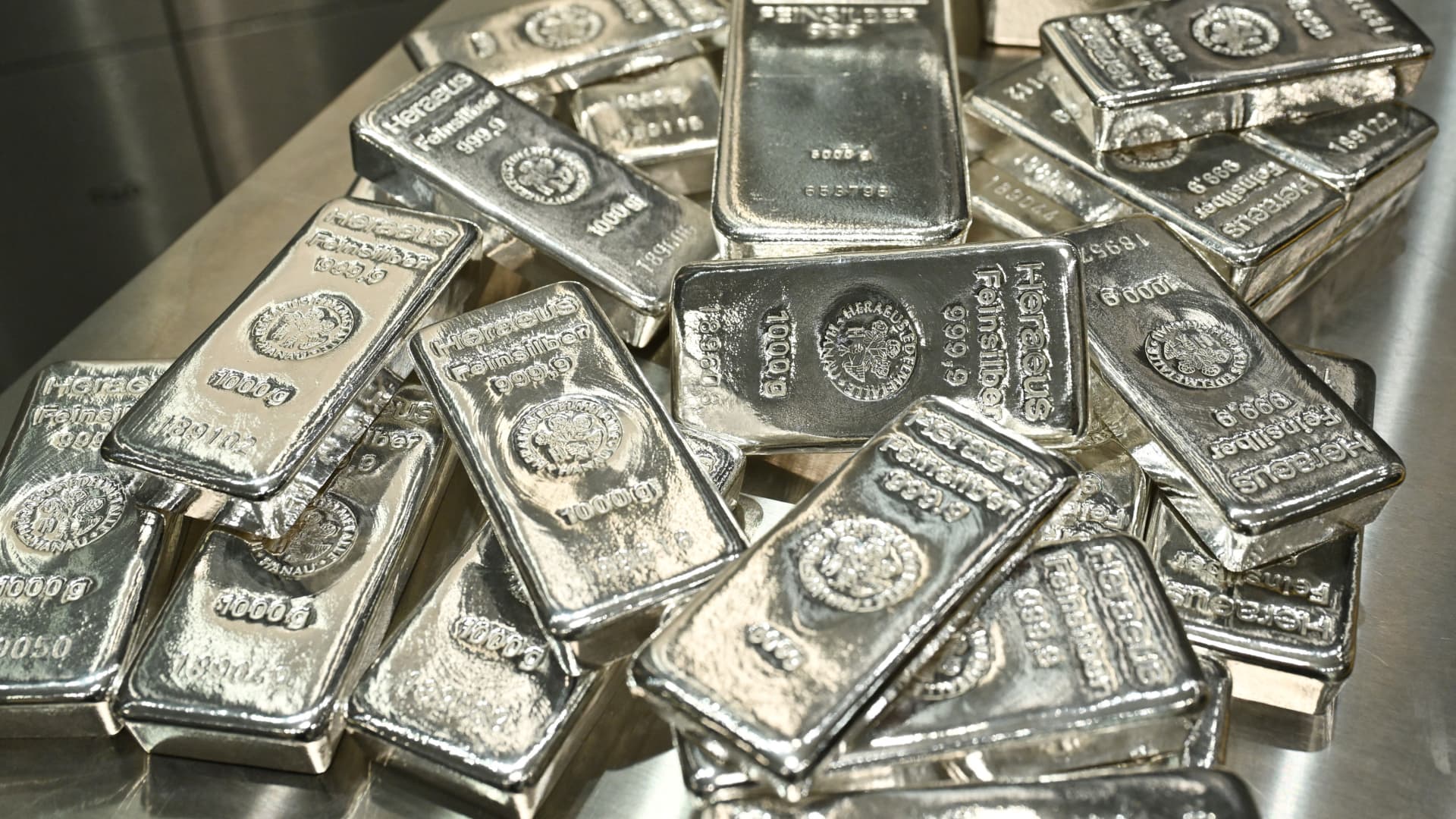
The Rigged Casino Floor: 2025’s Precious Metal Massacre
Listen up, because what you saw happen this week in the precious metals market wasn’t a healthy correction, wasn’t a natural reaction to some geopolitical bombshell—it was a coordinated, deliberate gut-punch delivered by the entities who control the global financial machinery, demonstrating once again that the little guy is nothing but chum in their leveraged pool, and they will run the price up to absurd parabolic heights just so they can pull the rug out from under everyone for maximum profit when sentiment is highest.
A classic.
We watched silver, the supposed ‘poor man’s gold’ and critical industrial metal, soar about seven percent early Tuesday, hitting $75.54 an ounce for March delivery, only to remember that just 24 hours earlier, it had tumbled like a drunk off a bar stool after touching those euphoric peaks, creating a whiplash effect that guarantees maximum liquidations for anyone trading on leverage and minimum accountability for those who engineered the whole damn thing.
This is not fundamental trading; this is high-frequency financial warfare against the retail investor base.
The $75.54 Silver Mirage and the $4,340 Gold Trap
Let’s talk brass tacks about the numbers we are seeing, figures that should scream ‘SCAM’ from the headlines rather than ‘historic rally,’ because the mere fact that silver could sustain such a breathtaking climb towards $76 before getting violently smacked down confirms two things: first, that real physical demand is desperately outpacing supply in a structural sense, which is why the price can be so easily weaponized upward by a focused short squeeze; and second, that the paper market—that endless, leveraged fiction of futures contracts—is orders of magnitude larger than the physical metal, allowing these insane, non-linear moves that defy economic gravity until the instant the big players decide the harvesting season is over.
It’s smoke.
Gold didn’t fare much better, crashing through key support levels immediately after tagging an astronomical $4,340 per troy ounce, a level that analysts with memory shorter than a goldfish proclaimed the new floor, foolishly believing that massive institutional players would allow the safe-haven asset to stabilize at such a lofty peak when they still had millions of contracts to dump quietly into the frenzy generated by financial news outlets telling you that gold was ‘going to the moon.’
They always wait.
The speed of the drop is the key element we must focus on—it wasn’t a slow erosion based on good economic news; it was a sudden, violent, algorithmic sell-off, the kind that looks suspiciously like massive institutional blocks liquidating positions simultaneously, forcing margin calls across the board and catching every leveraged bet with its pants down, proving that the market isn’t driven by fundamental value but by complex pre-programmed sell triggers designed to maximize pain for the periphery.
The Anatomy of a Parabolic Move and the Executioner’s Chop
When an asset goes parabolic, shooting up almost vertically on a chart, every veteran investor knows they are watching the final act of a melodrama because true, sustainable value appreciation looks like a gentle upward slope driven by earnings and growth, not a rocket ship fueled by media hype and retail FOMO, yet somehow, every cycle, thousands of new traders jump into the blast furnace thinking they are smarter than the decades of history that prove these moves are engineered for ultimate collapse.
Get a clue.
The build-up involves several predictable phases: first, quiet accumulation by insiders before the volume spikes; second, the institutional buying pressure drives prices past critical resistance, triggering small fund managers; third, the mainstream financial media finally catches on and starts hyping the asset, bringing in the retail flood (the ‘suckers’); and finally, once the asset is stretched so thin that the leverage ratios are nearing critical mass, the initial architects of the move begin offloading their massive, cheaply acquired positions onto the late buyers, creating a supply wave so enormous it crushes any remaining upward momentum.
It’s a perfect sequence.
Who Pulled the Plug? The Ghosts of JP Morgan
We’ve been watching this shell game for decades, especially in silver, the most notoriously manipulated commodity on the planet, where historical precedent screams that whenever the price starts to break free from the shackles of suppression—a suppression widely theorized to be maintained by massive short positions held by powerful banks like JP Morgan or similar entities acting through proxies—the price gets hit with such overwhelming force that any momentum is immediately erased, forcing the market back into a docile trading range convenient for the central bankers who hate competition for fiat currency.
They are the gatekeepers.
The sheer magnitude of the recent drop, plunging gold by 4.5% after that historic rally, suggests a whale—a truly massive player—decided enough was enough, and when a whale sells, the market doesn’t correct; it hemorrhages, demonstrating the frightening fragility of a market built on infinite derivatives rather than finite metal, proving definitively that paper gold and paper silver are fundamentally different beasts from the physical metal buried in your safe, which cannot be magically extinguished by an algorithm firing off millions of sell orders in milliseconds.
Physical always wins.
Speculating on identity is futile because these massive market moves are always obscured behind complex derivative swaps and offshore entities, but understanding the motivation is critical: maintain confidence in fiat currencies, prevent a widespread panic into hard assets, and maximize profits through engineered volatility, a triple mandate that ensures the price of gold and silver will remain a function of institutional control rather than legitimate supply and demand dynamics, despite the hysterical headlines about ‘record highs.’ This entire setup serves as a brutal reminder that financial freedom is a myth when the rules of the game are written by the house, and they can simply flip the table when they are losing.
Never forget that.
The Illusion of Safe Haven: Why Gold Failed the Stress Test
If gold is the ultimate hedge against inflation, against geopolitical chaos, and against the inevitable implosion of debt-ridden fiat currency regimes, then why did it suffer such a devastating plunge right after hitting $4,340, especially in an environment where the global economic outlook remains shaky, inflationary pressures are baked into the cake by endless quantitative easing, and central banks are printing money like it’s going out of style?
The answer is simple: control.
Gold failed the stress test of sustained high pricing because the very system it is meant to hedge against intervened to prevent its sustained breakout, signaling to every investor worldwide that while you can accumulate physical metal, the price discovery mechanism—the spot price traded on the COMEX—is entirely subject to the dictates of massive funds that can momentarily crush the price to reset expectations and scare away new buyers who might otherwise flee collapsing sovereign debt markets, illustrating the brutal reality that true price discovery is dead.
It’s all theater.
Furthermore, many leveraged players are not buying gold because they believe in its millennia-old value; they are trading it as a high-beta asset linked to the fear index, and when the price starts falling rapidly, these leveraged funds are forced to liquidate positions not just in gold but across their portfolio to meet margin requirements, creating a domino effect that amplifies the downward move far beyond what fundamental reasons would suggest, which is precisely why you see these violent moves down, proving that leverage is a double-edged sword designed to cut the small-time speculator to ribbons.
Stay physical.
Future Shock: Predictions for the Next Great Shakeout
Looking ahead, the volatility isn’t going anywhere, because the underlying structural debt issues plaguing every major economy—from the US to Europe to Asia—are only worsening, ensuring that central banks will continue their desperate attempts to inflate away their liabilities while trying to keep a lid on precious metals, meaning we are setting up for an even bigger showdown where silver might momentarily touch the triple digits, perhaps $100 or even $120, but not before another brutal, engineered dip takes us back down towards a manipulated floor of, say, $35-$40 per ounce, trapping the overly optimistic speculators in a cycle of hope and despair.
It’s pure chaos.
For gold, the floor is probably firmer due to central bank buying and deep cultural demand, but don’t expect a smooth ride to the anticipated $5,000 mark; instead, brace yourself for violent swings that could revisit the $3,000 level again just to clear the decks, consolidating power and metal into the hands of those who are patient and un-leveraged, allowing the manipulative forces to recalibrate their short positions and prepare for the next orchestrated surge, demonstrating the incredible difficulty in timing this market which has become less about investment and more about survival against overwhelming counter-party risk.
Timing is for suckers.
The true prediction is that the gap between the paper price (the spot price) and the physical price (what you actually pay for a coin or bar) will widen dramatically during the next major crisis, revealing the ultimate lie of the derivatives market, confirming that when the music stops, only the tangible, physical asset in your possession matters, and everything else is just digital noise created to distract you from the fact that true wealth is finite and cannot be printed on a whim by desperate governments looking to postpone the inevitable reckoning.
The Cynic’s Investment Guide: Don’t Get Whipped
If you take nothing else away from this analysis of the 2025 volatility, understand this single, crucial point: stop playing their derivative games; stop believing the hype that accompanies a vertical chart line; and for the love of financial sanity, stop trading on margin in precious metals, because leverage is the tool they use to steal your wealth when they decide to flip the switch and initiate a system-wide collapse that targets liquidity, ensuring that every time the price gets “this stretched,” as some reporters foolishly warned, the crash is not a warning but a certainty.
Cash is trash.
The only reliable strategy in this climate of orchestrated volatility is accumulation of physical metal, bought regularly and held securely outside the banking system, accepting that the spot price is often a complete fabrication designed to mask the true inflationary pressures and industrial shortages, recognizing that the long-term trend, driven by relentless currency debasement and soaring industrial usage for silver in things like solar panels, makes the physical asset invaluable, regardless of the daily manipulation that occurs in the paper markets where hundreds of paper ounces trade for every physical ounce that actually exists.
Hold your metal.
Ignore the headlines screaming about record highs or devastating plunges; focus on the long-term trend of currency devaluation and systemic counterparty risk, using these engineered dips not as moments of panic but as opportunities to acquire more physical metal at a momentarily discounted paper price, understanding that while they can crush the price on the COMEX floor, they cannot print a single additional ounce of silver or gold out of thin air, making your physical holdings the only true sanctuary against the ongoing, slow-motion disaster that is modern central banking and the leveraged insanity of Wall Street, proving the wisdom of those who distrust the entire system.
Survival demands it. This isn’t just about making money; this is about preserving what little purchasing power you have left before the inevitable curtain falls on this theatrical financial performance, leaving the unprepared standing in the economic darkness.