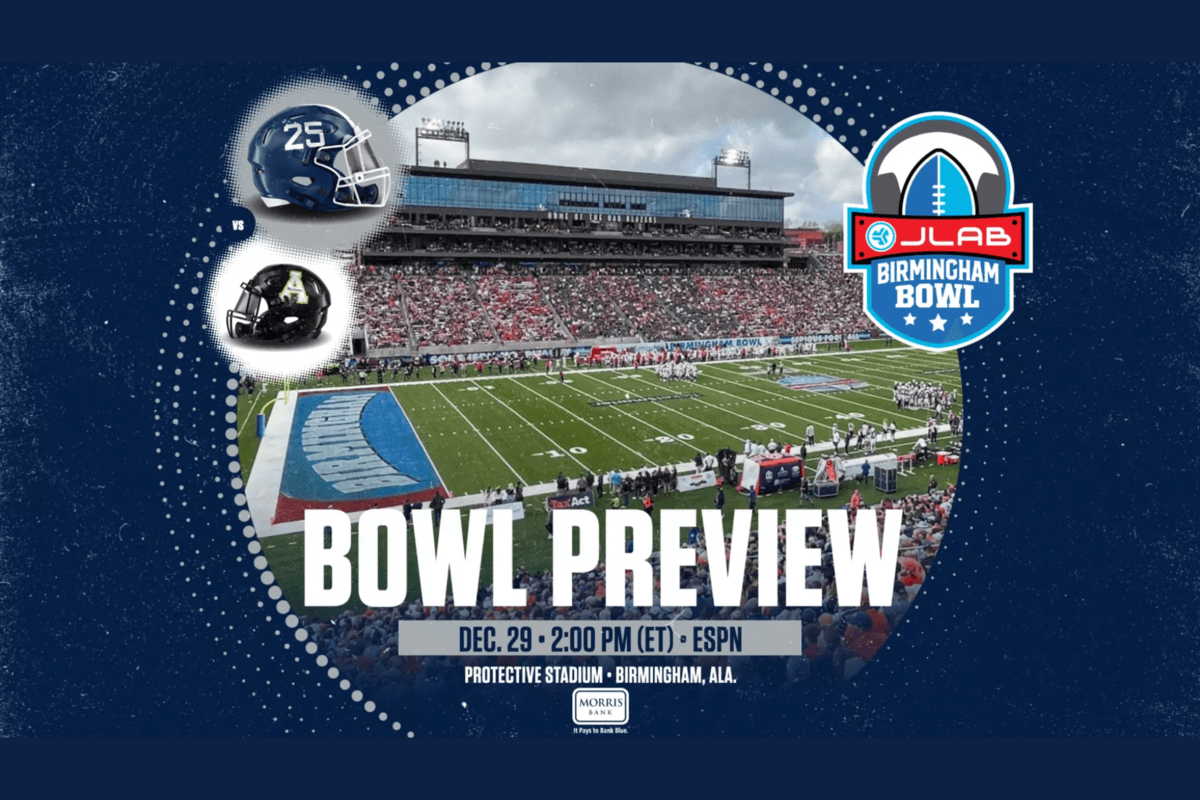
The Emperor Has No Clothes: Deconstructing the Birmingham Bowl Farce
Let’s cut the canned sports clichés right now. We’re supposed to dissect the Georgia Southern versus Appalachian State matchup in the JLab Birmingham Bowl, scheduled for the 29th. Supposedly, this is ‘meaningful football.’ Meaningful to whom, exactly? The television execs trying to fill a dead space between Christmas and New Year’s when everyone should be focused on literally anything else?
The Post-Season Rot Sets In Early
Look at the schedule. A 1:02 p.m. kickoff on a Monday afternoon. That screams confidence, doesn’t it? They aren’t putting this game in primetime because nobody cares enough to stay awake for it after a day of navigating holiday returns or nursing their New Year’s Eve hangover. This isn’t the Rose Bowl; this is the athletic equivalent of finding an old granola bar at the bottom of your gym bag—stale, but technically edible.
Why does this happen? It’s the consequence of expansion without corresponding quality control. College football has ballooned into an unmanageable beast. Every mid-major conference needs its two-bit trophy game to justify bloated coaching salaries and subpar facilities. Are we truly to believe that the pinnacle of the Appalachian State Mountaineers’ season—or the Georgia Southern Eagles’, for that matter—is a mid-tier bowl game in Alabama, played just before the real championship contenders even lace up their cleats?
The SportsLine Projection Model spits out its ‘picks.’ Model versus model. Does anyone actually believe that an algorithm understands the intangible dread hanging over a program that peaked in October? Does the data factor in the collective groan of the 18-year-old starting safety who decided that facing a slightly above-average Sun Belt opponent in an extra game isn’t worth missing out on an early flight to Cancun?
It’s a logistical nightmare disguised as a reward. Players are treating this like a mandatory, poorly compensated exhibition tour. We see the stars opting out, nursing phantom injuries, or simply going through the motions because NCAA compliance demands they show up for the photo op. This isn’t competition; it’s compliance theater.
The Historical Context: A Race to the Bottom
What is the legacy of the Birmingham Bowl? Not much, frankly. It’s a rotating door of teams desperate for exposure. In a better world, the cutoff for bowl eligibility would be a clean, respectable 8-4. Instead, we stretch the definition of ‘good enough’ down to 6-6, sometimes even scraping by with five wins if the television contract demands a warm body to fill the broadcast slot. Isn’t that the real indictment of modern college football?
The very environment breeds apathy. They say Birmingham loves its governor and afternoon football. Wonderful. But loving the politics of the state doesn’t magically infuse drama into a game featuring teams whose season trajectories were already set weeks ago. We watch because there is nothing else on, not because we are genuinely invested in the outcome beyond bragging rights for a handful of alumni who still pay season ticket prices from 1998.
Think about the coaching carousel. Coaches who are already looking at greener pastures—perhaps a mid-major DC job opening up after the bowl slate—are supposed to be instilling ‘culture’ and ‘heart’ into these players? It’s organizational hypocrisy at its peak. They are sending their troops into a statistically low-reward skirmish while they themselves are already scouting the next territory.
Why should a fan mortgage their holiday time for this? Why should a serious analyst waste bandwidth dissecting the matchup? Because the machine demands content. The content machine doesn’t care if the product is premium; it only cares that the feed stays live.
The Illusion of ‘Momentum’
We hear the tired narrative: winning this meaningless game builds momentum for next season. Momentum? Momentum is built by winning the conference championship, not by beating a mirror image of your own mediocre season in an empty stadium on a Monday. This is the opium of the perpetually mediocre programs—a manufactured high designed to sell early-bird season ticket packages in February.
If App State or Georgia Southern genuinely blow the doors off each other, what does it truly signify for their future in 2025? Virtually nothing, outside of a marginal bump in recruiting pitches: “Remember that time we destroyed them in the ’25 Birmingham Bowl?” It’s a fleeting moment in the endless cycle.
The true genius of the bowl system, and I use ‘genius’ with heavy sarcasm, is its ability to extract maximum value from minimum effort. Pay the travel expenses, slap a sponsor’s logo on the field—JLab, protective stadium, who cares?—and roll the cameras. The NCAA collects its cut, the local economy gets a minor, temporary boost, and the fans get a reminder that their team probably should have run a different defensive scheme in November.
And the odds? They’re practically a coin flip because, structurally, these teams are identical. They share the same ceiling, the same level of parity when matched against anything outside their immediate conference hierarchy. The ‘proven model’ can only tell you so much when the variables—player motivation, residual holiday stress, the sheer desire to be done with the season—are entirely unquantifiable.
The Future of Filler
What comes next? More bowls. They will keep adding them until the talent dilution reaches catastrophic levels, or until the TV ratings drop so low that advertisers pull out. Will the players revolt? Unlikely. They are locked into the system, beneficiaries of the current structure, even if it means playing meaningless football in December.
This Birmingham Bowl is a microcosm of modern sports: over-saturation leading to devaluation. We are drowning in content, starving for significance. When you look at the game, don’t look at the box score. Look at the empty seats, look at the time slot, and ask yourself: Is this genuinely necessary, or is this just corporate filler holding the calendar hostage?
The 1:02 p.m. start time is the punchline. It’s the official acknowledgment that this game is designed for people who have already quit their day jobs and are settling in for a long winter nap. It’s not destiny; it’s decompression.
The expectation for high-stakes drama here is laughable. We should treat this game with the respect it deserves: minimal attention, maximum skepticism. It’s a formality. It’s the contractual obligation before the real season—the offseason—begins.
App State versus Georgia Southern. Two teams clawing for a footnote in history. Is that the best we can offer?
Absolutely not. But it’s what we get when the appetite for football outweighs the appetite for quality control. It is what happens when the money machine dictates the schedule, ignoring the very concept of competitive integrity. We are forced to witness the spectacle.
The narrative will be spun: ‘Toughness rewarded!’ ‘Unforgettable performances!’ Lies. It will be a slog. A reminder that not every game needs to be played. Some should just be quietly filed away as required maintenance for the gigantic, ultimately hollow, college football enterprise. The model predicts a winner, sure. But who truly wins when the spectacle itself is this profoundly underwhelming? Nobody. That’s the analysis.