The Absurdity of the Digital Echo Chamber: A Manifesto Against Manufactured Outrage
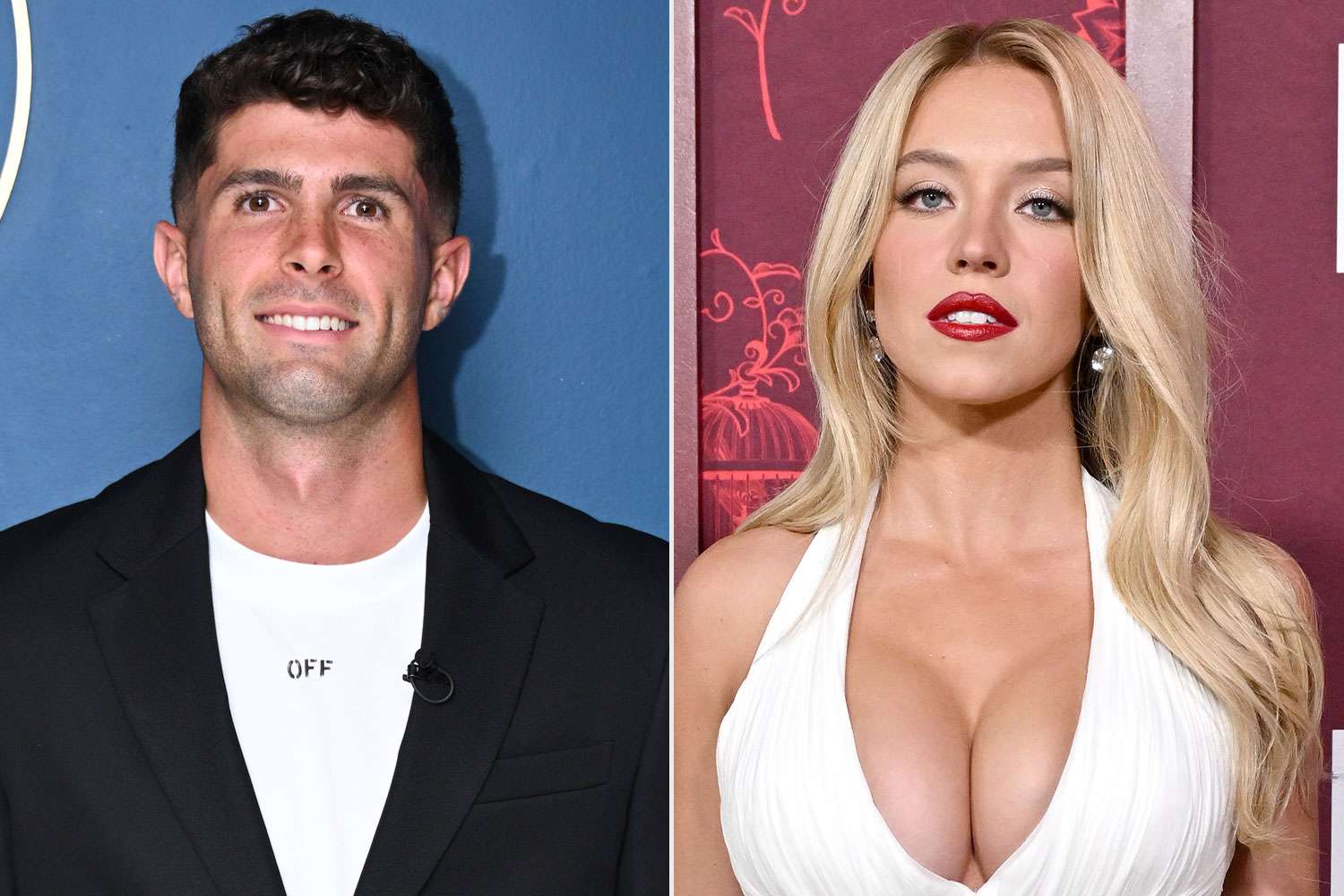
Let’s just cut to the chase, shall we? Christian Pulisic, the American soccer star (Captain America, if you’re so inclined, and a truly gifted athlete, mind you), had to publicly, explicitly, and with no uncertain terms, slam the brakes on some utterly ridiculous dating rumors involving actress Sydney Sweeney. ‘Please stop with the made up stories,’ he stated, a phrase that ought to be tattooed on the forehead of every single person who thought for even a nanosecond that this was real. Think about it: a man whose life is already under a microscope thanks to the insatiable maw of professional sports and international celebrity, had to personally put the kibosh on what was, by all accounts, a fabrication designed solely to generate engagement (and let’s be real, maybe a little fantasy fulfillment for those perpetually online). It’s exhausting, frankly, a total waste of bandwidth that could be spent debating actual issues, like whether pineapple belongs on pizza (it does, fight me).
This isn’t just about Pulisic or Sweeney; it’s a symptom, a flashing red warning light on the dashboard of our collective digital sanity. The ease with which a completely baseless rumor can not only take root but blossom into a full-blown ‘story’ (complete with headlines and breathless speculation) is nothing short of an indictment of modern media consumption. We are living in an era where ‘fake news’ isn’t just a political buzzword; it’s the very air we breathe when it comes to celebrity culture, a viscous, omnipresent fog that obscures anything resembling truth. Pulisic’s terse denial, ‘Fake news guys let’s stop with the silly rumor,’ wasn’t just a rebuttal; it was a plea, a lament from someone caught in the grinding gears of a machine that no longer distinguishes between fact and fleeting fantasy. It’s a crying shame, truly, that we’ve come to this.
The Anatomy of a Non-Story: How Social Media Cooks the Books
So, how does such a blatant piece of tomfoolery gain traction? It’s not rocket science, folks, it’s far more insidious than that. Social media, bless its hyper-connected heart, is the primary accelerant here. A few whispers, a couple of speculative posts, a poorly Photoshopped image (or perhaps just two people existing in the same geographic space, which, believe it or not, happens), and boom: the rumor mill starts grinding. It’s like a digital game of telephone, except instead of a funny miscommunication, you end up with a globally trending hashtag built on a foundation of pure, unadulterated nonsense. The input data itself confirms it: ‘CHRISTIAN PULISIC has been sensationally linked with A-List actress Sydney Sweeney by social media users.’ Not investigative journalists. Not credible sources. *Social media users.* That’s a crucial distinction, one that’s increasingly lost in the blur of endless scrolls and instantaneous information dissemination.
These ‘social media users’ aren’t just passive observers; they’re unwitting (or sometimes very witting) participants in the content creation cycle. Every retweet, every share, every comment (even those debunking the rumor) adds fuel to the fire, amplifying the reach of the fabrication. The algorithms, those soulless gatekeepers of our digital feeds, don’t care about truth; they care about engagement. And nothing, I mean absolutely nothing, generates engagement quite like a juicy, speculative celebrity romance. It’s a vicious cycle, a self-fulfilling prophecy of clickbait. The more outrage, the more clicks. The more clicks, the more visibility. The more visibility, the more people believe it might just be true, because, well, ‘everyone’s talking about it,’ right? Wrong. Absolutely, unequivocally wrong. Everyone’s *talking* about it because the system *wants* them to talk about it, creating a perpetual motion machine of digital noise. It’s a feedback loop from hell, a narrative black hole sucking in common sense.
The Weaponization of Privacy: Sweeney’s DMs and the Predator Class
Now, let’s peel back another layer of this rotten onion. The input data mentions a rather telling detail: ‘SunSport revealed in August that Sweeney; 28; has been inundated with DMs from Premier League.’ This, my friends, is where the whole thing shifts from merely silly to truly unsettling. Because while Pulisic’s denial addresses the *dating* rumor, the ‘inundated with DMs’ part speaks to a far more pervasive and frankly, gross, aspect of celebrity culture. It paints a picture of a certain type of male athlete (and let’s be blunt, it’s often men in these scenarios) who sees a high-profile, attractive female celebrity and views her as fair game, a conquest, someone whose perceived availability justifies a direct and often unwelcome intrusion into her private digital space. It’s the digital equivalent of wolf-whistling, but with the added creep factor of direct access.
This isn’t about flirting; this is about entitlement, about the assumed right of access that fame seems to confer upon certain individuals, particularly in the male-dominated world of professional sports. These aren’t just ‘DMs’ in the innocent sense; they represent a barrage, an ‘inundation,’ of presumed interest, perhaps even propositions, sent with the expectation that their status as ‘Premier League stars’ (read: rich, famous, supposedly desirable) grants them some special dispensation. It’s a digital casting call for potential partners, orchestrated by men who likely believe their wealth and fame make them irresistible. It’s a stark reminder that behind the glitz and glamour, celebrities, especially women, are constantly fending off digital advances that cross the line from admiration to outright invasion. This behavior normalizes the idea that public figures, particularly women, are open season, their boundaries permeable, their personal space merely a suggestion, not a right. It’s a predatory undercurrent in the seemingly benign waters of celebrity gossip, and it’s high time we called it what it is: a form of digital harassment, pure and simple. It’s an absolute disgrace.
The Celebrity Industrial Complex: Who Profits from Your Attention?
So, who really benefits from all this manufactured drama? It’s not Pulisic, who just wants to play soccer. It’s certainly not Sweeney, who has to navigate a deluge of unsolicited messages and baseless rumors. No, the real winners are the architects of the ‘celebrity industrial complex.’ These are the digital tabloids, the gossip aggregators, the social media platforms themselves, and anyone else who monetizes your attention. Every click, every ad impression, every moment you spend pondering whether Pulisic and Sweeney are actually a ‘thing’ translates directly into revenue for someone else. It’s a sophisticated, self-perpetuating ecosystem built on the cheapest commodity available: human curiosity and our insatiable desire for escapism. They feed us crumbs of conjecture, knowing full well we’ll gorge ourselves on the ensuing speculation, all while they rake in the dough.
The relationship between celebrity and media, once a delicate dance, has morphed into a monstrous, parasitic embrace. The media needs the celebrities for content, and (some) celebrities, ironically, sometimes need the media (even the negative kind) to stay relevant. But in this specific instance, where the rumor is outright denied and unequivocally false, the media’s hunger (and by ‘media,’ I’m talking about the amorphous blob of blogs, Twitter accounts, and Reddit threads) is simply exploiting two individuals for clicks. It’s not journalism; it’s digital panhandling, dressing up speculation as ‘news’ to generate ad revenue. This system thrives on ambiguity, on ‘sources say’ and ‘rumored to be,’ because definitive answers kill the golden goose of engagement. Pulisic’s definitive answer was a wrench in their gears, a temporary disruption in the perpetual motion machine of digital fabrication. Let’s hope it’s not just a momentary hiccup in their relentless pursuit of our eyeballs.
A Historical Interlude: From Tabloids to Tweets, The Evolution of Gossip
Lest you think this is some purely modern phenomenon, a unique blight of the digital age, let’s take a brief stroll down memory lane. Gossip, my friends, is as old as civilization itself. From the Roman Forum to the royal courts of Europe, people have always been fascinated by the private lives of public figures. The only difference? The speed, scale, and almost pathological lack of accountability in the current iteration. Back in the day, a whisper would travel through a village, then perhaps make its way to a local broadsheet. By the 20th century, the advent of mass media—newspapers, magazines, radio, television—created the tabloid empire. Think of the sensational headlines, the grainy paparazzi photos, the ‘unnamed sources.’ It was a structured industry, with editors, reporters (however ethically dubious), and a printing press. There were gatekeepers, however flawed, who at least theoretically controlled the flow of information.
Fast forward to today, and those gatekeepers are largely gone, replaced by algorithms and the collective, often unverified, voice of the internet. A rumor can now originate from a single anonymous Twitter account and be retweeted across continents in a matter of minutes. The velocity is breathtaking, the reach unprecedented, and the fact-checking almost nonexistent. The sheer volume of information (and misinformation) means that even well-meaning attempts to correct the record (like Pulisic’s clear statement) can be drowned out by the sheer force of the initial fabrication. It’s not just a faster gossip machine; it’s an entirely different beast, one that operates on a global, instantaneous scale with no central command. This decentralization makes it both incredibly resilient and terrifyingly effective at spreading falsehoods. It’s a hydra, cutting off one head only makes two more appear, ready to spew more venomous speculation.
The Erosion of Authenticity: When Truth Becomes a Side Dish
What happens when the truth is no longer the main course, but a mere side dish, easily ignored in favor of a more palatable (or provocative) lie? We see the erosion of authenticity, not just in the media, but in the public figures themselves. Celebrities are increasingly forced to perform their denials, to engage with narratives they never created, and to prove a negative (‘I am *not* dating so-and-so’). This isn’t just an inconvenience; it’s a profound psychological burden. Imagine having to constantly justify your existence, your relationships, your very reality, to millions of strangers who feel they have a right to every detail. It breeds a climate of distrust, both from the public towards media, and from public figures towards the very platforms that amplify their work (and their woes).
Pulisic’s response, blunt as it was, represents a growing fatigue among those in the spotlight. They’re tired of playing whack-a-mole with every fabricated story. But here’s the rub: silence is often interpreted as confirmation, so they’re damned if they do, damned if they don’t. It’s a no-win situation, a carefully constructed trap designed to keep them engaged, to keep them providing ‘content,’ even if that content is their own exasperated denials. This constant performance, this blurring of public persona and private reality, ultimately diminishes the authenticity of all interactions. When everything is a potential headline, every gesture, every look, every non-event, becomes fodder for speculation, reducing complex human beings to mere caricatures in a never-ending digital soap opera. It’s truly a disheartening spectacle, a slow-motion car crash of personal integrity.
The Future of Fame: A Dystopian Glimpse?
So, what does this all portend for the future? If trends continue, we are hurtling towards an even more dystopian landscape of celebrity interaction. We can expect an intensification of these rumor cycles, fueled by ever more sophisticated algorithms and, terrifyingly, by the nascent power of artificial intelligence. Imagine deepfakes so convincing that a denial, however emphatic, becomes irrelevant because the fabricated ‘evidence’ is visually indistinguishable from reality. We’re already seeing early iterations of this with AI-generated images and audio; it’s not a huge leap to imagine AI bots creating entire fake news cycles, complete with ‘anonymous sources’ and ‘eyewitness accounts,’ all synthesized from existing data, making Pulisic’s simple ‘fake news’ declaration woefully insufficient. The lines between what is real and what is algorithmically manufactured will not just blur; they will cease to exist entirely. This isn’t hyperbole; it’s a logical extrapolation of current trajectories, a terrifying peek behind the curtain of tomorrow’s media. It’s a stark, chilling prospect, one that should make us all sit up and take notice.
Furthermore, the pressure on public figures will become unbearable. Will they retreat entirely from public life, becoming even more secluded and inaccessible? Or will they become mere avatars, their public appearances so meticulously controlled and curated that any semblance of genuine human interaction is lost? The ‘Premier League DMs’ scenario? That could evolve into AI-powered stalkerware, digitally bombarding individuals with personalized, persuasive, and utterly unwanted advances, making even the digital world an unsafe space. The future of fame looks less like glamour and more like a high-stakes, perpetual battle for narrative control, with individuals fighting against the combined might of algorithms, AI, and the insatiable appetite of the online masses. It’s a gladiatorial arena, only the weapons are misinformation and the prize is your peace of mind. Not a pretty picture, is it?
A Call to Deconstruction: Reclaiming Our Media Literacy
This manifesto, then, is not just a critique; it’s a rallying cry. It’s a call for media literacy, for critical thinking, for a return to demanding evidence before believing every whisper in the digital wind. When you see a sensational headline, especially one concerning a celebrity’s private life, pause. Ask yourself: What’s the source? What’s their agenda? Is there any actual proof, or is this just speculative clickbait designed to harvest my precious attention? Pulisic’s quick, decisive rebuttal was a masterclass in shutting down nonsense, but it shouldn’t have been necessary in the first place. We, the consumers of this content, hold immense power. We can choose to starve the beast, to deny the oxygen of engagement to these fabricated stories. We can refuse to participate in the spread of what we instinctively know to be utter rubbish.
It’s time to move beyond the shallow allure of celebrity gossip and demand something more substantive, more truthful, more respectful of individuals’ privacy and dignity. We need to be the logical deconstructors of our own media diets, dissecting the narratives presented to us and rejecting the junk food. Because if we don’t, if we continue to passively consume the endless stream of fabricated drama, we are not just enabling the spread of misinformation; we are actively participating in the erosion of truth itself. And that, my friends, is a price far too high to pay for a fleeting moment of celebrity titillation. The choice is stark: either we take back control of our attention and our critical faculties, or we surrender entirely to the cacophony of manufactured lies. The ball, as they say, is in our court. Let’s make a better play, for crying out loud. Let’s reclaim some damn sense.