The Unbearable Weight of Too Much Football
Look at this mess. Week 17, and suddenly we’re scrambling for Saturday NFL action like starving pigeons fighting over crumbs. Texans versus Chargers, Ravens battling someone—who cares, really? (Okay, I care about the Chargers choke potential, but that’s beside the point). This whole expansion into Saturday isn’t some genius scheduling move; it’s a symptom of terminal content bloat. The league has decided that if a moment isn’t being broadcast, it simply doesn’t exist. And frankly, it’s making me sick of the entire spectacle.
The Illusion of Scarcity in the Digital Age
We used to wait for Sunday. That was the day. It had weight. Now? If you blinked during that late December lull, you missed the memo that there were *three* games crammed onto a Saturday. Three! Who asked for this? (Spoiler: The networks who paid billions and now need to justify the ROI on their digital real estate). It’s like a restaurant adding five extra appetizers to the menu just because they can; it doesn’t improve the meal, it just makes ordering a nightmare.
This drive to own every available time slot—from Black Friday afternoon to the post-Christmas Saturday slot—shows a staggering lack of respect for the viewer’s time. (Or maybe it shows the viewer has no time left, which is even worse). Remember when the NFL felt like an event? Now it feels like mandated background noise while you try to assemble furniture or remember what your spouse looks like. We are being force-fed, and I, for one, am choking on the appetizers.
The Tech Hangover: Streaming is the Enemy of Quality
The underlying mechanism driving this Saturday madness is the streaming arms race. It’s no longer about good, clean broadcast television; it’s about forcing you into proprietary apps. You want to watch the Ravens battle the Packers (or whoever they are facing; tracking this rapidly expanding schedule is a full-time job) streaming info? Better download three different apps, ensure your credit card is updated on all of them, and pray your outdated smart TV doesn’t decide this is the perfect moment to install a mandatory firmware update that tanks your Wi-Fi speed. It’s digital purgatory just to see a game that used to be available on Channel 4 with a rabbit-ear antenna. The convenience touted by tech evangelists is a myth; it’s just an endless series of paywalls hidden behind flashy graphics.
The irony is thick enough to spread on toast. They sell us on ‘access’ while simultaneously fragmenting the viewing experience until nobody knows where anything is airing. If I have to check four different sources just to figure out if the Texans game is on Peacock or Amazon Prime or some obscure satellite channel hidden behind a paywall—well, maybe I’ll just go read a book. (A book printed on *paper*, imagine that!)
Historical Decay: When Did We Stop Valuing Sundays?
Think back. The 1980s. Sunday afternoon. That was the golden window. You planned your week around it. Now, the league is actively cannibalizing its own established rhythms. Why? Because engagement metrics demand constant feeding. If the audience isn’t watching *something* NFL-branded between 1 PM and 11 PM EST on a Saturday, the algorithms flag it as failure. This isn’t about competitive football anymore; this is about algorithmic servitude. It’s depressing, really. The NFL, once the pinnacle of American sports packaging, has devolved into chasing micro-audiences across scattered platforms.
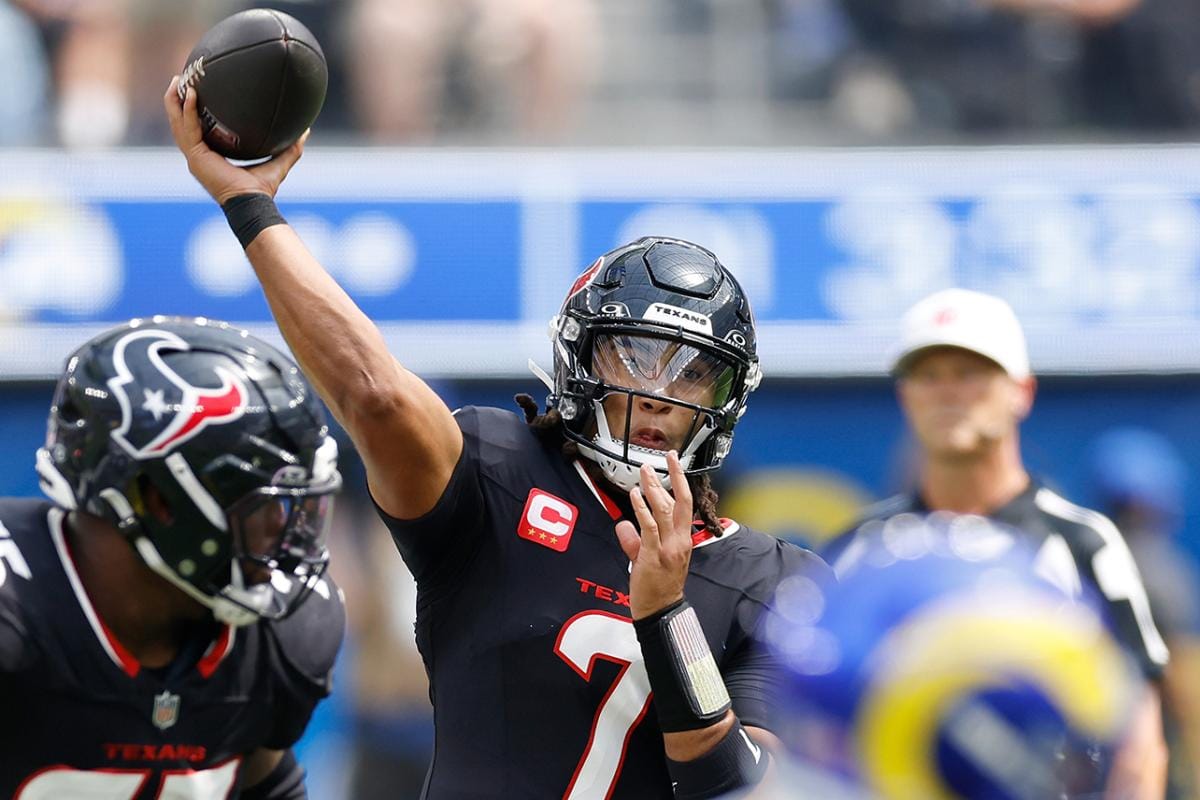
The Chargers (bless their perpetually flawed souls) hosting the Texans is a decent matchup on paper for late December, perhaps securing a playoff berth for one of them, but does it *need* to be Saturday? No. It needed to be Sunday afternoon when the anticipation had properly marinated all week. Squeezing it onto a cold Saturday just feels desperate, like throwing a party on Tuesday afternoon because nobody showed up on Friday night. It cheapens the product before kickoff.
The Implication for Future Viewing Habits (Spoiler: It Gets Worse)
What does this portend? More games. Always more games. We will soon see mid-week exhibition games, perhaps early morning skirmishes broadcast exclusively to Asia, or maybe they’ll start playing games in the middle of the night just to fill the 3 AM slot on a secondary streaming service nobody subscribes to. The quest for incremental viewership will override any sense of tradition or quality control. They will dilute the product until the only thing left is the logo and the corporate sponsors plastered on the screens.
And the viewer suffers. We are conditioned to graze, to constantly hop between feeds, never truly settling in. This scattershot approach damages the narrative arc of the season. By Week 17, we should be focused on playoff positioning drama, not frantically searching for the correct hyperlink to watch a mediocre AFC South matchup. It’s exhausting. I’m tired of hunting for television programming like it’s an Easter egg hunt organized by venture capitalists.
The Ravens situation is another prime example of scheduling chaos. They have a record that suggests they should be coasting or fighting for a top seed, yet here they are, slotted awkwardly on Saturday against whoever they drew for the road game. This placement suggests a lack of faith from the schedulers—they needed guaranteed eyeballs for that time slot, and apparently, only an NFL game, even a slightly mismatched one, would do. It’s a sad commentary on the state of linear television when you need two mediocre teams on a Saturday afternoon to prop up the ratings.
The whole spectacle is just too much. It’s like drinking from a firehose designed by Wall Street bankers. Give me a break. I want quality over quantity, which is a concept apparently banished from every boardroom that touches the NFL broadcasting rights. Stick to Sunday, give us a break, and let us remember why we liked the sport in the first place. (Or don’t. I’ll be watching reruns of things that actually ended their run gracefully.)
This constant pushing of boundaries isn’t innovation; it’s greed disguised as entertainment strategy. It’s lazy content generation masquerading as market dominance. The sheer volume of football thrown at us this late in the season—on a Saturday, no less—demonstrates a fundamental misunderstanding of consumer fatigue. We are tapped out. Our attention spans are shot. And the NFL keeps pushing the digital needle deeper, convinced that more clicks equal more relevance. It doesn’t. It just equals more headaches for those of us trying to enjoy a weekend without needing a complex viewing guide printed out from the dark web. This Saturday slate is just another nail in the coffin of focused, enjoyable sports viewing. Absolutely dreadful planning.