The Great College Football Illusion: A Manifesto on Modern Deception
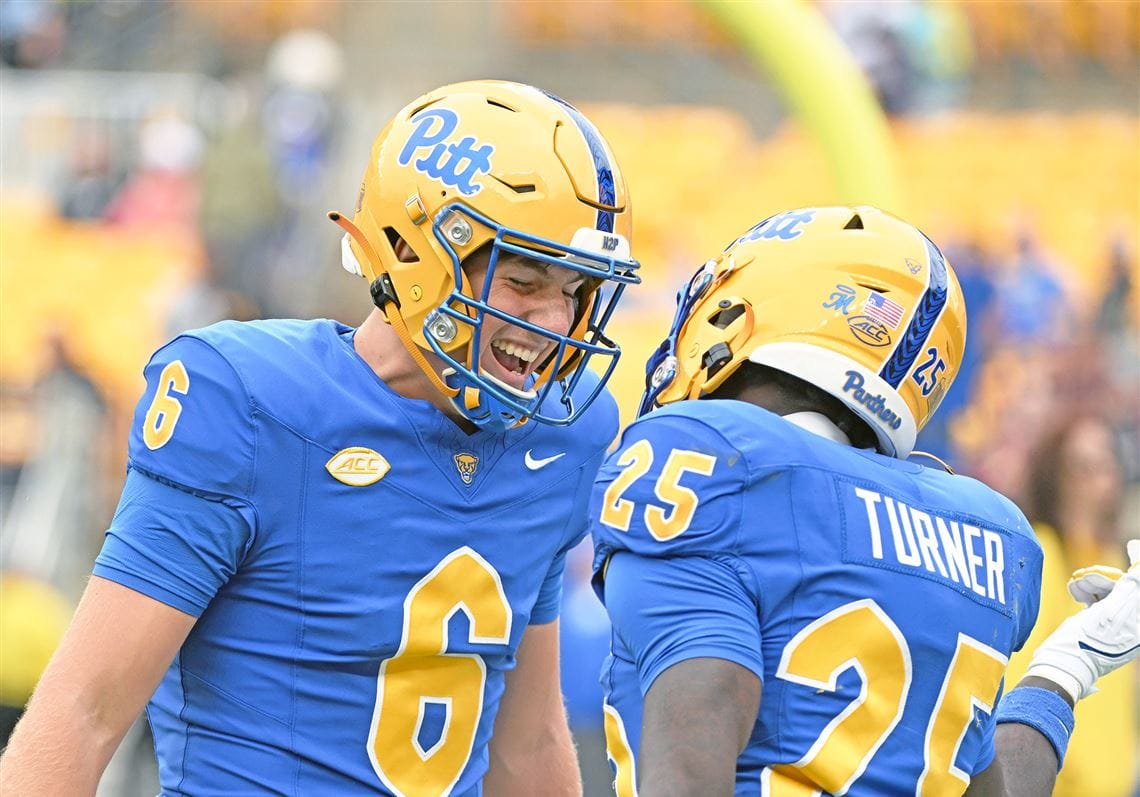
Let’s just be brutally honest for a moment, shall we? This whole spectacle, this annual charade of collegiate pride and gridiron glory, the very fabric of what we once quaintly called ‘amateur athletics,’ is unraveling faster than a cheap suit in a hurricane, and the Pitt football situation, specifically the Military Bowl and the growing epidemic of player opt-outs, is nothing short of a glaring, undeniable symptom of a terminal illness. What a crock. Pitt, ECU, the Military Bowl—it’s all just another stage for the inevitable professionalization of a system that pretended, for far too long, to be about something loftier than raw capitalism.
The news, as it trickles in, is less about football and more about financial calculus and personal brand management. London Montgomery, a running back for ECU, decides to hit the eject button on the Military Bowl, opting out like it’s a bad stock pick. Then you’ve got the ‘5 Players to Watch for Pitt’ article, which, while ostensibly about on-field performance, tacitly acknowledges the transient, mercenary nature of rosters in this era. We’re talking about a world where the concept of ‘team’ or ‘loyalty to the uniform’ has been replaced by ‘portfolio management’ and ‘risk assessment’ for burgeoning professional careers. It’s a pragmatic, if emotionally bankrupt, reality.
The Myth of the Student-Athlete: A Post-Mortem
For generations, we were sold a bill of goods, a beautifully packaged narrative about young men balancing textbooks and touchdowns, honing their craft not just for a shot at the pros, but for the love of the game, for their university, for their brothers in arms; it was a tale as old as time, replete with nostalgic undertones and a powerful moral compass. Bullshit.
The entire enterprise, from the moment massive television contracts started rolling in, transforming regional rivalries into national prime-time events, has been a carefully constructed illusion, designed to extract maximum value from unpaid labor while maintaining a thin veneer of academic integrity. The NCAA, bless its hypocritical heart, stood as the grand arbiter of ‘amateurism,’ enforcing draconian rules on athletes while administrators, coaches, and conference commissioners raked in fortunes. Then came the dam breaking, a tsunami of legal challenges and a generational shift in athlete perception that shattered the gilded cage.
The opt-out culture, the transfer portal frenzy, the Name, Image, and Likeness (NIL) deals that allow players to finally cash in on their talent and popularity—these aren’t aberrations. These are the *consequences*. They are the logical, unavoidable outcomes of a system that built its empire on the backs of exploited labor and then, when confronted with its own inherent contradictions, collapsed under the weight of its manufactured morality. The chickens, as they say, have come home to roost.
The Military Bowl: Patriotism or Profiteering?
Consider the very name: the Military Bowl. It conjures images of national service, sacrifice, and community support, all wrapped up in the hallowed tradition of American football; it’s a marketing masterstroke, linking the game to something far greater than mere sport, giving it an emotional resonance that transcends the triviality of a mid-tier bowl game. Poignant, isn’t it?
Yet, here we are, watching players — who, by every measure, are professional-level athletes on the cusp of multi-million dollar contracts — decide that this particular ‘hallowed tradition’ isn’t worth risking an injury that could derail their entire financial future. Is it unpatriotic? Is it selfish? Those are the easy, emotionally charged questions. The harder, more honest question is this: why should it be any other way?
These players, whether from Pitt or ECU, owe nothing to the abstract ideals of a bowl game. They owe nothing to a system that has historically denied them fair compensation. They owe everything to themselves, their families, and their future careers. To expect them to play in a game that means little to their professional trajectory, especially when millions of dollars are on the line, is not just naive; it’s an extension of the very exploitative mindset that defined college sports for decades. The ‘Military Bowl’ becomes a stark metaphor for the clash between marketing sentimentality and the cold, hard reality of individual economic agency.
The Deconstruction of Team Loyalty
The romantic notion of ‘team loyalty’ is probably the biggest casualty in this whole, messy affair. Remember when players would sacrifice personal gain for the good of the team, for the chance to play one more game with their brothers? It’s a nice thought, a comforting illusion for those of us who grew up watching grainy footage of gladiators playing for their alma mater, but let’s be real: that era is dead and buried, six feet under, with a headstone carved by the hands of agents and NIL collectives. Buried.
When a star player, an ECU running back like London Montgomery, can simply decide he’s done with the season, regardless of who’s left to pick up the pieces, it sends a clear, unambiguous message down the roster: every man for himself. This isn’t just about him; it’s about the systemic encouragement of individual maximization over collective good, a consequence of turning college football into a quasi-professional league without fully embracing the responsibilities that come with it. It’s a new paradigm, a ruthless one, where every single player is, in effect, a free agent testing the market, weighing their personal benefit against the increasingly ephemeral concept of ‘team needs.’
This isn’t to say players are inherently selfish. It’s to say the system has *made* them prioritize self-preservation, because the system itself prioritizes profit over everything else. When the university, the conference, and the NCAA consistently act in their own financial best interest, often at the expense of the athletes, why should anyone be surprised when the athletes finally learn to do the same?
A Glimpse Into the Future: Pro Leagues and Semi-Pros
So, where does this leave us? The future of college football isn’t some hazy, uncertain landscape; it’s a clear, well-lit path toward a fully professionalized minor league system, operating under the dubious guise of ‘collegiate athletics’ for as long as the market will bear the fiction. The hints are already there, etched in the constant roster flux and the increasing irrelevance of traditional university ties.
You’ll see two distinct tiers emerge: a true semi-pro league for the elite Power Five schools, where players are paid salaries, have agents, and move freely between programs like professional free agents; it will be a spectacle of immense talent, high stakes, and utterly zero pretense of amateurism, a gladiatorial arena where the biggest brands battle for supremacy. Then, below that, a rapidly declining tier of actual student-athletes, playing for smaller schools, where the balance between academics and athletics might actually still exist, but without the glitz, glamour, or national attention. They’ll be playing for the love, while the big boys play for the dough.
The implications are staggering. Fan bases, once fiercely loyal to a specific institution, will morph into followers of individual stars, much like in the NBA or European soccer leagues. The concept of the ‘walk-on’ will become an even more distant historical anecdote, relegated to the annals of a bygone era. Recruiting will transform into pure bidding wars, with collectives and boosters acting as pseudo-owners, vying for talent with promises of wealth rather than just playing time or a degree. The game, as we knew it, is over. Finished.
The Fan’s Dilemma: Adjust or Abandon?
And what of the fans, the lifeblood of this entire operation? We are left in a peculiar position, caught between nostalgia for a bygone era and the uncomfortable reality of the present. Do we mourn the loss of innocence, the erosion of traditions we held dear? Do we cling to the fragments of what once was, hoping against hope that the spirit of amateurism might somehow be rekindled? Or do we, as rational consumers of entertainment, simply adjust our expectations and embrace the new reality?
My take? Embrace it. The lamentations about ‘what college football used to be’ are pointless. The past is a foreign country; they do things differently there. What we have now is a hyper-capitalist, player-centric industry, operating under a thin veil of collegiate identity, and it demands a new perspective from those who consume it. Stop pretending it’s anything other than what it is: a feeder system for the NFL, where the best players maximize their value and the rest get left behind. It’s brutal. It’s unfair. It’s also the undeniable truth. The constant roster flux, the ‘problems’ ECU faces due to players opting out, the ‘5 Players to Watch’ lists that shift dramatically between seasons — these aren’t problems, they’re features of the new system.
The romantic idealism of college football has been deconstructed, laid bare, and found wanting. What remains is a raw, transactional, often ugly, but undeniably exciting spectacle. So, watch it, enjoy it, or turn away. But for the love of all that is logical, stop pretending it’s still about school spirit. It ain’t. Never was, really, not once the money started flowing like a river.
The Final Reckoning: A System Unmasked
The confluence of events around Pitt football and the Military Bowl — the opting out, the roster adjustments, the focus on individual player impact amidst institutional flux — is merely a small, but potent, microcosm of the seismic shifts rocking college athletics. It’s not just a few players making personal choices; it’s a fundamental reordering of power dynamics, a long-overdue reckoning with the exploitative model that defined the sport for far too long. We are witnessing the ultimate triumph of individual economic agency over institutional control, a victory that, while messy and disruptive, was always going to happen.
The old guard, the purists, the traditionalists, can wail and gnash their teeth all they want, but the tide has turned irrevocably. College football, as a concept, has been logically deconstructed and found to be a fundamentally flawed, hypocritical enterprise. What rises from its ashes will be different, perhaps more honest, certainly more overtly commercial, but it will be a reflection of the economic realities that have always driven it, just now without the thin veil of amateurism to hide behind. The game is changing, irrevocably, and for all its chaos, perhaps that’s a good thing. Maybe it’s time we all stopped living in a fairy tale.