The Synthetic Spectacle: Why “Song Sung Blue” is More Than Just a Movie, It’s a Warning
The Fading Echo of Authenticity in a Tech-Riddled World
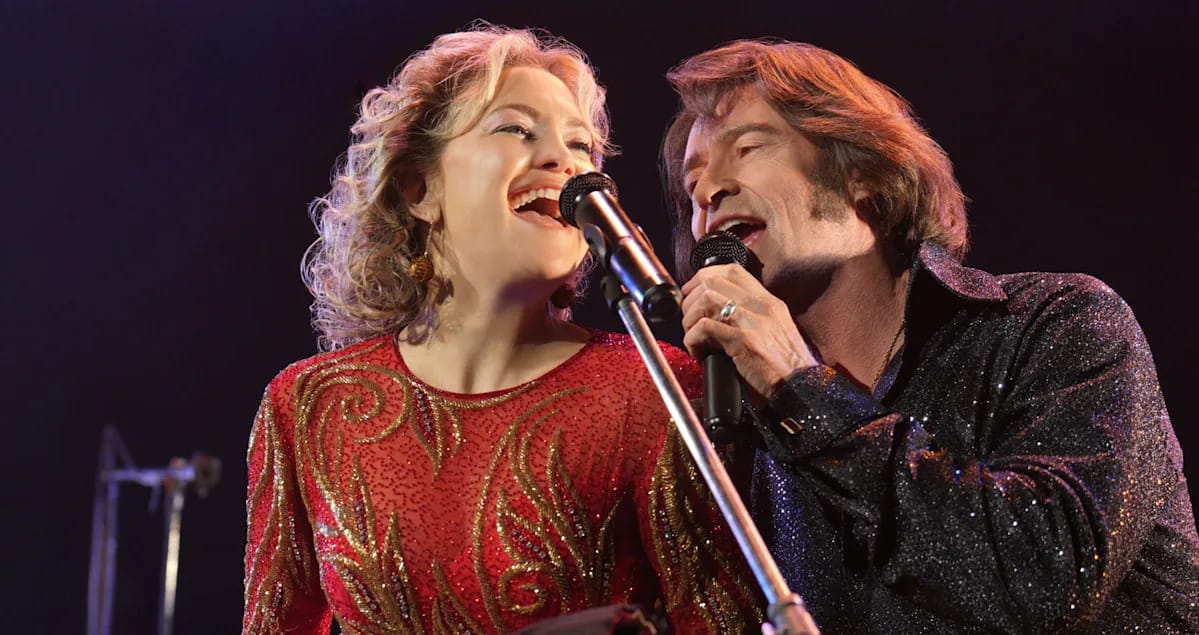
Alright, folks, settle in, because we need to talk. Forget the glitz, the sequins, and the tighty-whities (though we’ll get to those, trust me, they’re a whole can of worms on their own); the supposed “true story” behind a Neil Diamond tribute band getting the big-screen treatment, this “Song Sung Blue” flick, it ain’t just another quirky biopic. Nah, it’s a goddamn mirror, glaring back at us, reflecting everything that’s gone sideways in our tech-addicted lives, especially when it comes to what we call “art” and “authenticity.” This isn’t just about some guy singing covers; this is about the creeping, insidious takeover of genuine human experience by the digital, the artificial, the utterly simulated, and it’s a total bummer. We’re living through an era where our very understanding of “real” is being systematically eroded, one algorithm, one deepfake, one perfectly manicured social media feed at a time. It’s a slow-burn apocalypse for the soul, if you ask me, disguised as convenience and innovation.
The sheer audacity of Hollywood (that glistening, soulless behemoth now run by algorithms and data scientists who couldn’t tell a good story if it slapped them across the face with a wet fish) to greenlight a film celebrating a tribute act, a copy, a mere echo of the original, serves as a stark, screaming testament to how far down the rabbit hole of synthetic reality we’ve plunged, utterly captivated by the sheen of replication rather than the grit of invention, a cultural moment so ripe for critique that it practically screams for someone to pull back the curtain and expose the digital wizard behind it all.
It’s a sham.
For centuries, art evolved. Artists pushed boundaries, explored new forms, challenged perceptions (sometimes even getting locked up for it, bless their rebellious hearts). Now? Now, the cutting edge isn’t about human insight but about how convincingly a machine can mimic human output. A “true story” about a cover band, while perhaps charming on its surface, becomes a symptom of a deeper malaise when viewed through the lens of rampant technological advancement. We’re not valuing the genesis; we’re celebrating the perfected clone. Think about the history of art: from cave paintings to Renaissance masterpieces, from Shakespeare’s plays to the birth of jazz – each epoch, each movement, was about something new, something springing forth from the depths of human ingenuity. Today, we’re increasingly rewarded for how well we can replicate what already exists, often with the assistance of algorithms that scrape data from a million previous iterations to create something “optimal.” It’s like watching someone painstakingly hand-copy a painting that was already painted by someone else, while the original painter sits forgotten in a digital archive. This trend isn’t just diluting creativity; it’s actively choking it, telling aspiring artists that their best bet is to become a refined echo, rather than a groundbreaking roar.
We’ve become so accustomed to the digital facsimile (the deepfake, the AI-generated art that looks almost human, the social media persona that’s barely tethered to reality) that the idea of a “true story” involving a tribute band no longer strikes us as inherently paradoxical. Think about it: a tribute band, by its very nature, is an admission that the original magic is either gone, inaccessible, or simply too expensive (because, let’s be real, everything comes down to the bottom line in this brave new world of tech-driven content farms that demand constant, predictable output). Hollywood, always sniffing out a quick buck, now elevates the copy, celebrates the mimicry, because it’s safer, more predictable, and probably cheaper than nurturing actual, unpredictable originality, which might not fit neatly into a streaming service’s genre categories or hit specific demographic targets.
This isn’t new, mind you. Humans have always imitated, always paid homage, but there’s a fundamental difference between an artist being inspired by a predecessor and an entire industry pivoting to celebrate the perfect imitation over the messy, brilliant, often unprofitable act of creation itself. We used to seek out the unique voice; now, thanks to recommendation engines and content filters, we’re fed an endless stream of algorithmically optimized echoes, each designed to keep us scrolling, consuming, and never, ever challenging the status quo (because challenging the status quo is bad for engagement metrics, apparently). The very platforms that promise endless choice ironically funnel us into narrower, more predictable channels, reinforcing biases and stifling exposure to anything truly disruptive or outside the norm. It’s a digital echo chamber, and we’re all trapped inside, humming along to the same tune, often unaware it’s a cover version.
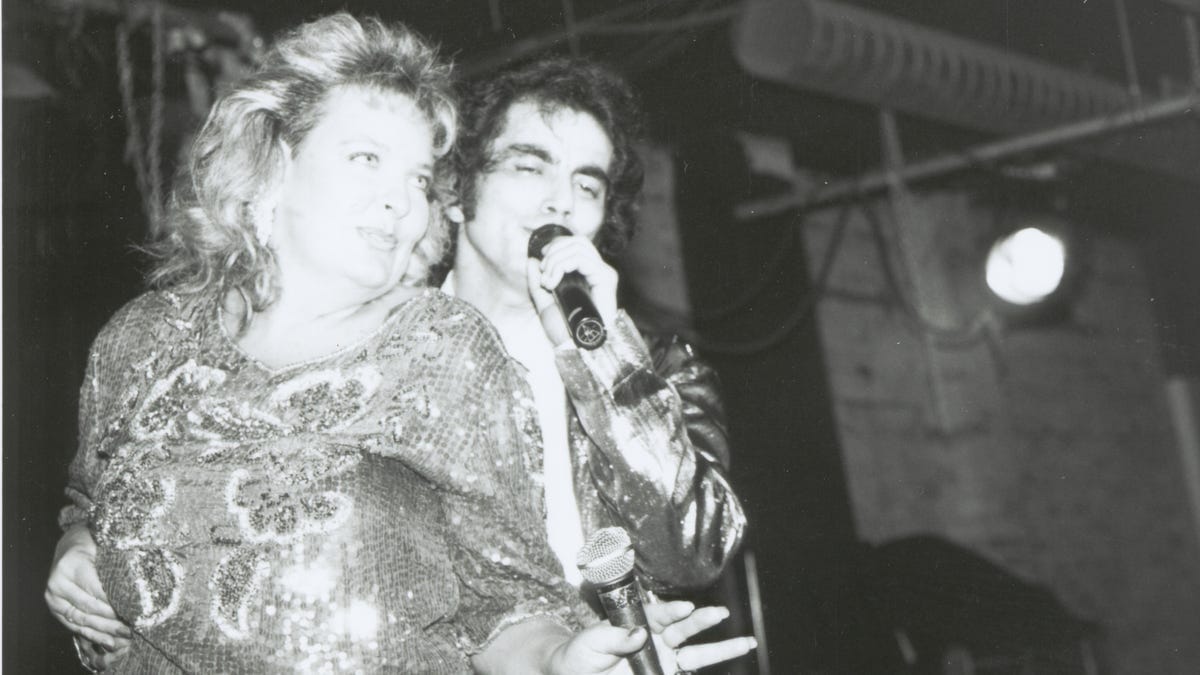
And let’s not even start on the concept of “real-life” Neil Diamond tribute acts. What does “real life” even mean anymore? Is it the sweaty, sequined performance in a Milwaukee bar, or is it the perfectly curated, digitally enhanced version beamed into your living room via a streaming service that tracks your every blink and breath, ready to suggest the next similar piece of content before you’ve even had a chance to process the one you just watched? The line blurs, buddy, it blurs faster than a poorly rendered CGI explosion in a summer blockbuster, leaving us adrift in a sea of manufactured experiences. It’s a classic bait-and-switch: they promise you the world, but deliver a meticulously crafted simulacrum, convincing enough to fool most, but hollow at its core. It’s enough to make a Luddite proud, I tell ya, because at least a Luddite understands the value of a thing made by human hands, with human imperfections and human soul.
The Sequins, the Tighties, and the Technocratic Overkill
Hollywood’s Obsession with Flash Over Substance, Powered by Tech
Now, about Hugh Jackman and his supposed 51 costumes for “Song Sung Blue” – including, get this, sequins and tighty-whities. Honestly, if that doesn’t scream “Hollywood excess fueled by tech money and a complete misunderstanding of what makes a story compelling,” I don’t know what does. Fifty-one costumes for a movie about a tribute artist! It’s an absurd indulgence, a symptom of an industry that has conflated spectacle with substance, largely because technology has made spectacle so damn easy to churn out. Why bother with a profound narrative, with genuine character development, or with a script that challenges the audience, when you can dazzle them with an endless parade of meticulously designed (and probably digitally tweaked and rendered) outfits? It’s a shell game, plain and simple, distracting us from the void at its center.
This isn’t about artistic expression; this is about demonstrating a capacity for production value, a kind of flexing of technological muscle. “Look what we can do!” shouts Hollywood, as armies of digital artists meticulously render every thread, every glitter particle, every wrinkle, often leveraging AI-powered tools to accelerate the process, making what was once painstakingly handcrafted into a scalable, replicable commodity. But what does it add to the human story? Often, precious little. It’s like putting a supercomputer in charge of making a peanut butter and jelly sandwich – it’ll probably optimize the spread, analyze the perfect bread density, and calculate the ideal bite-to-jelly ratio, but it won’t ever understand the simple joy of a kid making it themselves, messy fingers and all. It’s efficiency without empathy, perfection without passion.
The entertainment industry, bless its profit-hungry heart, has fallen head over heels for any tech shiny object that promises to cut corners, speed up production, or, most importantly, generate more “engagement” and thus more profit. We see it in the pervasive, often lazy use of CGI to replace practical effects (remember when things actually exploded on set, sending real debris flying, rather than being conjured by a farm of overworked graphic designers in Bangalore?), in the algorithms that dictate what kind of stories get greenlit based on past viewing data and focus group results, and in the relentless drive to capture every single nuance of an actor’s performance to be digitally manipulated later, sometimes to the point where the actor themselves is barely recognizable as human beneath layers of digital wizardry. The very idea of an actor’s raw, unedited performance is becoming an archaic concept. Everything is post-produced, polished, perfected to the point of uncanny valley blandness.
It’s sterile, folks.
They’re not making movies; they’re making content units, optimized for your attention span, curated by bots, and designed to generate enough data points to feed the next iteration of the algorithm, ensuring you stay glued to your screen for just a few more precious minutes. Hugh Jackman’s multitude of costumes, while perhaps an artistic choice in this specific instance, becomes emblematic of an industry increasingly willing to throw digital money (and digital effects) at any problem, rather than relying on the foundational elements of storytelling and human connection. We’ve seen this play out time and again, from movies that are 90% green screen to virtual reality experiences that promise immersion but deliver isolation. It’s a tragedy, truly, unfolding in IMAX, 3D, and soon, probably, directly into your neural implant, bypassing your senses altogether. And what’s truly tragic is that we’ve collectively bought into the lie that more technology equals better entertainment, when often it just means more noise, more distraction, and less soul.
The Illusion of “Weirdness” in an Algorithmic Age
Predictable Futures and the Fading Spark of Genuine Surprise
The input data says “‘Song Sung Blue’ avoids biopic pitfalls by being much weirder.” And that’s fascinating, isn’t it? In an era where every single piece of media feels like it’s been run through an algorithm designed to hit peak predictability, where AI is churning out bland, palatable scripts faster than a caffeinated squirrel on an espresso IV, “weird” becomes a marketing buzzword, a desperate plea for attention. Is it genuinely weird, or is it just weird enough to stand out from the homogenous sludge of streaming service offerings without actually challenging anything fundamental, without truly unsettling the carefully constructed digital comfort zone we inhabit? (My money’s on the latter, by the way, because true weirdness usually doesn’t get a Hollywood budget, nor does it typically pass the focus group sniff test, which is now almost entirely data-driven.)
We’re living through a golden age of manufactured weirdness, where the quirky indie film is immediately co-opted, analyzed for its “unique” elements, and then replicated by bigger studios, stripped of its original grit and soul. The initial spark of human creativity, the truly unpredictable, messy, beautiful thing that art is supposed to be, gets fed into the machine, polished, smoothed out, and then presented as “unique” (while simultaneously being optimized for maximum audience retention across various demographic segments, naturally, because the goal is always more eyeballs, more data, more ad revenue). It’s a cynical maneuver, a Trojan horse delivering conformity disguised as individuality.
It’s a cruel joke.
The future, if we continue down this digital path, looks terrifyingly boring. Imagine a world where AI doesn’t just write the scripts but directs the films, where actors are entirely synthetic (think deepfakes evolved to sentient, albeit digital, beings, capable of flawlessly emulating human emotion without ever feeling it), and where your viewing experience is perfectly tailored to your subconscious desires, removing any element of surprise, discomfort, or genuine intellectual friction. Every movie will be your “favorite,” because it’s been engineered to be so, a perfectly bland dopamine hit delivered on demand, without the need for critical thought or emotional investment. What then becomes of discovery? What becomes of the shared cultural touchstones that bind us, if everyone is living in their own perfectly curated content bubble, never exposed to anything truly different or challenging? We will become isolated in our “perfect” realities, less human than the machines that serve us.
This isn’t sci-fi anymore, folks. It’s happening. AI is already writing news articles (badly, thankfully, but it’s learning at an exponential rate), generating art, and even composing music that’s “indistinguishable” from human compositions to the untrained ear. The idea of an AI writing a Neil Diamond tribute biopic script, complete with optimal costume changes and character arcs designed to elicit maximum emotional response (as determined by sentiment analysis of millions of past viewers and predictive AI models), is not just plausible; it feels inevitable. And that, my friends, is enough to make my stomach churn like a faulty hard drive, because it signals the death knell for genuine artistic struggle and triumph.
The history of technology’s influence on art is a long one, from photography challenging painting to synthesizers changing music, and even the printing press democratizing knowledge. But what we’re witnessing now is different; it’s not merely a new tool but an attempt to replace the human element entirely, to automate creativity, to optimize the soul out of everything. We’re hurtling towards a future where our entertainment is designed by machines, for machines (or at least, for human brains optimized for machine-like consumption, reducing us to predictable data points). This “Song Sung Blue” narrative, with its focus on a human trying to recreate something, feels almost quaint, a relic from a time before the algorithms truly took over, before the digital ghost supplanted the flesh-and-blood artist. The very concept of a “tribute” implies a reverence for an original, a human touchstone. What happens when the “original” is just another AI output, and the “tribute” is another layer of artificiality? It’s a downward spiral into meaninglessness.
Resisting the Digital Deluge: A Call for Human Messiness
Reclaiming Our Stories from the Silicon Overlords
So, when you hear about “Song Sung Blue” (or any film, for that matter), don’t just see the pretty pictures or the famous faces, don’t just consume the carefully crafted narrative. Look deeper. Ask yourself: What does this say about us? About our collective hunger for manufactured nostalgia, for polished replicas, for experiences that are safe, predictable, and ultimately, devoid of genuine human grit? The film itself, for all its potential “weirdness,” exists within this ecosystem, a product of an industry increasingly beholden to the tech titans and their data-driven mandates, a cog in the content machine.
We, the consumers, have a choice. We can passively accept the algorithmically optimized sludge, the endless stream of synthetic experiences, the promise of perfectly tailored content that ultimately makes us all the same, reducing our unique tastes to mere statistical anomalies. Or, we can push back. We can seek out the messy, the imperfect, the truly original, even if it’s not trending or recommended by a bot, even if it doesn’t fit neatly into a pre-defined genre box. We can celebrate the raw, unpolished, human act of creation, even if it’s just a band of real people (not holograms, not AI-generated performers, not deepfake versions of dead celebrities) sweating it out on a stage, trying to capture a sliver of magic through sheer effort and heart.
It’s up to us.
Because if we don’t, if we simply let the silicon overlords dictate our culture, our stories, and our very definition of what it means to be entertained, we’re not just losing art; we’re losing a piece of our humanity. We’re trading the vibrant, unpredictable symphony of life for a perfectly optimized, digitally rendered elevator music, a soundtrack to our own comfortable, technological enslavement. And frankly, that future sounds like a real drag, a bland, homogenized existence where every spark of genuine rebellion, every flicker of true genius, is snuffed out by the cold logic of an algorithm. So, next time you’re faced with a choice, choose the human. Choose the real. Choose the messy. Because that’s where the actual song is sung, blue or otherwise, with all its beautiful, imperfect, irreplaceable human heart.