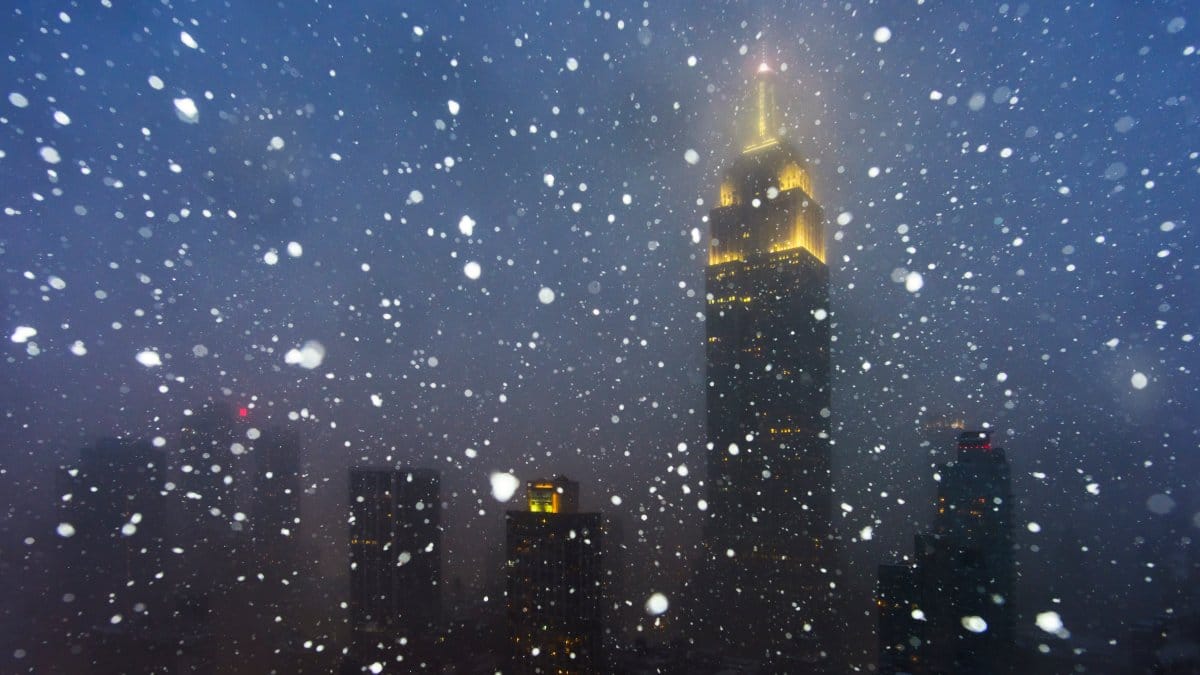
The Great NYC Snow Farce: Unpacking Hochul’s Winter Wonderland ‘Emergency’
And so, another winter rolls around, and with it, the same old song and dance from the powers that be. But really, was anyone actually surprised when Governor Hochul, bless her heart, declared a ‘State of Emergency’ for what amounted to a glorified dusting in the five boroughs? Because let’s be real, folks, the only thing truly ‘powerful’ about this particular winter storm hitting New York City and New Jersey was the storm of media hype preceding it.
But how many times do we have to fall for it? You’d think after years of ‘snowpocalypse’ warnings that turn into ‘snow-puddle’ realities, New Yorkers would be a bit more savvy. Yet, here we are, watching the news anchors breathlessly report on ‘major winter snowstorms’ hammering the Tri-State, while simultaneously mentioning NYC and NJ are getting ‘lower totals.’ It’s almost comical, if it wasn’t so utterly predictable. And you gotta ask yourself, who really benefits from all this theatrical weather panic?
The Forecast Flop and Political Posturing
See, they told us a ‘powerful’ winter storm was on its way, promising more than eight inches in parts of the Hudson Valley, which, to be fair, actually got hit. But for the city? The narrative shifted faster than a snowflake in a hurricane. Because while the upstate folks were indeed digging out, down here in the concrete jungle, it felt more like a mild inconvenience than a biblical blizzard. But still, the ‘State of Emergency’ was declared, the alarms were sounded, and the collective sigh of a million commuters anticipating disruptions echoed across the metropolitan area. And you can’t help but wonder if this was less about actual public safety and more about looking ‘in charge’ when the cameras are rolling. But let’s be honest, politicians love a good crisis, especially one they can ‘solve’ with a press conference and a stern warning.
And it’s a classic move, isn’t it? The preemptive strike. Because if you warn everyone about a catastrophe and it doesn’t happen, you can always say, ‘See? Our swift action prevented the worst!’ Which, ironically, makes people question if there was ever a ‘worst’ to begin with. But the psychological impact is real; businesses close, schools shut down, people stock up on milk and bread like it’s the end of days. And then, poof, a couple of inches of slush and a collective shrug. But the economic ripples of this kind of manufactured panic are anything but insignificant, disrupting supply chains and costing small businesses a fortune in lost revenue, all for a storm that, for many, barely registered as more than a pretty snowfall.
The History of Hysteria: A Pattern We Know Too Well
Remember past storms? Of course, you do. Because New York has a long and storied history with snow, from epic blizzards that truly crippled the city to those infamous ‘storms of the century’ that ended up being… well, not so much. And yet, every single time, we go through the same cycle of prognostication, alarm, and often, anticlimax. But it’s not just about the snow itself; it’s about the narrative, the control, the performance of governance in the face of nature’s caprice.
And the media, always eager for a compelling story, plays right into it. Because fear sells, doesn’t it? A dramatic headline about impending doom is far more clickable than a measured assessment of a mild winter event. But this constant escalation, this need to paint every weather system as an existential threat, it wears down public trust. And when a truly severe weather event *does* hit, will anyone even pay attention anymore? Because we’ve been cried wolf so many times, the real wolf might just sneak right in while everyone’s scrolling through memes about the ‘storm that wasn’t.’
But think about the long-term implications. Because this constant drumbeat of ‘crisis’ for what used to be considered normal winter weather conditions, it subtly shifts public perception. And suddenly, a few inches of snow becomes a ‘State of Emergency,’ begging the question: what exactly constitutes a ‘normal’ winter anymore? And are these declarations paving the way for easier, broader applications of emergency powers down the line? It’s a slippery slope, if you ask me, much like a freshly snow-covered sidewalk.
Who Wins, Who Loses: The Hidden Agendas of the Flake-Out
And who really benefits from all this brouhaha? Well, obviously, the politicians get their moment in the spotlight, looking decisive and prepared. But the emergency services, already stretched thin, get a full dry run, regardless of the actual severity. Because for them, it’s always better to be over-prepared than under-prepared. But at what cost? And are these resources, vital for genuine emergencies, being unnecessarily diverted for storms that don’t quite deliver on the drama?
And then there’s the whole ‘supply chain’ angle. Because whenever there’s a whisper of a storm, shelves empty out. And guess who’s laughing all the way to the bank? The supermarkets, the hardware stores selling shovels and salt, the delivery services charging surge prices. But it’s a subtle manipulation of consumer behavior, isn’t it? Creating a sense of urgency, a primal fear of scarcity, all based on a weather forecast that, for many, proves to be less dire than advertised. And ordinary New Yorkers, just trying to live their lives, end up footing the bill for this performative governance, whether it’s through lost wages, wasted supplies, or just the sheer mental exhaustion of another hyped-up event that fizzled.
But consider the long game. Because this kind of ‘managed perception’ can extend beyond just snow. And if we, as a populace, become accustomed to these grand declarations for minor events, what happens when something truly earth-shattering occurs? Will our skepticism, honed by years of false alarms, prevent us from taking necessary precautions? Or will the government simply assume we’ll comply, having been trained to react to every siren call, real or imagined? And that’s a chilling thought, far more chilling than any actual snowstorm.
Future Forecast: More Hype, Less Substance?
And looking ahead, what can we expect? More of the same, probably. Because the incentives are all aligned for continued meteorological melodrama. The media craves eyeballs, politicians crave relevance, and a certain segment of the population seems to thrive on the thrill of impending doom, however slight. But it’s a cycle that erodes trust, drains resources, and ultimately desensitizes us to genuine threats. And that’s the real danger here, far beyond a few inches of frozen precipitation.
But what if the next storm truly IS a monster? Because the boy who cried wolf eventually got eaten. And if the public stops taking these warnings seriously, due to a constant barrage of exaggerated forecasts and ‘state of emergency’ declarations for mere flurries, then the consequences could be truly devastating. And it makes you wonder about the ethical lines between informing the public and inciting panic for political or viewership gains. But it’s a tightrope walk that seems to get wobblier with every passing season.
And so, as the snow melts and the ’emergency’ fades from the headlines, let’s not forget what actually happened. Or, more accurately, what *didn’t* happen. Because while the Hudson Valley got its fair share, NYC and NJ largely dodged the bullet – or rather, the snowflake. And while it’s always better to be safe than sorry, there’s a fine line between caution and outright theatricality. But maybe it’s time we, the public, started calling out this seasonal spectacle for what it often is: a lot of sound and fury, signifying… well, not all that much for most of us. And until then, grab your milk and bread, folks, because the next ‘snowmageddon’ is surely just around the corner, ready for its close-up.