The Bad Boy Mowers Pinstripe Bowl: A Eulogy for Expectations
Let’s not mince words here: this game isn’t a celebration. It’s a wake. When Penn State and Clemson square off in the Bronx (a location that’s about as traditional for football as a ballet class for sumo wrestlers), we’re not witnessing a battle of champions; we’re witnessing a clash of disappointments. This isn’t just a football game; it’s a symptom of a much deeper, more insidious disease gripping college football. The Pinstripe Bowl, sponsored by a company known for cutting grass, serves as a grim metaphor for where these two storied programs find themselves—mired in the turf, struggling for relevance, and desperately trying to hide the fact that their seasons ended not with a bang, but with a whimper.
The Collapse of the Elite Class
Let’s call a spade a spade. Both Penn State and Clemson expected to be in the College Football Playoff. Period. Penn State, under James Franklin, is in the unenviable position of being the team that always almost makes it. They have the resources, the fan base, and the recruiting classes to compete for national championships. Yet, every single year, when it comes time to face Ohio State or Michigan (the two teams that actually determine the Big Ten’s fate), Penn State comes up short. This isn’t bad luck; it’s a pattern, a psychological roadblock that suggests a fundamental issue with program leadership or, perhaps, a simple acceptance of mediocrity as long as it’s paired with a massive contract extension for the head coach.
Clemson, on the other hand, is arguably in a worse situation, precisely because their fall from grace was so much steeper and more recent. Dabo Swinney built a dynasty on the back of generational talent and a seemingly impenetrable culture. But the writing has been on the wall for two seasons now. Swinney’s almost stubborn refusal to adapt to the new realities of NIL (Name, Image, Likeness) and the transfer portal has left his program scrambling. While other top programs are buying up talent like it’s Black Friday at Best Buy, Swinney is still preaching about “fit” and “family,” which sounds nice in a vacuum but looks downright delusional in the modern landscape of college athletics. The result? A once-dominant program reduced to playing in a second-tier bowl against another program that couldn’t quite get over the hump.
The Pinstripe Bowl: A Symbol of Obsolescence
The very existence of the Pinstripe Bowl in this context is a cruel joke. Non-playoff bowls used to be a reward, a chance for teams to celebrate a successful season in a destination city. Now, for teams like Penn State and Clemson, it’s nothing more than a consolation prize, a participation trophy for a season that failed to live up to expectations. The motivation level for the players is questionable at best. Why would a potential NFL draft pick risk injury playing in cold, potentially nasty weather in Yankee Stadium (a venue built for baseball, not football) for a game that has absolutely zero bearing on the national championship picture?
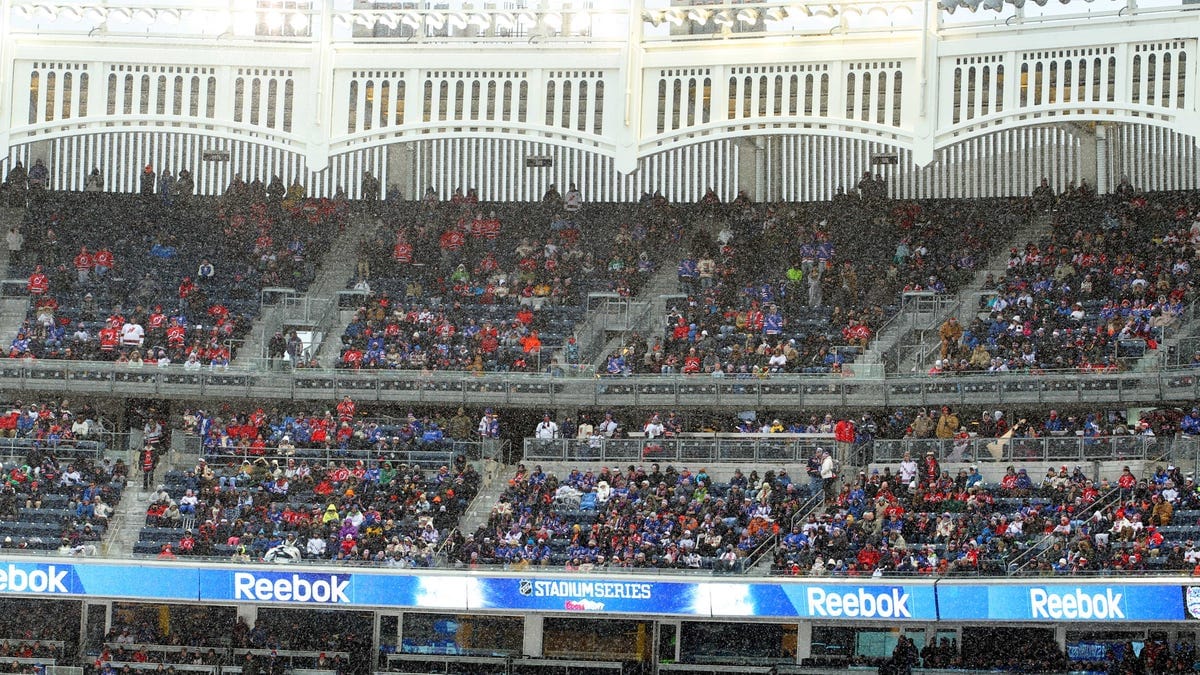
The input data specifically mentions the weather forecast for the Bronx on game day: “could be ugly.” This isn’t just about a little rain or cold. This is a perfect metaphor for the entire situation. The game itself is ugly. The circumstances surrounding these programs are ugly. And the future of college football, if this trend continues, is going to be incredibly ugly for everyone outside the top four or twelve teams.
The Economic and Existential Crisis of College Football
The Pinstripe Bowl’s descent into irrelevance is tied to larger, systemic issues. The College Football Playoff expansion, while necessary to address the shortcomings of the four-team format, will further diminish the importance of games like this. When twelve teams are competing for the ultimate prize, a bowl game between a 9-3 team and a 8-4 team in New York City (for which many high-profile players will opt out) becomes an afterthought. The financial incentives for these lower-tier bowls, which are often heavily reliant on ticket sales and local TV contracts, are eroding rapidly. It’s hard to justify the expense and travel for a game that doesn’t matter, especially when a high percentage of the roster might be entering the transfer portal immediately after the final whistle.
The Transfer Portal and NIL: A Zero-Sum Game
The input data highlights that this Pinstripe Bowl “caps disappointing seasons for both.” But the disappointment isn’t just about the current season; it’s about the future. For Penn State, this game represents an opportunity to prove they can still compete against top-tier talent, even if that talent is in decline. For Clemson, however, this game feels more like a final gasp before a potential structural re-evaluation. Swinney’s approach to the transfer portal (a refusal to use it effectively) is an existential threat. If you’re not actively upgrading your roster every single off-season, you’re falling behind. The Pinstripe Bowl is a stark reminder that both of these programs are currently losing ground in a rapidly changing environment. They’re stuck between being traditional powerhouses and adapting to a new era where money talks and loyalty walks.
The Coaching Conundrum: Franklin vs. Swinney
James Franklin’s situation at Penn State is complex. He’s often criticized for being unable to win the big one. He’s a fantastic recruiter, and he’s built a highly consistent program. However, consistency in the current landscape of college football is no longer enough. Fans demand championships, and in the Big Ten, that means beating Michigan and Ohio State. The Pinstripe Bowl is a chance for Franklin to avoid a double-digit loss season, but it doesn’t solve the core issue. His failure to translate recruiting success into playoff appearances is a significant pressure point.
Dabo Swinney’s issues are different. He has already won championships. His problem is not a lack of past success, but an inability to maintain current relevance. His stubborn adherence to a specific philosophy, while admirable in principle, is proving disastrous in practice. The Pinstripe Bowl is a chance for Clemson to prove that they haven’t completely fallen off a cliff, but it feels like a Band-Aid on a much deeper wound. If Swinney doesn’t adjust his approach to NIL and the transfer portal, Clemson will continue to fade into the background, becoming a ‘good’ program instead of a ‘great’ one. The game in Yankee Stadium is just a small piece of a much larger panic. It’s a snapshot of what happens when tradition collides with revolution, and the revolution almost always wins.
The weather forecast for Saturday’s Pinstripe Bowl matchup between the Clemson Tigers and Penn State Nittany Lions at Yankee Stadium could make for a truly miserable experience. The possibility of cold, windy conditions, perhaps even rain or snow, adds a layer of dread to an already low-stakes affair. This isn’t just about comfort for the fans; it’s about motivation for the players. For many, this is a final opportunity to showcase their skills before entering the professional ranks or transferring to another school. Playing through adverse conditions, especially for a game that doesn’t advance their championship goals, only increases the panic and uncertainty surrounding their future. It forces us to ask: why are we putting these athletes through this for a game sponsored by a lawnmower company?
Looking Ahead: The Panicked Future
This Pinstripe Bowl (a game that will be quickly forgotten by most of the country) highlights the precarious position of both Penn State and Clemson. They are too good for a standard bowl, but not good enough for the major playoffs. They are stuck in purgatory. The future of college football will be dictated by a small group of super-teams that dominate the NIL landscape and control the new 12-team playoff. Programs like Penn State and Clemson, unless they dramatically change their strategies (particularly concerning recruiting and player retention), risk becoming permanently second-tier. This game in Yankee Stadium is a final, depressing reminder of what used to be and what might never be again. It’s not a grand finale; it’s an alarming preview of the decline to come. The forecast for the Pinstripe Bowl is ugly; the forecast for college football’s middle class is worse.