The Christmas Myth: How We Traded Bethlehem for a Waterskiing Clown
Let’s talk about Christmas, shall we? Because what was once a quiet celebration of faith has devolved into a global, corporate-sponsored spectacle of gluttony, excess, and utter cultural nonsense. It’s a sellout of epic proportions, and we’re all so distracted by the shiny wrapping paper that we don’t even notice the soul has been ripped out of the holiday. The headlines about ‘waterskiing Santas’ and ‘giant cuts of meat’ are not just quirky anecdotes; they are symptoms of a profound societal sickness where meaning has been replaced by spectacle, and reverence has been swapped for revenue.
But to understand how we got here, you have to look back at where it started, and then look at the timeline of its decay. It’s a sad story of corruption, both religious and commercial, that has taken root over centuries. It’s not about the warmth of a fireplace; it’s about the cold, hard cash that drives this machine.
The Holy Land and the Hypocrisy of Origin
And yet, we still pretend this holiday has roots in Bethlehem. We see the photos of the tree lighting ceremonies in the Holy Land, a nod to the birthplace of the entire story. But let’s be real: this is just a convenient visual for news networks, a little bit of historical context to make us feel like we’re still connected to something profound. Because while they’re lighting a tree in Bethlehem, the rest of the world is lighting up credit card statements and preparing for another round of consumer frenzy. The gap between the symbol and the reality has never been wider. The original message—a story of poverty, humility, and spiritual renewal—has been buried under an avalanche of consumer goods. It’s almost insulting to look at the pictures from Bethlehem and then immediately cut to the pictures of European and American excess. It highlights a disconnect that is a fundamental betrayal of the holiday’s supposed origins. It’s like watching a documentary about famine while eating a five-course meal. The juxtaposition is jarring, but we’ve become numb to it.
And this disconnect isn’t new; it’s been cultivated by centuries of institutionalization and commercialization. The original story was simple, a birth in a stable, a humble beginning. The modern interpretation is a multi-billion dollar industry built on manufactured demand and artificial cheer. The very idea of celebrating the birth of Christ with gluttonous excess is inherently contradictory. It’s a slap in the face to the foundational principles of the faith. We are celebrating humility with hubris, and poverty with conspicuous consumption. It makes absolutely no sense, logical sense, and it proves that the holiday has become nothing more than a cultural reflex rather than a genuine expression of belief or values.
The Vatican’s Role in Scaling Faith and Losing Intimacy
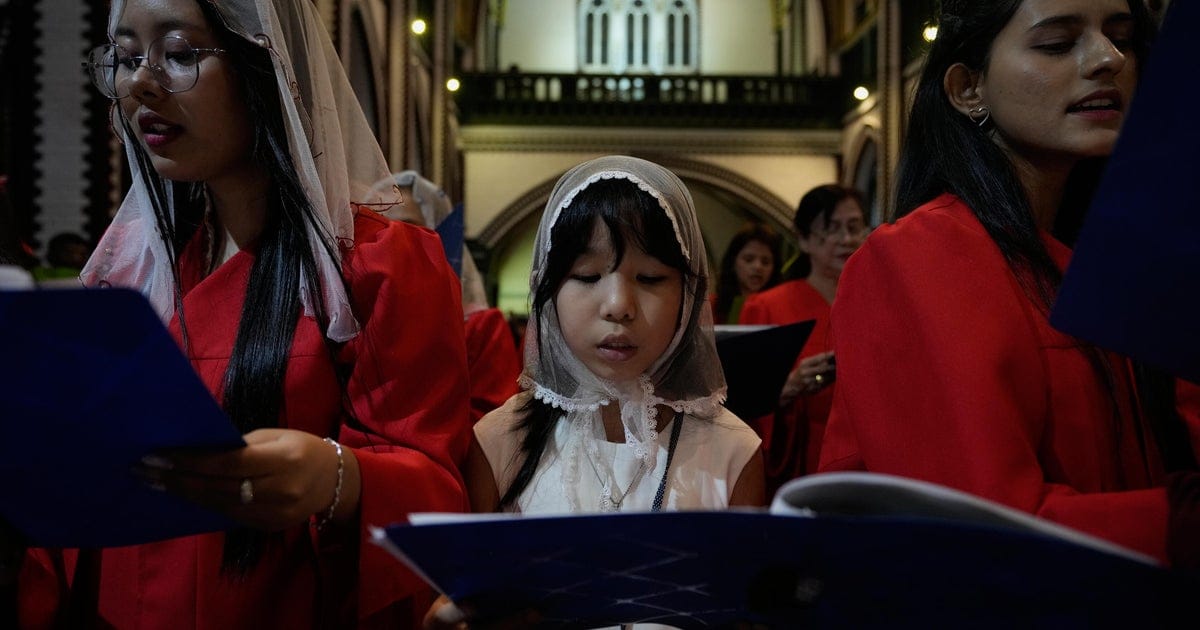
Because let’s not pretend the church itself didn’t play a part in this transformation. The input mentions Mass with Pope Leo XIV at the Vatican. The Vatican, for all its spiritual grandeur, represents the shift from a personal, intimate faith to a grand, public spectacle. The transformation from a small gathering in a stable to a global broadcast from St. Peter’s Square, while powerful for believers, sets the stage for grandiosity over genuine connection. It provides the template for turning a deeply personal experience into a performative one. When faith becomes a massive, televised event, it becomes easier to package, market, and eventually, corrupt.
And this institutionalization of the holiday allowed it to become a political and cultural tool. It moved from a quiet time of reflection to a major, international holiday that demands public recognition. The political implications of this are enormous, as nations compete to show off their cultural identity through elaborate displays. The Vatican’s influence expanded the holiday’s reach far beyond its original boundaries, making it ripe for commercial exploitation. The bigger the spectacle, the more opportunities for brands to insert themselves. And once the corporate machine gets involved, it’s a downward spiral.
Waterskiing Santas and the Triumph of Absurdity
But the real betrayal of Christmas occurs when we reach the present day. When we look at the headlines about waterskiing Santas in the US or giant cuts of meat being thrown into crowds in London, we are seeing the final, pathetic act of this holiday’s cultural appropriation. This isn’t just about fun; it’s about a complete and total detachment from reality. Waterskiing Santas are the epitome of meaningless spectacle. What does Santa Claus, a figure based loosely on Saint Nicholas (a Greek bishop known for giving gifts to the poor, not for extreme sports), have to do with waterskiing in Florida? Nothing. It’s purely for show, a desperate attempt to create ‘content’ and distract from the emptiness of the celebration.
And this spectacle isn’t just limited to America; it’s a global phenomenon. Look at London, with ‘giant cuts of meat being thrown into crowds.’ This isn’t a tradition; it’s a spectacle of gluttony and cultural appropriation, where the sacred has been replaced by the profane, and the quiet contemplation of faith has been drowned out by the noise of consumerism and corporate branding. It’s a public display of excess that completely ignores the historical context of the holiday. The entire concept of a holiday rooted in a simple birth in poverty is fundamentally contradicted by throwing massive amounts of food at a crowd. It highlights the grotesque inequality that defines modern society, especially during a holiday where charity and goodwill are supposedly paramount. The sheer waste involved is a mirror reflecting the moral decay of the modern West. We gorge ourselves while others starve, all under the guise of festive cheer.
The Global Sellout: How ‘Traditions Both Old and New’ Hide Cultural Erosion
Because the news reports call these ‘photos of ways Christmas is celebrated all around the world,’ and they talk about traditions ‘both old and new.’ But what they really mean is that ‘new’ traditions—the commercialized ones—are slowly but surely suffocating the ‘old’ ones. The new traditions are not organically grown cultural expressions; they are manufactured by marketing departments and broadcast globally. We are witnessing cultural erosion at a massive scale. The globalization of Christmas is not about spreading joy; it’s about spreading the American consumer model. The ‘new traditions’ are just excuses for spending money. They are designed to sell products, not celebrate meaning. And we buy into it every single year without questioning it.
The waterskiing Santa isn’t a quirky local custom; it’s a sign that the holiday has become so diluted that anything goes, as long as it generates buzz and clicks. It’s a cultural signifier stripped bare of any underlying substance. The original purpose is gone, replaced by whatever gimmick can draw the most attention on social media. We are living in an era where authenticity is subordinate to engagement. The holiday has become an exercise in performative cheer, where people are more concerned with appearing happy on social media than actually being present in the moment. The very concept of ‘tradition’ has lost its meaning, becoming a synonym for ‘marketing campaign.’ We cling to superficial rituals while letting the core values slip away. It’s a tragedy, really, to watch something so historically significant transform into a hollow shell of its former self. And because of this, the future of genuine holiday celebration looks incredibly bleak. We are heading towards a future where Christmas is indistinguishable from Black Friday, simply another excuse for mass consumption.