
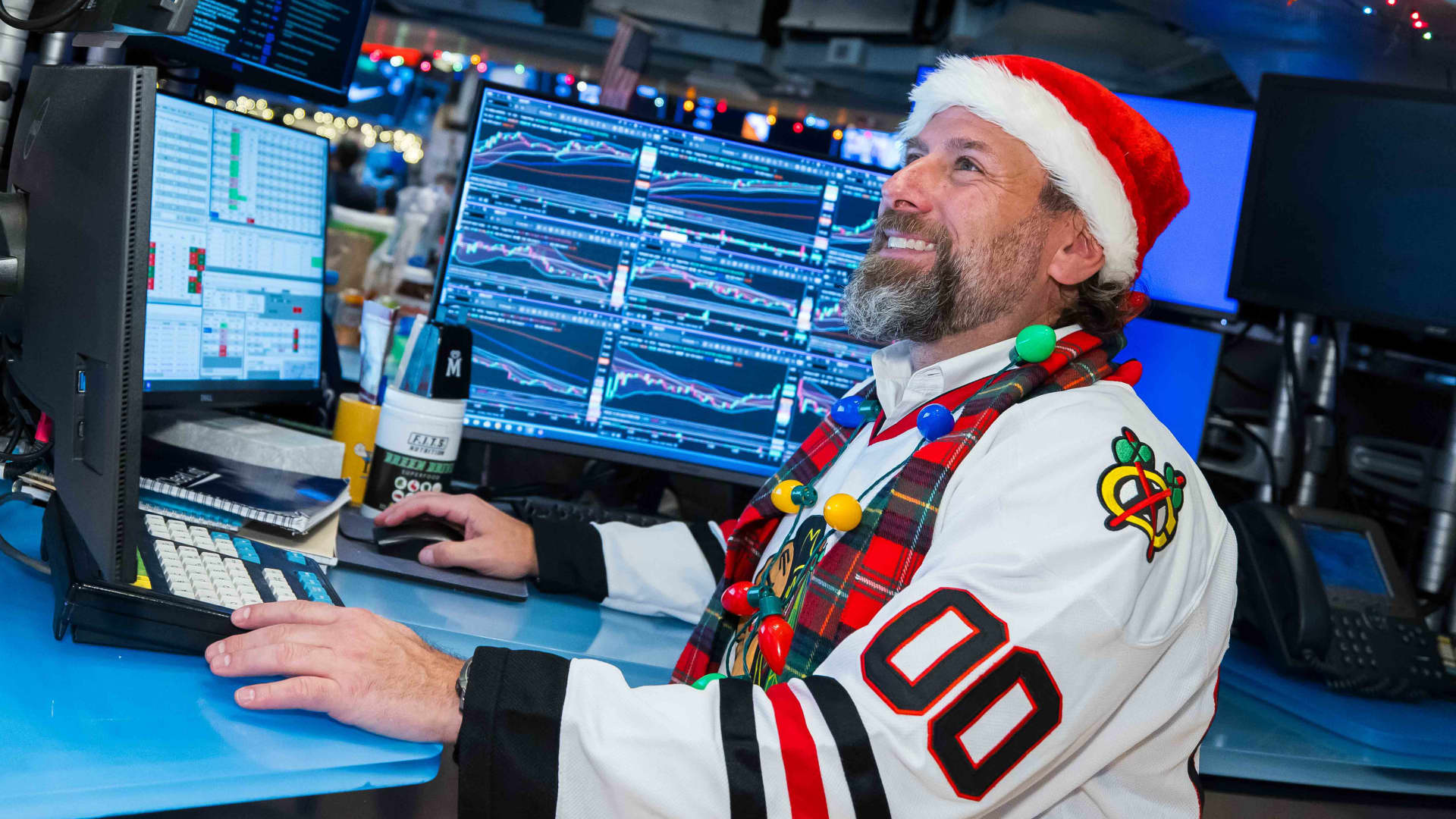
The S&P 500 Record: A Rigged Game or a Harbinger of Doom?
Let’s talk about this so-called “Santa Claus rally” where the S&P 500 suddenly decides to hit new all-time highs right when everyone is distracted by holiday shopping and eggnog. It’s not a coincidence, folks. The financial press wants you to believe this is a sign of robust economic health, a triumphant victory lap for the market after a year of navigating inflationary pressures and geopolitical uncertainty. They’re telling you to be bullish, to jump in before you miss the boat, and to celebrate this record as a sign that everything’s fine and dandy in the kingdom of capitalism, but I’m here to tell you that the real story is far darker and infinitely more calculated than any headline you read in the mainstream rags. This isn’t a genuine rally; it’s a carefully orchestrated grand finale where the institutional players are high-fiving themselves before pulling the rug out from under the retail investor.
The entire narrative hinges on a couple of key factors: rate cut speculation and the AI stock bubble, both of which are nothing more than smoke and mirrors designed to keep the game going just long enough for the insiders to cash out. The S&P 500 climbing to fresh intraday records fueled by rate cut bets isn’t a display of market strength; it’s an acknowledgment of weakness. The market is effectively demanding cheaper money from the Federal Reserve, and the Fed, seeing the writing on the wall for a potential economic collapse, is signaling a pivot to avoid a pre-election recession. The market’s insistence on hitting new all-time highs while core economic indicators like consumer debt and commercial real estate struggle is a blatant disconnect that screams of manipulation, suggesting that this entire rally is built on the flimsy foundation of future rate cuts rather than current fundamentals. It’s a house of cards.
The Great Deception: The Powell Pivot and the Illusion of Recovery
The history of this current market cycle is essential to understanding why this record high is so perilous. Go back a couple of years, and you’ll remember the Fed’s relentless campaign to fight inflation, hiking interest rates faster than at any point in recent history. This was supposed to bring the economy back to equilibrium, to cool down the overheated speculation and restore fiscal responsibility. But what actually happened? The market, particularly a handful of tech behemoths, completely decoupled from reality. The Fed’s policy created a massive divide: Main Street suffered with higher borrowing costs for mortgages and car loans, while Wall Street found new ways to speculate, buoyed by the promise that the Fed would ultimately have to backtrack to avoid crashing the whole system. Jerome Powell and his crew are not economic saviors; they are reactive politicians masquerading as central bankers, and they are terrified of being blamed for the next financial crisis. The moment they started hinting at rate cuts, it was a green light for every hedge fund and institutional investor to start bidding up prices, knowing that the easy money gravy train was about to roll again. They’re kicking the can down the road, and the road is running out of pavement.
This market behavior is eerily similar to other historical bubbles, where irrational exuberance reaches its zenith just before the collapse. Look at the dot-com bubble in 1999. Everyone was convinced that P/E ratios didn’t matter anymore because of the Internet revolution. Companies with no revenue were valued at billions. The S&P 500 kept climbing, fueled by retail investors buying into the hype and believing the talking heads. We know how that ended: a massive crash that wiped out trillions in market value. The current AI narrative, where a handful of companies like Nvidia are driving half of the market’s gains, feels exactly like that same cycle of madness. We’re told AI will change everything, and perhaps it will, but the stock prices are not reflecting future value; they are reflecting present speculative frenzy. The insiders know this. They are selling into the strength, quietly offloading their positions to the unsuspecting public who believe this time is different. It never is.
AI Hype: The New Dot-Com Bubble
Let’s focus on the AI stock jumps mentioned in the initial data. This is perhaps the most obvious tell that we are deep into bubble territory. The excitement around artificial intelligence, while understandable from a technological standpoint, has created a massive disconnect between company valuations and actual profits. We see companies achieving multi-trillion dollar market caps based almost entirely on projected earnings from a technology that is still in its nascent stages of commercial implementation. The narrative is powerful, almost religious in its fervor, and it has successfully drawn in a fresh wave of retail investors eager to replicate the success stories of the past. They see the S&P 500 hitting records, they hear about AI transforming the world, and they throw caution to the wind. This is exactly what the big players want them to do. The high-volume trading and sudden jumps in AI stocks are not organic growth; they are the result of smart money moving the pieces around to maximize their exit value. It’s like watching a high-stakes poker game where one player has all the cards but is pretending to be weak to draw more money into the pot before showing their hand.
The history of market bubbles shows that the final stage is often characterized by a narrow set of stocks carrying the entire index. We see this today with the “Magnificent Seven” tech stocks. The S&P 500 may be at a record high, but if you strip away these few companies, the broader market, the majority of the S&P 500, is actually struggling. This lack of breadth is a classic sign of market exhaustion. The rally isn’t broad-based; it’s concentrated in a few highly speculative areas, making the index extremely vulnerable to a sharp correction if any of these high-flyers stumble. The market is top-heavy, and the higher it climbs, the more precarious its position becomes. The insiders aren’t celebrating; they’re getting ready to duck and cover when the inevitable happens. They’ve already made their money, and now they’re just waiting for the signal to pull the plug on the retail investor’s dreams.
The Real Story Behind the Scrape Failure: Hiding the Mess
The fact that a portion of the data scraped shows “SCRAPE_FAILED” is almost too perfect, isn’t it? It reflects the opacity of a market that is actively hiding its cracks. The official narrative is clean and tidy: S&P hits record high. But what’s happening beneath the surface? The high-frequency trading algorithms, the dark pools, the off-exchange transactions—this is where the real action is. The public data, the data that feeds into news headlines, is carefully curated to present a picture of stability and growth. But if you look at the underlying economic indicators, the real estate market (commercial and residential), the skyrocketing consumer debt, and the persistent inflation that is crushing everyday Americans, you see a completely different picture. The S&P 500 record high is a distraction, a shiny object designed to make you look away from the fundamental rot in the financial system. It’s a classic insider trick. They want you focused on the headline numbers while they prepare for the inevitable collapse. This record high isn’t a victory; it’s a warning shot fired by a system on the verge of breakdown.
The Future Prediction: The Inevitable Hard Landing
Where does this go next? The pattern is predictable. The Fed’s rate cut signals will continue to fuel the rally for a short period, potentially pushing the S&P 500 even higher into uncharted territory. This is the final phase of a market bubble. The retail investor, spurred by FOMO (fear of missing out), will pour their life savings into index funds and speculative stocks. The market will become completely decoupled from reality, existing purely on momentum and positive sentiment. Then, a black swan event—a geopolitical crisis, a major default in the commercial real estate sector, or simply a realization that the rate cuts aren’t coming as fast as promised—will trigger a cascade effect. The bubble will burst, and the S&P 500 will plummet, potentially losing a significant percentage of its value in a short period. The insiders who bought low and sold high will be safe, having secured their profits. The retail investors who bought high will be left holding the bag. It’s a recurring cycle, and this record high is just another marker on the path to financial disaster. Don’t be fooled by the fireworks display; it’s just the prelude to the dark. The market is not the end of the market downturn; this is a pause before the final, more devastating drop. The S&P 500 hitting a new record high is the ultimate signal that it’s time for the smart money to get out.
A Warning from the Trenches: Don’t Trust the Bull Run
The core issue here is that the market is no longer reflecting economic fundamentals; it’s reflecting central bank policy and speculative hype. The S&P 500 record high isn’t a testament to the strength of the economy, but rather to the willingness of the Federal Reserve to continue propping up asset prices to avoid a political crisis. They are creating a moral hazard, rewarding risky behavior and punishing responsible saving. This cycle cannot last forever. The economic laws of gravity will eventually reassert themselves, and when they do, the fall from this record high will be swift and brutal. The time to be cautious is now, when everyone else is feeling invincible. The true insider knows that the time to buy is when there’s blood in the streets, not when the band is playing and everyone’s dancing on the deck of the Titanic. This record high is the band playing. Get off the ship before it hits the iceberg.