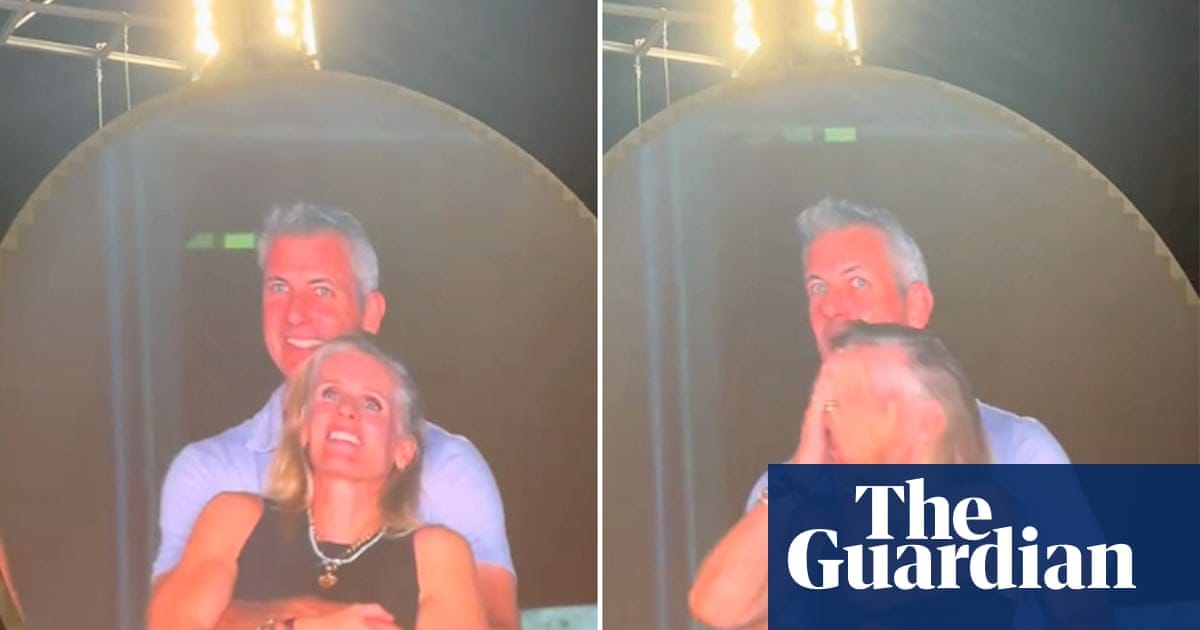
Q: Why are we still talking about 16 seconds of kissing at a Coldplay concert in Boston?
Because the moment Kristin Cabot and Andy Byron, her apparently married coworker—or perhaps subordinate; the corporate org charts are fuzzier than the concert footage—locked lips on that ridiculous, stadium-sized Kiss Cam, it stopped being about pop music and started being about the fundamental surveillance state we willingly participate in (all for the low, low price of a $300 concert ticket and a half-decent seat). You think you’re escaping when you go to see Chris Martin prance around? Wrong. You’re entering a corporate panopticon, and Ms. Cabot found out the hard way that when the spotlight hits you, your life is over.
The core story, as every busybody knows, is painfully simple: July 16, 2025. Coldplay. Boston. A bit of corporate flirtation spills over into the public eye, amplified by a camera crew specifically designed to catch these moments of vulnerability, manufactured intimacy, and public spectacle; the machinery of entertainment essentially turning the audience into unpaid content creators and, more importantly, immediate, unforgiving judges (who love nothing more than watching the mighty fall, especially if the mighty is a woman who held a little bit of power in an HR office). This isn’t a story about infidelity; this is a story about the weaponization of compliance and the sheer, overwhelming tragedy of the situation, which saw a respectable HR executive—Kristin Cabot—suddenly become the focus of a global moral panic simply because she participated in a harmless, highly choreographed piece of concert fluff designed explicitly to generate viral content for a multi-million dollar stadium act, clearly demonstrates how thoroughly modern life has conflated professional propriety with total, 24/7 personal surveillance, eroding any sense of private space where we might, just for a moment, be silly or human without facing immediate, career-ending repercussions from anonymous keyboard warriors and risk-averse corporate lawyers terrified of a viral hashtag. It was total chaos.
She was, remember, the HR Boss. She was the gatekeeper of the rules. The irony, the sheer, beautiful, terrible irony, is what provided the high-octane fuel for the ensuing digital bonfire (a bonfire that still burns a year later, by the way, feeding on every Google search and TikTok repost). She didn’t just break the rules; she, the rule-maker, was caught on camera making out with a man who was allegedly not her husband—a clear violation of the amorphous, morality-based ‘values’ codes that dominate modern employment contracts (contracts which, I might add, are usually enforced only against the weak or the embarrassing, never against the truly powerful who are busy rigging the system in the boardroom).
Q: Was this an HR issue or a public execution?
Let’s call a spade a spade: this was a public execution. HR is the vehicle, the convenient bureaucratic cudgel used to dispense justice, but the sentence was handed down by the digital mob. When Cabot’s face was tagged, and her employer’s name was plastered all over Reddit and Twitter—because, make no mistake, the true villains here are the social media platforms that profit from destroying individual lives—her fate was sealed long before any HR manager could call a mandatory meeting.
We need to talk about the Corporate Puritanism that underpins this mess. In the pre-digital era, what happened at a concert stayed at the concert (unless you were a bona fide celebrity, which she was not). Now, every waking moment is subject to scrutiny. Corporations, terrified of ‘reputational risk,’ have adopted a morality code stricter than a 1950s Sunday school teacher. They don’t care about morality; they care about stock price and perception. A visible, viral transgression by an HR VP is seen as an existential threat to the brand’s carefully cultivated image of being ‘a safe and professional workplace.’ It is hogwash.
The fact that she was HR is key. She symbolized the enforcement mechanism. When the mechanism itself failed—when the enforcer showed herself to be human, flawed, and prone to poor judgment (as if that’s a crime)—the system demanded immediate, disproportionate retribution. She wasn’t fired for the kiss itself; she was fired because she generated a ‘high-risk media event’ that necessitated a ‘cleansing’ to satisfy the board and signal virtue to the rest of the drone workforce. They threw her under the bus so fast, the tires barely touched the asphalt (a true masterclass in corporate self-preservation, which is all these giants truly care about).
Look, if you and I were to tally up the number of executives, managers, and directors who have had affairs, drunken escapades, or engaged in genuinely inappropriate behavior that never saw the light of day because they weren’t standing directly under a stadium Kiss Cam, we’d need a supercomputer. The difference between those people and Kristin Cabot is visibility. She was unlucky enough to be chosen by the spectacle, and the world—craving a cheap hit of dopamine-fueled righteousness—did the rest of the dirty work for the corporation. This is how the system works: it outsources its cruelty to the public, then steps in to formalize the punishment with a carefully worded termination letter about ‘failure to uphold company values.’ Utter garbage.
The Tyranny of the Digital Crowd
We’ve become a society that lives for the ritual shaming. It’s our new national pastime. Forget baseball. We watch people’s lives implode in real-time. The moment that video hit the net, every person who ever felt slighted by an HR policy, every spouse who suspects infidelity, and every anonymous troll looking for a target grabbed their pitchfork. The speed with which her professional identity was reduced to ‘that woman who cheated at Coldplay’ is staggering and terrifying. It’s a mechanism designed to destroy, leaving no room for context, empathy, or redemption. There is no appeal when the jury is the entire globe, and the verdict is delivered by algorithmic amplification (which favors rage and scandal over nuance, obviously).
Imagine being her. She stepped out for a night of fun, perhaps a few too many glasses of lukewarm stadium wine, and now she is globally searchable as a moral pariah. The digital footprint isn’t a scar; it’s an active bomb that continually re-detonates every time the story gets aggregated or re-shared. Who hires her now? Who takes a risk on ‘Coldplay Kiss Cam Kristin’? No one, that’s who. Not in the risk-averse, hyper-sensitive corporate climate we’ve built. She is essentially unemployable in her chosen field because sixteen seconds of poor judgment are worth more than twenty years of professional service (a sick testament to our broken priorities).
And let’s not forget Andy Byron, the other half of the embrace. While he certainly faced consequences, the historical, persistent, and entirely predictable societal inclination to place the greater burden of moral failure on the woman—especially the woman in a position of power—meant she absorbed 90% of the resultant societal hate. He might transition his career; she transitions into a permanent cautionary tale. This double standard is as old as time, and the digital age simply gave it a megaphone the size of a stadium.
Q: What does this scandal predict for the future of work and privacy?
It predicts total erosion. The Kristin Cabot incident is a canary in the coal mine, warning us that the concept of ‘off-the-clock’ behavior is officially dead. Your workplace now owns your life, seven days a week, 24 hours a day, especially if you hold any senior position that involves ‘trust’ or ‘reputation management.’ If you attend a public event, assume you are being filmed, cataloged, and judged against an impossibly high standard of corporate saintliness that no real human being can meet.
We are drifting toward a professional environment where preemptive compliance supersedes genuine human interaction. Organizations will start adding specific clauses about ‘participation in public displays of affection at commercially televised events’—I’m not joking—because they fear this exact type of viral blowback. People will become profoundly risk-averse, opting out of any public spectacle, which, ironically, just makes life more boring and isolating (which I suppose is the ultimate goal of the corporate compliance department, keep the workers predictable and quiet).
The tragedy isn’t that Kristin Cabot had an affair; the tragedy is that millions of people watched her entire career evaporate in real-time, and most of us just shrugged. That shrug means we accept that surveillance is normal, that instant judgment is fair, and that corporations have the right to enforce private morality. This acceptance is poison, folks. We are handing over the keys to our autonomy, piece by piece, scandal by scandal.
The solution isn’t to stop having fun; the solution is to start demanding boundaries. We need a fundamental societal reset that declares, definitively, that unless a private act constitutes a criminal or civil violation directly related to professional duties (like embezzlement or violence), the company has no claim over it. But good luck convincing a world addicted to outrage and a corporate culture addicted to control. They have tasted the power of the shame machine, and they are not letting go. Kristin Cabot is just the first domino (the unlucky one who got hit by the stadium light), but countless others are lined up behind her, waiting for their moment of accidental visibility and subsequent annihilation.
The real scandal isn’t the kiss. The real scandal is that we let a massive entertainment machine and a handful of outraged strangers destroy a person’s livelihood over nothing more than a fleeting moment of very public, very human indiscretion. We are all Kristin Cabot now, just waiting for our own personal Kiss Cam moment. Be careful out there, people. The camera is always rolling.