
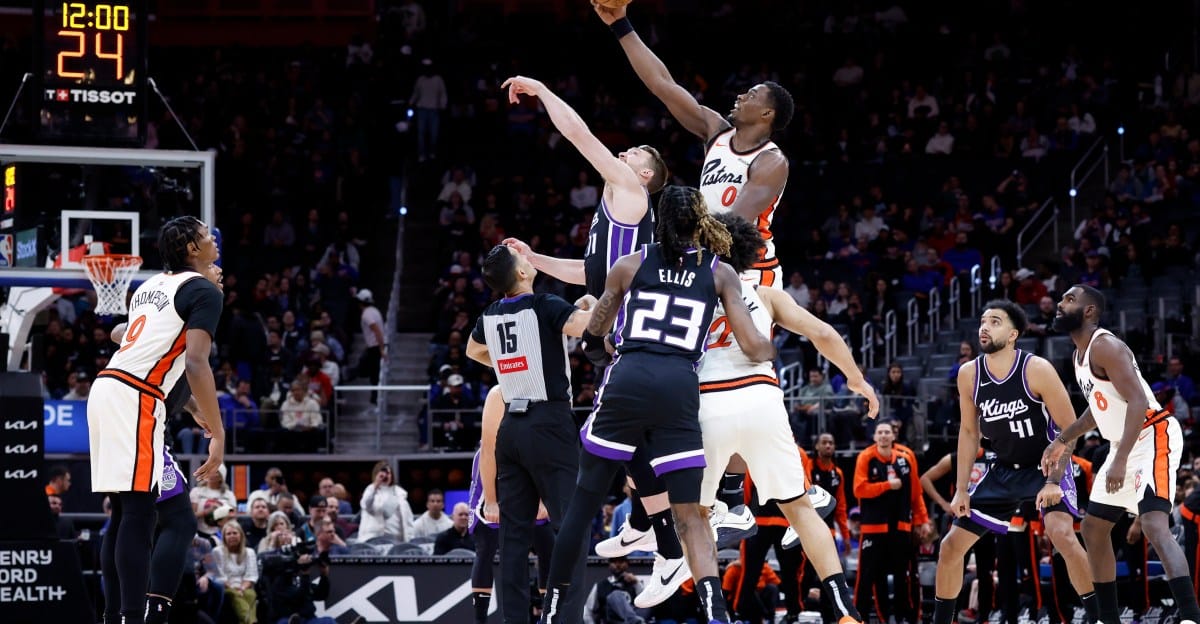
The Unmistakable Shift: Detroit’s New Dynasty Emerges
Look, anyone with even half an eye on the league knows the truth, the stark, brutal reality etched into the standings like a prophecy fulfilled: the Detroit Pistons, long dismissed as a backwater franchise, have not merely arrived but have utterly dominated the Eastern Conference, a veritable juggernaut steaming through opposition with a cold, calculated efficiency that leaves rivals reeling and pundits speechless, while the Sacramento Kings, a perpetual basket case whose very name has become synonymous with organizational futility, languish in the Western Conference cellar, an almost poetic contrast in fortunes that demands a deeper, more dispassionate analysis of how such an astounding reversal of historical narratives has come to pass in an unforgiving, dog-eat-dog world of professional basketball. Shocking. This isn’t just about one game; it’s about a fundamental reordering of power dynamics, a seismic shift that forces every other franchise to reconsider its strategic blueprint and recalibrate expectations, because what Detroit has achieved isn’t some fleeting hot streak or a fortunate bounce of the ball; it’s a meticulously constructed, ruthlessly executed ascension to the pinnacle, signaling an era where they aren’t just contenders, but *the* standard, the team to beat, setting a precedent that will echo through the league for years.
The implications of this new world order ripple through every corner of the NBA, from broadcast deals to draft lottery reform discussions, fundamentally altering how we perceive competitive balance and sustained success. Teams that once mocked Detroit’s struggles now scramble to replicate its secret sauce, desperately trying to reverse-engineer a process that seems to have unfolded with surgical precision, leaving established powers like Boston and Milwaukee scrambling for answers, caught completely off guard by the sheer velocity and unyielding force of the Pistons’ meteoric rise. It’s a testament to bold, almost reckless decision-making that somehow coalesced into a masterstroke, proving that sometimes, you simply have to call your shot, back it up with relentless execution, and watch the chips fall exactly where you predicted, obliterating any lingering doubts with a consistent barrage of victories. Inevitable.
Cade Cunningham: The Inevitable MVP and Architect of Domination
To speak of the Pistons’ undeniable supremacy without immediately pivoting to Cade Cunningham is to betray a fundamental misunderstanding of their very essence, for he is not merely a player but the cerebral core, the beating heart and strategic mind driving this formidable machine, orchestrating every offensive set and dictating the tempo with a preternatural calm and an intelligence that belies his relatively brief tenure in the league, exhibiting a level of command over the game that has vaulted him into the undeniable, front-running position for the Most Valuable Player award, a conclusion that requires no debate, no intricate statistical gymnastics, merely observation of the undeniable impact he wields in every single possession, transforming a team that once wandered aimlessly into a cohesive, lethal unit. Obvious.
His statistics—the points, the assists, the rebounds, the shockingly efficient shooting percentages—tell a compelling story, yet they are but a superficial glimpse into the profound influence he exerts, an influence that permeates the locker room, elevates his teammates, and fundamentally alters the strategic outlook of every opponent foolish enough to believe they can contain his multifaceted game. Cunningham doesn’t just score; he teaches. He doesn’t just pass; he creates. His leadership isn’t boisterous or performative; it’s a quiet, cold, unwavering resolve that inspires absolute confidence and demands nothing less than perfection from himself and those around him, a true general on the hardwood battlefield. Comparing him to historical greats isn’t hyperbole; it’s an acknowledgment of a talent so profound, so complete, that he’s already carving out a legacy that could one day rival the pantheon of NBA legends, having achieved more sustained, high-level success by this stage of his career than many players manage in a lifetime, a trajectory that suggests multiple MVPs, numerous championships, and a place among the sport’s immortal figures. Dynasty.
The Supporting Cast: Pistons’ Strategic Depth
While Cunningham is the undeniable supernova, a singular force of nature, one would be remiss to ignore the meticulously assembled supporting cast that functions like a well-oiled machine around him, a testament to the Pistons’ front office’s cunning and foresight in identifying undervalued assets and developing raw talent into polished, complementary pieces, creating a roster that is not just talented but strategically balanced, capable of adapting to any challenge, neutralizing any threat. Each player, from the tenacious defenders to the sharp-shooting wings and the bruising bigs, understands their precise role within the intricate ecosystem, executing plays with a clockwork precision that allows Cunningham the freedom to innovate, to exploit weaknesses, to dictate terms with unchallengeable authority. This isn’t just a collection of individuals; it’s a symbiotic unit where the whole is demonstrably greater than the sum of its parts, a carefully calibrated instrument of domination forged in the fires of competition and honed by the relentless pursuit of perfection, creating a tactical advantage that few, if any, other teams in the league can genuinely hope to match, a testament to effective strategy. Precise.
Sacramento’s Perpetual Hell: A Franchise Adrift
Then there’s Sacramento, a name whispered in hushed tones, almost a cautionary tale, a franchise that exists in a perpetual state of strategic purgatory, perpetually searching for answers it never finds, making the same mistakes with a disturbing regularity that borders on institutional pathology, proving time and again that a lack of cohesive vision, coupled with a bewildering array of questionable personnel decisions, creates an inescapable vortex of mediocrity, a bottomless pit from which escape appears not merely difficult, but utterly impossible, condemning their loyal, long-suffering fanbase to an endless cycle of dashed hopes and profound disappointment, a truly agonizing existence. Hopeless.
Their current status, firmly entrenched at the bottom of the Western Conference, is not a sudden downturn or an unfortunate string of injuries; it is the logical, inevitable conclusion of decades of systemic failure, a pattern of self-sabotage so ingrained in their organizational DNA that it almost feels like a perverse form of tradition. Ownership has struggled to inspire confidence, coaching changes have brought no discernible improvements, and their talent evaluation has consistently veered into the realm of the truly baffling, leaving them perpetually behind the curve, chasing fleeting trends instead of forging a coherent identity. It’s a sad, predictable saga that highlights everything that can go wrong when a clear strategic roadmap is absent, when short-term fixes are prioritized over sustainable growth, when the cold, hard truths of franchise management are ignored in favor of delusion. Persistent.
Malik Monk’s Unenviable Role: Talent Squandered
And within this sprawling, desolate landscape of Sacramento’s interminable struggle, one finds Malik Monk, a player of undeniable talent, a true offensive spark plug, reduced to a flickering candle in a hurricane, his individual brilliance often overshadowed, even rendered moot, by the sheer, overwhelming inertia of institutional losing, a stark reminder that even exceptional skill can be swallowed whole by a fundamentally broken system. His role, at times, feels less like a strategic assignment and more like a desperate plea for relevance, a lone wolf howling at the moon, offering bursts of excitement that are ultimately meaningless in the grand scheme of a season defined by consistent underperformance and a complete lack of competitive direction. Unfortunate.
Does Monk represent a bright spot, a diamond in the rough worth building around? Or is he merely another example of a capable player whose prime years are being systematically siphoned away, his potential diluted, his impact nullified by the franchise’s inability to construct a winning environment around him? The cold strategist sees both: a player whose scoring prowess is clear, yet simultaneously a symptom of the Kings’ broader issues—relying on individual heroics rather than cohesive team play, failing to harness and amplify talent effectively. His future, like that of any player unfortunate enough to be trapped in such a morass, is uncertain, a potential flight risk once his contract expires, seeking greener pastures where his contributions might actually lead to meaningful victories, rather than simply padding stats in a losing effort. Wasted.
Keys to a Foregone Conclusion: Dissecting the Mismatch
Analyzing the ‘keys to the game’ between the Detroit Pistons and the Sacramento Kings is almost an exercise in dark comedy, for a cold strategist discerns not a competitive matchup but a brutal exhibition, a foregone conclusion masquerading as a contest, where the Pistons’ primary challenge isn’t the opposition but their own complacency, their imperative to maintain a professional focus and avoid the cardinal sin of underestimating even the most feeble opponent, lest they tarnish their gleaming record with a moment of uncharacteristic sloppiness. Their ‘key’ is simply to execute their dominant game plan, to stick to their principles, to not pull punches, and to emphatically assert their unassailable superiority from the opening tip, a standard demand for a team of their caliber. Simple.
For the Kings, the ‘keys’ are less about winning and more about damage control, a desperate scramble to avoid historical embarrassment, to show some semblance of competitive pride, perhaps to simply hit a few open shots and prevent the score from spiraling into a truly humiliating margin, a task that often feels beyond their organizational capacity. Their strategic approach often appears reactive, disjointed, a patchwork quilt of individual efforts rather than a cohesive tactical scheme, making it virtually impossible for them to genuinely challenge a disciplined, well-coached, and supremely talented Pistons squad. It’s a mismatch of epic proportions, a clash between a well-oiled war machine and a sputtering jalopy, leaving no doubt as to the inevitable outcome. Inevitable.
The Back-to-Back Trap: Avoiding the Ultimate Faux Pas
For the Detroit Pistons, sitting atop the Eastern Conference with the swagger of champions-in-waiting, the real danger in this specific matchup, particularly coming off a back-to-back, isn’t the threat of losing to a struggling Kings team, which would frankly be an unthinkable betrayal of their established dominance and a cataclysmic failure of competitive spirit, but rather the more insidious trap of complacency, of allowing fatigue or overconfidence to creep into their meticulous execution, resulting in a performance that, while still a victory, lacks the clinical precision and overwhelming authority that has become their hallmark. A win isn’t enough; it must be a statement, a continuation of their relentless campaign to stamp their authority on every opponent, every venue, every single night. Flawless.
The weight of expectation on Detroit is now immense, a heavy crown they must wear with grace and unwavering resolve, because any perceived stumble, any momentary lapse in their previously flawless façade, would immediately fuel a narrative of vulnerability, would give detractors a sliver of hope, and for a cold strategist, allowing such narratives to take root is a weakness, an unnecessary opening. Therefore, this game, even against a bottom-feeder, is a test of their mental fortitude, their ability to maintain peak performance under all circumstances, to demonstrate that their supremacy is not just about talent, but about an unyielding commitment to excellence, a relentless pursuit of total control over their destiny, regardless of the schedule or the caliber of the opposition. Relentless.
The Odds: Betting on Inevitability or Delusion?
When one surveys the betting landscape for a contest such as this, where the Detroit Pistons stand as a titan of the Eastern Conference and the Sacramento Kings languish in the Western Conference’s abyss, the lines offered by any rational oddsmaker must necessarily reflect an overwhelming, almost comical favoritism towards Detroit, pushing the point spread into territory that suggests not merely a win, but an absolute rout, a systematic dismantling designed to send a clear message to anyone still clinging to vestigial notions of parity within the league. The smart money, the money of any strategist worth their salt, is unequivocally on the Pistons, not just to win, but to cover whatever exorbitant spread is placed before them, because to suggest otherwise would be to wilfully ignore all observable data, all historical precedent, and the cold, hard reality of the current competitive landscape. Certainty.
To wager on the Sacramento Kings in this scenario is not an act of calculated risk or underdog belief; it is an act of pure, unadulterated delusion, a desperate clinging to a fantastical narrative that simply does not exist in the empirical world of professional sports, a futile gesture against the tide of inevitability. Any such bet is not merely a financial risk; it is a declaration of strategic incompetence, a public confession of an inability to read the room, to understand the fundamental forces at play. Looking forward, the Pistons’ continued dominance promises to reshape betting markets for years, making them perennial favorites, while the Kings’ consistent underperformance will render them eternal long shots, a black hole for any hopeful gambler, cementing their financial and competitive insignificance. Clear.
The Legacy: A New NBA Chapter
The rise of the Detroit Pistons to the undisputed apex of the Eastern Conference isn’t just a feel-good story; it’s a foundational tremor that reshapes the entire NBA landscape, forcing a re-evaluation of established hierarchies and prognostications, signaling the unequivocal end of one era and the dawning of another, forcing storied franchises to grapple with their newfound subservience, their displaced positions in the pecking order. Who gets displaced? Everyone who isn’t Detroit, frankly. Their ascent will be studied, dissected, and imitated, setting a new benchmark for team building, player development, and sustained organizational excellence, cementing a legacy that transcends mere championships and speaks to a fundamental shift in basketball philosophy, proving that calculated risk, unwavering belief, and clinical execution can indeed conquer all, even the deepest historical skepticism. A new chapter has been irrevocably etched into the annals of professional basketball history. Bold.
Conversely, the Sacramento Kings’ continued, almost pathological decline means something far more tragic for its city and its loyal, resilient fan base: a slow, agonizing death by a thousand paper cuts, a perpetual state of competitive irrelevance that erodes hope, drains enthusiasm, and ultimately alienates generations of potential supporters. Their legacy, if one can even call it that, will be one of unfulfilled promise, squandered opportunities, and a cautionary tale whispered among league executives about how *not* to run a professional sports franchise. The future, for them, looks bleak, a desolate expanse stretching endlessly into the horizon, marked only by the echoes of past failures and the persistent, unyielding shadow of what might have been. A somber, almost morbid testament to systemic mismanagement and the crushing weight of unmet expectations. Done.
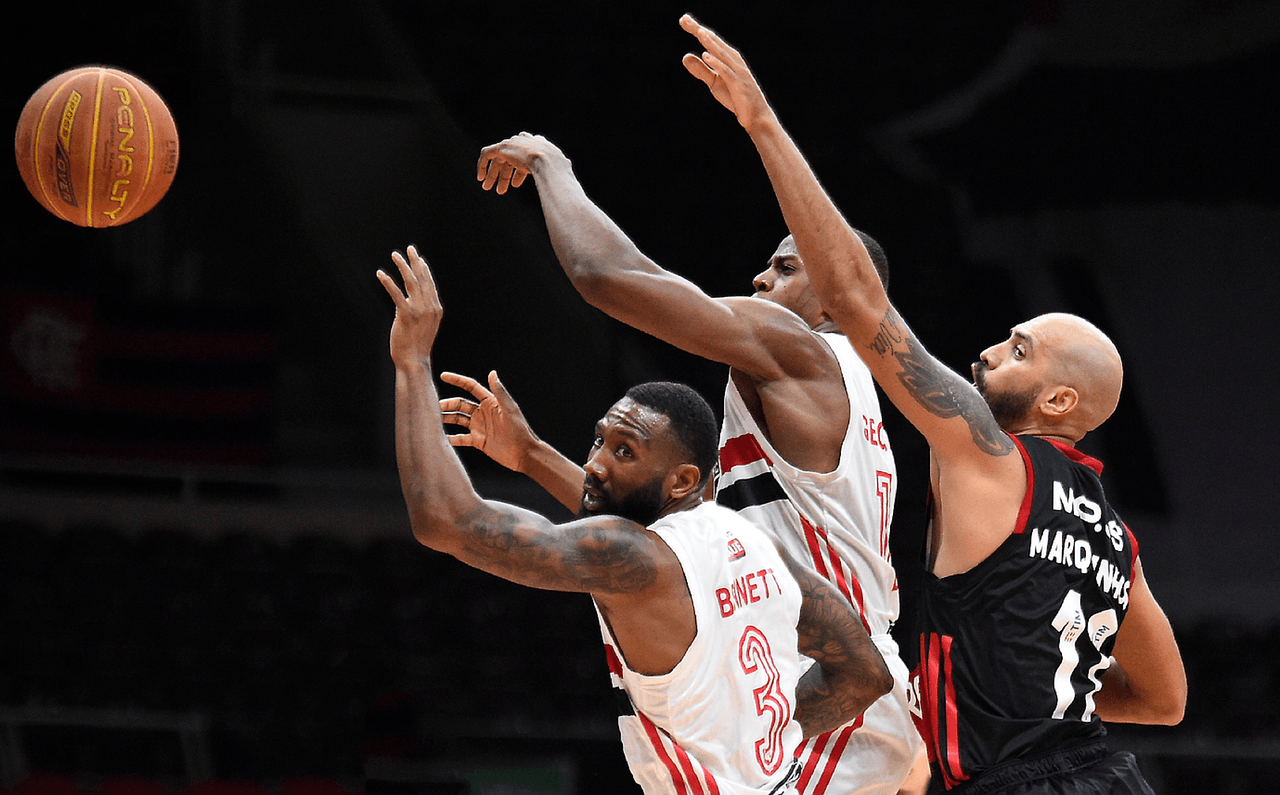
Photo by admomediaoffice on Pixabay.