The Anatomy of a Systemic Collapse
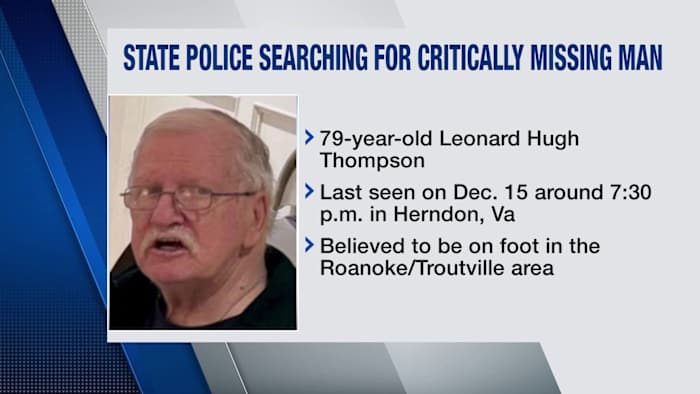
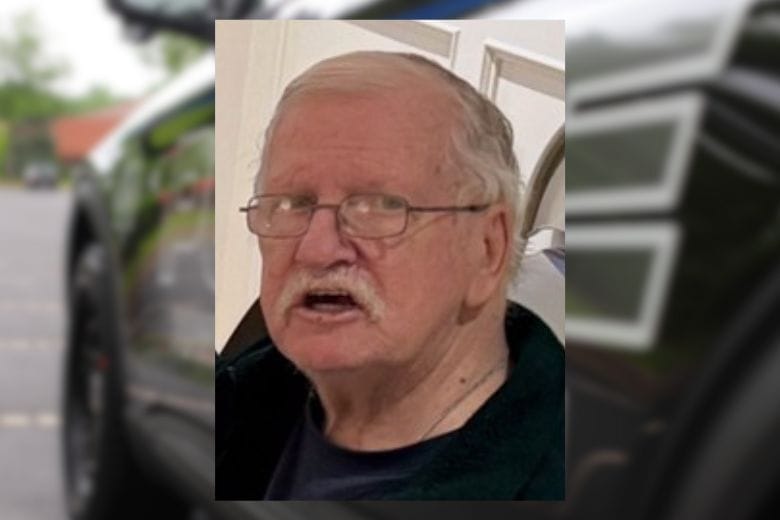
Let’s not mince words here; the tragic conclusion to the search for Leonard Hugh Thompson, the 79-year-old father-in-law of Olympic legend Dominique Dawes, is less a sad, isolated incident and more a blistering expose of institutional indifference, proving once again that visibility—not necessity—dictates the speed and effectiveness of emergency response in America.
When an elderly man, particularly one potentially suffering from cognitive impairment, goes missing, the clock isn’t just ticking, it’s screaming, yet the initial police response often feels less like an all-hands-on-deck effort and more like bureaucratic box-checking, waiting for the required 48 hours to pass before anyone truly commits resources that might actually save a life.
It demands serious scrutiny how Thompson vanished from Herndon, Virginia, only to have his body discovered hundreds of miles away in Troutville, near Roanoke, a geographical chasm that suggests either a catastrophic lapse in immediate area surveillance or a terrifyingly efficient, yet undirected, journey that the fragmented alert system failed spectacularly to intercept, leaving us all wondering what the point of these protocols even is if they can’t track a vehicle moving across major interstate corridors in the mid-Atlantic.
It’s a dereliction.
The Deadly Distance: Herndon to Troutville
Think about the sheer logistics involved: Herndon is deep in Northern Virginia—a congested, highly populated, and surveilled area—yet Thompson managed to traverse the entire state, crossing multiple jurisdictions, before ending up lifeless in a location roughly 200 miles away, forcing us to ask fundamental, uncomfortable questions about the quality of the initial ‘critically missing’ designation and whether law enforcement truly leveraged the technology at their disposal the moment the alarm was raised, especially considering the inherent vulnerability that comes with a 79-year-old traveling alone and possibly confused.
Who was watching?
The gap between the moment Thompson was reported missing on Monday and the tragic discovery on Saturday represents five days of agonizing uncertainty, amplified by the desperate public appeals from Dawes, who, because of her status, managed to inject the kind of frantic urgency into the search that average families can only dream of accessing, illustrating how the tragic calculus of attention is skewed heavily toward celebrity adjacency rather than universal human need.
We are told constantly that we live in a hyper-connected surveillance state, where license plate readers, traffic cameras, and cell phone pings are standard tools for locating criminals, yet when it comes to safeguarding vulnerable elders—the ones who truly need protection from the modern, dizzying world—the technological infrastructure seems to vanish into thin air, only to reappear when the case garners enough social media traction to warrant a prime-time news cycle, which is a horrifying indictment of our priorities.
Silver Alerts: A Second-Class Status?
The system distinguishes sharply between Amber Alerts (for children) and Silver Alerts (for the elderly or mentally impaired), and while both are vital, the practical reality is that Silver Alerts carry significantly less weight in the public consciousness and often receive a diluted broadcast reach, creating a two-tiered system of urgency where one type of disappearance generates instant, state-wide panic while the other often fades into the background noise of local police blotters.
Is this bias?
We have to face the cynical truth: the media feeds on novelty and dramatic tension, and while the disappearance of a child offers both in spades, the slow, often ambiguous nature of a senior citizen wandering off—a situation tied more to aging demographics than immediate external threat—simply doesn’t possess the necessary emotional dynamite to sustain 24/7 coverage unless, of course, an Olympic gold medalist is standing there, tearfully pleading for help, twisting the narrative into a digestible, high-profile drama that momentarily allows the public to perform digital empathy.
This isn’t just about Virginia; this systemic frailty is endemic across the nation where the bureaucratic machinery for handling the critically missing is often slow, fragmented across county lines, and woefully under-resourced, relying primarily on volunteer efforts and the accidental discovery rather than predictive modeling or proactive digital tracking that could leverage existing infrastructure to close the gap between reporting and locating before it becomes a recovery mission.
The fact that Thompson’s vehicle was identified near Roanoke—a significant distance that surely required multiple stops for gas or rest—suggests that if the initial alert system, including automated highway signage and border patrol notifications, had been activated with the same aggressive fervor reserved for a bank robbery, the search perimeter could have been exponentially tightened within hours, potentially resulting in a very different outcome for the Thompson family and providing a much-needed lifeline.
We must seriously reconsider the activation thresholds and dissemination protocols for Silver Alerts, demanding that state agencies treat the disappearance of a vulnerable senior with the same immediate, unyielding vigilance afforded to a child, because the cold, hard biological reality is that time is equally hostile to the elderly in distress, yet somehow, that reality continues to be overlooked, treated as a tragic but inevitable consequence rather than a preventable institutional failure that needs immediate legislative overhaul.
It’s simply appalling.
The Morbid Economy of Celebrity Oxygen
Here is where the cynicism bites hardest: had Leonard Thompson been just Leonard Thompson, residing quietly in Herndon without a famous daughter-in-law, his story would have likely been confined to local Facebook groups and perhaps a small bulletin on page 17 of the county paper, disappearing from public discourse almost as quickly as he vanished from his home, full stop.
Dawes’s involvement, however, served as pure oxygen for a search that was desperately needed, elevating a local tragedy to national trending status, illustrating that in the modern media landscape, grief is only amplified to life-saving volumes when filtered through the lens of celebrity, making the distinction between public concern and public performance hopelessly blurred.
We see this play out constantly, where the level of sustained investigation and public outreach scales directly with the social capital of the afflicted family, meaning that systemic inequalities don’t just affect healthcare or employment; they deeply permeate our vulnerability and dictate the value assigned to our very lives when they hang in the balance, creating a horrifying stratification of who is worth saving and who is destined to become another cold case file that gathers dust in some overlooked municipal storage unit.
Does it make you sick?
The tragedy, therefore, is not just the physical loss of Mr. Thompson, but the agonizing realization that the machinery of public rescue and media visibility is entirely arbitrary, driven not by standardized humanitarian metrics but by the arbitrary accident of familial association, forcing everyday families, who lack the powerful network of an Olympic champion, to fundamentally rely on blind luck and the kindness of strangers, rather than a reliable, taxpayer-funded infrastructure designed precisely for moments of critical need.
The Cynic’s Prediction
Look, the United States population is aging rapidly. As the Baby Boomer generation enters their late seventies and eighties, the incidence of dementia, Alzheimer’s, and associated wandering behaviors is going to skyrocket, transforming the scattered Silver Alert case into a constant, overwhelming demographic crisis, and if we are already failing Thompson now, the future looks bleakly predictable.
Will Congress act?
The current setup is not sustainable; relying on sporadic media coverage and social media pleas is amateur hour when faced with the inevitable surge of missing elderly cases; what is urgently required is mandated integration of vehicle tracking technologies, immediate real-time data sharing across state lines, and a dedicated, non-local search unit specifically trained in tracking vulnerable adults whose movements often defy rational psychological explanation.
If we treat these cases as mere footnotes, if we continue to prioritize the fleeting drama of pop culture over the agonizing reality faced by families whose loved ones are cognitively drifting hundreds of miles from safety, then we are effectively accepting a future where thousands more Leonard Thompsons vanish into the vast, unforgiving American landscape, forcing us to collectively shoulder the blame for a society that prioritizes spectacle over safety for its most fragile citizens.
The search is over for Mr. Thompson, but the interrogation of the systems that failed him must only be beginning; this isn’t about finding closure, it’s about forcing change, because if this tragedy, magnified by the spotlight of Dominique Dawes, doesn’t shock the government into overhaul, nothing will. Get the picture?