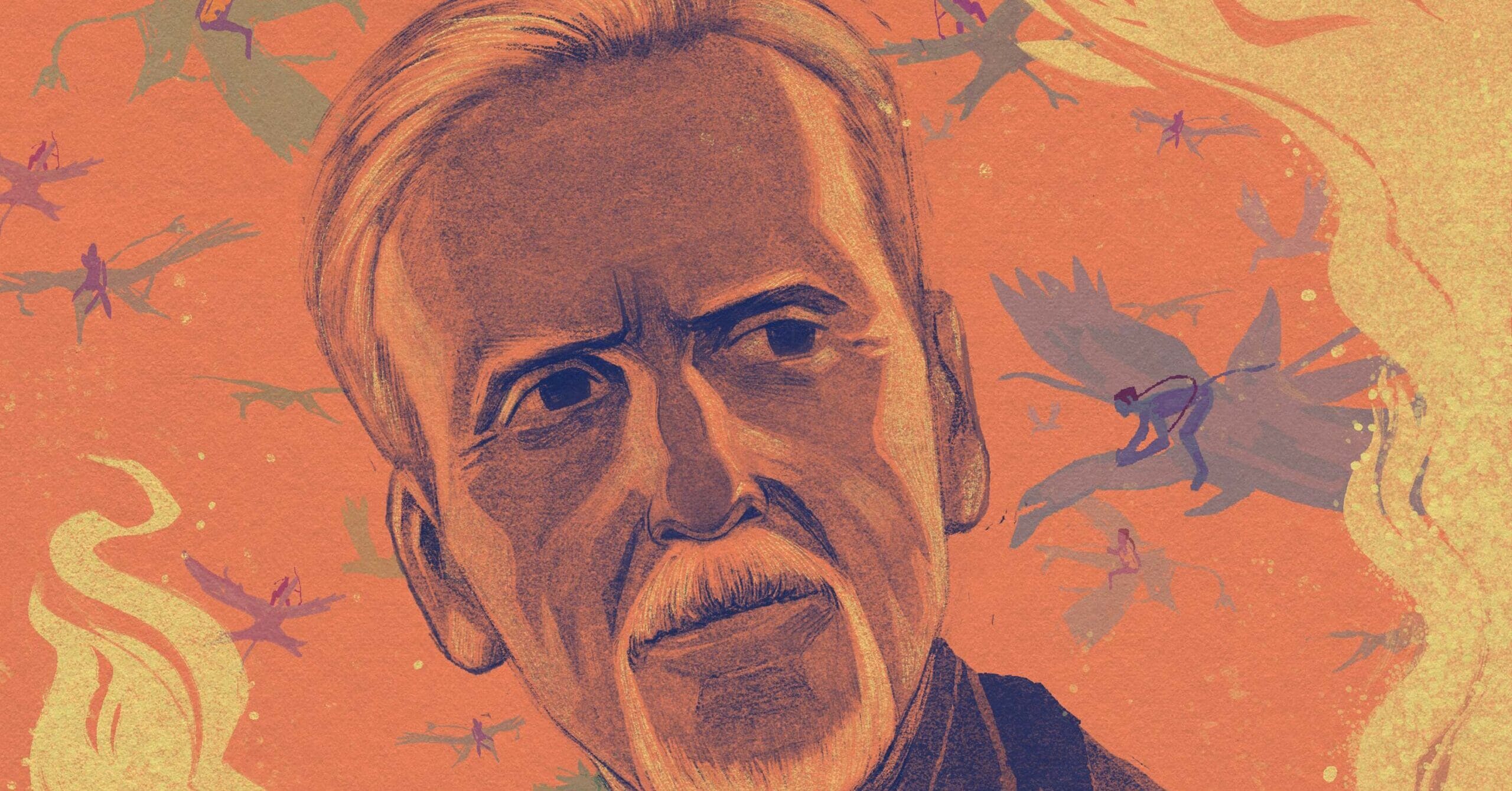
The Gilded Cage: James Cameron’s Struggle for Artistic Freedom
James Cameron is a man who loves to talk. He loves to tell us how important his work is, how much thought goes into every frame, and how he’s pushing the boundaries of technology. But lately, a new narrative has emerged from the man behind the biggest cinematic spectacles of all time: a narrative of fatigue, of looking for an exit strategy. He claims he’s ready to move on from Pandora, to tell other stories. It’s a noble sentiment, isn’t it? The seasoned artist yearning for new challenges, eager to shake off the shackles of his own creation. But let’s be realistic, shall we? The man who built the ‘Avatar’ universe is now trapped within its walls, and no amount of public statements about “other stories to tell” will change the financial gravity of the situation. He is a prisoner of his own success, and the keys to his gilded cage are held by a corporate behemoth that sees only dollar signs, not artistic freedom. This isn’t about passion projects anymore; it’s about a high-stakes, big-budget high wire act that he can’t possibly walk away from without bringing down the entire show. Cameron might be talking a good game about future projects, but the writing’s on the wall, and it reads ‘Pandora for life.’ So where does this leave us, the audience, and where does it leave him, the creator?
The Cameron Paradox: From Maverick to Machine
To understand the current predicament, we need to look at Cameron’s history. This is a man whose career trajectory is defined by a series of high-risk gambles that somehow always paid off. He wasn’t always a franchise-builder; in fact, he started as a maverick. Think back to ‘The Terminator’ in 1984. It was a gritty, low-budget sci-fi horror flick. He never intended for it to spawn a multi-billion dollar empire, certainly not one where he’d eventually sell the rights and see it continue without him. Then came ‘Aliens,’ where he took Ridley Scott’s masterpiece and turned it into a different kind of monster movie—a high-octane action piece. He successfully established a sequel pattern, yes, but even that felt like an isolated, creative leap. The ‘Avatar’ project, however, was different from the jump. It wasn’t a sequel born of unexpected success; it was a pre-meditated, decade-long commitment to building a new cinematic universe from scratch. This wasn’t just a movie; it was a business model. A high-stakes, all-in poker game where he essentially bet his entire legacy on one property. He waited years for the technology to catch up, spent hundreds of millions of dollars, and then, after the first film dominated the box office, he immediately announced a four-sequel plan. This wasn’t the spontaneous maverick; this was the calculated strategist. But even the best strategies can lead to self-imprisonment when the scale becomes so vast, so encompassing, that the creator effectively loses control of the creature he birthed. The question is, does he really want out, or is he simply trying to manage expectations while negotiating the next phase of his career? He’s a brilliant filmmaker, but let’s not confuse strategic maneuvers with genuine artistic yearning in this corporate age.
The ‘Cultural Footprint’ Delusion and Financial Realities
Cameron has recently made statements dismissing the importance of a ‘cultural footprint,’ implying that he doesn’t care about merchandising or whether ‘Avatar’ leaves a lasting mark on pop culture beyond the films themselves. This is perhaps the most disingenuous claim of all. When you create a property, you either care about the cultural footprint or you’re simply naive about how the modern entertainment industry functions. The reality is that the cultural footprint of ‘Avatar’ is precisely what justifies the hundreds of millions of dollars Disney is pouring into the sequels. He may claim not to care about the T-shirts and action figures, but those are vital parts of the ecosystem that fund his next epic. His comments on merchandising sound like a director trying to sound detached and above the fray, when in reality he’s a key cog in the machine. Disney didn’t acquire Fox to simply release a few movies; they bought a property that can generate revenue across theme parks, streaming platforms, merchandise, and a steady stream of cinematic releases. Cameron’s desire for new projects—including a hypothetical ‘fire and ash’ sequel and whatever else he’s vaguely hinting at—is competing directly with the demands of a $20 billion franchise that has yet to fully realize its potential. How can he say he wants to move on when he’s explicitly stated his intention to make ‘Avatar 3’ and ‘Avatar 4’? It’s a contradiction that only makes sense when viewed through a lens of strategic corporate messaging. He’s trying to make noise about his other ideas to maintain leverage, perhaps to negotiate a better deal for himself or to ensure that the franchise doesn’t simply become a factory churning out content without his input. But the truth is, once the train leaves the station, the driver rarely gets to decide the destination; the corporation does.
The Sequel Conundrum: A Timeline of Entanglement
The journey from the original ‘Avatar’ in 2009 to where we are now with ‘Avatar 3’ and ‘4’ on the horizon is a timeline of increasing corporate entanglement for Cameron. After the initial film’s unprecedented success, Cameron’s vision evolved from a single story into a sprawling saga. He originally announced two sequels, then expanded it to four, committing more than a decade of his life to Pandora. This wasn’t just a director signing on for a sequel; this was a complete absorption of his creative faculties into a single property. Now, we are looking at ‘Avatar 3: Fire and Ash’ (due in 2025), which will introduce new elements and cultures to Pandora. Then there’s ‘Avatar 4,’ scheduled for 2029, and ‘Avatar 5’ for 2031. This is a commitment that extends into the next decade. When Cameron says he has other stories to tell, he’s basically saying he hopes he lives long enough to get through this and still have time and energy left over for non-Pandora projects. It’s a logistical nightmare, a massive undertaking that requires constant attention. He’s not just directing; he’s writing, producing, designing, and overseeing a visual effects pipeline that is literally pushing technology to its limits. This kind of work doesn’t leave room for quick, small-scale passion projects. The corporate machine demands consistency and scale. Will he really see it through? Or will he, like George Lucas before him, eventually hand off the reins to a new generation of filmmakers, allowing the franchise to continue while he retreats to a position of executive oversight? The history of mega-franchises suggests the latter. He’s building something so much bigger than himself that it will eventually consume him entirely. He’s trying to get out now, but it might already be too late. The ‘Fire and Ash’ sequel isn’t just another movie; it’s the next step in a corporate strategy designed to keep Pandora at the forefront of pop culture for decades to come, regardless of whether Cameron wants to move on or stay.
The Future Beyond Cameron: A Franchise in Peril
Cameron’s public statements, however contradictory, highlight the precarious state of the franchise. He’s in a position where he has to balance his artistic desires with the financial expectations of Disney. The success of ‘Avatar: The Way of Water’ proved that the demand for Pandora exists, but it also raised the stakes. The budgets are massive, the technology complex, and the profit margin reliant on global dominance. If ‘Avatar 3’ fails to meet expectations, Cameron’s position becomes even more vulnerable. Will Disney allow him to continue with ‘Avatar 4’ and ‘5’ if the returns aren’t astronomical? The cold strategist view suggests that a major corporate entity like Disney will eventually move on from Cameron if he cannot deliver on a consistent basis. His statements about wanting to pursue other projects could be read as an implicit acknowledgement of this reality. He knows that the pressure to deliver is immense, and he may be preparing for a future where he can transition away from the direct management of the franchise. It’s not a matter of if, but when, a large corporate machine will decide that the creator’s vision is less important than a standardized, predictable content output. Cameron has built an extraordinary world, but he needs to recognize that he no longer owns it entirely. He’s a steward, not the king, and the kingdom he built is getting too big for any single individual to rule effectively.
The Final Verdict: A False Exit Strategy
James Cameron’s desire to tell other stories is commendable. It’s what artists do. But in the context of the ‘Avatar’ franchise, it’s a false exit strategy. The corporate structure surrounding ‘Avatar’ ensures that he will be involved for many years to come, whether he likes it or not. The sequels are too expensive, too complex, and too deeply ingrained in Disney’s long-term strategy for him to simply walk away. His statements about future projects sound more like a negotiation tactic than a genuine plan for immediate departure. He wants to remind the corporate powers that he is more than just the ‘Avatar’ guy, but those powers know exactly what they bought when they acquired Fox. They bought Pandora, and they bought Cameron’s commitment to delivering it. He may talk about moving beyond ‘Avatar,’ but he’s already signed up for the next several chapters, and the only escape route for him right now is to fulfill those obligations. The ‘other stories’ will have to wait until he finishes telling the stories that Disney has paid him handsomely for him to create.