The Deconstruction of a Popularity Contest
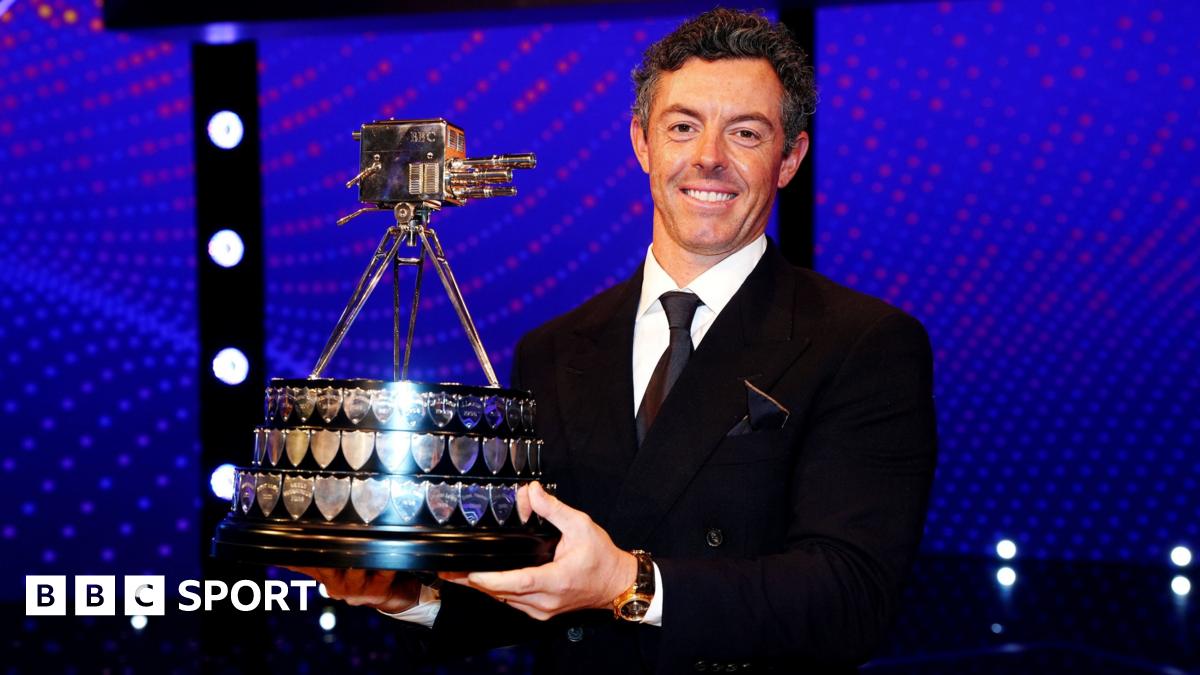
Let’s not get carried away here. Rory McIlroy’s recent triumph as the BBC Sports Personality of the Year, while certainly a moment of national pride for a certain segment of the British public, demands a more rigorous, less sentimental analysis than the fluffy headlines have offered. We are looking at a man who has just achieved one of the most difficult feats in all of sport—completing the career Grand Slam with a Masters victory—and yet, the narrative immediately pivots to a domestic award show that has historically favored popularity over truly transcendent, generation-defining achievement. This is not just a win; it is a complex intersection of media narrative, athlete ambition, and the curious state of British sports culture in 2025.
The Flimsy Narrative of ‘Personality’ vs. ‘Achievement’
What exactly does ‘personality’ mean in this context? It’s a deliberately vague term used by the media to elevate athletes who are either highly articulate or deeply embedded in the public consciousness through repeated exposure, regardless of whether their accomplishments in the past year truly overshadow others in terms of global impact. When you look at the field that McIlroy supposedly ‘beat’—a field that often includes F1 drivers who are simply more visible on television screens and in high-profile events throughout the year—you have to ask if this award is truly about merit or simply about who managed to capture the public’s fleeting attention at precisely the right time. McIlroy himself, according to reports, worried about being beaten by ‘not an F1 driver,’ which shows a rather telling awareness of how the British public’s voting habits work; it’s a cynical popularity contest, pure and simple, and McIlroy, in this particular year, happened to be the most palatable option.
Is This Win a Distraction from the Real Goal?
Let’s get down to brass tacks: Does winning SPOTY matter to a man whose primary goal has been, for the better part of a decade, to chase down the ghosts of Tiger Woods and Jack Nicklaus? Of course not. This award is a domestic accolade, a pat on the back from a nation that, frankly, often seems confused about how to properly celebrate its global sporting heroes. It’s a nice thing to have on the mantle, certainly, but it pales in comparison to the Masters green jacket he secured this year. The statement McIlroy made, saying he has ‘a lot more I want to achieve,’ serves as the perfect, logical, and slightly biting rejoinder to the whole affair. He’s essentially saying, ‘Thanks, but I’m not done yet. Don’t define me by this.’ It’s a subtle rejection of the idea that this award marks the pinnacle of his year, or even his career, which it absolutely shouldn’t for a player of his standing.
The Anatomy of Ambition: What Does ‘A Lot More’ Actually Mean?
When an athlete of Rory McIlroy’s stature says he has ‘a lot more I want to achieve’ after completing the career Grand Slam, we must go beyond the standard media platitudes and dissect what that statement truly entails. For a golfer, there are only two metrics that matter after achieving the career Grand Slam: major championships and longevity. The first is obvious, but the second, longevity, is where the true analysis lies. McIlroy has long been criticized for his mental game, specifically his ability to close out majors when under extreme pressure, which has led to a narrative of near misses and ‘what-ifs’ that have defined much of the post-Tiger era. So, when he says ‘a lot more,’ is he referring to simply adding more majors to his tally, or is he actually referring to fundamentally changing his approach to the game, thereby solidifying his place in history alongside Nicklaus and Woods?
The Nicklaus Problem and the LIV Specter
The elephant in the room for every generational golfer since Tiger Woods has been the major championship record set by Jack Nicklaus. For McIlroy, a man who has always spoken openly about his place in golf history, the goal of reaching Nicklaus’s record of 18 majors seems almost impossible. He currently has five. Even reaching Tiger’s 15 seems like a stretch given the current state of professional golf and the rise of other talents like Scottie Scheffler and Viktor Hovland. So, we must interpret his statement not as a literal challenge to Nicklaus’s record, but rather as a commitment to maintaining dominance in a fragmented sport. The recent emergence of LIV Golf, and the subsequent split in the professional game, adds another layer of complexity to this entire discussion. McIlroy has consistently positioned himself as the standard-bearer for the PGA Tour, often acting as a spokesperson for traditional golf. When he says ‘a lot more,’ part of that commitment surely involves maintaining his relevance and dominance in this new landscape, proving that he can win majors even while battling a fractured professional environment. This SPOTY award, in this context, feels like a superficial diversion from the real ideological battle he has engaged in for the past two years.
Rhetorical Questions: Is SPOTY Merely a Consolation Prize?
Consider the logic: Does a Masters victory, one of the four most prestigious tournaments in the world, need validation from a national popularity contest? It’s almost insulting. The award itself is fundamentally flawed in its structure. It attempts to compare a golfer’s achievement over a full year against a swimmer’s, a cyclist’s, or an F1 driver’s, where the metrics and competitive fields are vastly different. How can one quantify the ‘personality’ required to navigate the pressures of Augusta National versus the ‘personality’ needed to win a high-stakes F1 race? The comparison is inherently apples and oranges, and the resulting vote often reflects the emotional investment of the public rather than a reasoned evaluation of sporting greatness. This makes McIlroy’s win feel less like a true testament to his achievement and more like a necessary box checked by the British media machine to ensure their top star remains in the public eye. It’s a pragmatic win, not a celebratory one.
McIlroy’s calculated response to media scrutiny
McIlroy’s career has been a masterclass in dealing with immense media scrutiny, and his comment about achieving ‘a lot more’ is no exception. It’s a sophisticated piece of PR, a subtle deflection from the pressures that come with winning a Masters and a Ryder Cup in the same year. The media wants to define him by his past successes and failures; he wants to define himself by his future goals. By immediately pointing forward, he avoids getting stuck in a feedback loop of celebrating past glories. The logical deconstructor must see this for what it is: a calculated move by a seasoned professional to control the narrative surrounding his legacy. He’s not just a personality; he’s a highly intelligent individual who understands how to manipulate public perception to maintain his focus on what truly matters. This win at SPOTY, therefore, is not the highlight of his year; it’s merely a footnote in a larger, far more compelling story that he is still writing.
The Legacy Question: Will He Be Defined by SPOTY or the Majors?
History will not remember Rory McIlroy for winning the BBC Sports Personality of the Year. It will remember him for his majors, for his Ryder Cup performances, and for his battles against the new wave of talent. The SPOTY award is a fleeting snapshot of public sentiment, while the majors are permanent markers of greatness. When we look back on this specific year, the true significance lies in the Masters victory, which finally completed the career Grand Slam, and in his leadership role in the Ryder Cup, where he once again demonstrated his ability to perform under high-stakes team pressure. The fact that he won SPOTY this particular year, after a decade of frustration, suggests that the public finally felt comfortable celebrating him, perhaps because the pressure has slightly eased off now that he has finally achieved the Grand Slam. It’s almost as if they were waiting for him to prove himself again before giving him this specific form of recognition. This makes the award feel less like a celebration of greatness and more like a belated acknowledgment of a struggle that has finally ended. A truly logical analysis must recognize this subtle shift in public perception.
So, we return to the central thesis: This award is a domestic accolade, and while pleasant, it’s entirely secondary to McIlroy’s true ambitions. His statement about having ‘a lot more to achieve’ is not mere rhetoric; it is a declaration of intent. He is telling us, quite clearly, that he is not satisfied with being defined by a popularity contest or even by a single career Grand Slam. He wants more. He wants to challenge the record books. He wants to cement his legacy as one of the truly great players in the history of the sport. And in that context, the BBC Sports Personality of the Year award is simply a momentary distraction from the long, arduous path ahead. It’s time to move on from the celebration and start analyzing what that ‘a lot more’ truly looks like for one of golf’s most scrutinized figures.