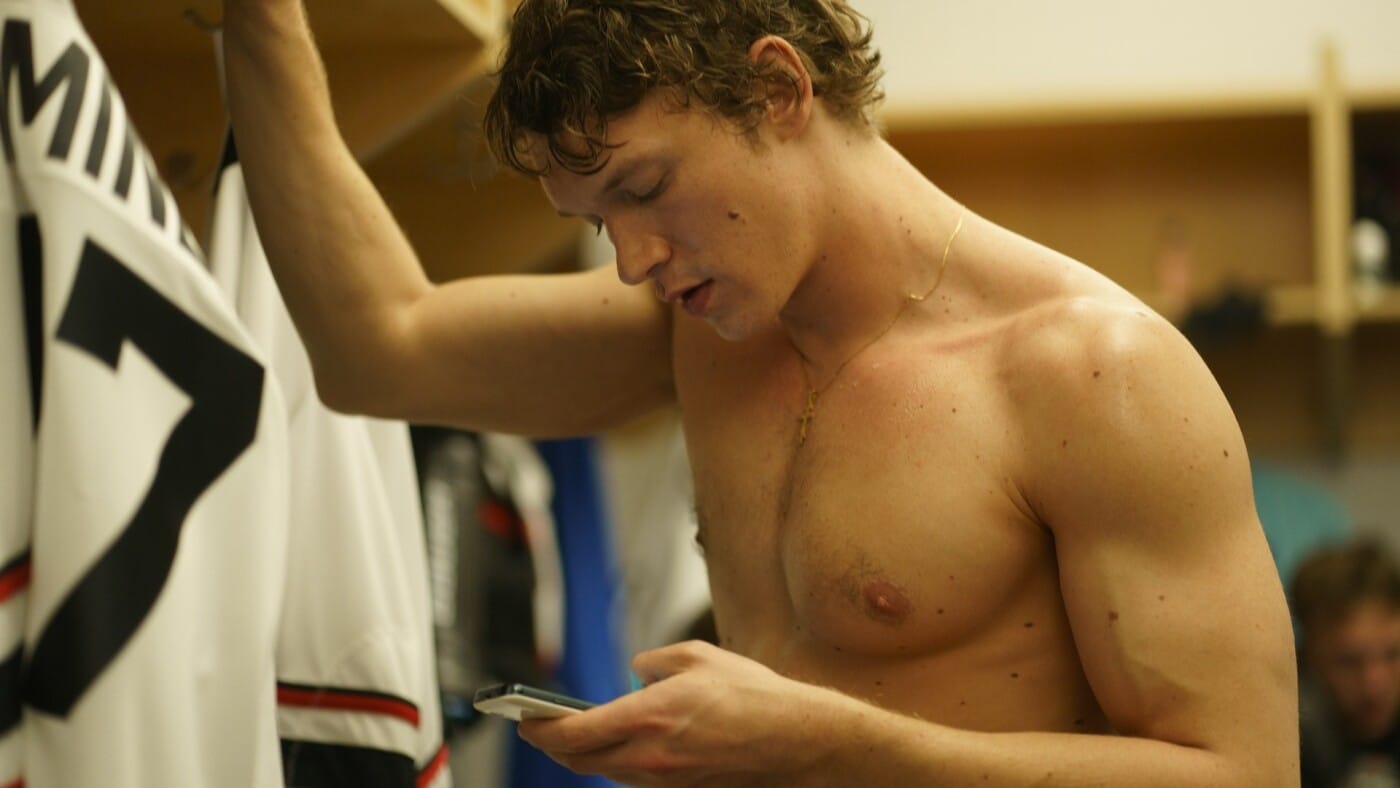
The Rise of Curated Feelings: ‘Heated Rivalry’ and the Dystopian Algorithms
What makes ‘Heated Rivalry’ a cultural ‘phenomenon’ right now, and why should we be suspicious of its sudden explosion in popularity?
Let’s not kid ourselves. The idea that a niche piece of media like ‘Heated Rivalry’—a queer, “man-on-man romance” set in a hyper-masculine world like professional hockey—organically rises to prominence in the current attention economy is laughable. Organic growth is dead. What you are witnessing isn’t a spontaneous outpouring of shared cultural feeling; it’s the precise, calculated outcome of algorithmic engineering. The platform—be it HBO Max or any other streaming service—has identified a specific, underserved demographic craving a particular blend of narrative tropes, and it has served up this product with surgical precision. The show’s success isn’t a testament to its artistic merit or its genuinely groundbreaking nature; it’s a testament to the fact that Big Tech knows exactly what buttons to push to keep a certain audience segment glued to the screen.
We’re talking about a demographic that has, for decades, built its own narratives—slash fiction, fan forums, fan art—around exactly this kind of dynamic. The algorithms, however, didn’t create this desire; they simply identified the existing, persistent data trails left by millions of users engaging with similar content. The show’s premise, described in reviews as having face-offs that will “melt your face off,” isn’t just about high-stakes physical contact or emotional intensity; it’s about providing the exact emotional payoff that a specific group of viewers has been conditioned to crave through years of digital consumption. The system observes the behavior of millions—how long they watch specific scenes, which characters they gravitate toward, which social media posts they share—and then it feeds back exactly what a user’s data profile suggests will maximize their engagement. It’s not a love story; it’s a feedback loop.
How is the rise of this niche content related to broader technological and societal changes?
The rise of hyper-specific media consumption, where a show like ‘Heated Rivalry’ can thrive by targeting a microscopic niche, is a direct symptom of late-stage digital capitalism. We’re living in a world where AI and automation are rapidly redefining traditional male roles and labor structures. The anxieties that stem from this societal shift—the feeling of obsolescence, the loss of traditional identity—are often sublimated into media consumption. The content industry offers a new form of digital opium: highly personalized, emotionally potent narratives designed to distract from the cold, hard reality outside the screen. The focus on a “man-on-man romance”—specifically one that emphasizes vulnerability within a hyper-masculine environment like hockey—addresses a specific cultural tension: the desire to see a different version of masculinity that is both physically strong (hockey player) and emotionally available (romantic partner). The algorithms have simply figured out how to monetize this tension.
This isn’t just about entertainment; it’s about emotional regulation. In a world increasingly dominated by technological interfaces and mediated communication, genuine human connection becomes harder to establish. We learn to expect the neat, satisfying narrative arcs presented in shows like ‘Heated Rivalry,’ where conflict always resolves into intimacy in exactly the right time frame. Real-world relationships, which are messy, ambiguous, and often unsatisfying, begin to pale in comparison. The algorithms are creating a generation of people who are data-fed, emotionally satiated by curated content, but relationally starved. This, in turn, makes us more reliant on the very systems that are isolating us.
If this content is designed to appeal to specific emotional needs, what does it mean when reviews call it a “love story, but often a sad one”?
That description—”a sad one”—is the key to understanding the deeper, more sinister aspect of this media ecosystem. The melancholy isn’t a byproduct of the plot; it’s a feature. The algorithm understands that sadness, or rather, a specific kind of bittersweet emotional catharsis, is just as effective at driving engagement as unadulterated happiness. The “sadness” in these stories often reflects the underlying anxieties of the audience itself, who find themselves in an increasingly automated world where genuine connection feels fleeting. By providing a curated dose of melancholy alongside the expected romance, the platform creates a complex emotional experience that mirrors the feeling of scrolling through social media: a mix of validation, envy, and despair.
This isn’t a new phenomenon; it’s an old trick re-packaged for the digital age. The creators of ‘Heated Rivalry’ are providing a fantasy of emotional depth that masks a very shallow, transactional relationship between the viewer and the content provider. We consume this media, we feel the curated sadness, we get the resolution, and we move on to the next algorithmically suggested piece of content. The true tragedy is not the story on the screen, but the fact that we accept this substitute for genuine emotional struggle and resolution in our own lives.
What are the implications for human relationships and culture as we move forward?
We’re witnessing the full-scale industrialization of human emotion. The success of ‘Heated Rivalry’ proves that specific emotional states can be manufactured on demand, targeted at specific demographics, and sold as entertainment. This model won’t stop with romance; it’ll expand into every aspect of human experience. The future of media won’t be about new stories; it’ll be about better-curated experiences that are personalized to our individual emotional profiles. Imagine a future where every piece of entertainment you consume is so precisely tailored to your emotional weaknesses and cravings that you never have to face ambiguity or boredom again. This is the ultimate digital prison: a world where we are constantly validated by algorithms, but completely detached from reality. We will become emotionally perfect, yet completely hollow.
In this dystopian future, genuine connection will become a rarity, replaced by algorithmically generated simulations of intimacy. The ‘heated rivalry’ on screen will give way to a cold, sterile reality where technology has succeeded in providing us with exactly what we want, while simultaneously stripping us of the ability to desire anything outside the pre-programmed script. The show itself isn’t the problem; it’s just a symptom of a much larger shift where human experience is increasingly mediated by machines. We are watching the slow, comfortable death of genuine cultural expression, replaced by perfectly engineered digital content.