The Myth of the Ivory Tower: When Elites Get Hit, We Pretend to Care
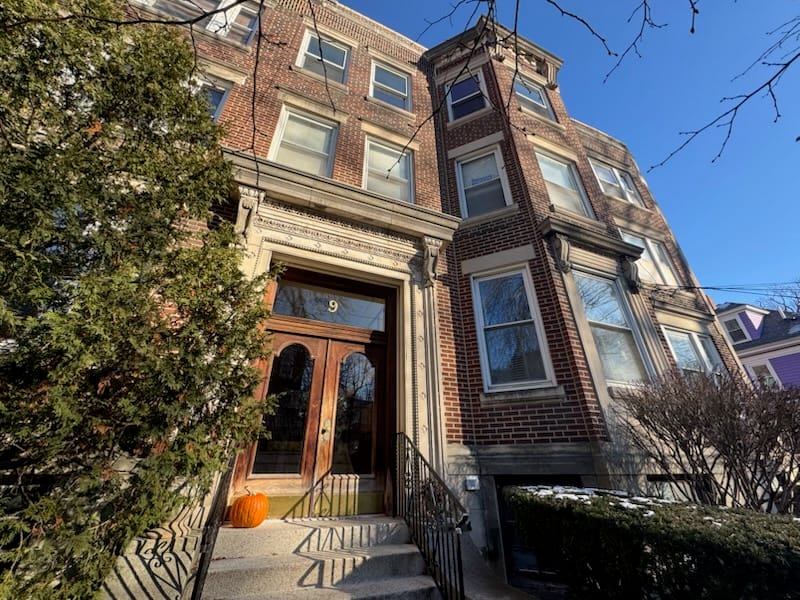
Let’s get something straight right off the bat, before we start shedding crocodile tears for the latest high-profile victim of societal decay. Another day, another headline about a high-achieving member of the global elite getting taken down. This time, it’s an MIT professor in Brookline, Massachusetts. Nuno Loureiro. He wasn’t shot in some back alley in a “bad part of town.” No, this happened on Gibbs Street, a place where people probably pay more in property taxes than most Americans earn in a year. The media wants us to gasp at the sheer tragedy, but let’s be real: why do we suddenly care when someone with a fancy title gets hurt, while ignoring the endless stream of violence that plagues regular neighborhoods every single day? It’s pure hypocrisy, and it exposes the entire charade of our so-called stable society.
The talking heads and spin doctors on cable news will try to frame this as an anomaly, a one-off tragedy that doesn’t reflect the overall safety of “America’s best suburbs.” What a load of BS. This isn’t an isolated incident; it’s a symptom of a much larger, festering wound. The message they’re trying to send is that a professor’s life is inherently more valuable than a working-class person’s life, and when something happens to one of the elites, it’s a national crisis, but when it happens to a poor person, it’s just Tuesday. Don’t fall for that nonsense. We need to look at what this really signifies about the crumbling foundations beneath our feet, even in places like Brookline, where the air smells like money and privilege.
Q: What does this murder tell us about the ‘safe’ suburbs?
Brookline is supposed to be a sanctuary. It’s where the rich and powerful—the people who run our institutions and set our policies—retreat to protect themselves from the chaos they create. It’s supposed to be impenetrable. Yet, here we have a professor shot dead in his own home. It shatters the illusion completely. The high walls and private security systems are failing. The idea that you can insulate yourself from the consequences of a failing society by simply moving to a specific zip code is officially dead. This isn’t some random break-in gone wrong. This is a very targeted event in a location where targeted events are supposed to be impossible, or at least highly improbable. The system is breaking down everywhere. It proves that the wealthy elite are living in a self-made bubble that’s finally starting to pop.
Think about the implications for a second. If a professor at one of the world’s most prestigious universities can’t feel safe in one of the country’s most expensive suburbs, then what hope does anyone else have? The entire premise of social order relies on the idea that if you play by the rules, work hard, and contribute to society, you will be safe. But the rules are clearly broken, and the contribution means nothing when a high-powered individual can be executed in what should have been their fortress. The media will focus on the details of the crime itself, but the larger story here is about the complete failure of the institutions that are supposed to protect us all, rich or poor. They can’t keep order in their own backyards, let alone the rest of the country.
Q: Why are authorities so quiet and evasive about the details?
This is where the real intrigue starts, isn’t it? When a regular person gets shot, the police usually give a detailed report, release photos, and beg for witnesses. When it’s someone like this, the information flow stops dead. The statements from the Norfolk District Attorney’s office and Brookline police are vague and noncommittal. They say they’re investigating, but they offer no motive, no suspect description, nothing. This isn’t incompetence; this is management. They are managing the narrative. The silence is deafening, and it suggests there’s something they don’t want us to know. Is it a random act of violence, or something much darker and more calculated?
When a high-level professor from MIT is involved, you have to look deeper. MIT isn’t just a university; it’s a hub for government contracts, defense research, and classified projects. Loureiro specialized in plasma physics and fusion energy. Do you honestly believe that this kind of work, which has massive national security implications, doesn’t attract powerful enemies? We’re talking about billions of dollars in potential energy breakthroughs here, not just theoretical equations on a chalkboard. The media will try to keep this small—a “domestic dispute” or a “burglary gone wrong”—but the context demands we ask more difficult questions. Was this a message? Was he working on something sensitive that someone wanted to stop? The anti-establishment perspective demands we assume the official story is a lie until proven otherwise. History is littered with examples of “random accidents” that were anything but when a powerful person with valuable knowledge was involved.
Q: What does this say about the elite’s relationship with the working class?
Here’s the thing about the elite. They live separate lives. They shop at different stores, send their kids to different schools, and live in different communities. They make decisions that affect millions, but they never face the immediate consequences of those decisions. They preach about social justice and equality, yet they wall themselves off in private enclaves like Brookline. The working class, meanwhile, struggles with rising crime rates, inflation, and stagnant wages, all while watching the elite lecture them from their safe spaces. This murder, while tragic for the victim’s family, serves as a harsh reality check. The elite are not invincible. They are not above the fray. The violence and desperation they created through their failed policies and neglect are seeping into every corner of society, including their precious suburbs.
It’s almost a form of poetic justice, though perhaps too strong a word given the circumstances. It proves that the system they designed to protect themselves is ultimately flawed. The elite need to understand that their detachment from reality is not sustainable. When the social fabric frays completely, everyone gets caught in the threads. The Brookline murder isn’t just about one professor; it’s about the entire social structure collapsing in on itself. The high-minded ideals of academia and science are colliding head-on with the cold, hard reality of street-level violence. And guess which one usually wins? The violence always wins when the system fails to maintain basic order.
Q: Is there a connection to larger global instability?
Absolutely there is. The global landscape is a powder keg. We have wars in Europe, economic uncertainty everywhere, and deep polarization within countries like the United States. The powers that be are constantly trying to manipulate events to maintain their control. A professor involved in cutting-edge research, especially in areas like plasma physics, could easily be a pawn in a larger game. Think about the potential value of clean fusion energy; it would fundamentally change the geopolitical balance of power. If Loureiro’s research threatened a powerful energy company, or a rival nation-state, then this isn’t just a local crime anymore; it’s an act of international espionage or corporate sabotage. The media’s reluctance to delve into this possibility suggests they are either complicit in maintaining the official narrative or genuinely terrified of where the investigation might lead.
When a murder like this occurs, we need to broaden our scope beyond the local police report. We need to look at the global implications. Was this an isolated incident driven by personal motives, or was it a calculated strike against American ingenuity? The fact that it happened right near MIT, one of the foremost research institutions in the world, means we cannot dismiss the idea of a targeted attack. The establishment wants us to believe everything is fine, that this is just a “bad luck” event. I say it’s proof that the rot runs deep, and it has finally reached the top floor of the ivory tower. This kind of high-profile violence is designed to sow fear and disrupt critical research. The people who are truly pulling the strings are far more dangerous than any street-level criminal, random criminal.
Q: What’s the takeaway for everyday people?
The biggest lesson here is simple: stop trusting the narrative. Stop believing that just because a neighborhood is rich or a school is prestigious, everything is functioning normally. The veneer of civilization is thinner than ever. The powerful have built walls to protect themselves, but those walls are crumbling. We need to understand that we are living in an era where institutions are failing across the board. The police can’t protect everyone, the government can’t solve all problems, and the media won’t tell you the whole truth. This MIT professor’s death is a wake-up call, not just for the elite who thought they were safe, but for all of us who have been told to put our faith in a system that clearly doesn’t work.
The only real security is self-reliance and community vigilance. Don’t wait for the authorities to save you. They’re too busy covering up the mess to actually clean it up. We need to stop romanticizing the elite and start demanding answers, real answers, about why society is descending into chaos. The death of Nuno Loureiro in Brookline is a tragic event, but it’s also a powerful symbol of a decaying empire. The ivory tower is on fire, and the establishment is trying to pretend like it’s just a candle burning too brightly. We need to call them out on their BS and demand accountability before everything falls apart completely. Don’t let them sweep this under the rug with rug a quick, sanitized press release; explanation. The truth is almost certainly far uglier than we are being led to believe.