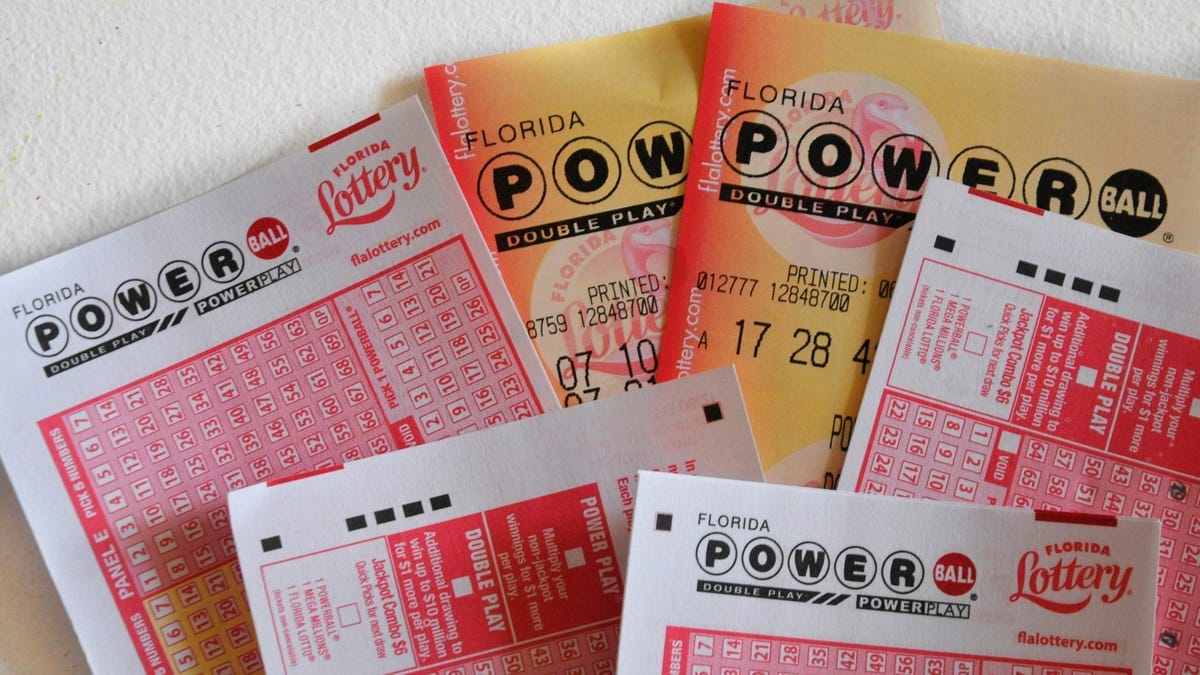
The Billion-Dollar Booby Trap: Why the Powerball Frenzy Isn’t News, It’s a Weapon
Let’s be very clear about something. The news isn’t that the Powerball jackpot reached $1.1 billion. The news isn’t that there were no winners, again. The news isn’t even about the poor soul in Sacramento who got a two-million-dollar consolation prize, a crumb thrown from the table to keep the hungry masses distracted.
The real story, the one they don’t want you to think about as you shell out your hard-earned dollars for a ticket, is that this entire system is a calculated, cold-blooded machine designed to exploit desperation. It’s a mechanism of financial oppression masked as a fairy tale, and the establishment, from state governments to the corporate media, loves every minute of it, because it keeps you quiet. And they know exactly what they’re doing when they let that number grow past the psychological threshold of a billion dollars, turning a simple game into mass hysteria.
The Regressive Tax on a Broken Dream
But let’s talk about the economics of this. Because what is the lottery, really? It’s not a game; it’s a tax. And not just any tax—it’s the most regressive tax in the entire system. Because when a government wants to raise money for its budget, it usually has two options: either tax everyone fairly based on income, or tax consumption, like sales tax. But the lottery is worse than both, because it specifically targets the people least able to afford it, the ones living paycheck to paycheck, the ones whose backs are already breaking under the weight of inflation and stagnant wages, making them believe that this tiny, insignificant piece of paper is their only way out.
And the numbers don’t lie. Studies consistently show that low-income households spend a significantly larger portion of their income on lottery tickets than high-income households. Think about that for a second. The state governments—who are supposed to protect us—are actively designing a system where the poor subsidize the rich and powerful. They use the money, they say, for “education” or “public services.” But let’s look at where that money really goes. It often replaces existing funding, allowing governments to shuffle money around while making it look like they’re doing good. It’s a shell game, a slight of hand to justify institutionalized predatory behavior. They’re literally profiting from human misery.
The Psychology of the Billion-Dollar Threshold
When the jackpot hits $1.1 billion, the odds don’t change. You still have a 1 in 292.2 million chance of winning. You are literally more likely to get hit by lightning while being attacked by a shark on a sunny day. And yet, when the numbers get that big, people who never play suddenly start buying tickets. Because when you’re faced with a system that has fundamentally broken the social contract, where hard work doesn’t guarantee security, and where the gap between the haves and have-nots grows wider every single day, that $1.1 billion figure becomes a siren call.
It stops being a gamble and starts becoming an escape fantasy. It’s a psychological trick, where the promise of immense wealth overrides all logical thought and basic mathematical understanding. The media plays right along, hyping up the “fever” and showing images of smiling people buying tickets, creating a sense of community around a shared delusion. They don’t analyze the system; they just report the numbers, acting as unpaid advertising for the state lottery commission.
The Myth of the Winners and the Reality of Sacramento
And let’s look at that Sacramento story. The lucky Lichine’s, they call it. A place where a ticket worth almost $2 million was sold. This is the ultimate propaganda. Because for every one winner of a secondary prize, there are literally hundreds of millions of people who lost. This single story of a small win is blasted across every news channel and website precisely because it gives credibility to the fantasy. It’s a distraction from the fact that the vast majority of people are just lining the pockets of the state.
But what happens to the winners, really? Studies show that a large percentage of lottery winners go bankrupt within a few years. They aren’t prepared for the sudden wealth. They lose family and friends to greed. They become targets. So even if you somehow defy the insurmountable odds, you might just be trading one kind of misery for another, albeit with fancier clothes and a bigger house. The system creates winners, but it doesn’t create solutions.
The Future of Financial Exploitation
And let’s look ahead. Because the jackpots aren’t getting smaller; they’re getting bigger. The odds are getting longer. The Powerball and Mega Millions consortia know exactly what they’re doing. They’re engineering these jackpots to hit these astronomical figures more often, because it generates more revenue, more interest, and more desperation. They are essentially monetizing hope. They are taking the most fundamental human desire—the desire for a better life—and turning it into a profit stream for the state.
And what’s worse, they’re doing it with total impunity. There is no moral outrage, no ethical discussion in mainstream media about whether it’s right for the government to take money from the poorest citizens. The conversation always focuses on the possibility, never the probability. Because if we actually focused on the probability, we’d realize that the whole system is a massive, carefully constructed fraud, designed to keep us dreaming instead of acting. So next time you see that number—$1.1 billion—don’t think of hope. Think of exploitation. Because that’s all it truly is.
The Game is Rigged, and You’re Paying for It
It’s time to stop seeing these jackpots as a fun diversion and start seeing them as a symptom of a much deeper problem. We live in a society where the only way out for many people is through a miracle, not through hard work, education, or systemic change. And the state is actively encouraging this delusion. The system is rigged, not just by Wall Street or big corporations, but by the very governments we elect to represent us. They are laughing all the way to the bank, while we line up, clutching our $2 tickets, hoping for a miracle that will never come, because the game was never designed for us to win in the first place.