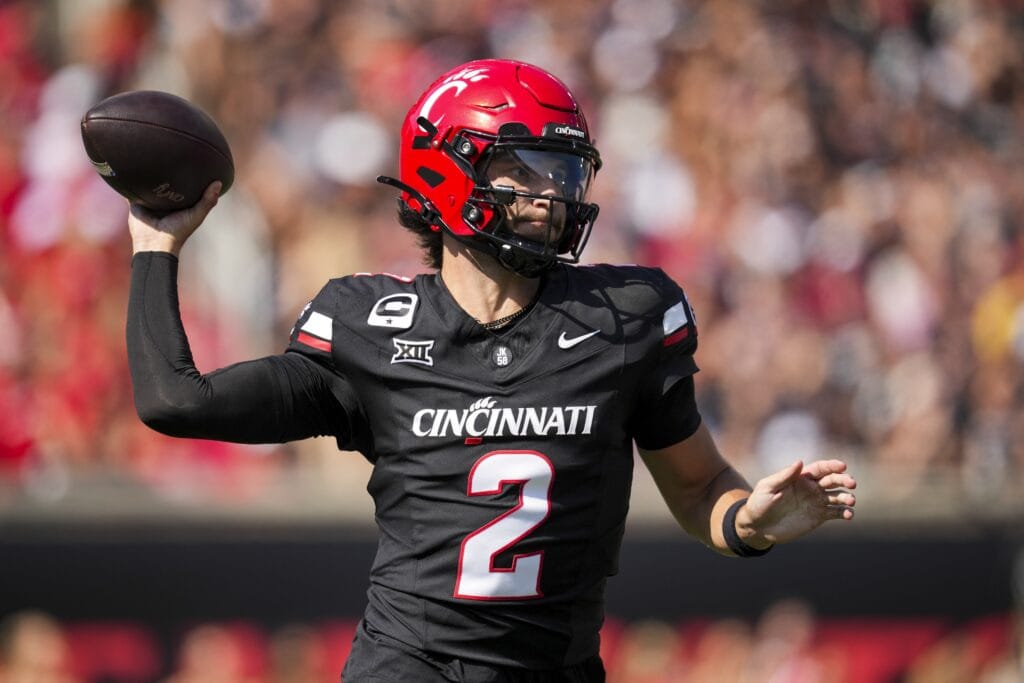
The Great College Football Sellout: Sorsby’s Departure Exits and the Death of Loyalty
Let’s not mince words here. What we witnessed this week with Brendan Sorsby packing his bags and jetting from Cincinnati is not some innocuous development in a young man’s career; it’s a glaring, neon-lit sign that college football as we knew it has officially flatlined, replaced by a cutthroat, corporate free-for-all where the almighty dollar reigns supreme and loyalty is nothing but a relic in the museum of quaint memories. Sorsby, for all intents and purposes, is the new face of the mercenary movement, another athlete proving that the jersey and the university crest mean less than the zeroes on a check, or maybe, just maybe, the promise of a better opportunity in a more prestigious program, because let’s be honest, everyone wants to play in the big leagues where the real money flows, and a place like Cincinnati, well, it’s increasingly looking like a stepping stone rather than a destination.
The news broke like a bombshell in the Queen City: Quarterback Brendan Sorsby plans to enter the NCAA Transfer Portal. The Cincinnati Bearcats, a program struggling to find solid footing in the Big 12 after the departure of Luke Fickell, now loses a key component of its future, a redshirt junior who could have provided vital leadership and stability in a turbulent period. But in today’s college landscape, stability and continuity are for the weak; ambition and opportunism are the new virtues, and Sorsby’s decision to leave after just two seasons screams opportunism louder than a cheerleader on game day. The man is looking for greener grass, a bigger paycheck, and a better shot at the big time, and he’s not letting little things like team camaraderie or fan support get in the way. It’s a harsh truth, but it’s the new reality we’re all forced to swallow.
The Scraps of Cincinnati and the Mercenary Mindset
Let’s talk about Cincinnati for a minute. This program clawed its way into the Big 12, a major achievement that was supposed to usher in a new era of respectability and sustained success, but instead, it feels like they’re being picked apart piece by piece, like vultures circling a carcass. First, Fickell left for Wisconsin, and now key players are using the transfer portal as an escape route, and Sorsby is just the latest, but arguably most significant, departure. The timing couldn’t be worse; the Bearcats desperately need leadership at the quarterback position, and Sorsby was a potential answer, yet here we are, watching him walk away, leaving head coach Scott Satterfield to clean up the mess and try to recruit new talent from the very same portal that stole his current talent. It’s a vicious cycle of cannibalism where only the biggest sharks survive, and Cincinnati is starting to look like chum in the water.
This isn’t just about one player leaving; this is about the complete destruction of team-building strategy in college football. How do you build a lasting culture when every player has one foot out the door, ready to leave at the first sign of trouble or the promise of a bigger NIL deal from a rival school? The loyalty myth has officially imploded; it’s a dog-eat-dog world where every man fends for himself, and Sorsby’s departure is just another nail in the coffin of college tradition, a tradition that probably died when the first NIL check cleared, leaving behind nothing but the stench of opportunism. He’s gone. Poof. Just like that, the program loses a piece of its future, and the fans are left wondering who to root for next year when half the roster is comprised of faces they’ve never seen before.
NIL and the Transfer Portal: A Recipe for Chaos
Let’s address the elephant in the room: NIL, or Name, Image, and Likeness. Don’t let anyone tell you otherwise; the transfer portal and NIL are inseparable components of a broken system. When a player leaves a school, it’s not always because they suddenly realized they prefer another academic major; it’s often because a booster or a collective at another school offered them more money to play for their team. It’s professional free agency disguised as college athletics, and the lack of oversight and regulation means schools with deep pockets can simply buy up all the talent, leaving the smaller, less affluent schools to fend for scraps. Sorsby’s decision to leave Cincinnati, a Group of Five powerhouse that just made the jump to a Power Five conference, suggests a search for bigger opportunities, and in the current environment, bigger opportunities almost always equate to bigger paydays.
Is Sorsby a bad guy for chasing a better deal? Not necessarily; he’s just playing by the rules that the NCAA created. But let’s be clear: these rules are destroying the very fabric of college sports. Fans used to be invested in the players who grew up in the system, who represented the university’s values, and who stayed through thick and thin. Now, we’re asked to cheer for transients, for mercenaries who are here today and gone tomorrow, for players who view a school as nothing more than a temporary stopover on the way to their next big payday. The emotional investment of the fan base is eroding, and a large part of that blame falls squarely on the shoulders of the NCAA for opening Pandora’s Box with the transfer portal rules. The one-time transfer exception has turned college football into musical chairs, and when the music stops, someone is always left without a seat, and this time, it’s the Cincinnati faithful.
The “Grass Is Greener” Delusion
The core philosophy of the transfer portal is built on a delusion: the idea that the grass is always greener on the other side. A player struggles to find playing time at one school, or perhaps a new coach comes in, and instead of fighting for their spot, instead of persevering through adversity, they simply pack up and leave. They look for a fresh start, believing that all their problems will disappear at a new institution. But let’s be real here: most players who enter the transfer portal end up at schools with less prestige, or worse, struggle to find a new home at all. Sorsby’s situation is different; he’s a potential starter, a proven commodity, and he’s likely to land on his feet at another major program. But the underlying message remains the same: why fight when you can flee?
This cultural shift away from perseverance to instant gratification is a direct consequence of the transfer portal. It teaches young athletes to avoid hard work, to look for the easy way out, and to prioritize self-interest over team goals. The idea of sacrificing for the greater good of the team, of waiting your turn, of developing over several years within the same system—all of that is going out the window. Now, it’s all about “What’s best for me right now?” And Sorsby, despite being a redshirt junior, exemplifies this mindset. He’s not waiting around to see if things work out at Cincinnati. He’s taking control of his destiny, which in this context, really just means looking for a better offer elsewhere.
A Glimpse into the Future: The Death of College Football Identity
Where does this all end? The transfer portal, combined with NIL, is creating a scenario where only about twenty schools truly matter, schools that can afford to buy a new roster every off-season. Programs like Cincinnati, which once served as a stepping stone to the big leagues, are now struggling to hold onto their best talent. The parity that made college football so special is disappearing. We’re heading toward a future where a few super-teams dominate everything, and the rest are left to pick up the pieces, trying to fill out their rosters from a pool of cast-offs and mercenaries.
Sorsby’s departure isn’t an isolated incident; it’s part of a massive trend that is redefining college sports. The fans are losing connection with their teams because there’s no continuity. How can you develop an emotional bond with players when they rotate in and out faster than the seasons change? The history of the program, the rivalries, the traditions—all of it becomes less meaningful when a significant portion of the roster changes every year. The soul of college football, the very thing that sets it apart from professional sports, is being stripped away in real-time, and Brendan Sorsby just played a small but significant role in accelerating that process. The era of loyalty is dead, long live the era of opportunism.