The Great Northeastern Collapse: A Few Inches of Snow and Total Gridlock
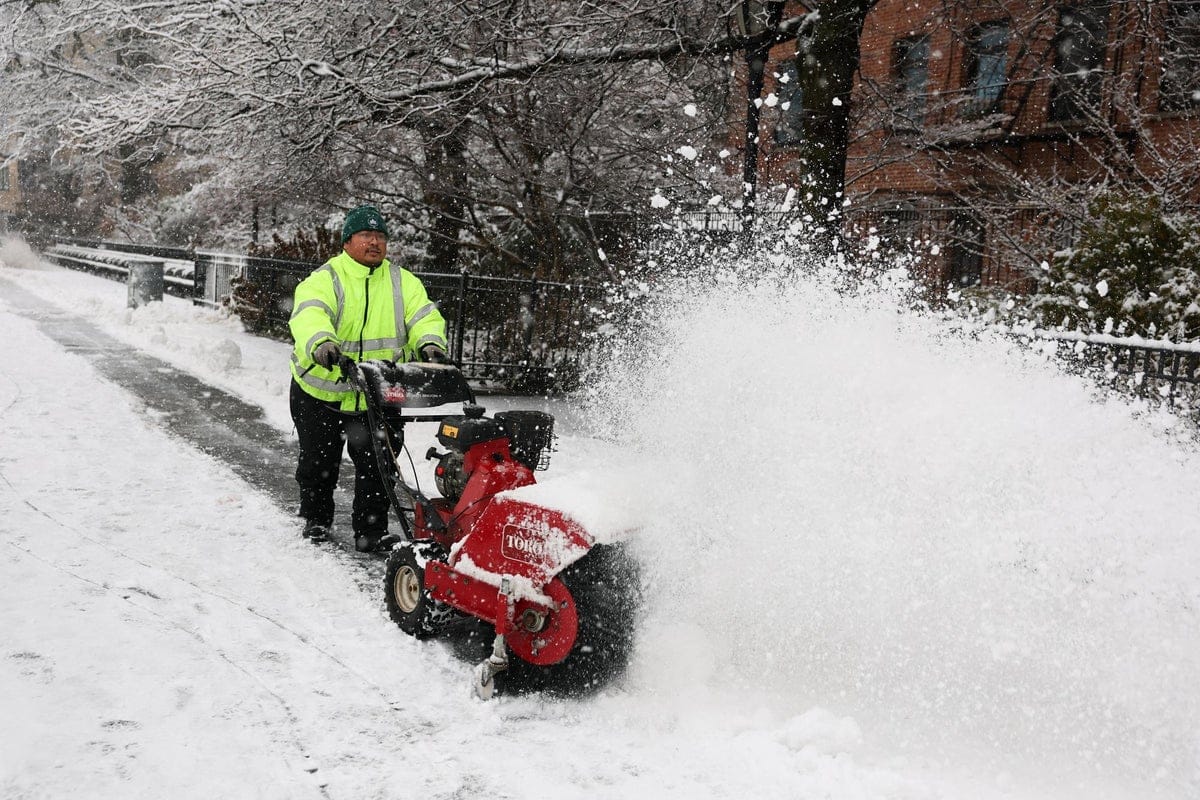
It’s the same old story every time, isn’t it? The first sign of real winter weather hits the Tri-State area—that little triangle of New York, New Jersey, and Connecticut where everything important in America, and arguably the world, actually happens—and suddenly, everything grinds to a halt. We’re talking about the season’s first widespread snowfall, and it acted like a sucker punch right to the gut of the entire region, turning what should be a minor inconvenience into a full-blown logistical nightmare that snarled travel and left thousands stranded in a deep freeze of their own making.
The headlines screamed it, but a headline barely captures the sheer, unadulterated chaos that unfolded in real-time on Sunday. We saw a widespread “ground stop” in effect for major hubs like JFK and PHL, and Newark Airport, EWR, was seeing extended arrival delays that stretched for hours, essentially turning the airport into an expensive, brightly lit holding pen for travelers who had absolutely no idea when they might actually get to their destination. This wasn’t just a slight delay; this was a complete surrender to the elements, a humiliating acknowledgment that despite all our supposed technological advancement and billions poured into infrastructure, we are still completely unprepared for something as routine as a bit of snow.
Just let that sink in for a minute: a winter storm brings “travel chaos” to the Northeast, and the response is to just shut everything down. Ground stops. The phrase sounds so professional, so technical, but what it actually means for the poor schmucks on the ground is that their meticulously planned trips, their family reunions, their crucial business meetings, and their mental health are all being held hostage by a few inches of precipitation. And let’s not pretend this is a surprise. Every year, we go through this song and dance, where the local authorities wring their hands and act shocked—shocked!—that winter weather actually happens in the winter in this specific geographic area. It’s a joke, really, a spectacular failure of planning and basic common sense that frankly should embarrass everyone involved.
The Myth of Preparedness: Blaming the Climate and Incompetence
You hear the excuses immediately. “The weather was unpredictable!” they cry. “Climate change is making storms worse!” Yes, climate change is real, and yes, storms are getting more intense, but let’s not use that as a blanket excuse for every single failure to properly prepare a major metropolitan area’s infrastructure for predictable seasonal changes. Are we really going to pretend that a city like New York or Philadelphia, which experiences winter every year without fail, can’t figure out how to de-ice planes and clear runways efficiently? Other cities around the world—places like Helsinki or Montreal, which see vastly more extreme and prolonged winter conditions—manage to keep their airports operational with relative ease. They have the equipment, the protocols, and apparently, the political will to invest in systems that actually work. Here in the US, especially in the Tri-State area, we seem to prefer a reactive approach: let the chaos happen first, then apologize profusely later.
The ripple effect from these ground stops is massive, far beyond just the Northeast. JFK and EWR aren’t just local airports; they are major international gateways. When they halt operations, flights are backed up across the entire country, affecting travel in Florida, California, and even across the Atlantic in Europe. It’s a cascading disaster, a perfect storm of local incompetence creating global gridlock. The economic costs alone—the lost productivity, the cargo delays, the thousands of refunded tickets, and the sheer human misery—are staggering. Yet, year after year, we seem content to allow this cycle of failure to repeat itself, simply shrugging our shoulders and saying, “Oh well, it’s winter in New York.”
This deep freeze isn’t just a weather pattern; it’s a symptom of deeper decay. It highlights our crumbling infrastructure, our short-sighted planning, and a government that seems more focused on arguing about non-issues than actually ensuring basic public services function properly. When the snow hits, the entire system reveals its fragility. The roads get slick, the trains break down, and the airports become uninhabitable, all because we choose to ignore the hard-earned lessons from previous winters. The fact that the first widespread snowfall causes this much disruption suggests a level of societal fragility that should frankly terrify us more than the actual snow itself.
The Human Element: The Real Cost of Gridlock and Future Shock
Let’s talk about the real victims here: the people stuck in those airports and on those roads. The guy trying to get home for Christmas, the family heading out on vacation, the business traveler who just wants to make it to their hotel room. Imagine being trapped in the sterile, fluorescent-lit purgatory of an airport terminal for hours on end, watching the board flip from “delayed” to “delayed indefinitely,” all while the deep freeze settles in outside. The smell of stale coffee and desperation hangs in the air, tempers flare at the ticket counters, and the collective groan of thousands echoes through the terminal. It’s a truly miserable experience, and it’s a completely avoidable one.
The reports coming in from Carteret, New Jersey, about slick conditions out on the roads and snarled traffic are just a prelude to the main event. It’s not just the airports; it’s the entire ecosystem. Highways turn into parking lots, accidents spike, and even a simple trip to the grocery store becomes a high-stakes adventure. And who do we blame? The snow? No. We blame the drivers who didn’t take precautions, the local authorities who didn’t salt the roads fast enough, and the airlines who clearly prioritized profit over safety by scheduling flights during known adverse weather conditions. The truth is, everyone shares a piece of the blame, but the traveler—the person just trying to live their life—is always the one who pays the highest price.
Looking ahead, what does this tell us about the future? As climate change continues to make weather patterns more volatile and extreme, these “once-in-a-decade” storms will become more frequent. The deep freeze will become deeper, the snowfall more intense, and the resulting chaos more widespread. Unless we drastically change our approach, investing heavily in resilient infrastructure and developing robust contingency plans, this kind of disruption will become routine. We’ll no longer talk about “travel chaos” as an isolated incident; we’ll talk about it as a seasonal guarantee. The snarls and delays we saw this past Sunday are just a preview of what’s to come, a warning that our current systems are simply not built for the new reality of a changing climate. The Tri-State area, a place that prides itself on being the center of the world, is proving to be incredibly vulnerable. And that, my friends, is truly alarming.
Terrifying.