The Digital Panopticon Eats Another Victim: The Moore Firing
It’s funny how they call it an “inappropriate relationship.” Like it’s something neat and tidy. A little box you can put on a form and check off. The truth is, Sherrone Moore’s departure from Michigan football isn’t just another coaching scandal. It’s a cold, hard look at the terrifying efficiency of the digital panopticon that governs modern life, where every human interaction, every whispered secret, and every fleeting indiscretion is logged, categorized, and weaponized by institutions that prioritize data over dignity. We used to believe that what happened in private stayed private, that the messy complications of human nature were insulated from the brutal scrutiny of the corporate machine. We were wrong. The firing of Moore wasn’t a moral reckoning in the traditional sense; it was a logistical decision made by a university system that views high-profile personnel less as leaders and more as high-value assets with inherent, and increasingly unacceptable, digital risk profiles.
The university, in its infinite corporate wisdom, decided that Moore’s tenure, despite its recent success and connection to the program’s cultural resurgence under Harbaugh, was ultimately expendable in the face of public relations risk, prioritizing the sanitized image of institutional morality over the messy, complicated reality of human relationships within the high-pressure cooker of elite athletics. He was gone. Fast. The specifics of the relationship are irrelevant to the overarching critique, which focuses on the systemic changes in how organizations manage human capital in the age of omnipresent surveillance and instant communication. This isn’t about right or wrong; it’s about control. It’s about the university’s ability to minimize digital liability by preemptively removing any human element that might deviate from the pre-programmed script. The digital age has turned high-stakes employment into a zero-sum game of digital hygiene, where a single misstep can erase years of dedicated work, transforming a person’s life into a cautionary tale in a matter of hours. This is the new normal. We’re all living under a microscope, waiting for the inevitable moment when our past catches up to our present, and the algorithm decides we are no longer suitable for a role, or for society itself, based on a single data point.
The media, in its endless quest for clicks and outrage, played its part perfectly, amplifying the story and ensuring that Moore’s personal life was subjected to the maximum amount of public scrutiny, feeding the very machine that ultimately destroyed him. The digital age has turned us all into voyeurs, complicit in the destruction of privacy, demanding every detail while simultaneously claiming outrage. This isn’t just about football; it’s about the fundamental erosion of privacy and the rise of a corporate culture that demands perfection from imperfect beings. The university, like every major corporation, is a machine designed to run smoothly and predictably. Human emotion, human connection, human imperfection—these are all variables that introduce friction into the system, and friction, in the algorithmic world, must be eliminated.
The Algorithm’s Candidate Profile: The Search for a Cyborg Coach
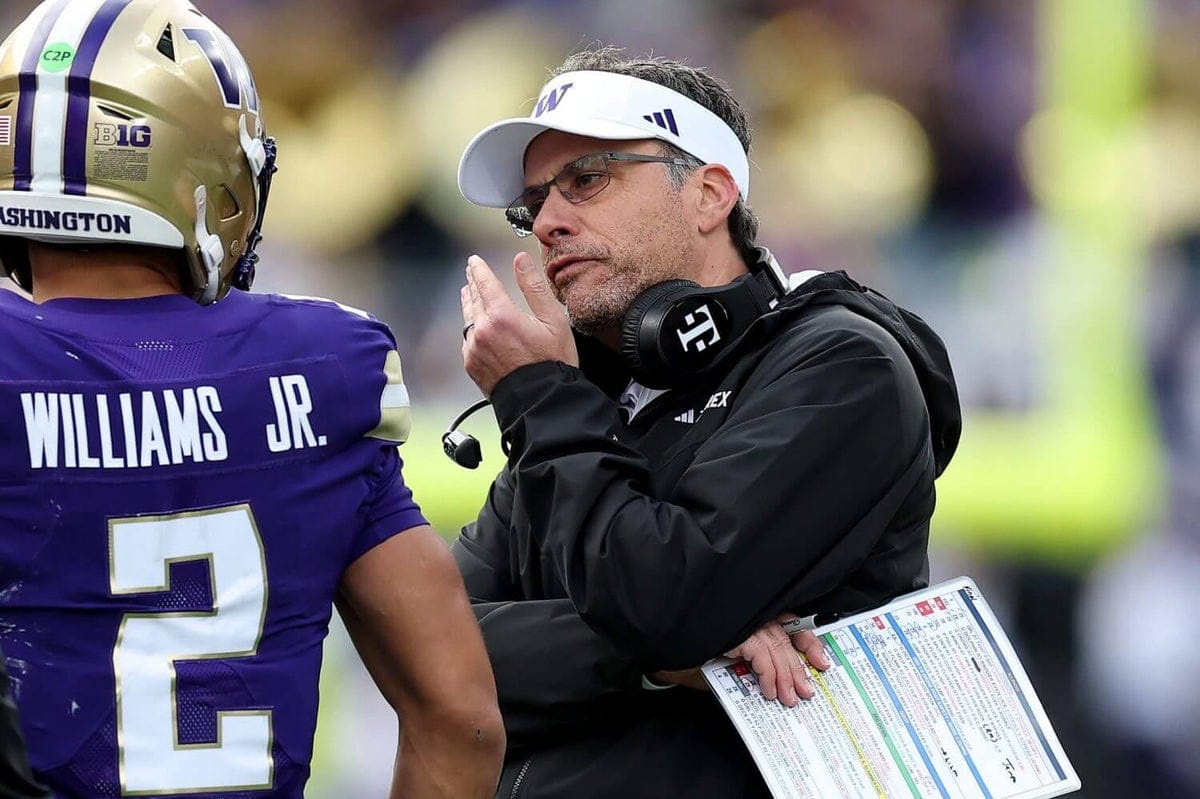
Now comes the fun part: the coaching search. The hunt for Sherrone Moore’s replacement isn’t a search for the best football mind; it’s a search for the best digital profile. The university isn’t looking for a charismatic leader or a master strategist; they’re looking for a low-risk asset. The candidates being floated—from Kalen DeBoer to Jedd Fisch to Urban Meyer—are all being assessed through the cold, calculating lens of digital risk management. Each candidate carries a different digital footprint, a different history of public statements, personal controversies, and digital interactions that must be weighed against their potential wins. The university’s search committee is effectively running a large-scale background check on their social media history, not their play-calling ability. They are looking for someone with a clean slate, someone who understands that in the age of digital surveillance, the only safe option is to be a ghost, a non-entity, or, perhaps, a machine.
Consider Urban Meyer, the ultimate high-risk, high-reward proposition. His digital and personal history is a minefield of potential controversies. While his track record on the field is undeniable, his off-field baggage is a massive liability in the current climate. The university understands that hiring Meyer isn’t just hiring a coach; it’s inviting a digital hurricane into their meticulously crafted ecosystem. The old-school thinking would say, “Win at all costs.” The new corporate thinking says, “Win, but only if you don’t violate the terms of service agreement or create negative PR noise that will impact institutional brand value.” Meyer is too much a human, in all his flawed glory, for the corporate machine. He’s messy. The new generation of leaders must be clean. This leads us to the new, optimized candidates, the ones with a lower digital footprint and fewer obvious liabilities.
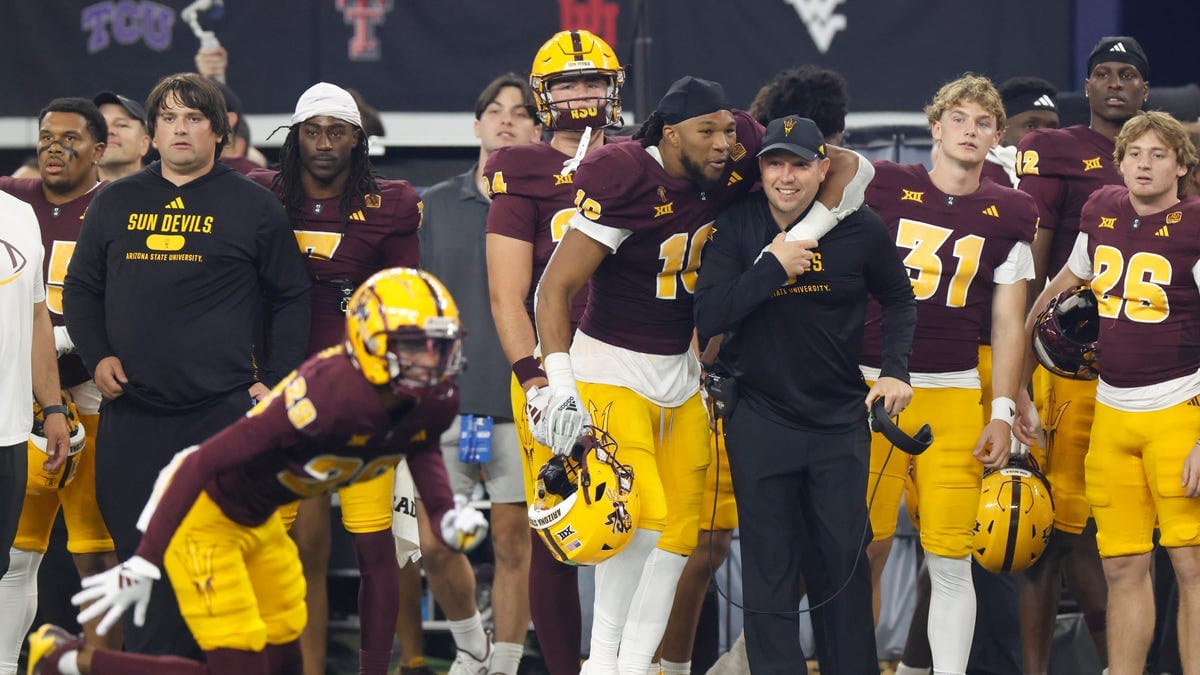
Take Kenny Dillingham, for example, whose resurfaced comments are now being scrutinized under a microscope. This is exactly how the system works. Every comment, every tweet, every casual remark made years ago becomes part of your permanent record, ready to be pulled up at a moment’s notice when a position of power becomes available. It’s a terrifying prospect. We live in a world where forgiveness doesn’t exist, where a single misstep can follow you forever. The university isn’t asking if Dillingham is a good coach; they’re asking if he’s a potential headline. The algorithm values safety over passion, homogeneity over authenticity. The future of coaching will be defined by individuals who are either too boring or too careful to ever make a mistake, creating a new generation of leaders who lack the fire and passion necessary to inspire real change, prioritizing digital compliance over human connection. They will be perfect. And perfectly unwatchable.
The Dystopian Future of College Athletics: The Rise of the Machine
This entire process isn’t a coaching search; it’s a corporate sterilization. The university, desperate to sanitize its image and eliminate human error, will likely choose a candidate who is a “safe bet.” The chosen one will be highly analytical, meticulously prepared, and, crucially, completely devoid of the human complexities that make us interesting. The future of college sports is not one of passionate rivalries and human drama; it’s one of optimized performance metrics, data analytics, and risk management. The coaches will be less like leaders and more like CEOs, managing their brand image and carefully curating every public utterance to avoid digital pitfalls. They will be cyborgs—half-man, half-machine—trained to prioritize institutional stability over human connection.
The firing of Moore highlights a larger trend: the increasing dehumanization of high-stakes environments. The university has a responsibility to protect its brand and its financial interests. In the digital age, a human being is simply a variable in an equation of risk and reward. The value of an individual’s loyalty, dedication, or past success pales in comparison to the potential damage caused by a single negative news cycle. This creates a terrifying environment where individuals are constantly forced to self-censor, to hide their true selves, and to adopt a public persona that is both bland and compliant. The result is a workforce, and in this case, a coaching staff, that is less authentic, less passionate, and ultimately less inspiring.
The digital footprint has become the new scarlet letter. It follows us everywhere, waiting for the precise moment when it can be used against us. The university’s search for Moore’s replacement isn’t just about finding someone to lead the team; it’s about finding someone who can navigate this treacherous digital landscape without leaving any trace of humanity behind. The chosen candidate will be the one who best understands that to survive in this new world, you must be perfect, or at least appear perfect, in the digital realm. This is a dark prediction for the future of sports, where the very passion and unpredictability that made the game compelling are systematically purged in favor of sterile efficiency. We are watching the end of an era, where human imperfection is no longer tolerated, and the machine reigns supreme. The human element, the very thing that makes sports interesting, is being slowly, methodically, and efficiently eradicated. The game is becoming boring. Predictable. Dystopian.