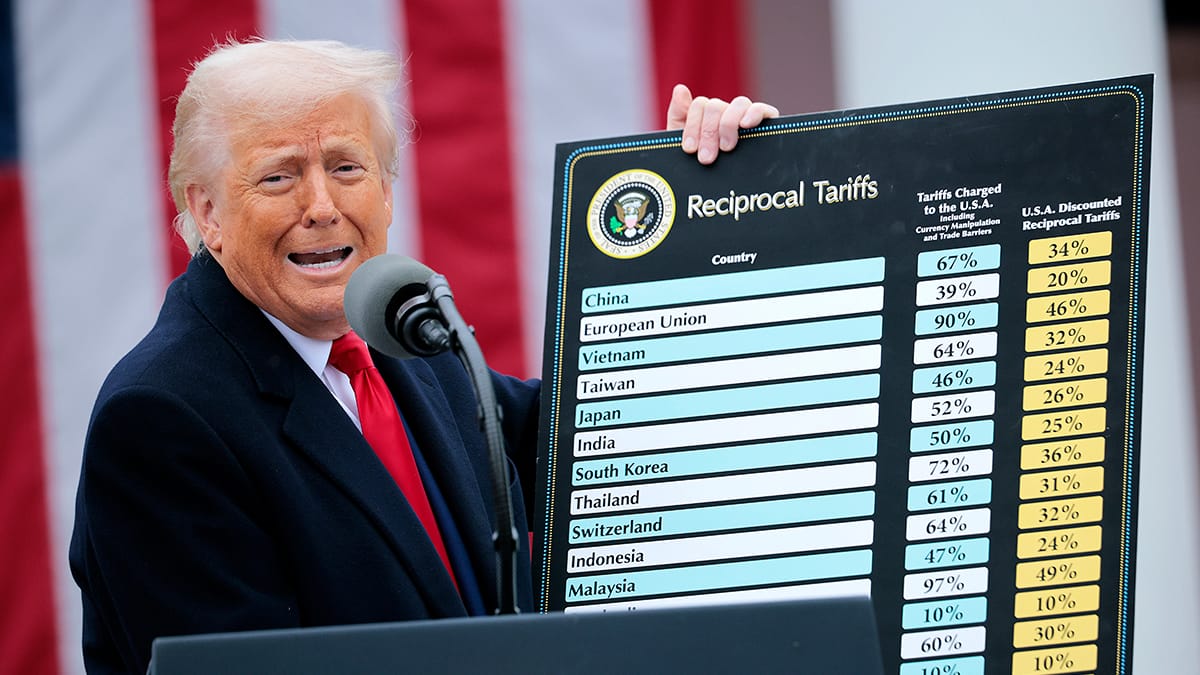
The Elites Are Panicking: Why Tariffs Are Good for Everyone but Global Corporations
Let’s talk about the corporate crocodile tears flowing right now. The big-time brokers and multinational outfits are freaking out over tariffs and calling it a massive new “risk.” Oh, the horror! The financial class is genuinely worried that the good old days of frictionless global trade, where they could outsource every job to the cheapest corner of the globe and maximize profit margins without consequence, might actually be over. This isn’t just a compliance issue for them anymore; it’s a strategic crisis. Why? Because the populist wave is finally forcing governments to prioritize national interest and domestic jobs over the quarterly earnings reports of multinational corporations.
For decades, we were fed the lie that “globalization” was an unstoppable force of nature, a rising tide that would lift all boats. The reality, however, was that it was a carefully constructed mechanism designed to centralize wealth in the hands of a very small, very elite group of people while hollowing out the industrial heartlands of countries like ours. Tariffs—once dismissed as relics of a protectionist past—are now proving to be one of the few effective tools to push back against this process. When WTW, or any of these massive risk management firms, starts warning that tariffs must be “embedded at the core of strategic plan,” what they’re really saying is that the game has changed, and their clients, the global corporations, can no longer ignore the demands of national sovereignty. The risk isn’t that tariffs exist; the risk is that the people have finally woken up to who really benefits from a borderless world.
These companies thrived on a model of perfect efficiency, where cost was king and resilience was an afterthought. They built complex supply chains that stretched across continents, relying on authoritarian regimes for manufacturing and cheap labor. Now, as geopolitics heats up and nations rediscover the concept of national interest, those very same supply chains are unraveling. The corporate elite created a world where their profits were maximized, but the security and stability of the average citizen were jeopardized. Are we supposed to feel bad because their strategic plans are getting complicated?
The Fragile House of Cards: When Cyberattacks Hit Home
And speaking of jeopardized security, let’s look at the second major alarm ringing right now: the cyber threat. The very same corporations that lobbied for maximum globalization are also guilty of building a highly fragile digital infrastructure. They cut corners on security, prioritized quick deployment over long-term resilience, and outsourced critical data management to third-party providers in who knows where. Now, global cyber threat escalation puts critical infrastructure right in the crosshairs, and we’re seeing just how unprepared we truly are.
A recent report highlights that UK organizations are waking up to ransomware attacks far too late. Let’s not mince words here: this isn’t just a technical problem; it’s a leadership failure. The elites running these critical organizations—from power grids to hospitals—are demonstrating a stunning level of incompetence. They’re too busy counting their profits to properly secure the very systems that keep society running. They operate under the naive belief that a complex, interconnected system, built for profit, will somehow magically hold together against highly organized and motivated adversaries. The reality is that the hyper-connected, just-in-time nature of modern business, which was supposed to be a hallmark of efficiency, has become our greatest vulnerability. When a ransomware attack can bring down an entire city’s operations, or a hostile state actor can breach a power grid, we’re not just dealing with corporate risk; we’re dealing with national security failures on a grand scale. The populists’ argument has always been about bringing things home, about local resilience, about controlling our own destiny. When you see how fragile these global systems are, it’s hard to argue with that logic. We’ve become dependent on systems we can’t control, managed by people who don’t care about us.
The Solution: Resilience over Efficiency
So, where does this leave us? The corporate response to these two crises—tariffs and cyberattacks—is to essentially ask governments to step in and solve *their* problems, or, in the case of tariffs, to just go away so they can keep making money. The populist answer is fundamentally different: We must reorient our entire approach to prioritize resilience over efficiency. The age of unbridled globalism, where everything was outsourced to the lowest bidder and national borders were seen as quaint suggestions, is dead. The new reality, whether the corporate elites like it or not, is defined by national sovereignty, local production, and robust security for essential services. Tariffs are a necessary tool to rebuild domestic manufacturing and create a buffer against geopolitical chaos. Cyber security is not an optional add-on; it’s the foundation upon which all modern society rests. We cannot trust a system where a single point of failure in a foreign country can bring down our infrastructure or where corporate managers ignore warnings until it’s too late. The “us vs. them” narrative has never been clearer: It’s the people seeking security and stability against the corporations seeking profit at all costs. The populist revolution isn’t just political; it’s economic, and it’s here to stay. The elites can call it risk; we call it common sense.