
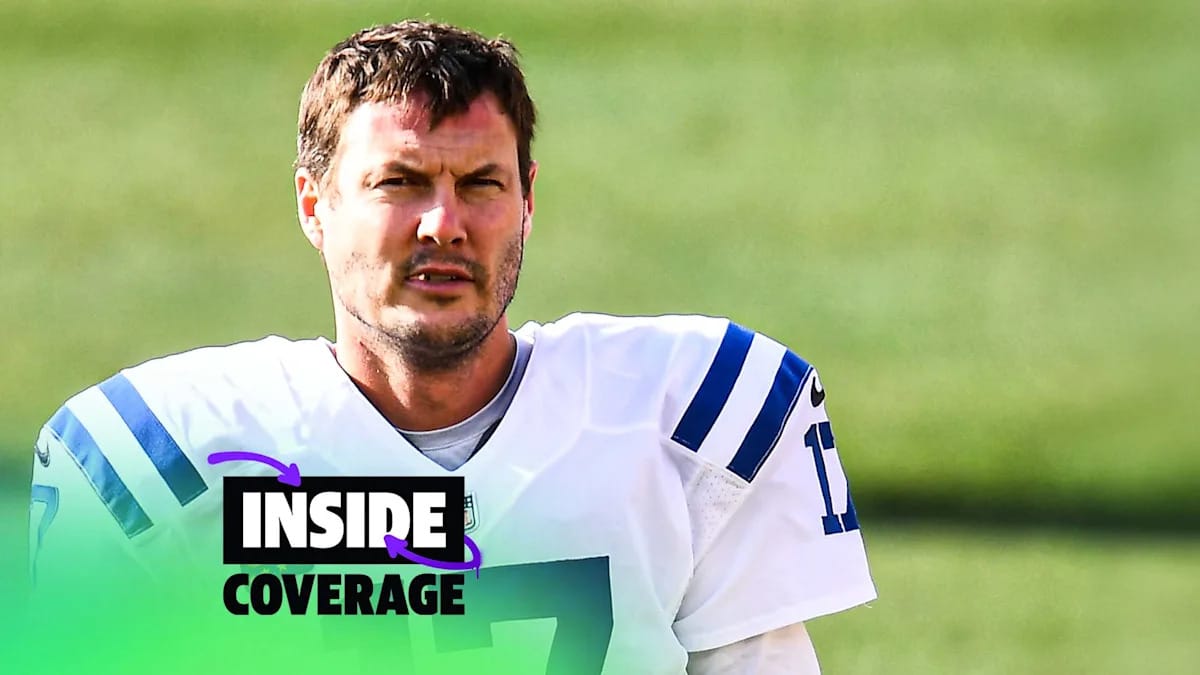
The Whispers Are Getting Louder: Rivers’ Return Isn’t a Story, It’s a Warning
Let’s get this straight, because what you’re hearing in the mainstream press is just the surface level noise. The return of Philip Rivers to the Indianapolis Colts isn’t a feel-good story about a veteran coming back to chase a ring. No, no, no. This is a five-alarm fire. You hear things on the back channels, whispers from people who are truly in the know, and the consensus among insiders is that this move isn’t about football; it’s about control. It’s about a franchise owner, Jim Irsay, who has lost complete faith in his entire organization—from the front office to the coaching staff—and is now trying to roll back the clock to a time when things felt stable, even if that stability was mostly an illusion.
You have to understand the context here. The Colts organization is not just struggling; it’s a hot mess right now. The Jeff Saturday experiment, where they hired a TV analyst with zero experience over established, proven coordinators, wasn’t a calculated risk; it was a symptom of a much deeper, more insidious problem. It was an act of organizational hubris, an owner saying he knows better than everyone else in the league, and when that blew up spectacularly, as anyone with half a brain knew it would, the next move had to be equally chaotic and desperate. Enter Philip Rivers, the ghost of Christmas past, suddenly reappearing to fix a mess that has been building since Andrew Luck unexpectedly walked away, leaving behind a power vacuum that Irsay has been trying to fill with increasingly bizarre decisions. This isn’t just about a quarterback; it’s about the soul of a franchise trying to find its way back to relevance by grasping at straws, and I’m telling you, this straw is brittle.
The Smoking Gun: Why Now?
Let’s analyze the timing and the motivation, because this is where the real story is buried. Rivers retired because he wanted to be with his massive family, to focus on raising his kids and coaching high school football. He left the game on his own terms after a decent season with the Colts, even if it ended in heartbreak during the playoffs. So, why would a man who seemed so content in retirement suddenly decide to un-retire? The official story will be something about a love for the game, or a desire for one last chance at a Super Bowl. But if you listen closely to what’s actually happening behind the scenes, you realize this move is probably less about Rivers’s personal ambition and far more about Irsay’s inability to move on. This isn’t a spontaneous act of passion from Rivers; it’s a plea for help from an owner who feels like the walls are closing in and needs a familiar face, a comfort blanket, to stabilize the ship before it sinks entirely. The very idea that a 44-year-old quarterback, who hasn’t played in years, is seen as a viable solution speaks volumes about the level of desperation in Indianapolis; it screams that they have absolutely no faith in anyone else on their roster, or in their ability to scout and develop new talent.
The Jalen Hurts Analogy: Two Sides of Desperation
Now, let’s look at the Jalen Hurts situation in Philadelphia, because it offers a fascinating contrast that highlights just how different a kind of pressure Rivers is under. You see, Hurts is facing the pressure of expectations, the kind that comes after a Super Bowl run and a massive contract extension. When the Eagles collapse on Monday Night Football, as they did against the Seahawks, it’s a crisis of confidence, a problem of whether a new generation can sustain elite performance under pressure. Hurts is dealing with the weight of the future, trying to prove he’s worth the investment in front of a fanbase that, frankly, can be brutal in its expectations. Rivers, on the other hand, is facing the exact opposite kind of pressure. He’s dealing with the weight of the past. His return isn’t about proving he’s the future; it’s about proving that the past was better, that the current situation is so dire that even a ghost from yesteryear is preferable to what they have now. It’s a sad commentary on both situations, really, illustrating how fragile success truly is in this league, regardless of whether you’re a young superstar trying to solidify your legacy or an aging veteran trying to reclaim it.
The Saturday-Rivers Conundrum: A Cycle of Chaos
Let’s talk about Jeff Saturday for a minute, because you cannot analyze Rivers without analyzing the Saturday factor. Saturday was the ultimate ‘drinking the Kool-Aid’ hire. It was supposed to rekindle the ‘Colts Way’ by bringing back a beloved player from the Manning era to be the interim head coach. The underlying thought was that the culture was broken and only a former player could fix it. When that failed—and let’s be honest, it was always going to fail—it proved that nostalgia and emotion cannot replace experience and competence in the NFL. Rivers’ return fits perfectly into this pattern of organizational behavior. It’s another attempt to recapture that magic, another attempt to prove that the ‘Colts Way’ of old is still superior to the modern analytical approach. It’s a refusal to adapt. The organization is essentially saying, ‘We can’t find a good new quarterback, so let’s just bring back the old one and pretend it’s 2020 again.’ This isn’t just bad management; it’s pure self-destruction, and the fact that they’re willing to go this far to avoid admitting they made a mistake with Saturday shows just how deep the rabbit hole goes.
Tainting the Legacy: Is It Worth It?
Now, let’s get personal. What does this do to Rivers’ legacy? The narrative right now is fairly clean. He was a great quarterback, a borderline Hall of Famer, known for his fiery personality and ability to play through pain, even if he never quite got over the hump to win a Super Bowl. He left on a decent note. But a return like this, especially if it fails, carries significant risks. If he comes back and performs poorly, if he looks slow and rusty, if he throws too many interceptions, he could tarnish everything he built. The NFL has a short memory; people tend to remember the last chapter, not the whole book. Is he risking his Hall of Fame case, or at least his current positive perception, for a potential handful of games with a team in complete disarray? It’s a gamble that seems more reckless than noble. When you look at other athletes who tried to come back after retirement, like Michael Jordan with the Wizards, or even Brett Favre with the Vikings, it’s rare that it actually improves their legacy. In many cases, it makes you wonder why they didn’t just stay home, enjoying the fruits of their labor rather than trying to prove a point that nobody was asking them to prove.
The NFL’s Crisis of Quarterback Development
Beyond the Colts and Rivers themselves, this move highlights a bigger, systemic issue in the National Football League: the inability of franchises to find and develop quality quarterbacks. We’re in an era where teams are so terrified of striking out on a top draft pick that they’d rather sign a 44-year-old coming out of retirement than bet on a young prospect. This isn’t just about Indianapolis; look around the league. How many teams are truly set at the quarterback position for the next five years? The answer is probably fewer than ten. The rest are either in constant flux, recycling mediocre talent, or desperately hoping that a miracle happens. The Rivers story isn’t just about one team’s desperation; it’s a reflection of a league-wide crisis where the demand for quality quarterbacking far outstrips the supply. When a veteran who hasn’t played in years becomes a hot commodity, it proves that the process for identifying and cultivating talent is fundamentally broken.
The Final Word: What Jim Irsay Really Wants
Here’s the inside scoop, the real confidential information that nobody wants to print: Jim Irsay is obsessed with winning, but he’s also obsessed with being right. He wants to prove that he can fix this without outside help, without going through the conventional processes. The Saturday hire was his attempt to be right about the culture; Rivers’ return is his attempt to be right about the talent. He wants to be able to look at the league and say, ‘I found the solution, even if everyone else thought it was crazy.’ This return is less about Rivers saving the season and more about Irsay trying to save face. It’s a high-stakes gamble, and I predict it will end just like the Saturday experiment did: in frustration, chaos, and a complete lack of long-term improvement. The Colts are in a vicious cycle of desperation, and bringing back Rivers is just another spin of the wheel in a casino where the house always wins.